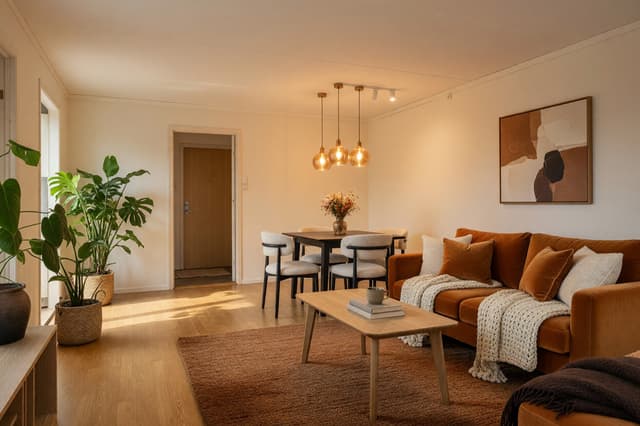
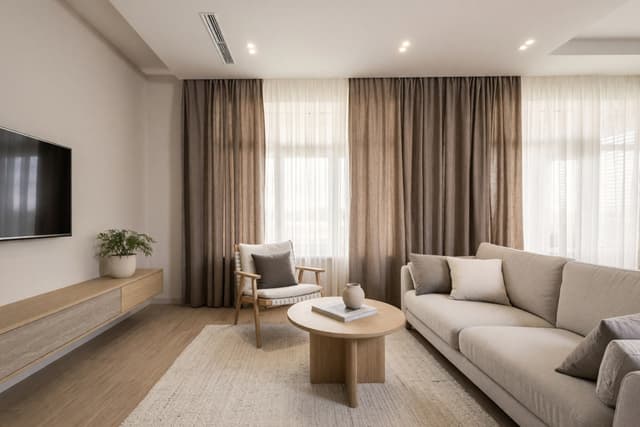
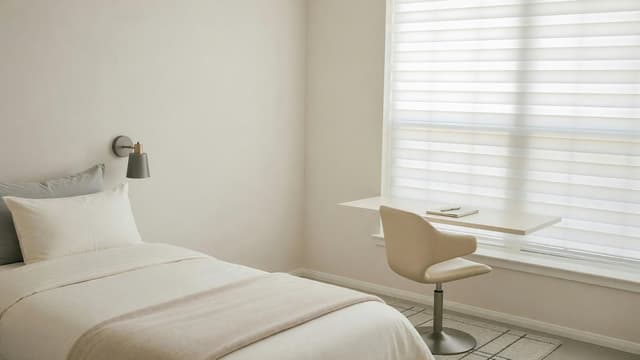
Nursery ideas
A good nursery is calm, practical for night-time care and simple enough to grow with the child. Below are six nursery ideas on real rooms, before and after, with the colors, materials and layout behind each one.
How do you plan a nursery?
- Start with the crib wall and the chair. The crib, a comfortable chair for feeding and a place for changing and storage are the three things the room has to hold; style comes after.
- Choose a calm palette. Soft whites, warm neutrals, sage, pale blue or one muted accent let the room feel quiet and still look good as the child grows.
- Think about light. A window with sheer curtains for the day and a dimmable lamp for the evening are easier to live with than one bright ceiling light.
- Pick materials that last. Wood, cotton, linen and wool age well. Skip fashions that will look dated in two years.
- Leave floor space. A rug and open floor give room to play later, and the room feels larger.
- Plan for change. A crib that becomes a toddler bed, a dresser that holds a changing pad and a chair that suits a reading corner will serve for years.
6 nursery ideas, before and after
Each example starts from a real photo of a room, shown before and after AI redesigns it as a nursery in Interior Design with Structural Preservation, which keeps the walls, windows, doors and the shape of the room. The last three rooms were empty, so the AI furnished them. AI can also change small details, so compare each pair closely and treat every result as a design idea. One result, the empty room in the fourth example, redraws the window. These pictures show style, not safety, and some show pillows, blankets or soft toys in or on the crib, which is styling only. Choose and install the crib and furniture following the maker's instructions and your local safety guidance. A window sign, a sticker, a wall monogram and a small framed photo were blurred in four of the photos for privacy.
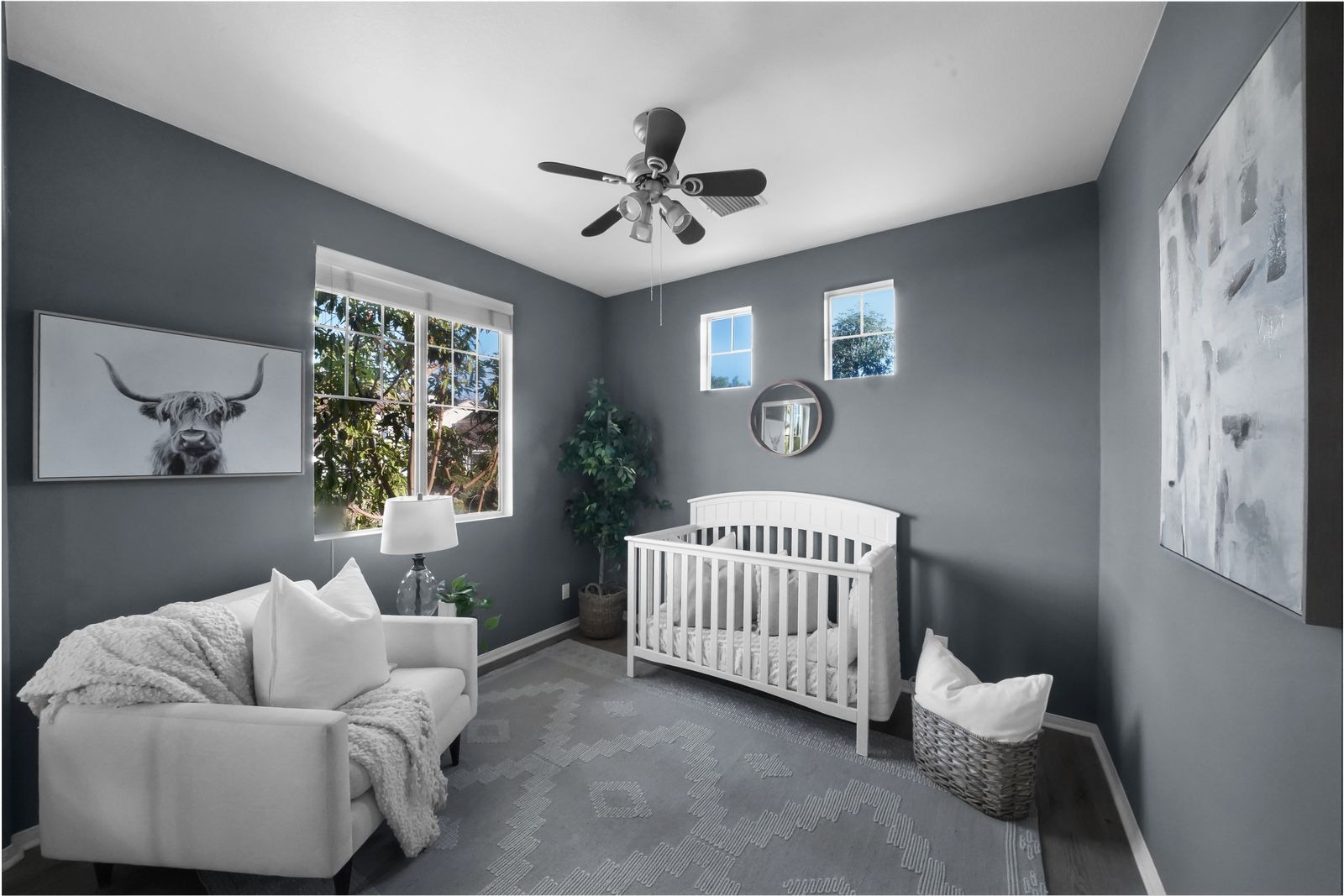
1. Japandi: warm wood and cream in a gray room
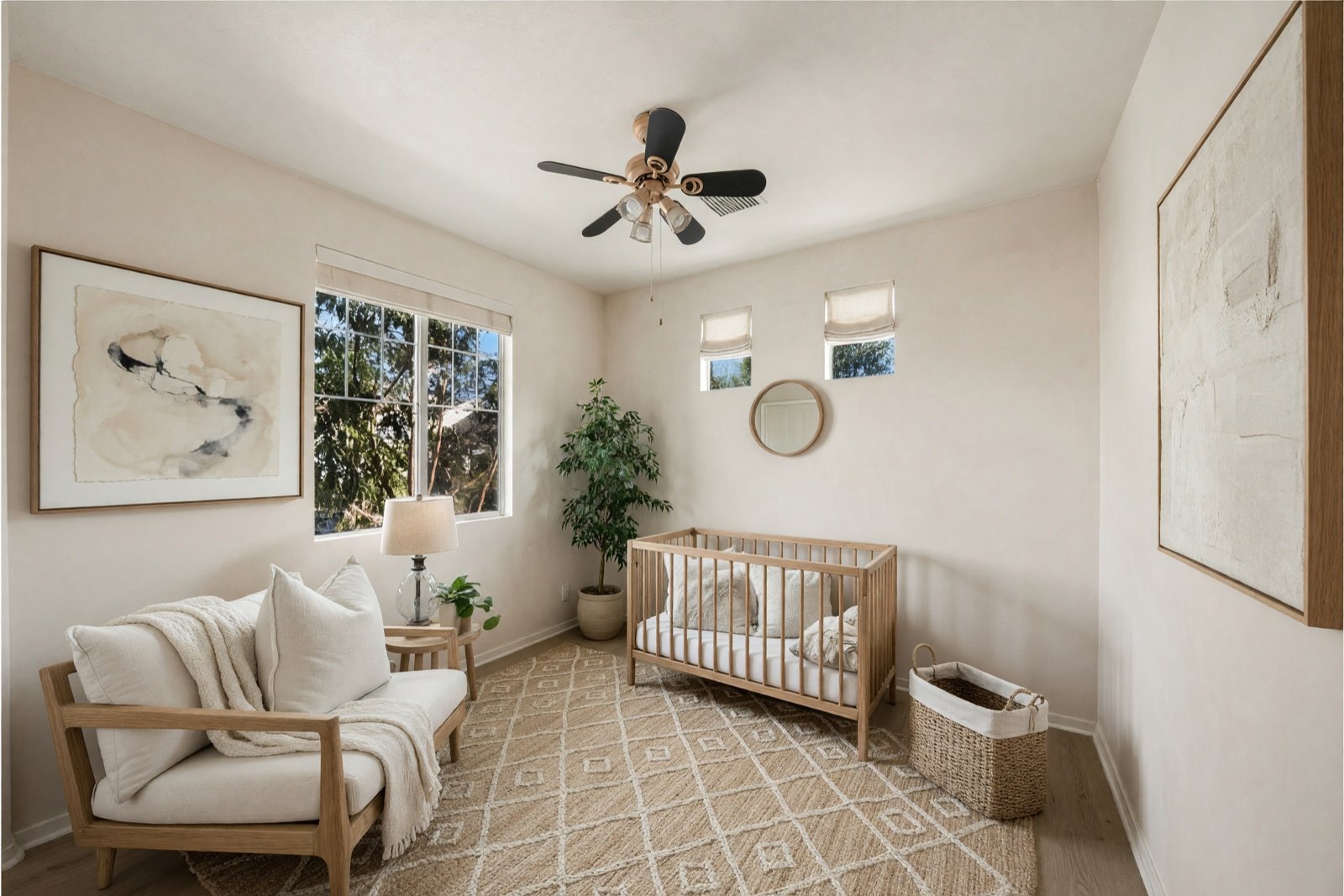
The pictures show a style, not safe sleep advice. Follow the crib maker's instructions and your local safety guidance.
Japandi here means warm cream walls, pale oak and woven jute with very little color, so the gray room turns calm and light without changing its shape. The oak crib, chair and side table repeat one wood tone, and the soft abstract prints keep the walls quiet. Compare the details closely: the AI redrew the furniture and the fan, and this style can feel plain without the knit throw and the rug.
2. Cozy: soft textiles in a paneled room
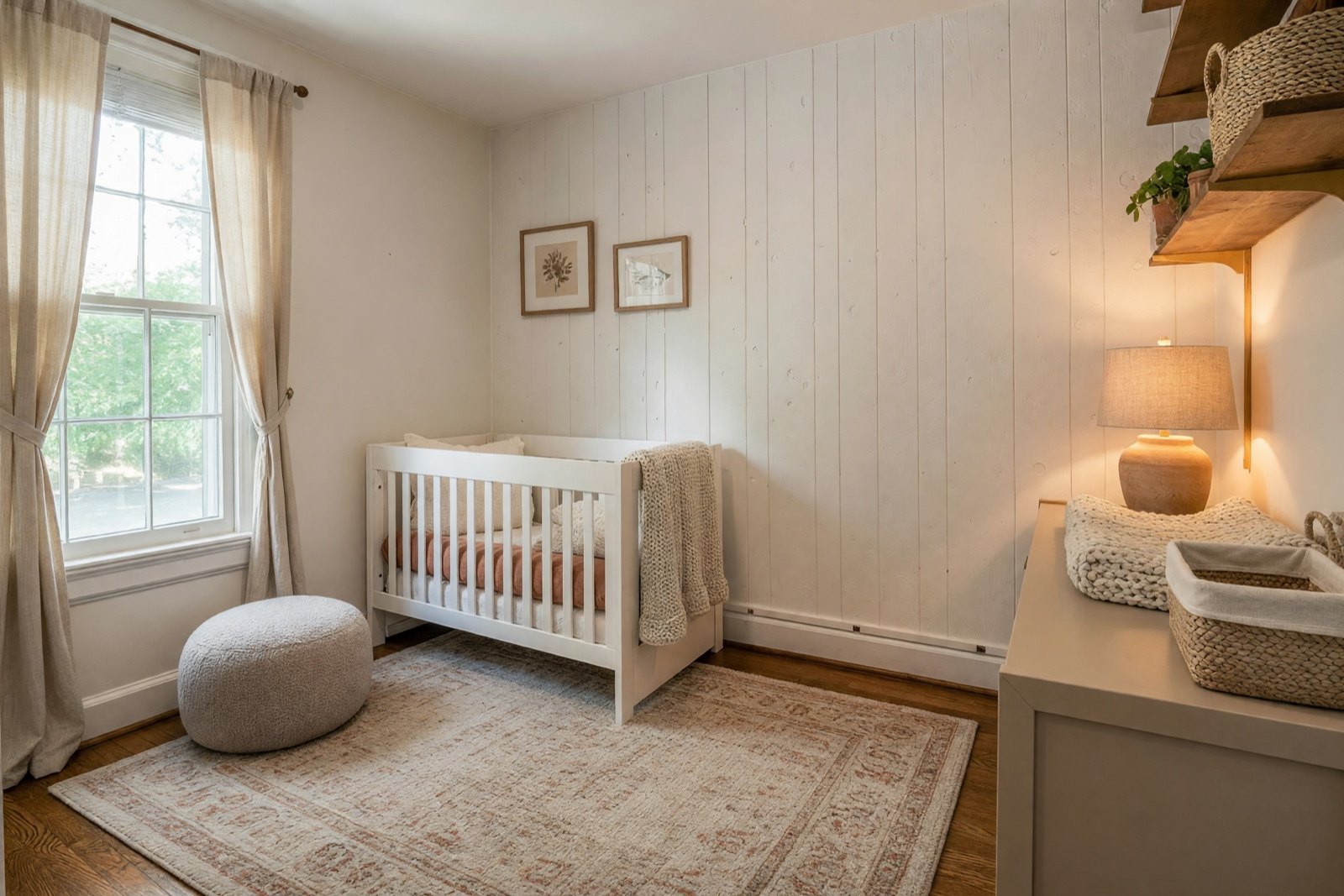
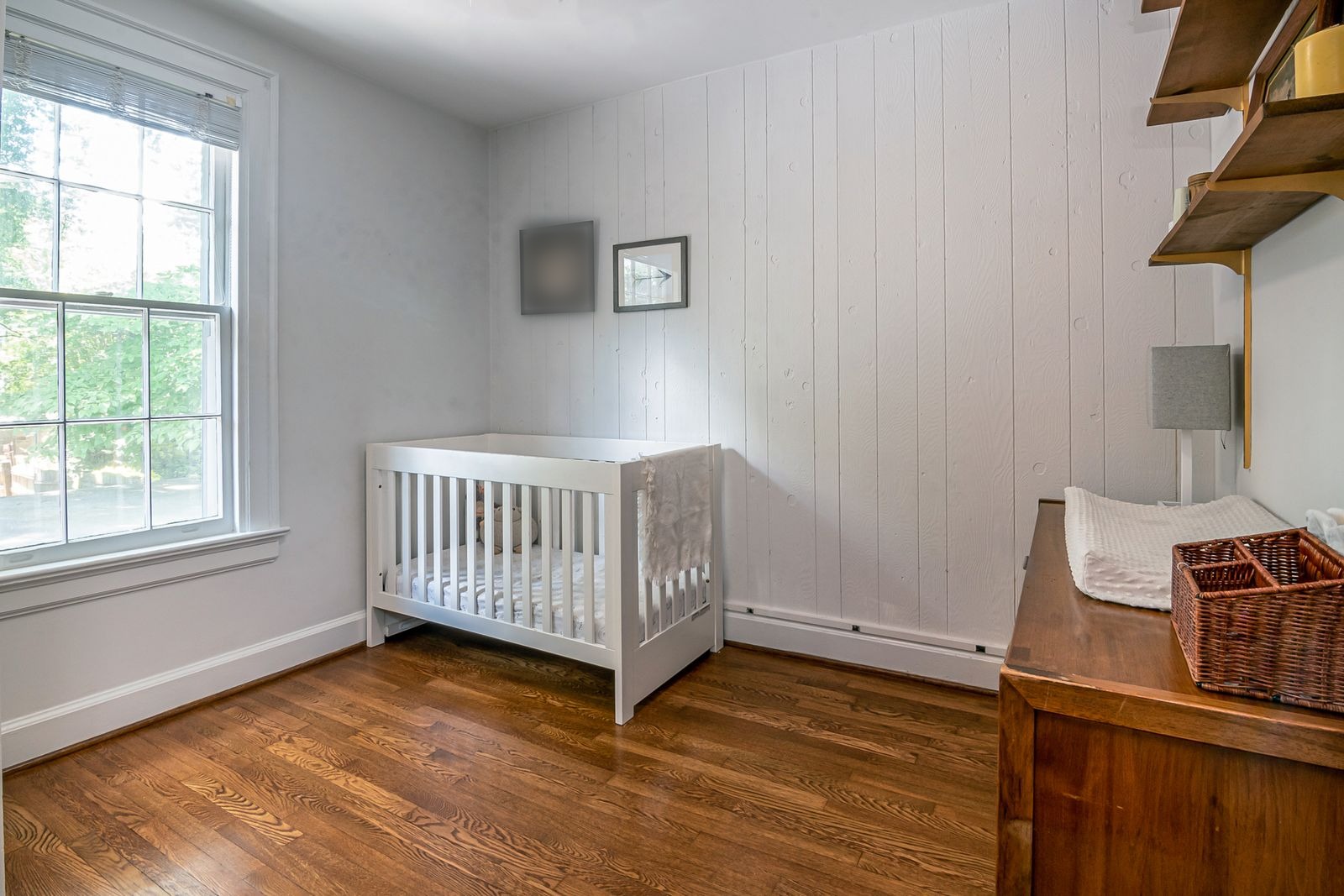
Cozy here comes from layers rather than from furniture: linen curtains, a bouclé pouf, a soft rug and a warm lamp make the white plank wall feel like a cocoon. The terracotta lamp and the faded rose rug are the only color, and they work against the cream. Several layers of soft textiles collect dust and clutter quickly, so keep the number of pieces on the floor and shelves small.
3. Minimalistic: clean lines and a few good pieces
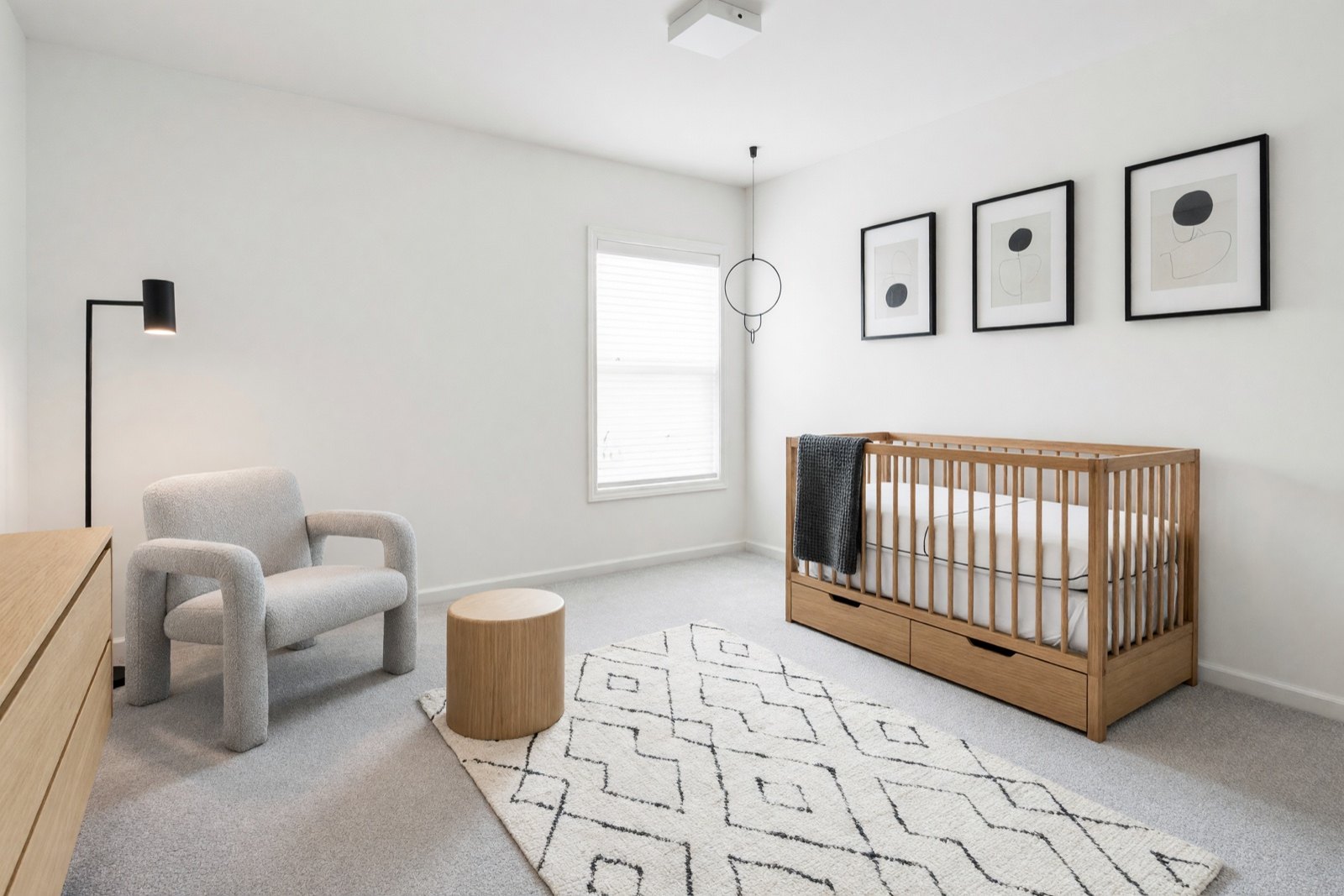
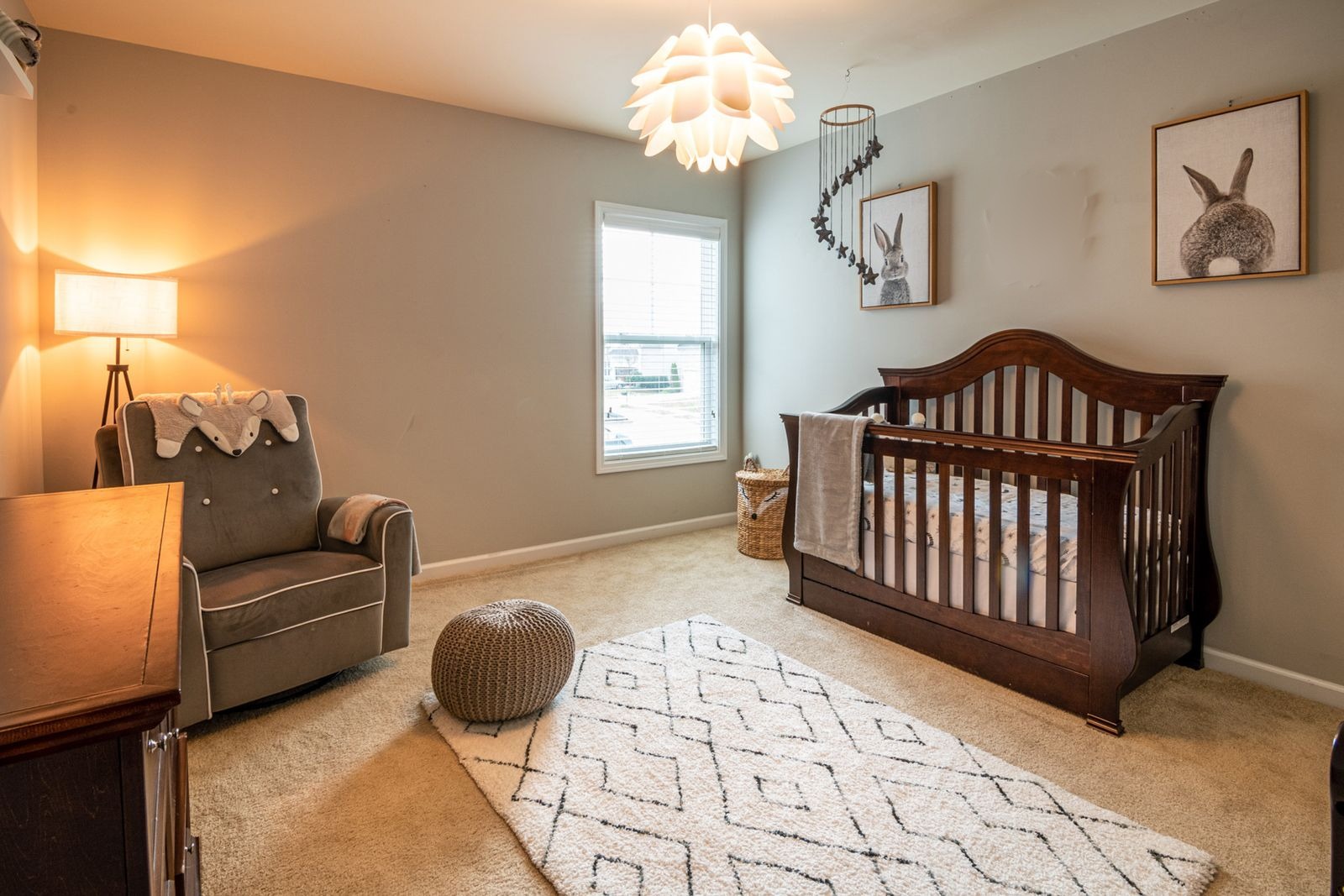
The room loses the dark wood, the deer blanket and the busy wall, and keeps only an oak crib, one chair, one table and three prints. The black frames, floor lamp and ring pendant give the white room its few sharp accents. White and gray can feel cold, so the white diamond rug and the oak are doing the warming; judge the carpet and wall colors on a sample rather than on screen.
4. Coastal: blue-gray walls and natural fibers in an empty room
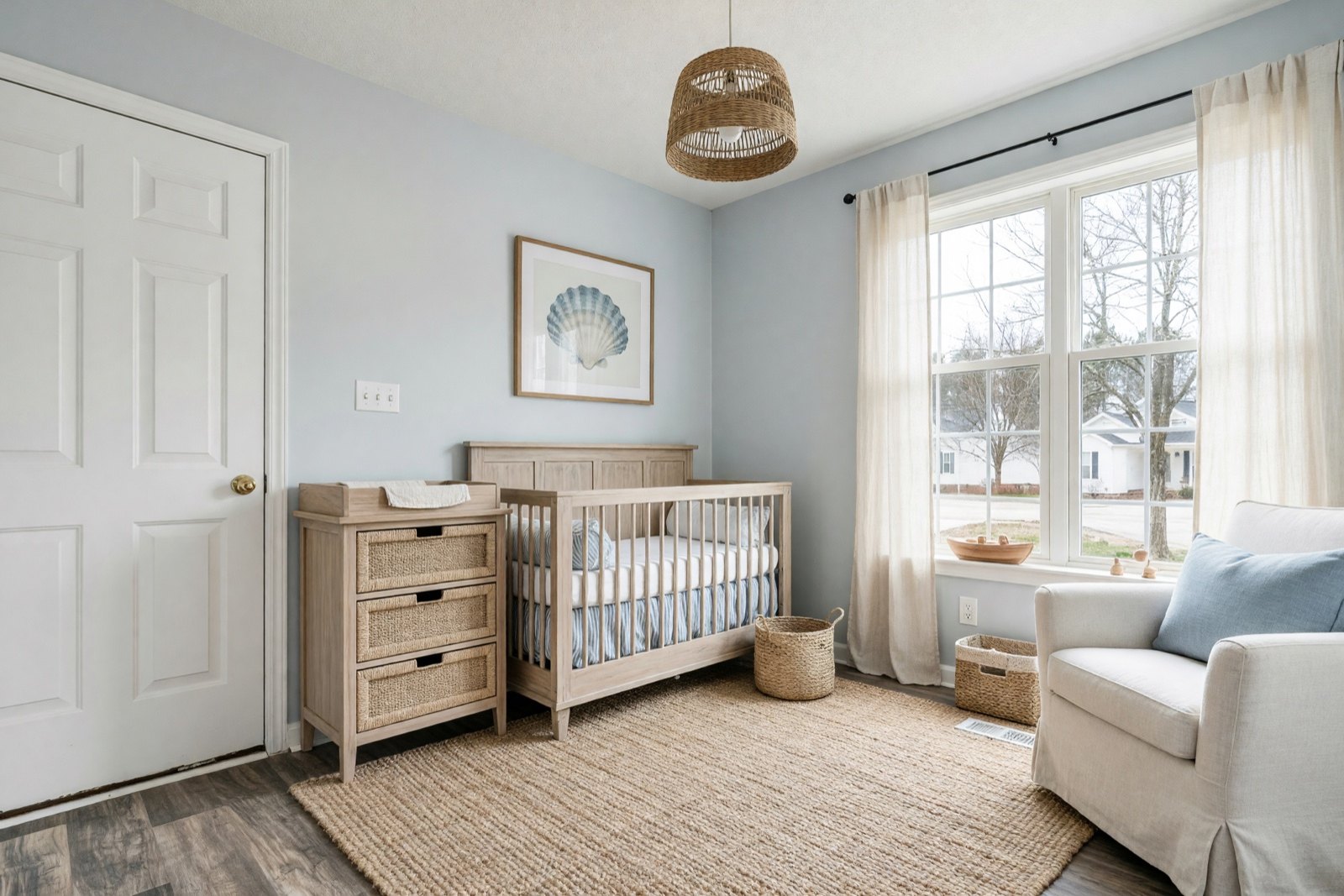
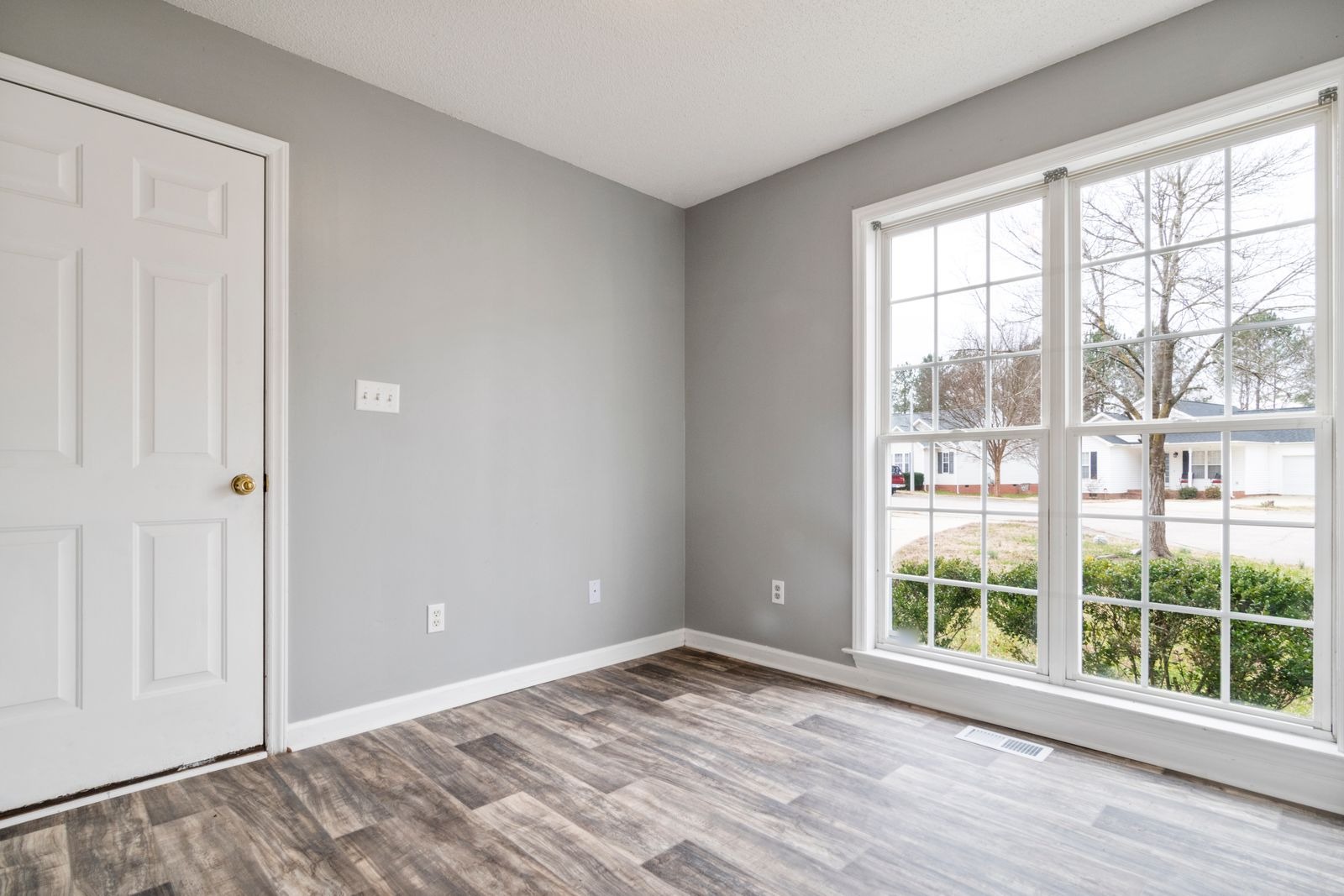
Here the AI starts from an empty room and furnishes it, so every piece of furniture is new. Pale blue-gray walls, light driftwood tones, jute and seagrass give the coastal look without anything literal beyond one shell print, and the white door and window trim keep it crisp. Pale blue can look cold in a room that gets little sun, and these pieces are only design ideas, so check that the crib, dresser and chair really fit the room.
5. Bohemian: rattan, macramé and plants
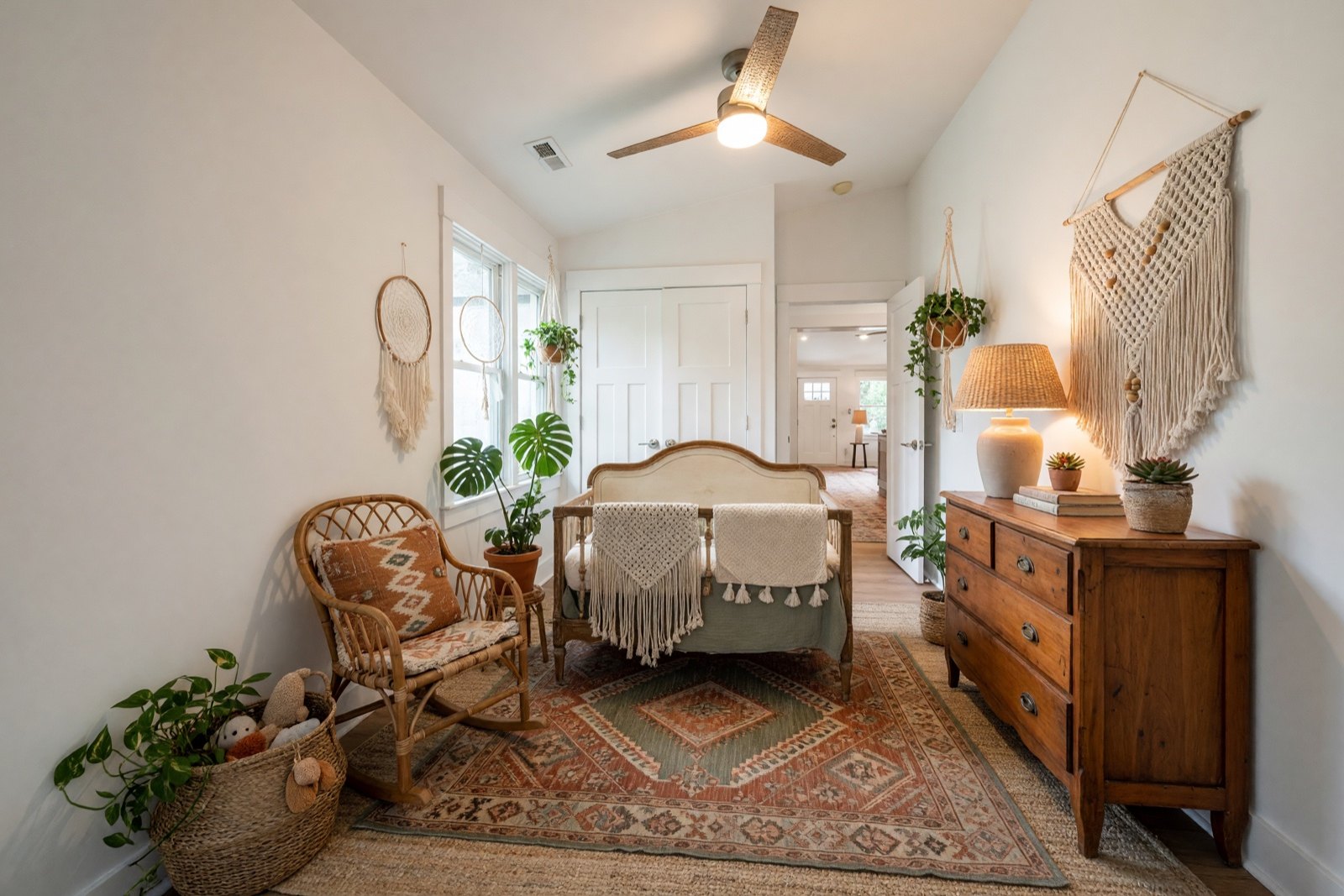
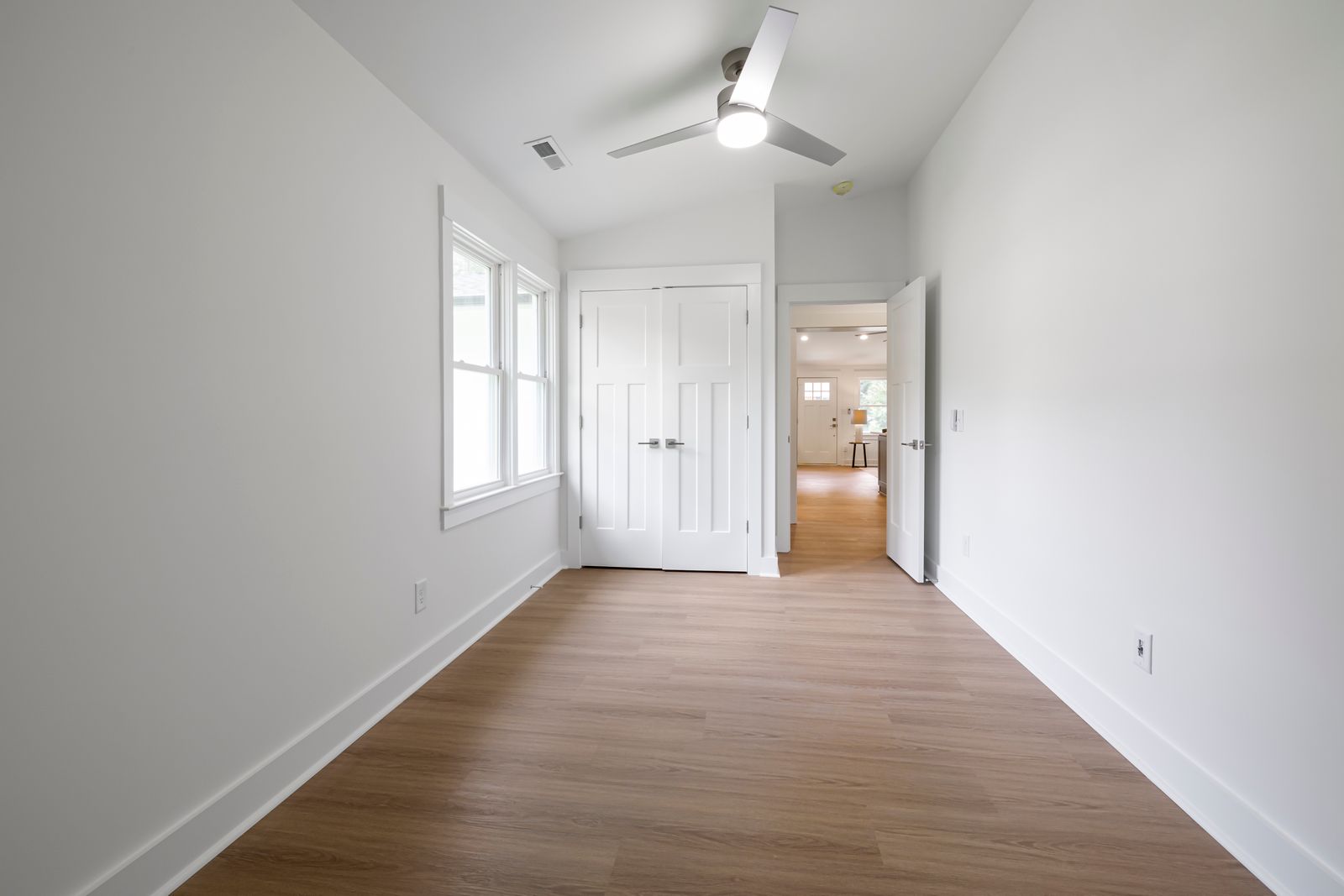
This is the most layered pair: rattan, macramé, a patterned rug over jute, a wood dresser and plants give a warm, collected look in a plain white room. The rust-and-sage rug and the wood tones are what hold the palette together. It is also the easiest style to overfill, and a long narrow room like this one can lose its floor space, so edit the pieces down before you copy the look.
6. Biophilic: green, wood and light
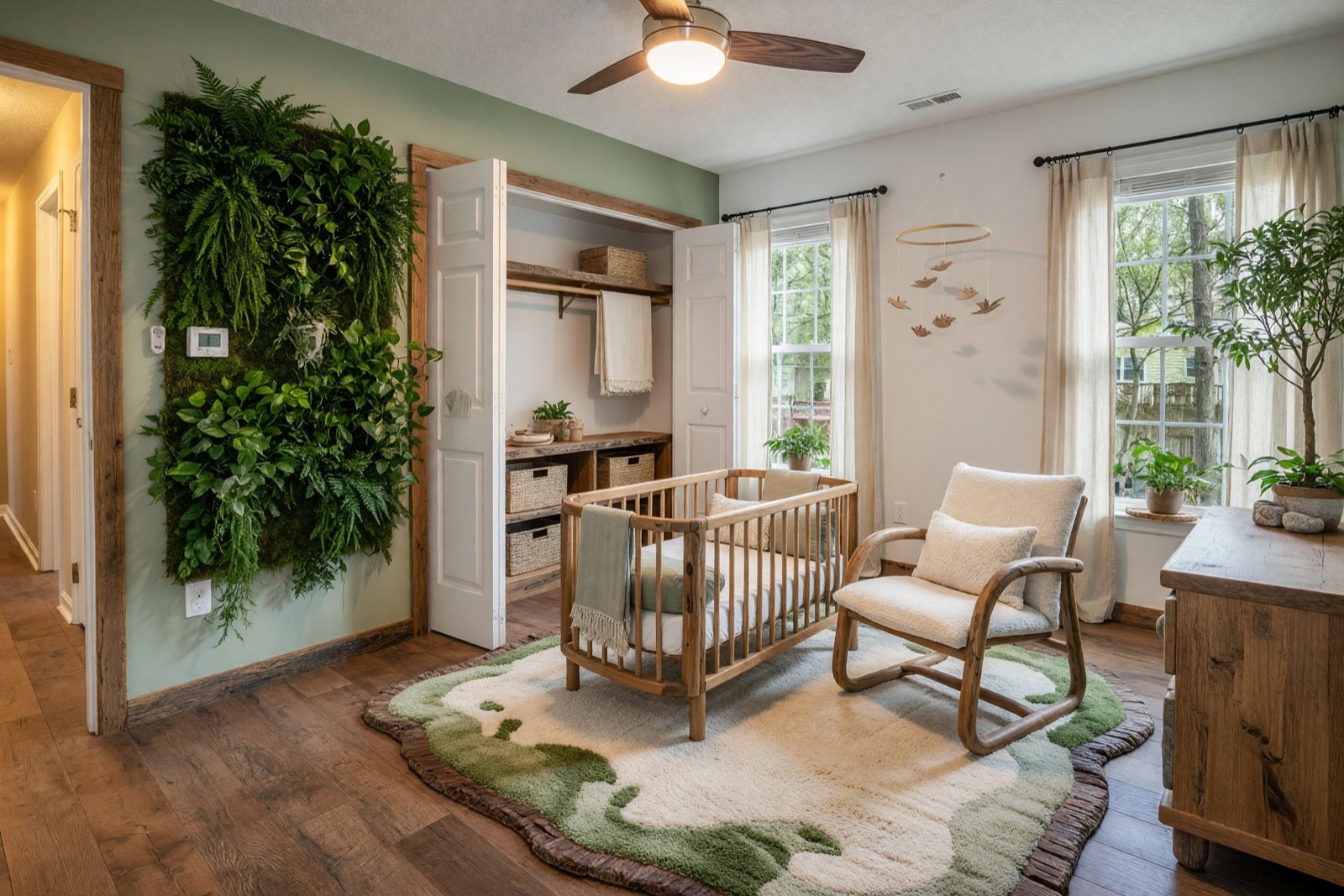
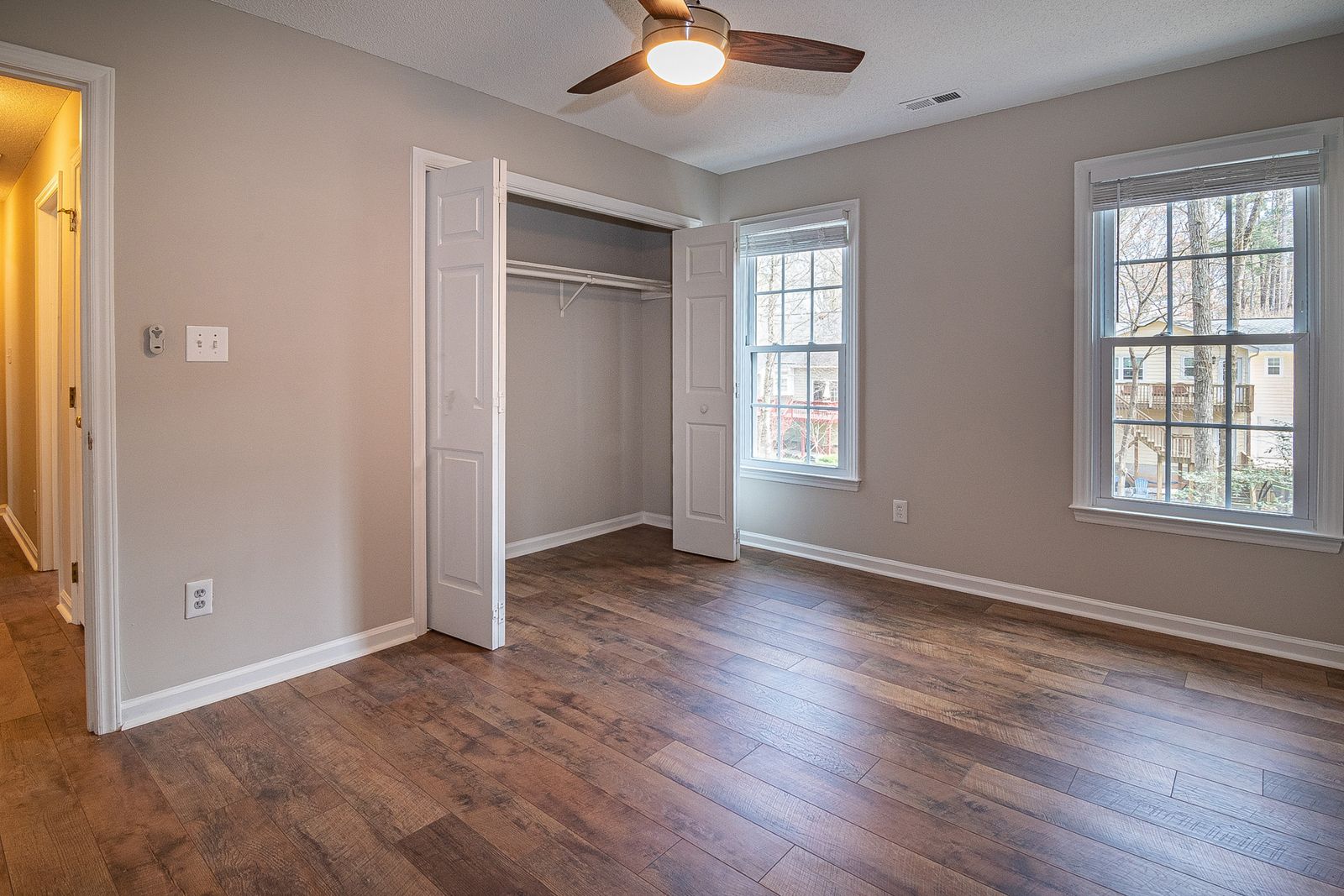
Biophilic works through a few large natural elements: a sage wall with a plant wall, rough wood trim, a wood crib and chair, and a rug shaped like a green clearing. Good daylight from the two windows is what makes the plants plausible. Real plants need water and light, and a plant wall is a project of its own, so treat the living wall here as a picture to adapt, for example with a few pots or an artificial panel. The AI also redrew the light switch as a thermostat, so check small fixtures like this in your own room.
Nursery styles at a glance
| Style | Look | Good with | Watch out for |
|---|---|---|---|
| Japandi | Warm wood, cream, simple shapes | Neutral walls, jute rugs | Can feel plain without texture |
| Cozy | Soft textiles, warm light | Paneled or light walls | Too many layers collect dust and clutter |
| Minimalistic | Few pieces, clean lines, gray and white | Small rooms | Can feel cold without a warm rug |
| Coastal | Blue-gray, white, natural fibers | Bright rooms | Pale blue can look cold in a room with little sun |
| Bohemian | Rattan, macramé, patterned rug, plants | Warm wood | Easy to overfill |
| Biophilic | Plants, green, natural wood | Rooms with good daylight | Real plants need care and light |
What are the must-haves in a nursery?
Six things cover most nurseries: a safe sleep space, a comfortable chair, soft light, storage within reach, blackout curtains and a changing surface. Everything else is style.
- A crib that meets your local safety standards, set up as the maker's instructions say.
- A comfortable chair for feeding, with a small table or shelf beside it for a lamp and a glass of water.
- Soft, dimmable lighting, so night-time care does not need the main light.
- Storage within reach of the changing spot for diapers, wipes and spare clothes.
- Blackout curtains or lined shades for daytime naps.
- A changing surface, either a pad on a sturdy dresser or a table made for it.
Follow current official guidance for your country and the maker's instructions, secure tall furniture to the wall, and keep cords, including blind cords, away from the crib.
Small nursery ideas
In a small room, keep the floor open and let the walls do the work. Put the crib in a corner, using two walls, and choose a slim dresser with a changing pad on top as the changing station. Fix a few wall shelves above it for diapers, wipes and books, and hang a mirror on a wall away from the crib to bounce daylight around. Light colors and one calm palette make the room feel larger.
Unique nursery ideas and baby nursery themes
A theme works best as one or two touches, not a full set, so the room stays calm and is easy to change later. Five themes that keep the room quiet:
- Nature: leaf or botanical prints, a wood crib and a plant or two, as in the biophilic example above.
- Soft animals: one quiet animal print or a single plush on the chair, instead of animals on every surface.
- Stars and sky: a deep blue or soft gray wall, a round night light and a few small star prints.
- Books: a low shelf with the covers facing out and a reading chair that will still be used when the child is older.
- Vintage: a carved or curved-headboard crib, a rocking chair and a patterned rug, like the Bohemian example.
Girl, boy or simple: choosing nursery colors
Choose the colors you like; a nursery does not need pink or blue. Soft neutrals, sage and warm white suit any child, and wood adds warmth. To give the room more personality, add one accent in a pillow, a print or a rug, such as dusty rose, terracotta, deep blue or mustard. For a simple nursery, count the pieces: a crib, a chair, a dresser, one lamp, one rug and one print is enough. For an older child's room, see boys bedroom ideas.
Nursery trends for 2026
Many nursery looks are leaning toward calmer colors, natural wood and textured textiles such as bouclé, linen and knit throws. On this page, the Japandi, minimalistic and biophilic rooms follow that direction. Trends change, so use them as a starting point and keep only what you will still like in a couple of years.
Common nursery design mistakes
- Decorating before choosing the furniture. The crib, chair and storage fix the layout.
- Too many bright colors or busy patterns. A calm room is easier to live with and easier to change later.
- Dark, heavy furniture in a small room. Light woods and white make the same room feel larger.
- Forgetting the light. Plan a soft lamp for night-time care so you do not need the main light.
- Forgetting future use. Leave space for a bed, a desk or a toy shelf.
Try a nursery design on your own room photo
Upload a photo of the room to Interior Design, choose Nursery, a style such as Japandi, Cozy, Minimalistic or Coastal, and Structural Preservation to keep the walls, windows and doors. Photograph the room in daylight from a corner so the walls, floor and window show.
The result is a design idea, not a plan or a safety check. Colors and materials look different on screen and in the room, so test real samples before you buy. For a calm, natural look, see Japandi living room ideas. For a cozy look, see cozy living room ideas. To furnish an empty room, see the virtual staging guide. More rooms and styles are on the HomeCompose design ideas page.
Frequently asked questions
How do I decorate a small nursery?
Keep the furniture light in color and low, use one calm palette, hang prints at eye level and leave some floor open. A crib, a chair and one dresser are enough in many small rooms.
What colors suit a nursery?
Soft white, warm neutrals, sage, pale blue-gray and pale wood are calm and last as the child grows. Add one or two muted accents rather than many colors.
What is a gender-neutral nursery?
A room in warm whites, wood, sage or gray with natural fibers instead of pink or blue. Most of the styles above can be done that way.
Can I see a nursery design on my own room before I buy?
You can try one on a photo of your room in HomeCompose Interior Design as an idea. The result shows style, not whether the furniture fits or is safe, so measure and follow the maker's instructions.
Is it free to try?
Yes. You can start on the free plan, and it includes a limited number of designs.