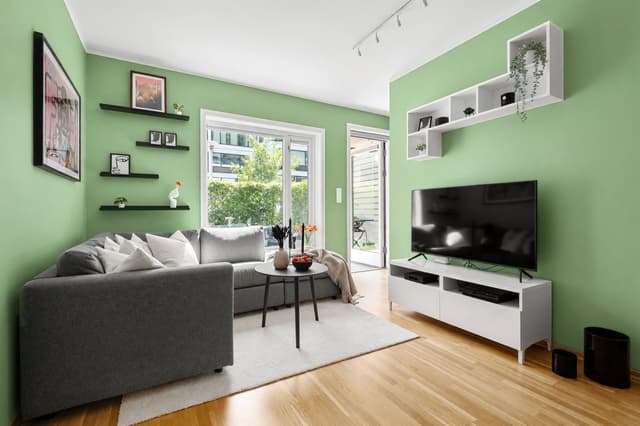
Bedroom paint colors
The best bedroom paint color is one that feels restful in your own light and works with your bedding and floor. Below are six bedroom paint colors shown on real bedrooms, before and after, with what each one does to mood and light, how to pair it, and what to check before you buy paint.
How do you choose a bedroom paint color?
- Start with the light. In the northern hemisphere, north-facing rooms look cooler and grayer, so warm colors help; south-facing rooms can take cool greens and blues. Look at the wall in the morning and in the evening.
- Choose the mood first. Soft blues and greens calm a room, warm neutrals and clay make it cozy, and deep navy or olive make it feel wrapped up.
- Go deeper behind the bed. The wall behind the headboard is the one you see most from the door. It can carry the strongest color while the other walls stay lighter.
- Keep the ceiling and trim light. White or warm white on the ceiling, doors and trim keeps a bold wall from closing the room in.
- Check the undertone. Hold the color next to your bedding, curtains and floor. A green with a yellow base looks very different from one with a gray base.
- Use a matte finish. It hides small wall flaws and looks calm in lamp light.
6 bedroom paint colors, before and after
Each example starts from a real photo. The walls are repainted with a color from the HomeCompose Paint tool, and the photos are shown before and after an AI paint job. Paint is told to change only the plain wall surfaces, but AI can also change or add small details, such as a molding at the ceiling edge, so compare each pair closely, treat every result as an idea and test a sample on your own wall.
1. Sage: a soft green for a calm bedroom
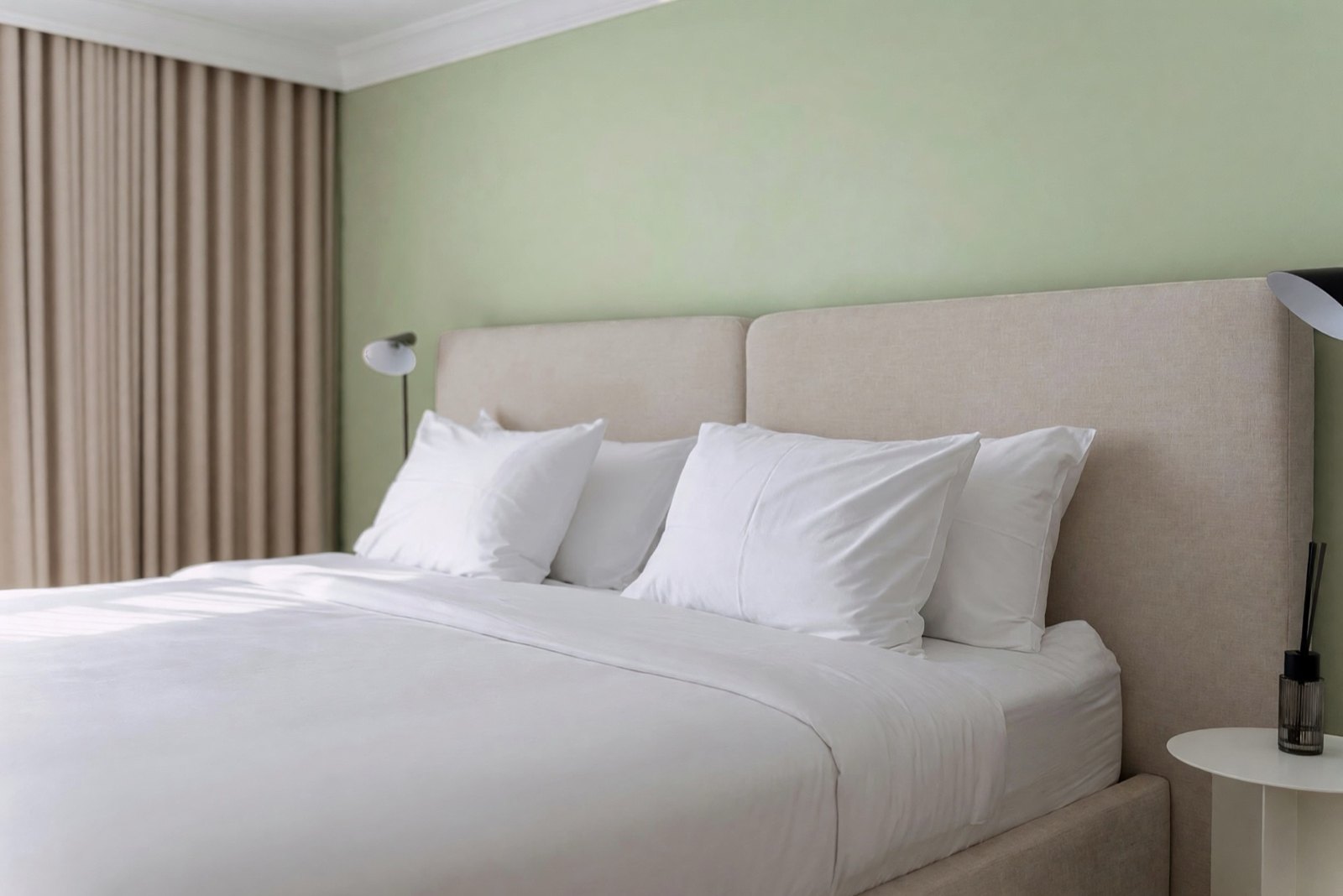
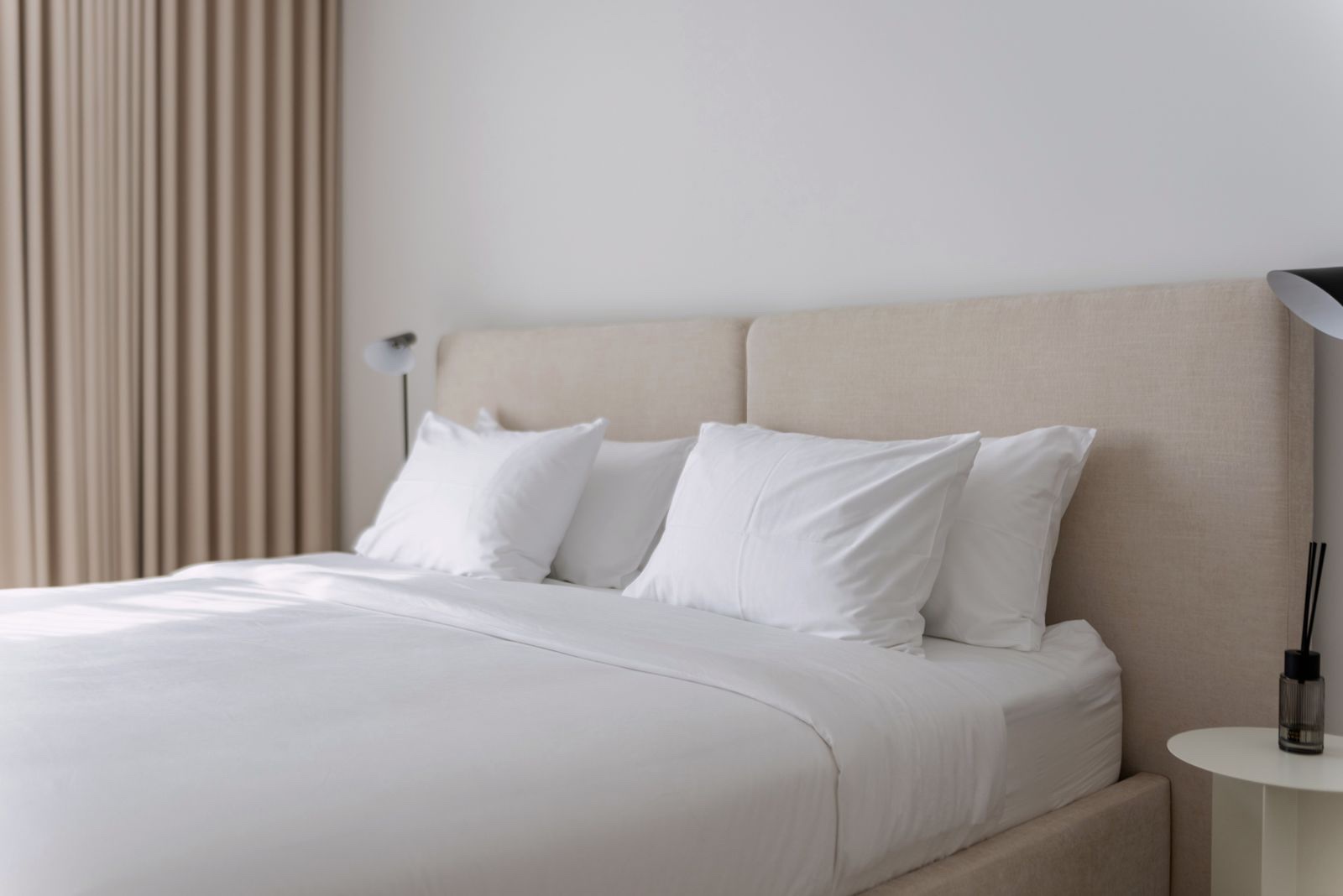
Green is an easy color to rest in. Against beige linen and white bedding, a soft sage makes the bed feel like part of a garden room. Keep the curtain and bedding in neutral tones so the green stays the only color.
2. Navy: a deep color for the headboard wall
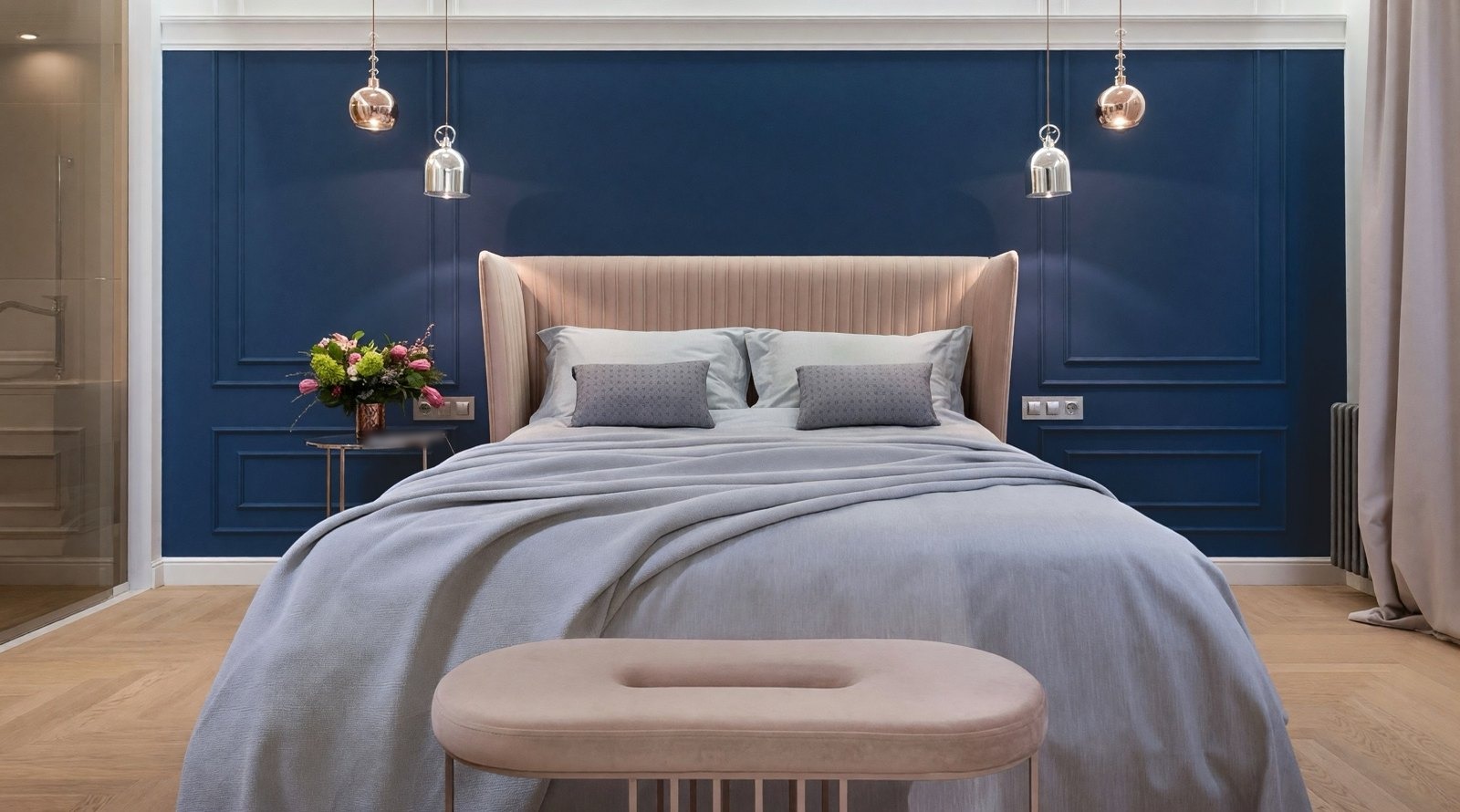
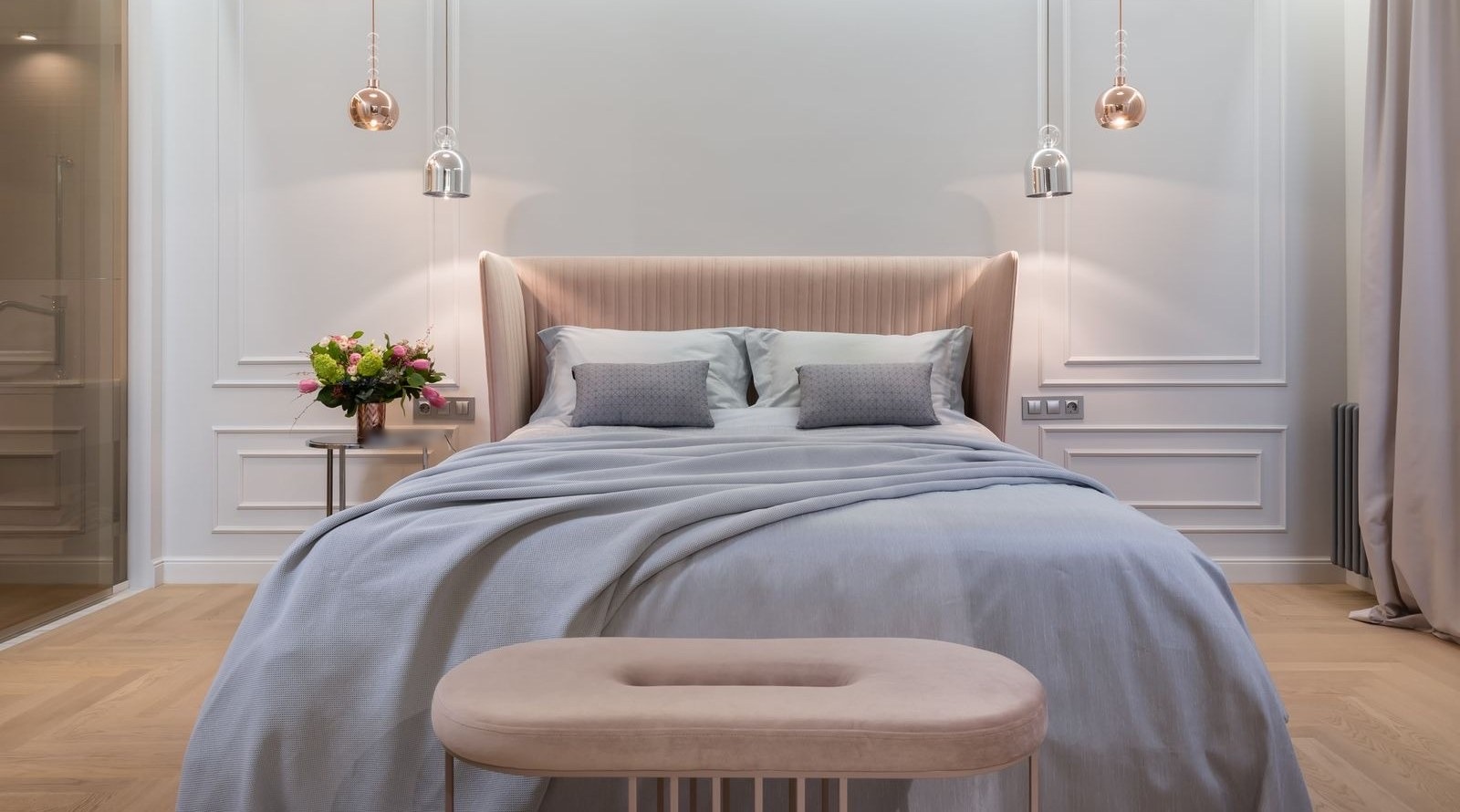
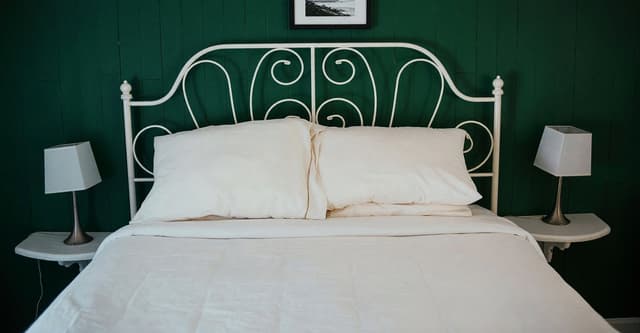
A deep navy turns a paneled wall into a backdrop. Painting the moldings in the same color gives a calm, tonal look; leave them white if you want the panels to stand out. Pale bedding and metal lamps look sharper against navy.
3. Clay: a warm terracotta for a bright room
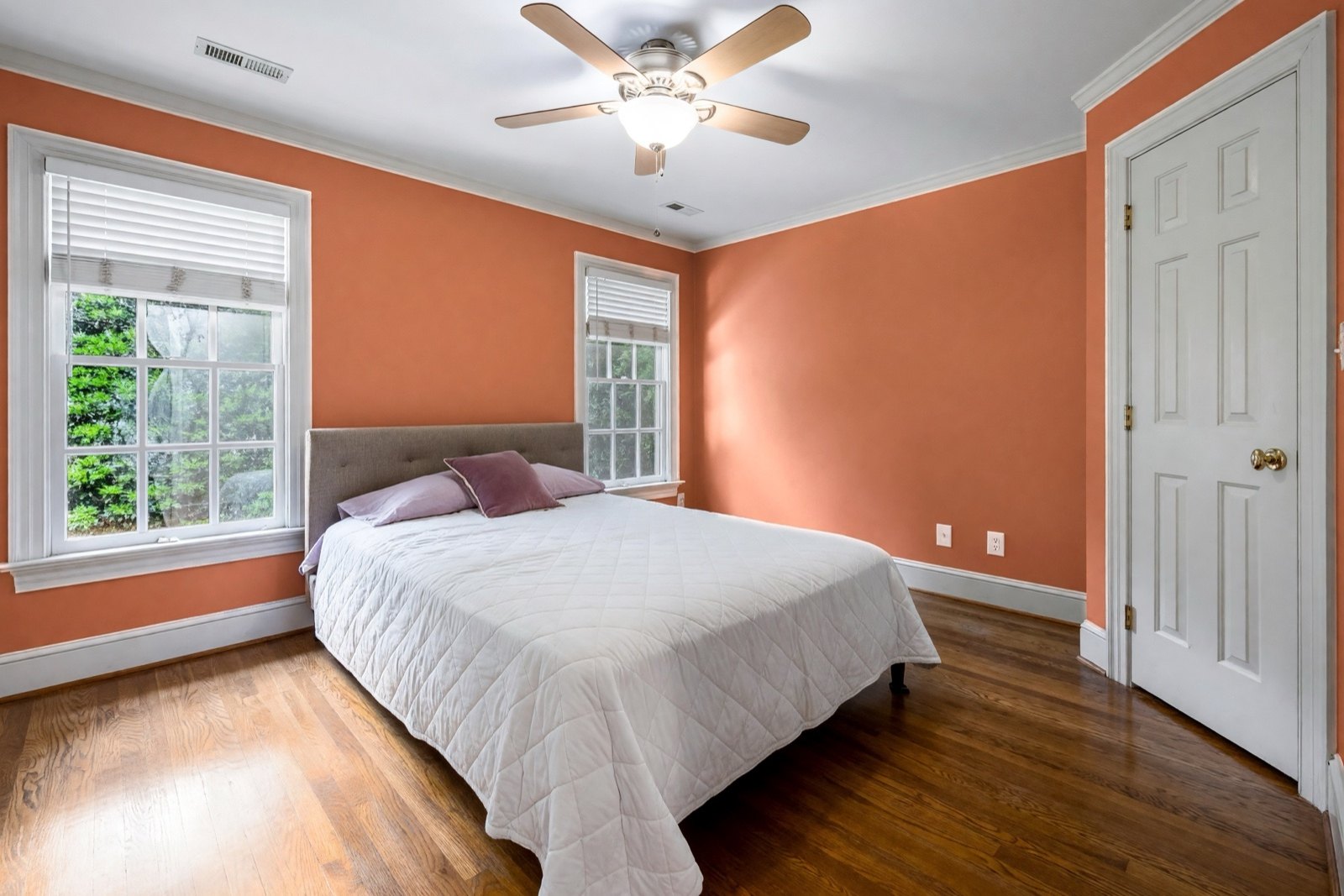
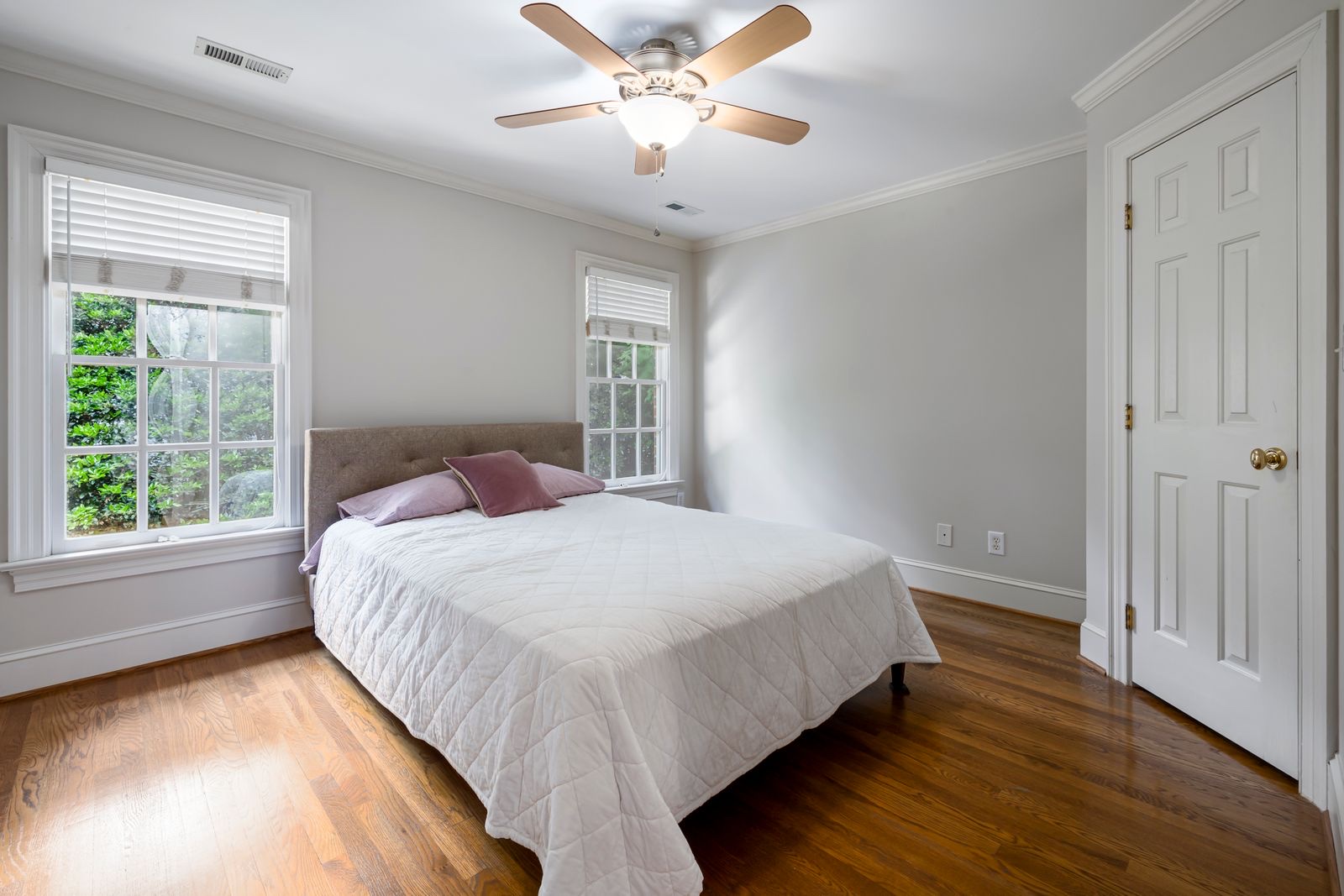
Clay works in rooms with plenty of daylight, like this one. White trim and a white bed keep the warm color looking fresh, and the wood floor picks up its red undertone.
4. Mist blue: one calm wall instead of two tones
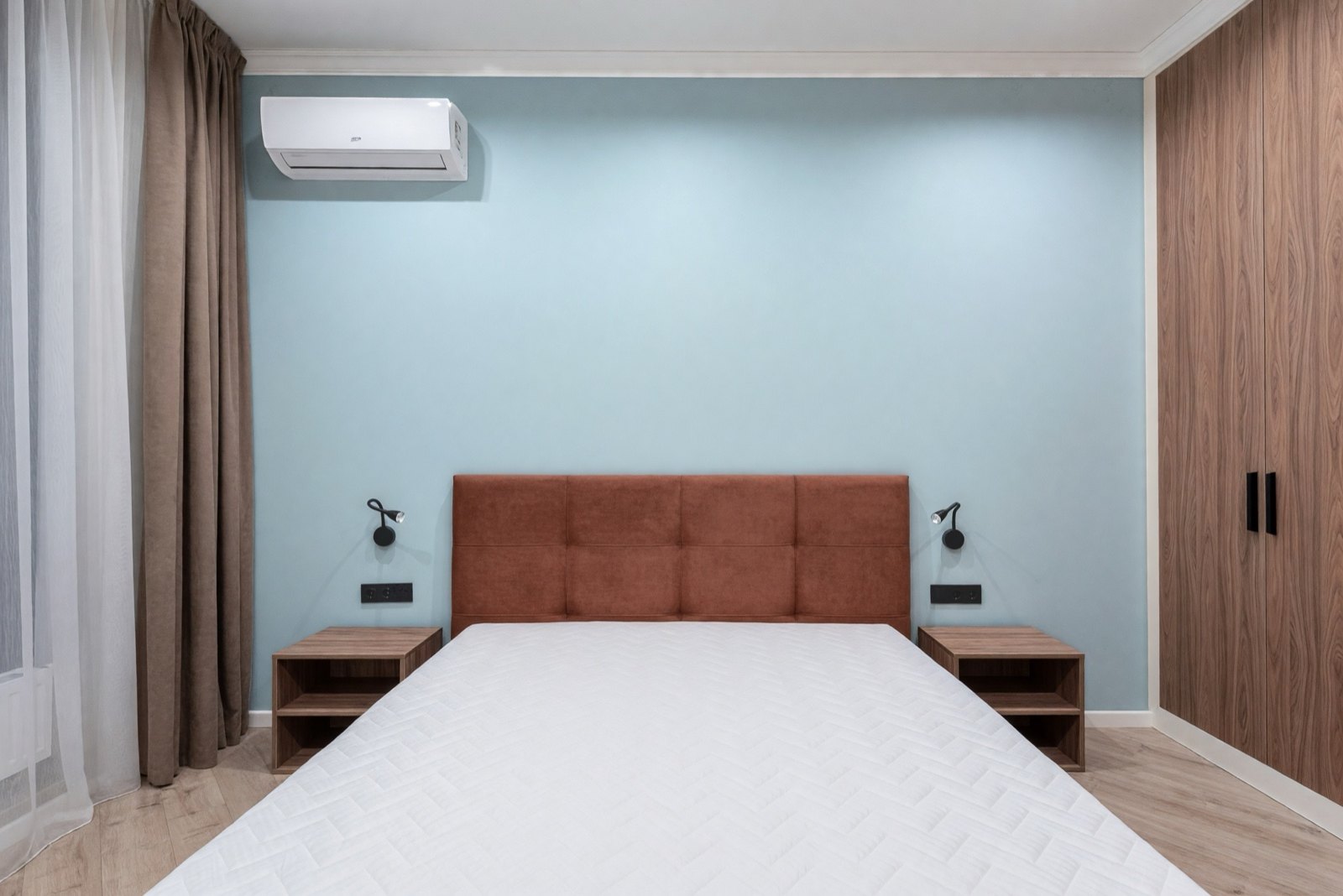
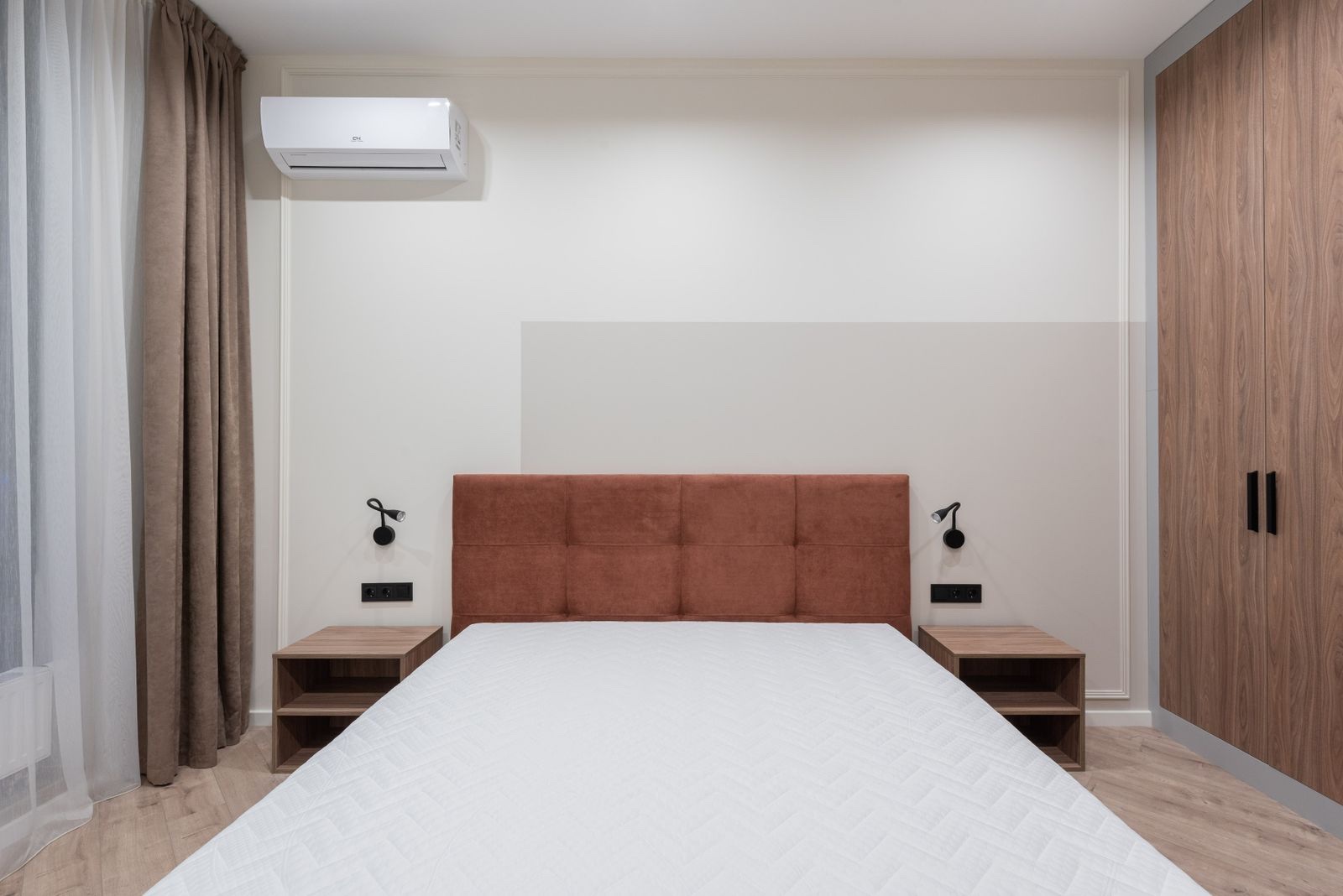
Light blue is a classic choice for sleep. Here it also removes the visible edge between two beige tones, and its coolness balances the rust headboard and walnut wood.
5. Olive: a muted green for a bold wall
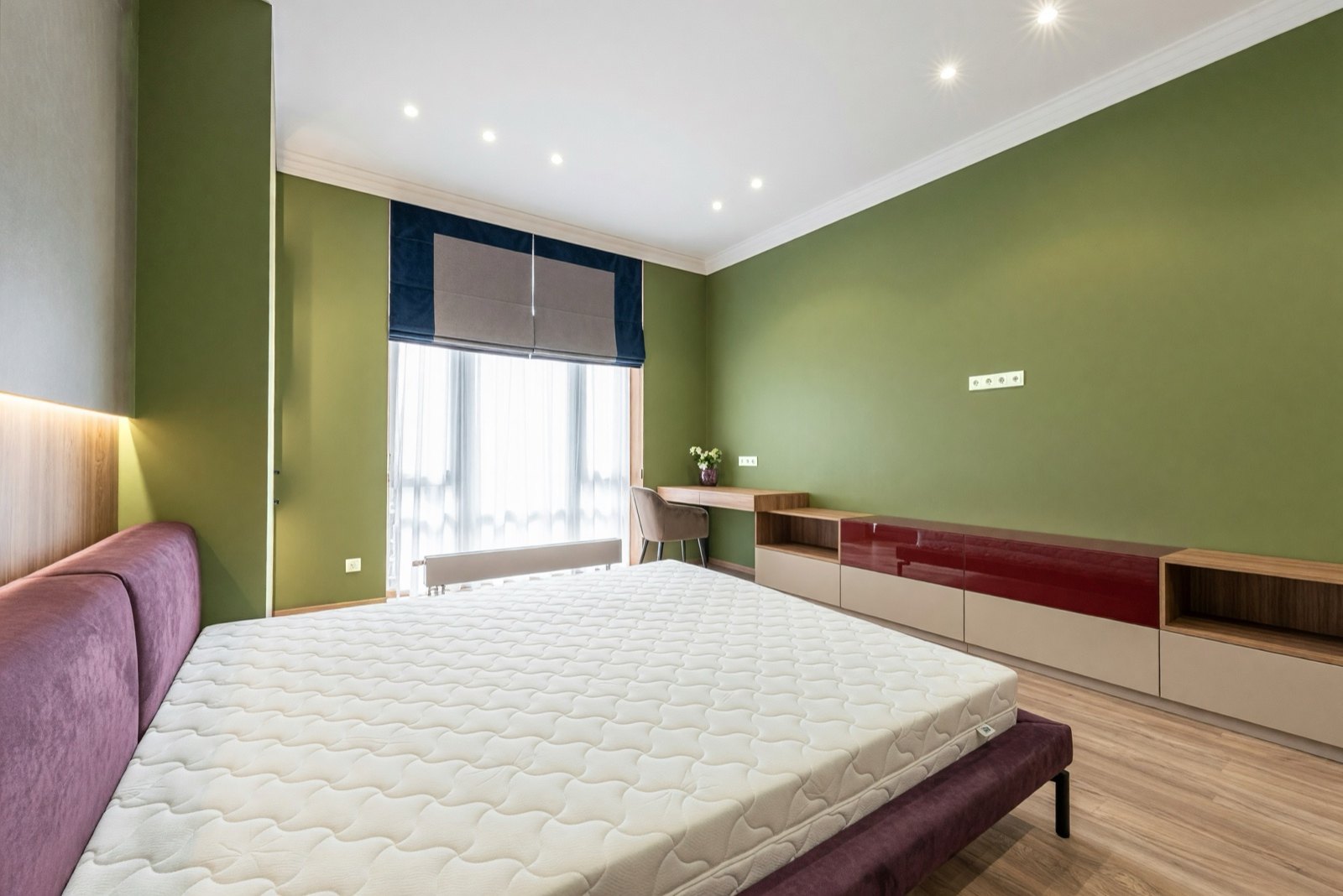
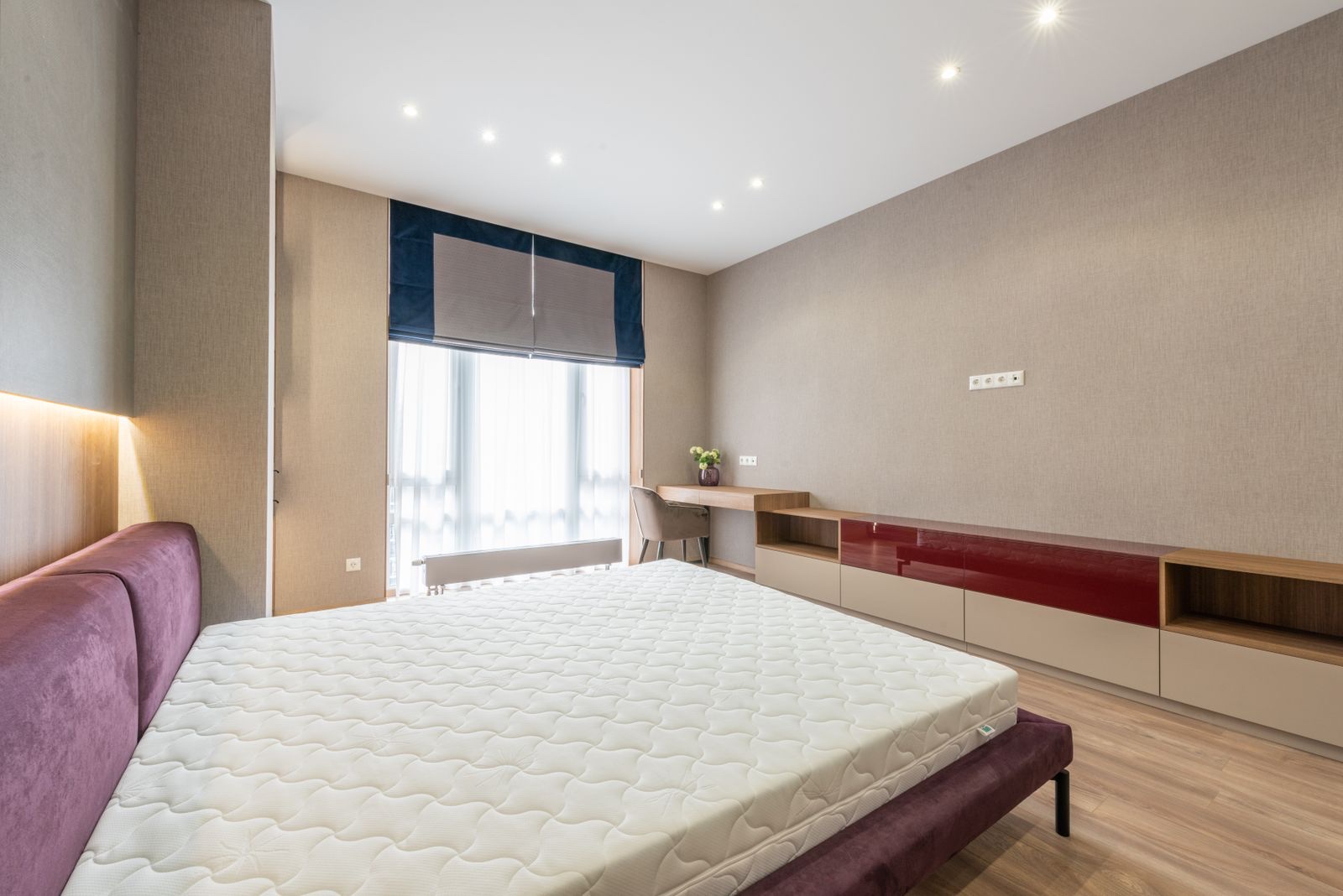
Olive is a rich neutral. It sits well with wood and works with the red and purple already in this room. Because it is deep, it is best in a bedroom with a large window.
6. Antique rose: a moody pink for a classic room
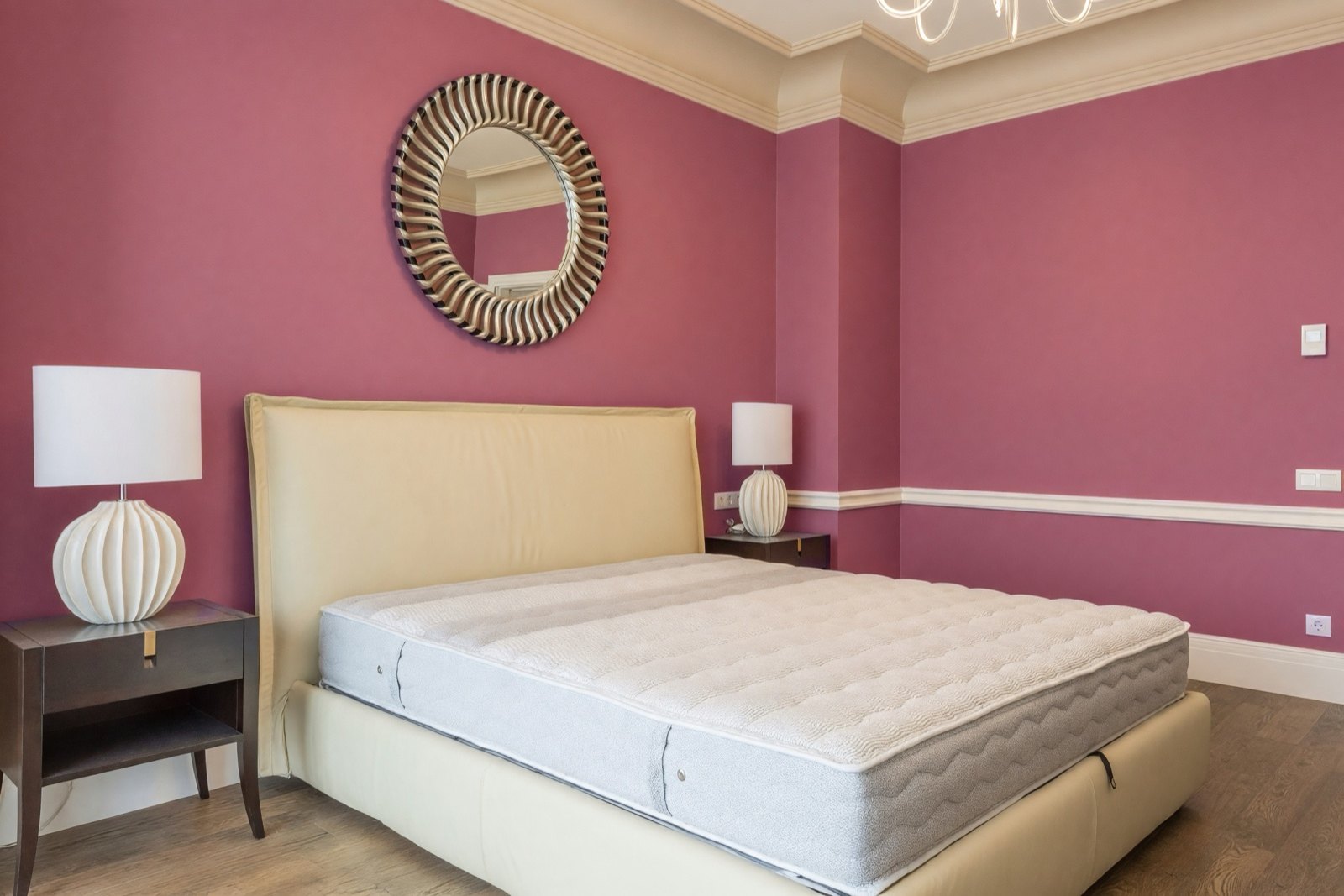
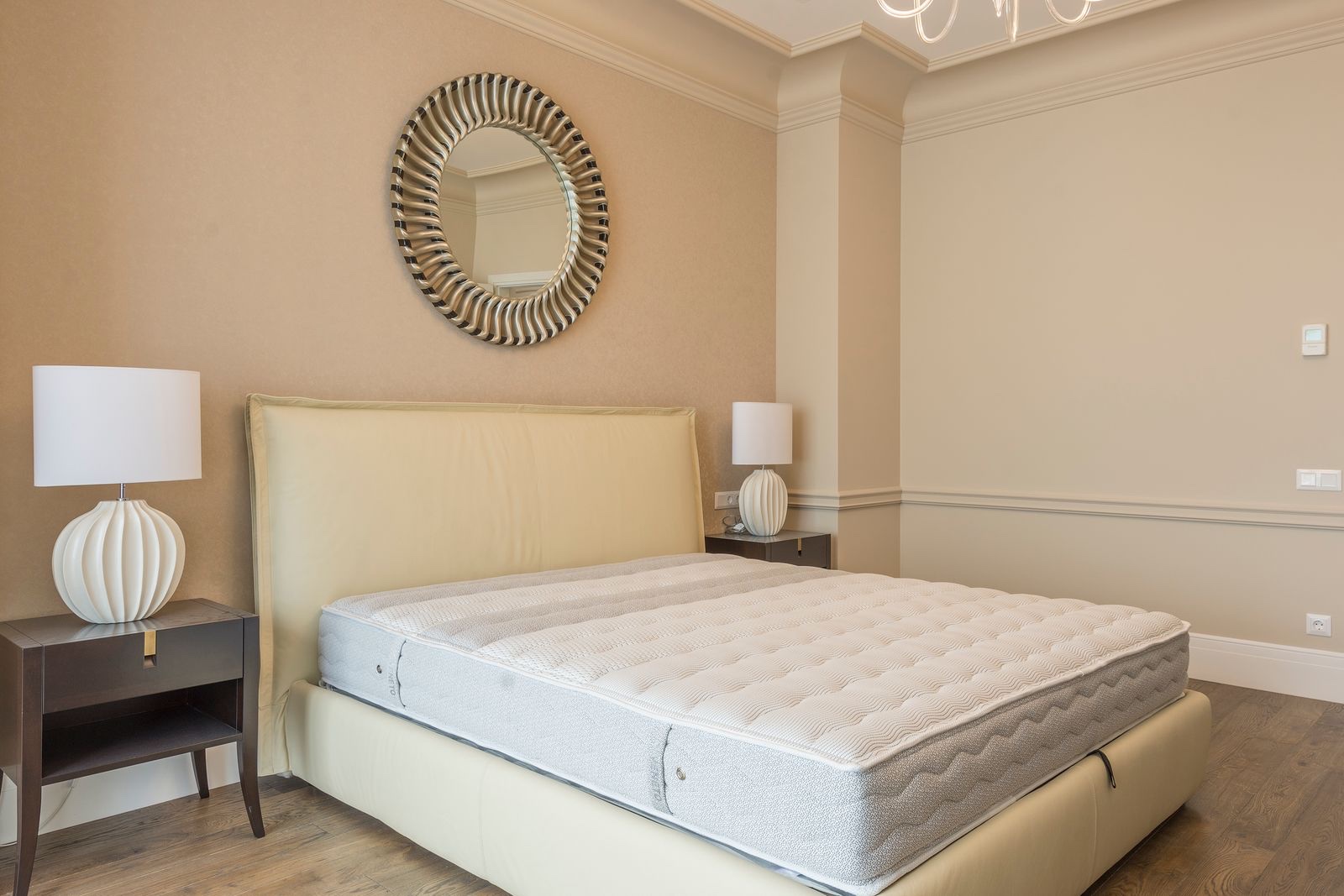
Antique rose feels warm and a little old-fashioned in a good way. Cream moldings and a cream headboard keep it soft; with white trim it looks fresher.
Bedroom paint colors at a glance
| Color | Mood | Pairs with | Watch out for |
|---|---|---|---|
| Sage | Calm, natural | Linen, oak, white bedding | Can look gray in weak light |
| Navy | Deep, quiet | Brass, pale bedding, white trim | Needs good lamps in the evening |
| Clay | Warm, cozy | White trim, wood floor | Strong in a small room |
| Mist blue | Light, restful | Walnut, rust, white | Can feel cool on the north side |
| Olive | Rich, grounded | Wood, brass, cream | Dark in a room with little daylight |
| Antique rose | Soft, classic | Cream, wood, brass | Choose a gray-based pink, not a sweet one |
Common bedroom paint mistakes
- Choosing from a small chip. Paint a large sample and look at it for a few days.
- Ignoring the floor and bedding. The color has to work with the wood and fabrics you already have.
- Painting the ceiling the same dark color without a plan. Dark ceilings lower a room; keep it light unless you want a cocoon.
- A glossy finish. It shows every wall flaw and reflects glare at night.
- Too many bold colors. One strong wall or one strong color is enough.
Most popular bedroom paint colors
There is no official ranking, but a few families show up in bedrooms again and again: soft whites, warm neutrals such as sand and light beige, muted greens and dusty blues. They are popular because they are easy to live with and sit well with wood, linen and white bedding. If you want something quieter than the six colors above, start with one of these, then compare two or three shades on your own wall.
Calming bedroom colors for adults and the master bedroom
The calmest bedroom colors are usually soft and low in contrast: a blue-gray, a sage green or a warm neutral, with white or warm white on the trim. In a master bedroom, keep the walls, bedding and curtains close in tone so nothing competes for your eye. Calm is personal, though. Some people find a deep, dim room more restful than a pale one, so judge a sample in your own evening light.
Bedroom colors for small rooms, dark rooms and modern style
Small bedrooms and light colors
Light colors usually help a small bedroom feel more open, because they bounce more daylight around. Soft white, pale sage and mist blue are safe starting points. A deep color on all four walls can also work if you want a cozy, wrapped-in feel. It will not make the room look bigger, but it softens the corners. Keep the ceiling and trim light either way.
Dark bedroom colors
Dark bedroom colors make a room cozier, not bigger. If you like charcoal, deep navy or forest green, use a matte finish, add warm lamps at different heights and keep the trim and ceiling lighter so the edges stay clear. Try the dark shade on the headboard wall first; accent wall ideas shows how a single deep wall looks.
Modern bedroom colors
A modern bedroom usually keeps to one muted tone on the walls, such as gray-green, warm gray or pale blue-gray, with white trim and little pattern. Let texture in the bedding, wood and curtains add interest instead of a second wall color.
Try bedroom paint colors on your own photo
Upload a photo of your bedroom to Paint, choose Interior and pick a color from the list. Paint aims to repaint the plain wall surfaces and keep the ceiling, trim, doors, windows, furniture and floor as they are, though it can touch moldings or add small details, as the examples above show. It colors the walls it can see; to try a single feature wall, see accent wall ideas.
The result is a design idea, not a paint specification. Colors look different on screen and on the wall, so test a real sample before you buy. For the living room, see living room paint colors. For a cozy bedroom look beyond paint, see minimalist bedroom ideas. To add depth to a painted wall, see wall paneling ideas.
Frequently asked questions
What is the best color for a bedroom?
A color you find restful: soft blue, sage green or a warm neutral for most people, and deep navy or olive if you like a cozy, dark room. Check it in the morning and the evening light.
Do dark colors make a bedroom look smaller?
They can, especially with little daylight. Use a dark color on the wall behind the bed only, and keep the ceiling and trim light.
Which wall should I paint a stronger color?
The wall behind the headboard. It frames the bed and is the wall you see first when you enter.
What bedroom paint color is in for 2026?
Trends change, but the direction often mentioned lately is calm and earthy: warm neutrals, muted greens and soft clay tones rather than stark white or bright color. Treat that as a starting point, not a rule. A color you enjoy in your own light will outlast a trend.
Is it free to try?
Yes. You can start on the free plan, and it includes a limited number of designs.