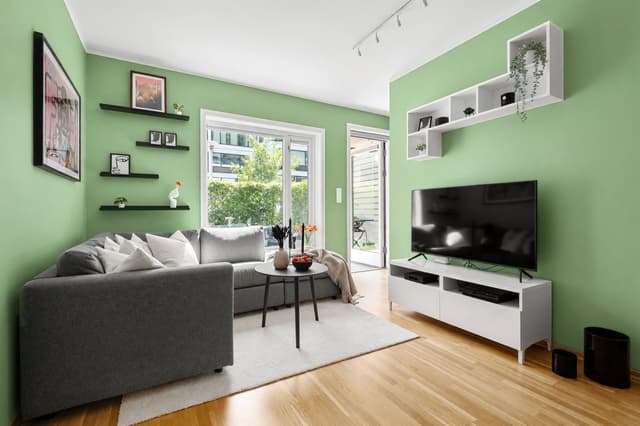
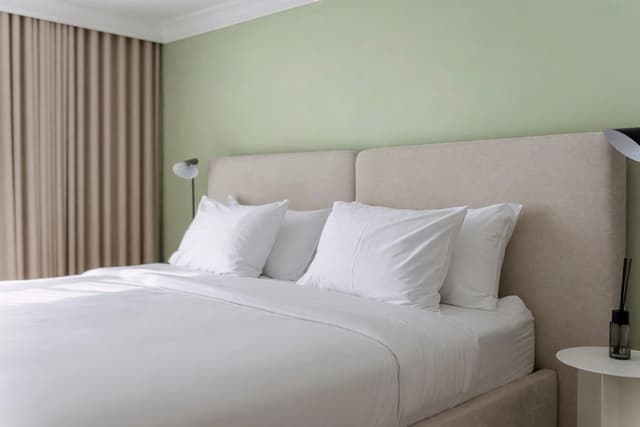
Accent wall ideas
An accent wall is one wall painted a deeper color than the rest of the room, and it works best on the wall people look at first. Below are six accent wall ideas shown on real rooms, before and after, with how to choose the wall, which colors pair with wood and furniture, and what to check before you paint.
How do you choose an accent wall?
- Pick the wall people look at. The wall behind the bed, the sofa or the desk, or the one you face when you walk in, is the natural choice. A wall with no door or window on it looks calmest; a wall with one large window can work too if the window is not the main feature.
- Start from what stays. The floor, sofa and wood tones will not change, so choose a color that works with them before you look at any chip.
- Go deeper than the other walls. An accent wall works when it is clearly stronger than the rest, such as forest green or navy against white, and the other walls stay light.
- Match the strength to the light. A deep color suits a room with plenty of daylight; in a dim room, choose a mid tone or a warm color.
- Keep the ceiling and trim light. White trim frames the colored wall and keeps it looking finished.
- Stop at a corner. The color should end where two walls meet, not in the middle of a wall.
6 accent wall ideas, before and after
Each example starts from a real photo, shown before and after AI paints one wall in Magic Edit. Magic Edit is told to change only that wall, but AI can also change small details, so compare each pair closely, treat every result as an idea and test a sample on your own wall.
1. Forest green: a deep wall behind the bed
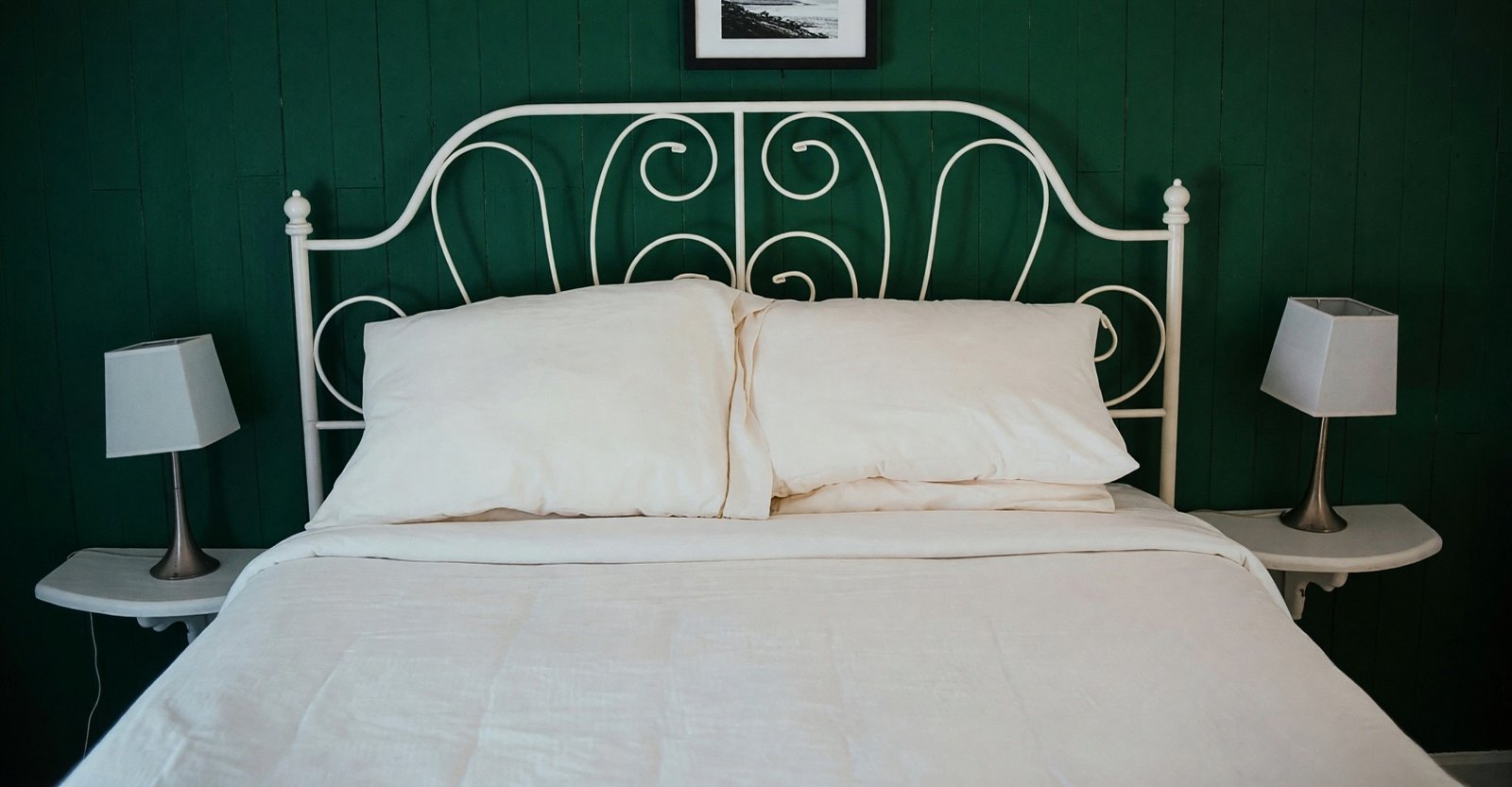
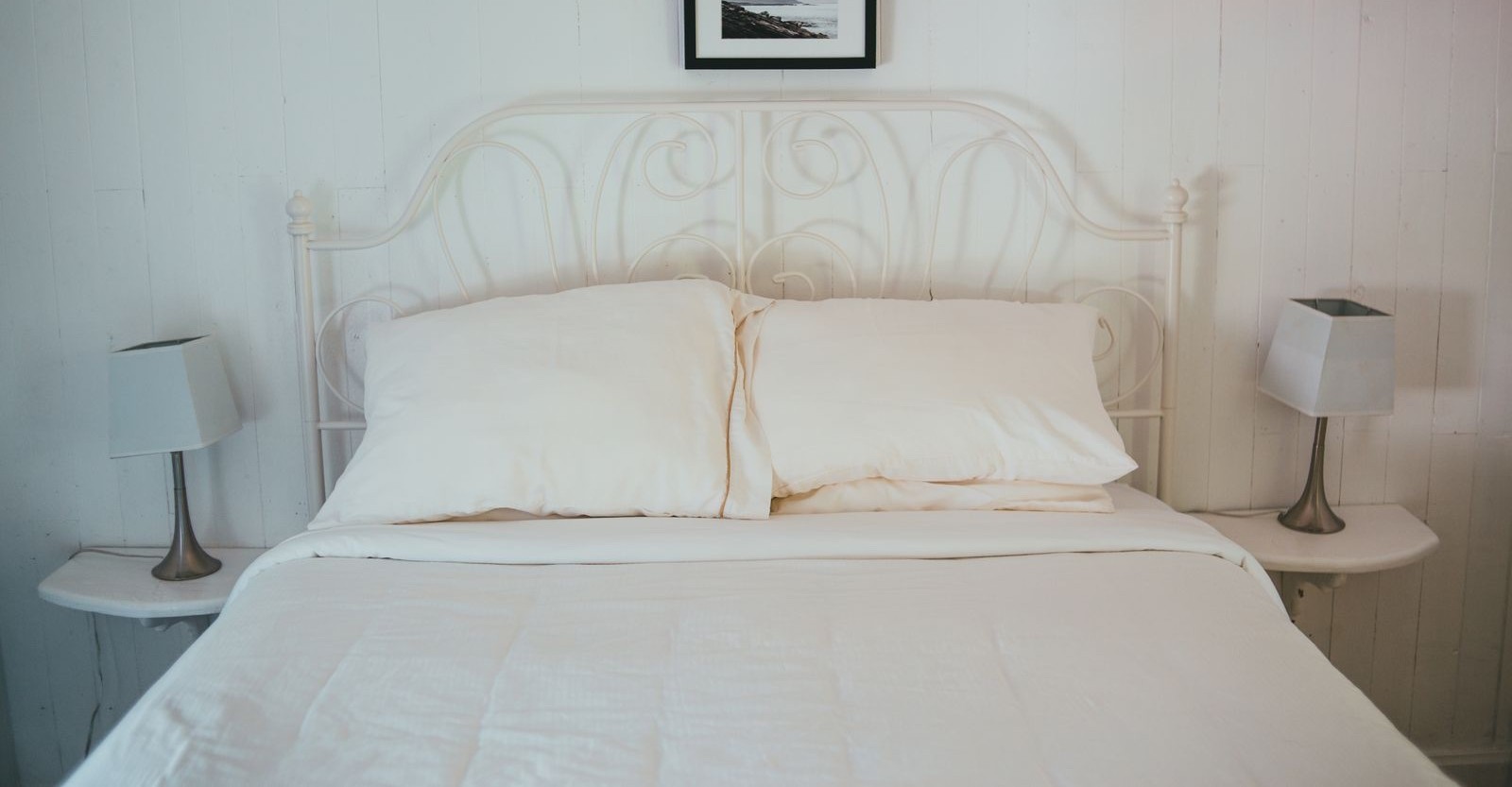
Dark green behind a white headboard and cream bedding makes the bed the center of the room. The plank lines stay visible, which keeps the color from looking flat. Use warm white lamps so the green looks rich, not cold.
2. Teal: one deep wall in a bright dining room
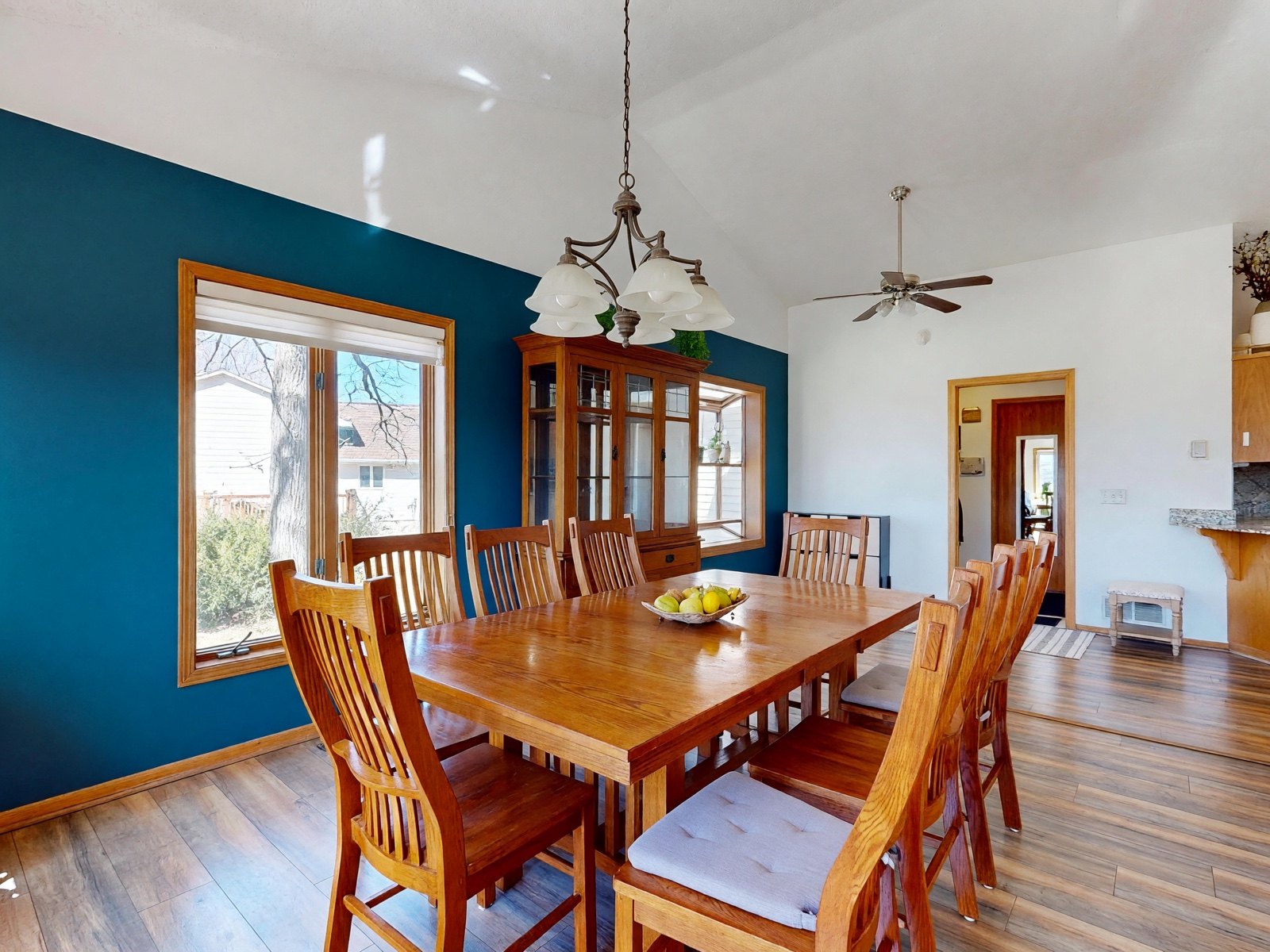
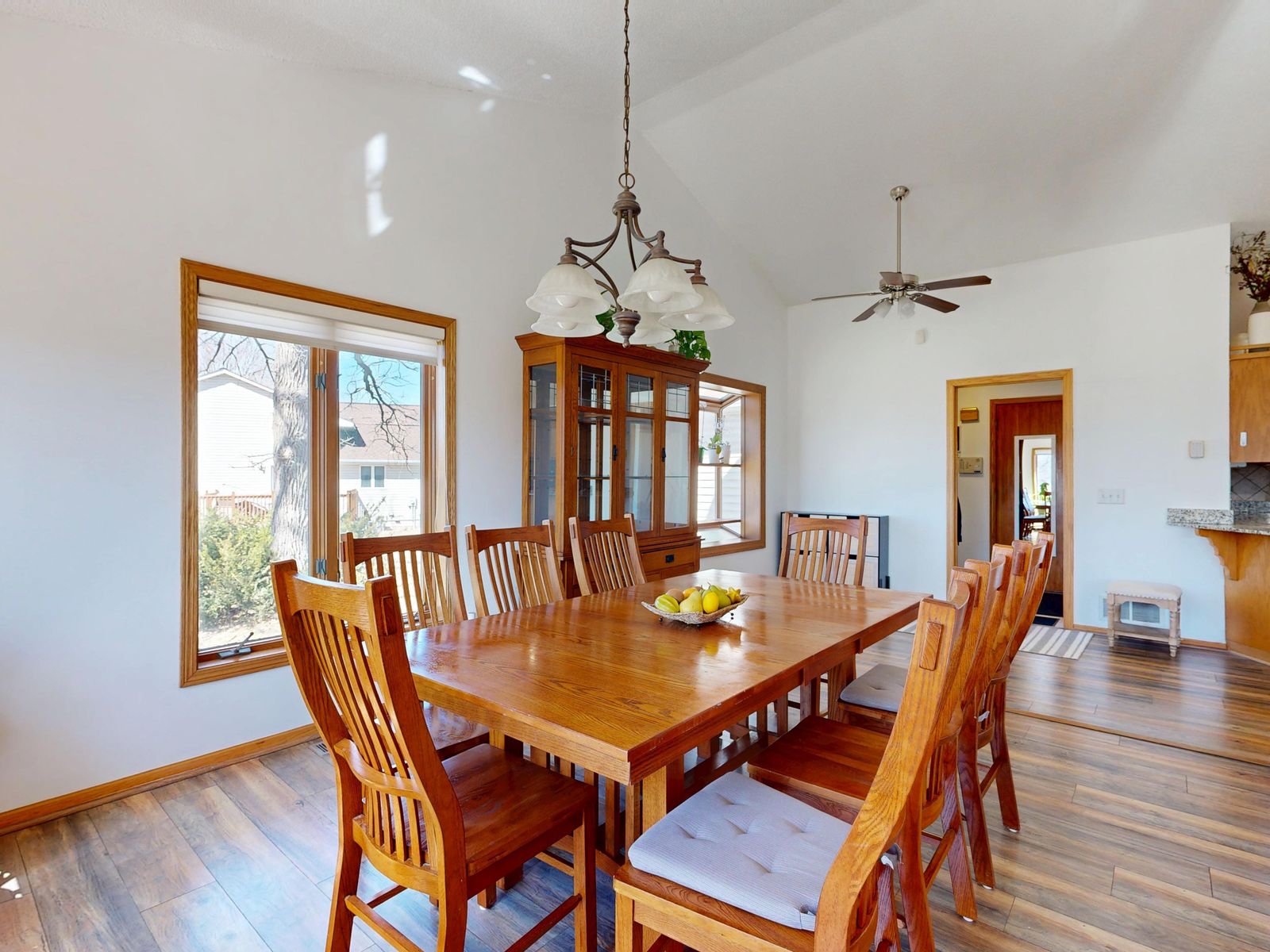
Teal and orange wood are close to opposites on the color wheel, so the table, chairs and window frame look warmer against it. The other walls stay white, which keeps the room bright. The sloped ceiling is the natural place to end the color.
3. Terracotta: a warm side wall in a long dining room
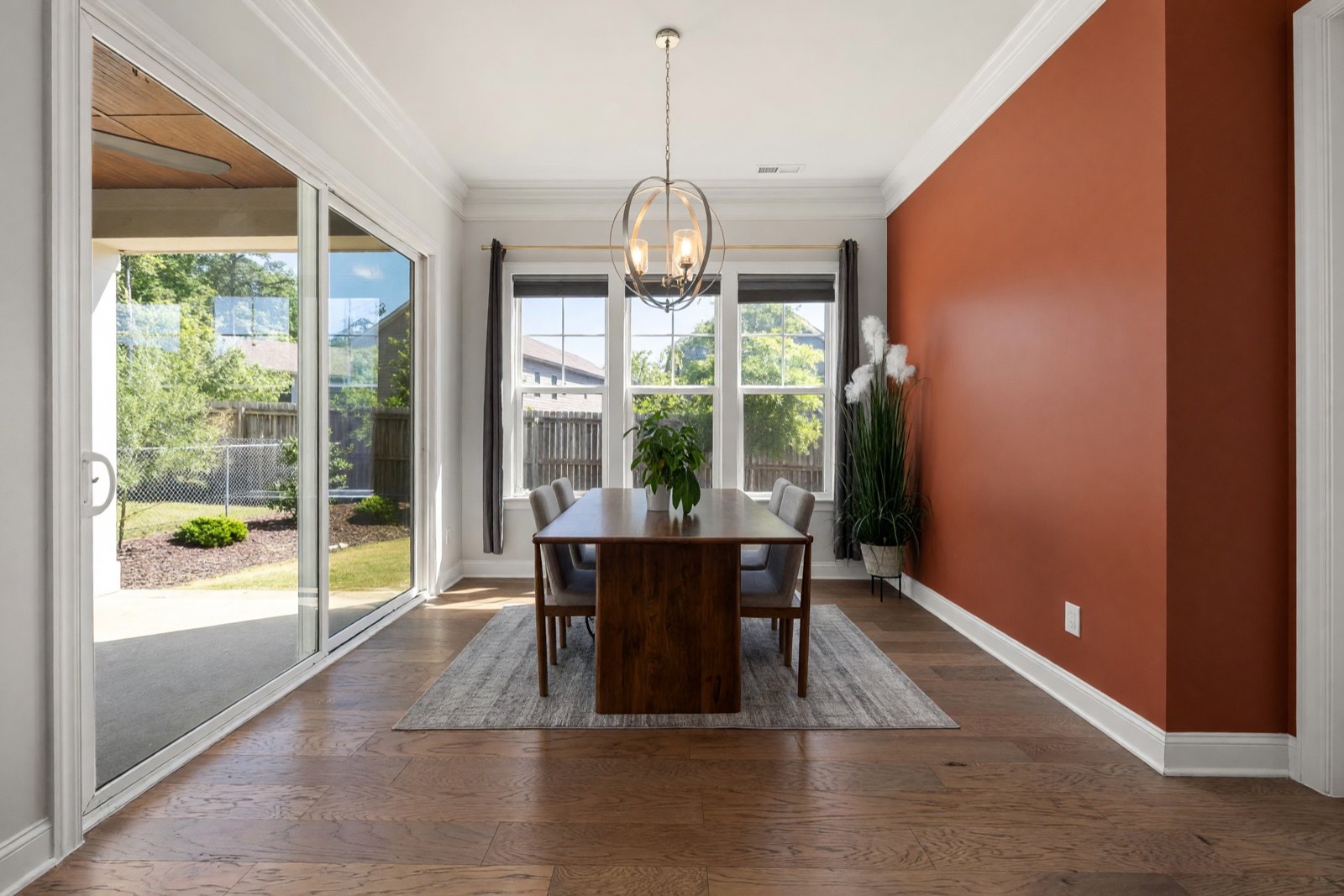
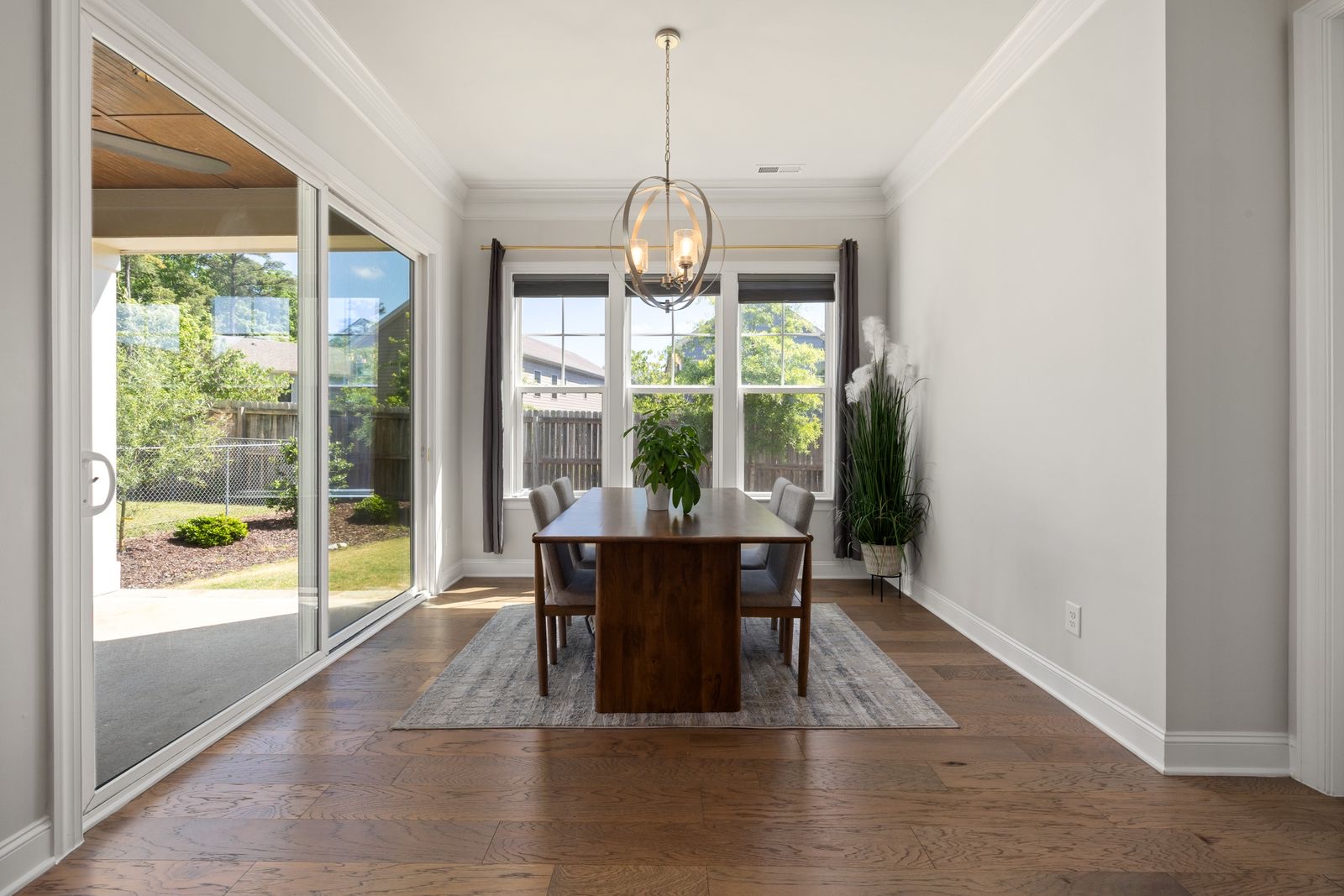
A warm color on one long wall makes a long room feel cozier. Dark wood, a gray rug and white trim all sit comfortably next to terracotta. Avoid it on a wall that gets no daylight.
4. Navy: a wall behind the desk
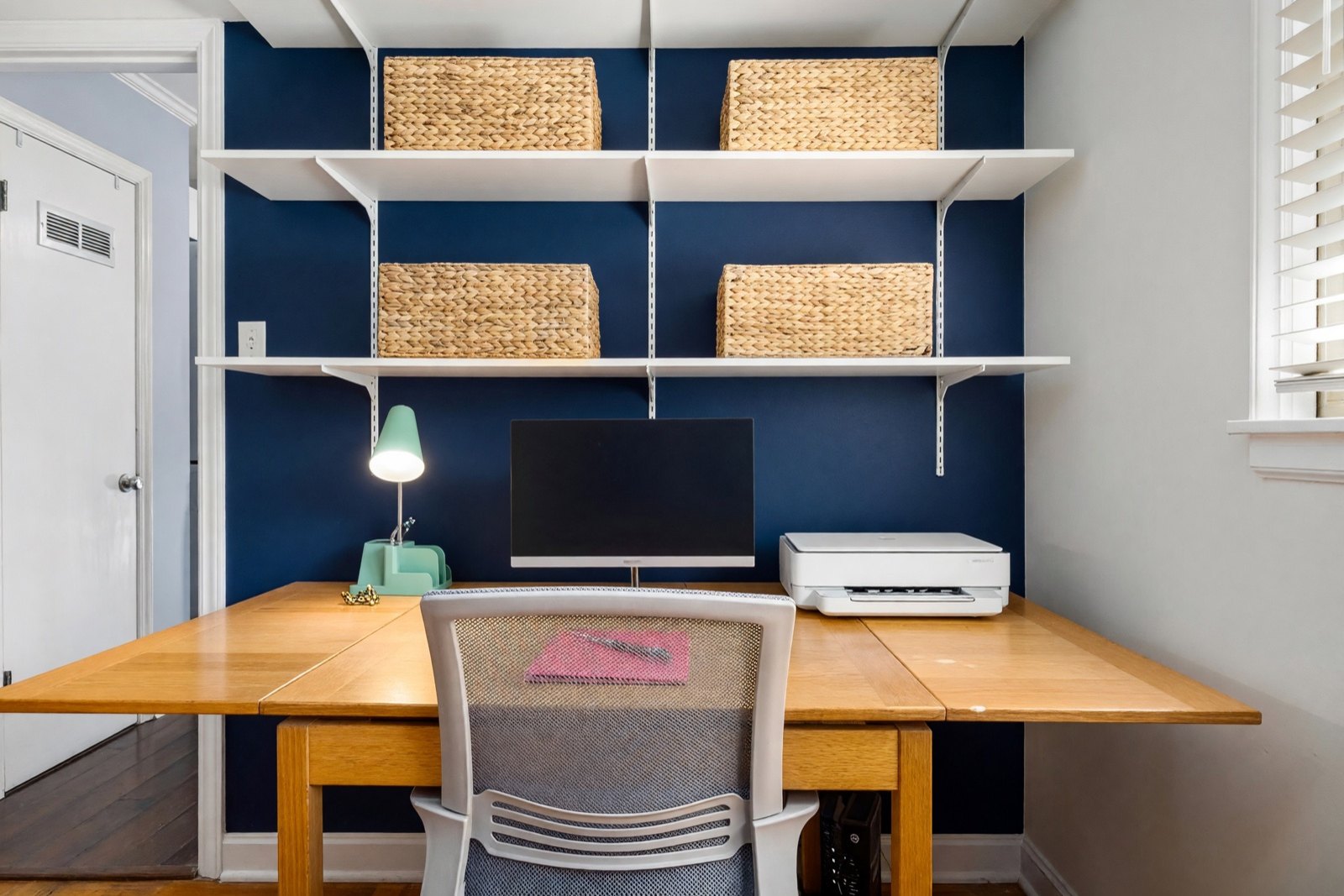
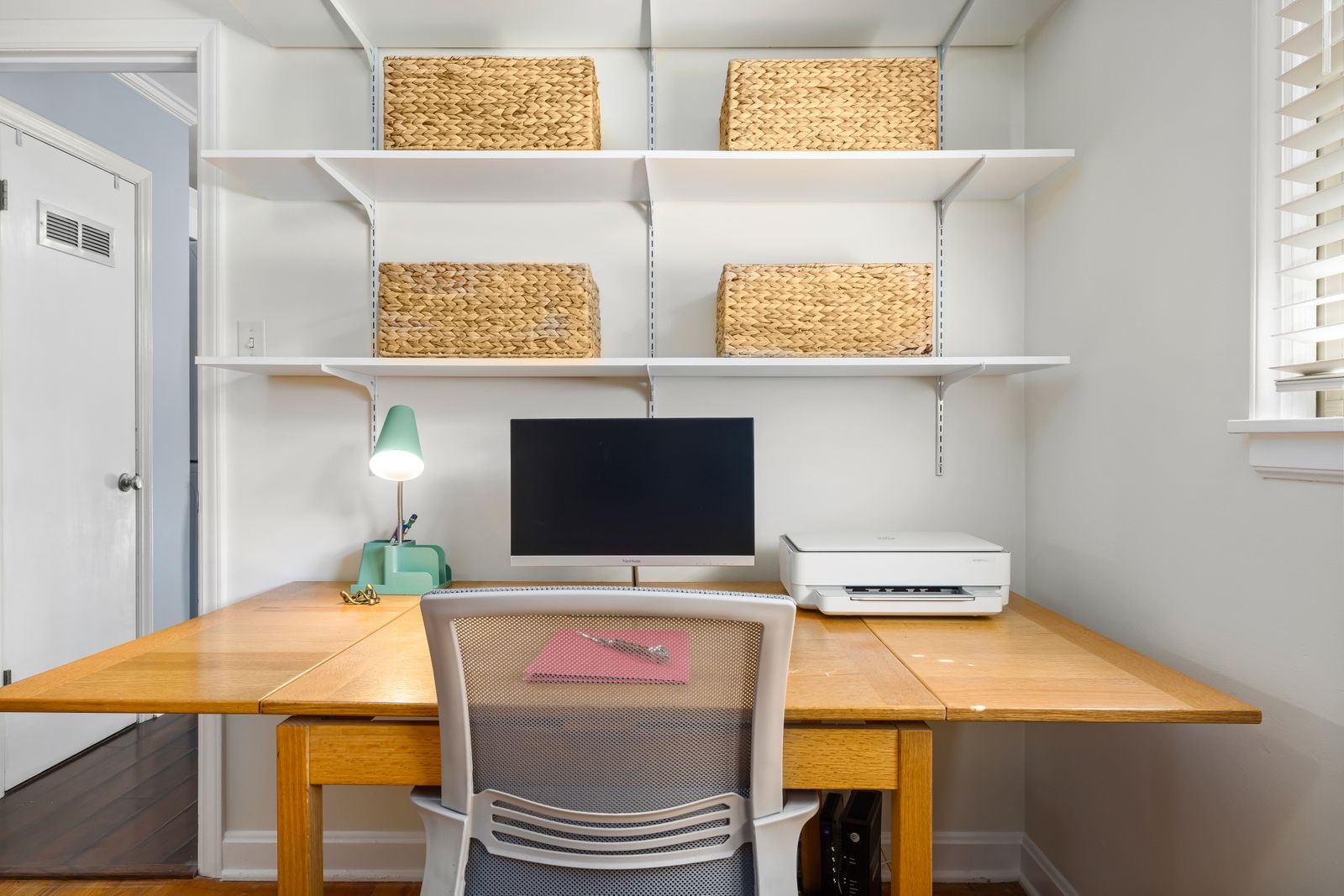
Navy behind white shelves makes the baskets and the lamp stand out and gives the screen a calm background. Here the color stops at the corner where the wall steps forward, which is the right place to end it.
5. Plum: a moody back wall in a white bedroom
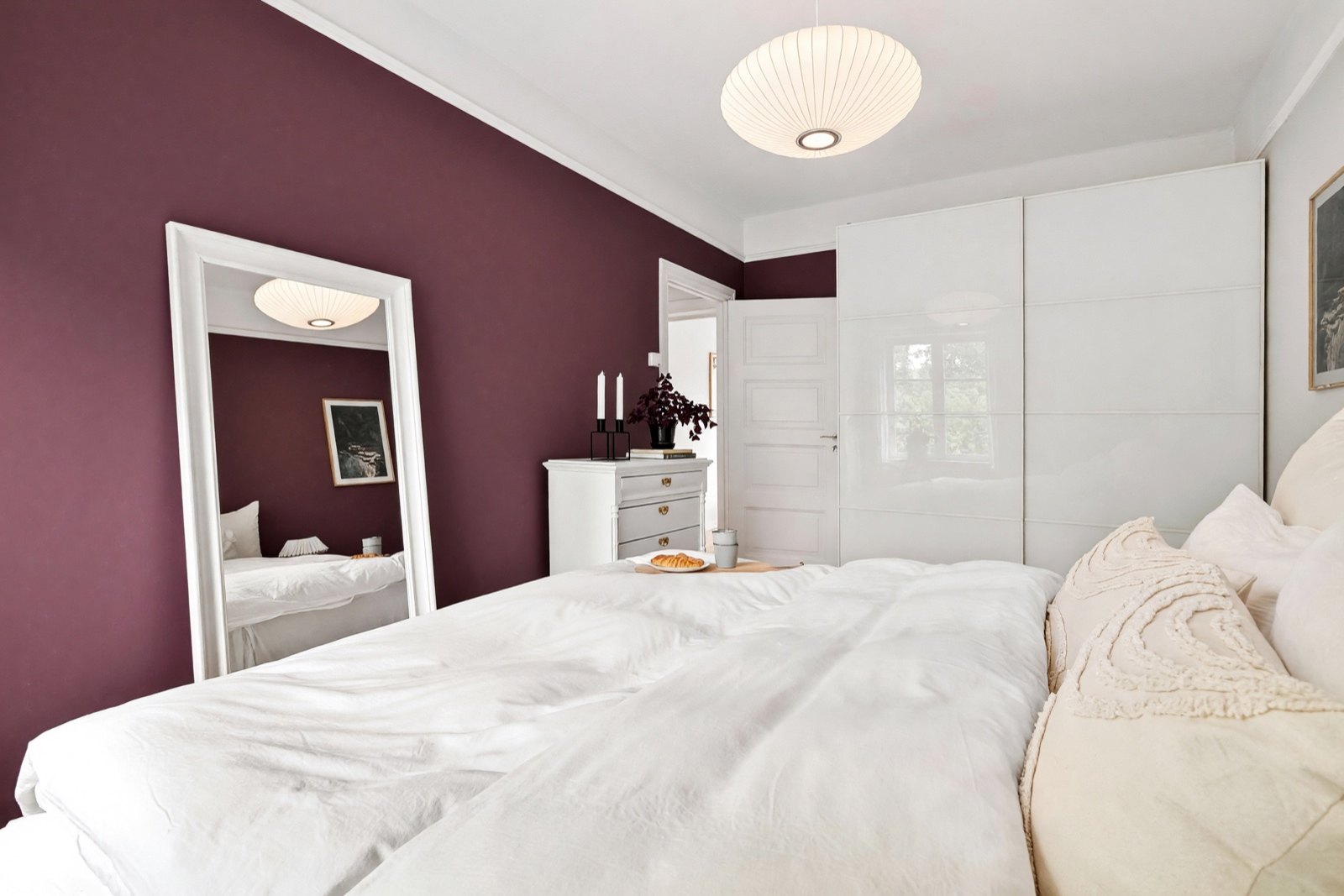
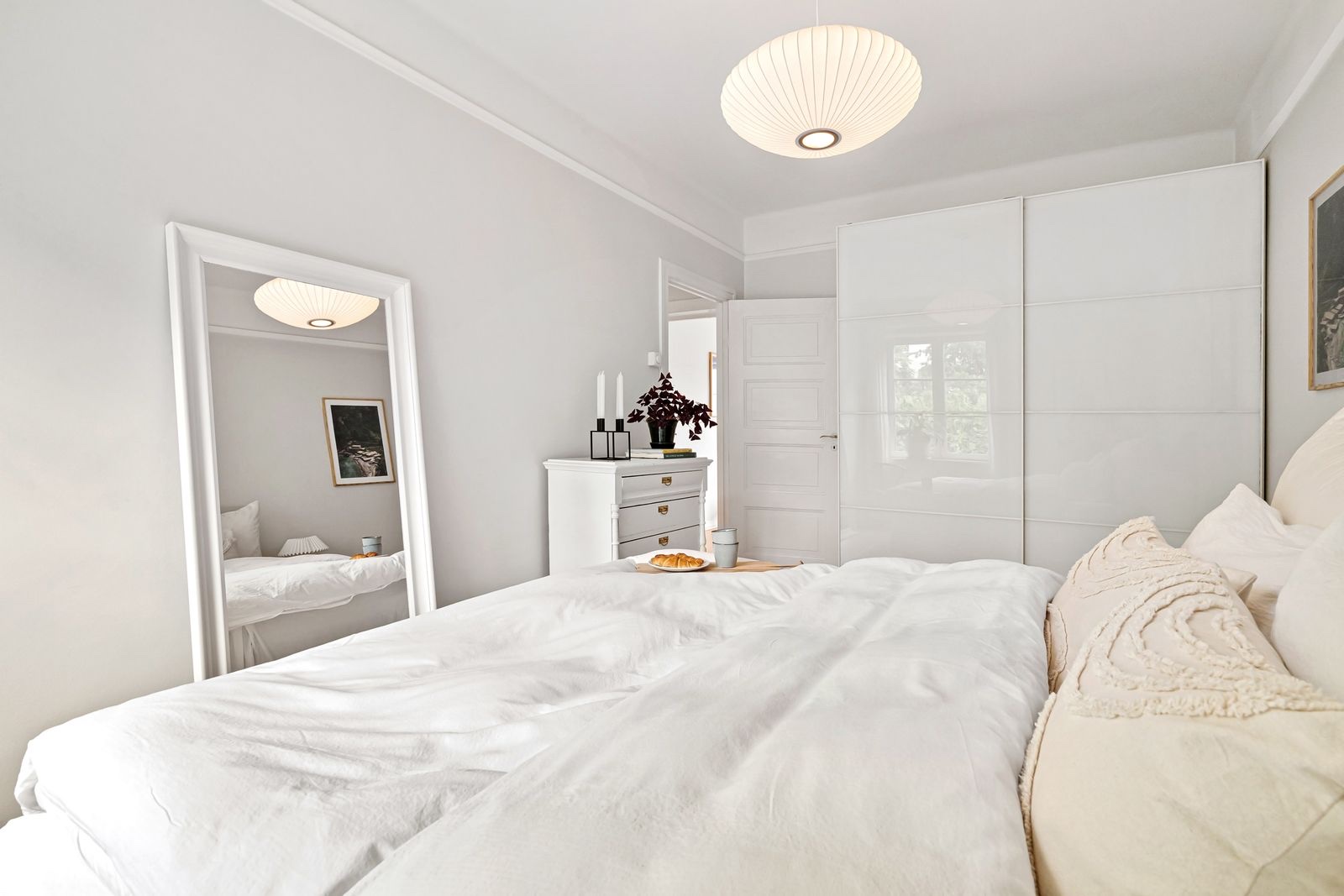
White furniture and white bedding make a deep plum look intentional rather than heavy. The glossy wardrobe stays neutral so the wall is the only strong color. In a small room, keep the color to one wall like this.
6. Ochre: a bright wall behind the sofa
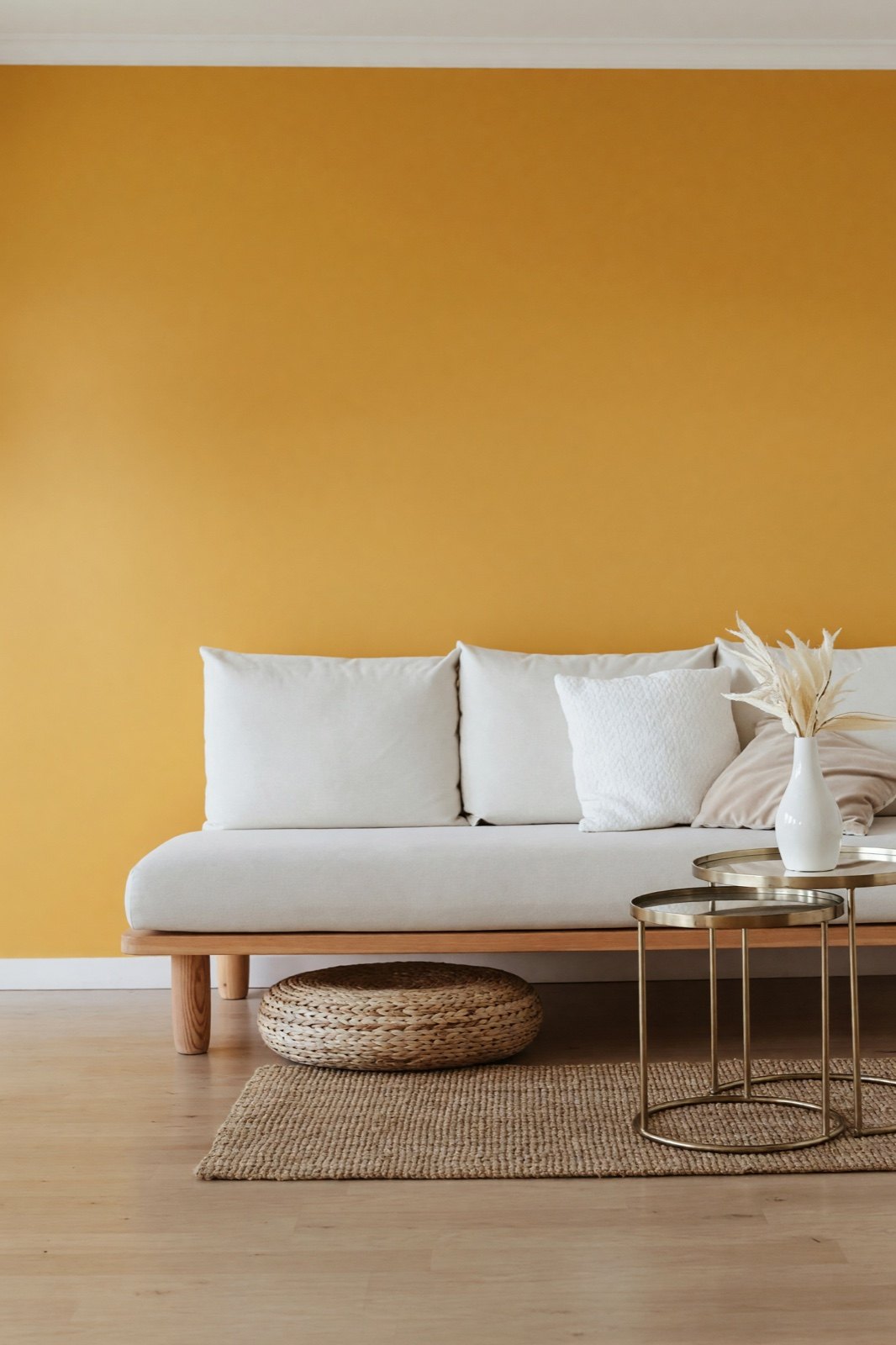
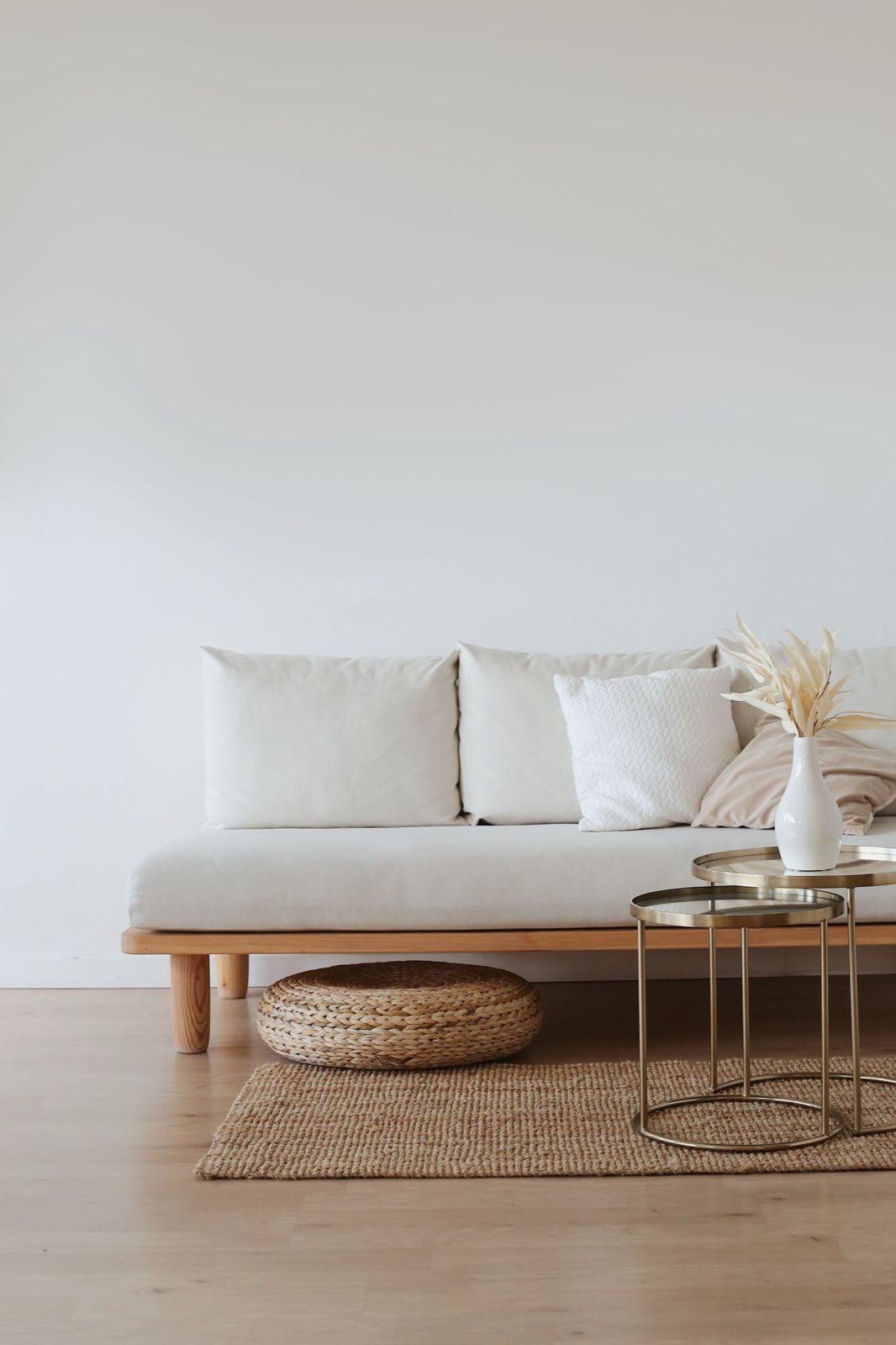
A cream sofa and pale wood give ochre a clear place to sit, and the color makes the room feel sunny even in weak light. Brass and rattan pick up the warmth. Use one yellow wall, not four.
Accent wall colors at a glance
| Color | Best wall | Works with | Watch out for |
|---|---|---|---|
| Forest green | Behind the bed | White or cream bedding, oak | Looks cold under cool lamps |
| Teal | A wall with one large window | Orange wood, white trim | Dark in a room with little daylight |
| Terracotta | A long side wall | Dark wood, gray, cream | Strong in a room with little daylight |
| Navy | Behind a desk or sofa | White shelves, brass, wood | Absorbs light; keep lamps warm |
| Dusty plum | The back wall of a bedroom | White furniture and bedding | Heavy in a small room |
| Ochre | Behind the sofa | Cream, rattan, pale wood | Can look green-yellow in cool light |
Common accent wall mistakes
- Choosing a wall full of doors and windows. The color gets cut into pieces; pick a plain wall.
- Painting two or three walls in different colors. One accent wall is enough.
- Picking a color that fights the floor. Hold the sample next to your floor and sofa in your own light.
- Ending the color mid-wall. Stop it at a corner or at a trim line.
- Skipping the sample. Paint a large patch and look at it for a few days.
Are accent walls still in style in 2026?
Yes, an accent wall is still a simple way to give a room one focal point, so it is not outdated. What has shifted is the finish: instead of a flat color alone, texture such as wood slats, fluted or paneled walls and wallpaper is often added. Whether it suits you depends on your taste and the room. If you like calm, one-color rooms, skip it; if a room feels flat, one deliberate wall can change it without a full redo. These are general design trends, not measured figures.
What colors are best for an accent wall?
There is no single best color, because it depends on the palette and the light in your room. Three safe starting points, then one check:
- A deeper shade of a color already in the room. Take the wall color, a rug or a cushion and go two or three steps darker.
- A muted green or blue. Forest green, teal and navy sit well with wood and white, as in the examples above.
- A warm clay. Terracotta suits warm wood floors and rooms with good daylight.
- Check it by light. In a room that gets little direct sun, a warm mid tone usually holds up better than a very dark cool one, so look at your sample in the morning and in the evening.
Accent wall ideas by room
Bedroom: the wall behind the headboard
The wall the bed sits against is the usual choice, as in the green example. Stop the color at the corners and keep the bedding lighter than the wall so the bed stands out.
Living room: the sofa wall
Choose the wall behind the sofa or the one your seating faces. Cushions, a lamp or art in a related shade tie the color back into the room.
TV wall: a color that frames the screen
A mid to deep color behind the TV makes the screen look less like a black rectangle on a pale wall. A matte finish reflects less light than a glossy one, which helps when lamps or windows are opposite.
Home office: the wall behind your video-call spot
Whatever shows behind you on a video call is your office accent wall in practice. A calm solid color, like the navy example above, is an easy background; strong patterns compete with your face.
Paint, panels or wood for an accent wall?
Paint is the easiest to try and to change later. Panels or wood add texture and shadow that paint cannot, and suit a wall you want to feel built rather than painted. Wallpaper adds pattern. The harder a material is to remove, the more it is worth looking at on a photo of your room first. For more, see wall paneling ideas and wallpaper ideas.
DIY accent wall: what to check first
- Test a sample. Tape or paint a large patch and look at it for a few days in different light.
- Protect the edges. Tape the ceiling line, baseboard and corners, and mask or remove switch plates (turn the power off at the breaker box before you do).
- Cover well. A deep color over a light wall may need a primer and more than one coat.
- Panels need a flat wall. Hold a straight edge against the wall; gaps and bumps show once slats or panels go on.
- Heavy materials need the right fixings. Solid wood or thick panels must be fixed in a way that suits your wall type; if you are unsure, ask a professional.
Try an accent wall on your own photo
Upload a photo of your room to Magic Edit (Pro plan) and describe the change in your own words, for example: paint only the wall behind the bed deep forest green, and keep everything else as it is. Name the wall, the color and what must stay. If you want the same color on every wall, Paint does that with a color list.
The result is a design idea, not a paint specification. Colors look different on screen and on the wall, so test a real sample before you buy. For whole-room colors, see living room paint colors and bedroom paint colors. For a narrow wall in an entrance or corridor, see hallway ideas. More rooms and styles are on the HomeCompose design ideas page.
Frequently asked questions
Which wall should be the accent wall?
The wall people look at first, usually behind the bed or sofa, or the wall opposite the door. Choose one with few doors and windows.
How many accent walls should a room have?
One. Two can work in an open plan where the walls are far apart, but more than that stops it from being an accent.
Should an accent wall be darker or lighter than the other walls?
Usually deeper or stronger, so it stands out against light walls. A pale room with one deep green, teal, navy or terracotta wall is the classic look.
Can I see an accent wall color on my own room before I paint?
You can try one on a photo of your room in HomeCompose Magic Edit (Pro plan), as an idea. Then test a real sample on the wall in your own light before you buy.
What is the rule for accent walls?
It is a common guideline, not a standard: use one wall, the one the eye meets first, such as behind the bed or sofa, and keep the other walls calmer. Avoid a wall broken up by many doors or windows.