Living room flooring ideas
The best living room flooring works with your light, your walls and the furniture you already have. Below are six living room flooring ideas shown on real rooms, before and after, with the wall and furniture tones each one pairs with, and what to check before you choose.
How do you choose living room flooring?
- Start with the light. A pale floor such as light oak or terrazzo bounces light into a room with small or north-facing windows; a dark floor suits a room with big windows and plenty of daylight.
- Match the undertone. Hold the sample next to your sofa, walls and wood furniture. Warm oak looks harmonious with warm woods and cream walls; a cool gray floor looks calm with white walls and gray upholstery.
- Think about pattern and size. A herringbone or parquet floor adds interest to a plain room; in a busy room, wide plain planks are calmer.
- Keep the walls in mind. Mid-tone walls such as taupe or gray-blue take most wood tones; very orange walls fight an orange floor.
- Plan the transition. Look at the rooms the floor continues into. A change at a doorway should be a clear line, not a random spot in an open room.
- Add a rug. A rug softens a hard floor, frames the seating area and covers a floor you are still deciding on.
6 living room flooring ideas, before and after
Each example starts from a real photo, shown before and after AI lays a new floor in Floor Restyle. Floor Restyle is told to change only the floor, but AI can also change small details, so compare each pair closely, treat every result as an idea and ask for a real sample before you buy.
1. Light oak: warm wood for a gray room
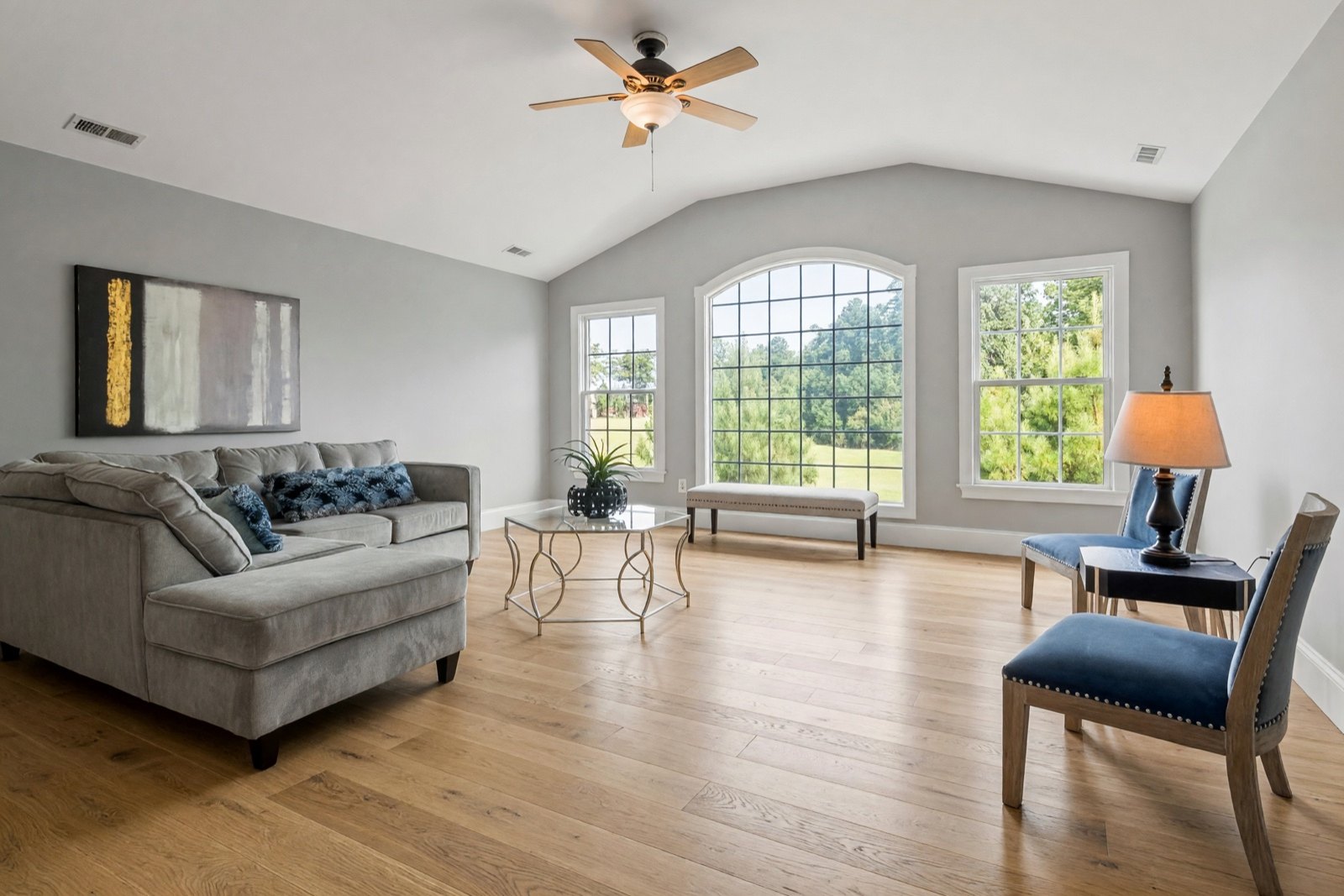
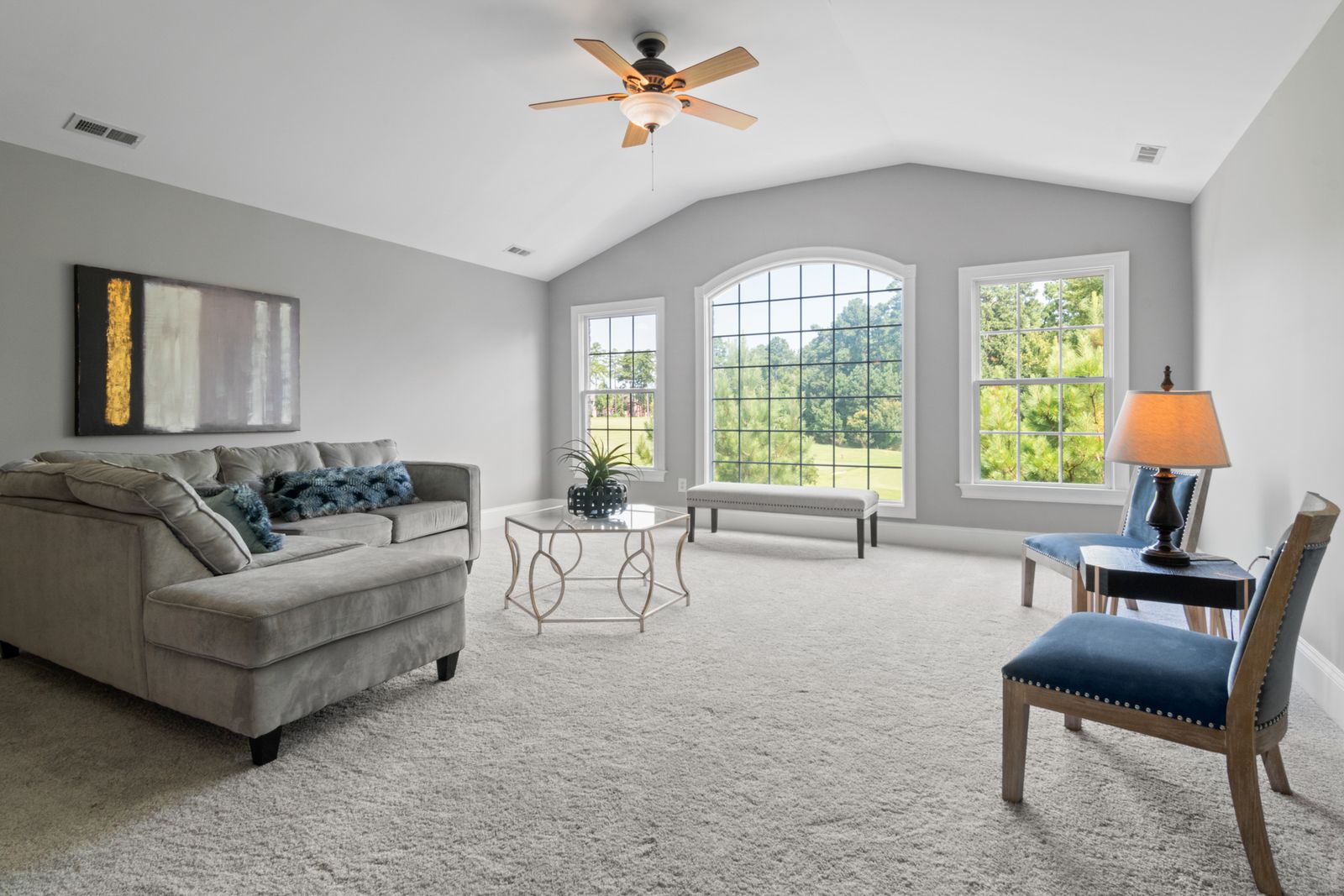
Light oak warms a gray room without taking over. The blue chairs and gray sofa look crisper against wood than against carpet. Add a large neutral rug under the coffee table to keep the seating area soft.
2. Oak herringbone: pattern for a plain room
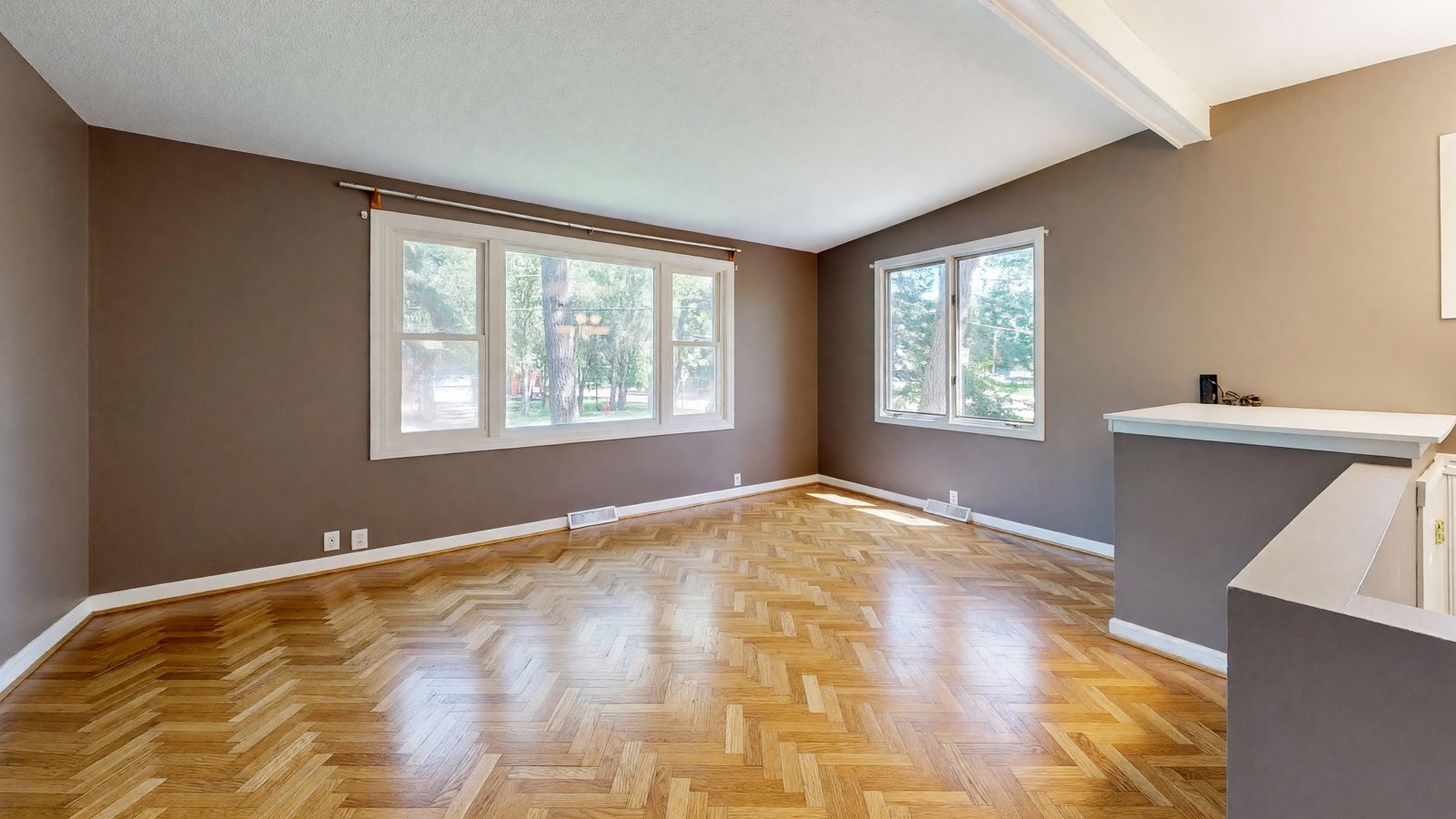
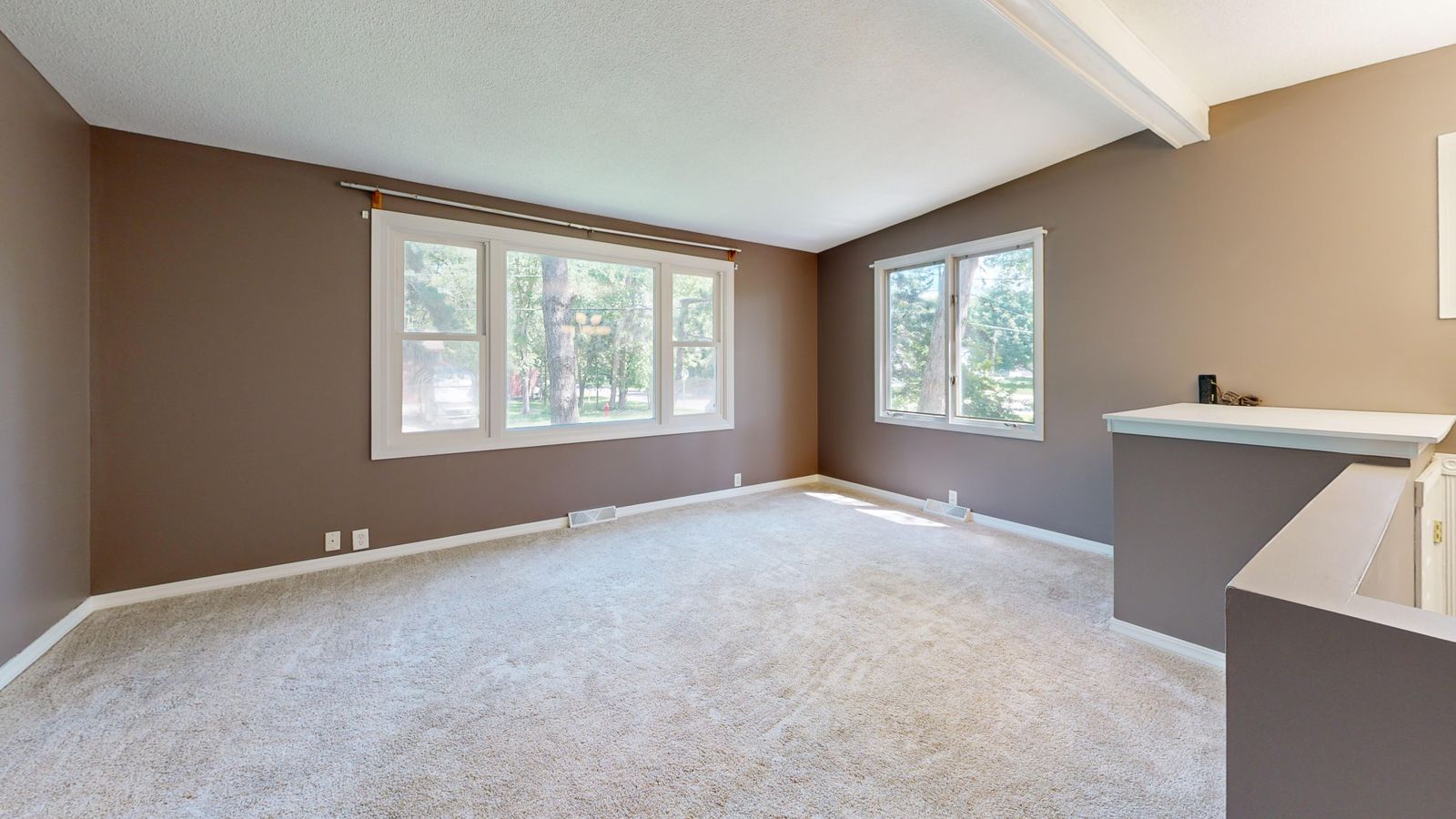
A herringbone floor is the detail in an otherwise plain room, so the walls and furniture can stay simple. The pattern runs best along the longest wall. A glossy finish catches window light; a matte finish looks calmer. Write a matte or glossy wish in the optional floor note; the result may still vary.
3. Walnut: a dark floor in a bright room
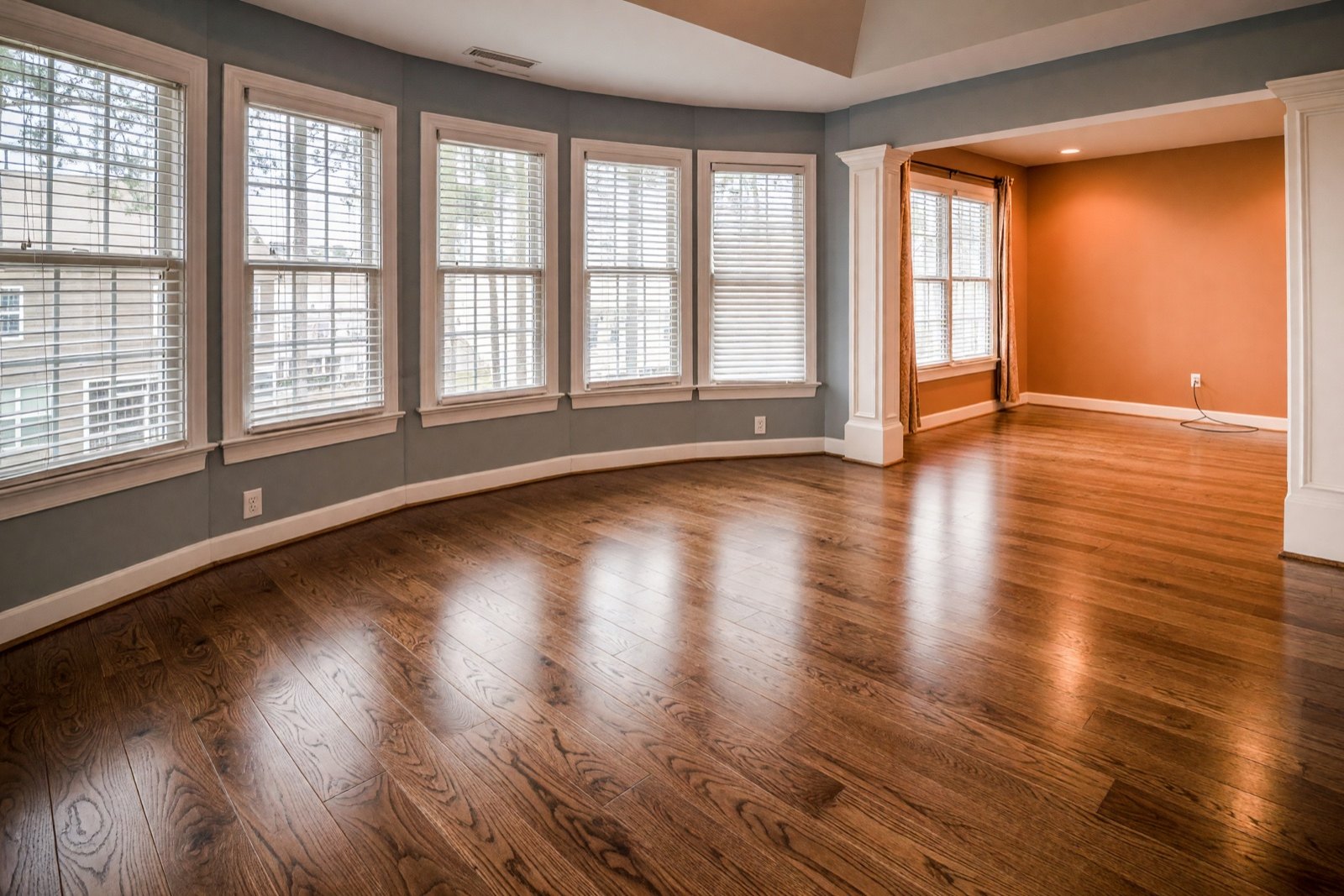
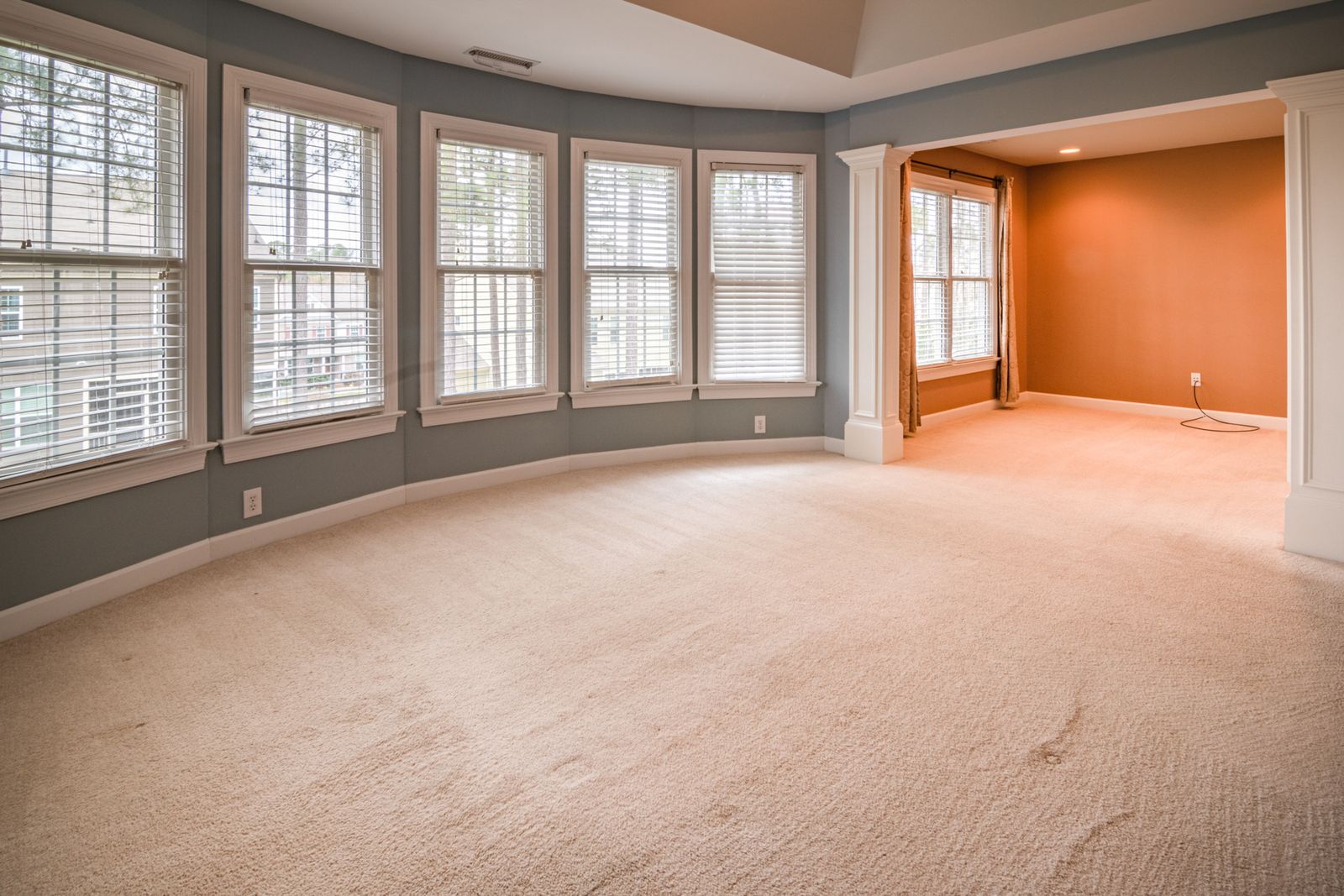
Dark walnut needs light, and this room has a full row of windows. It gives the gray-blue walls weight and makes the orange room look richer. In a room with little daylight, choose a lighter wood.
4. Polished concrete: a quiet gray floor
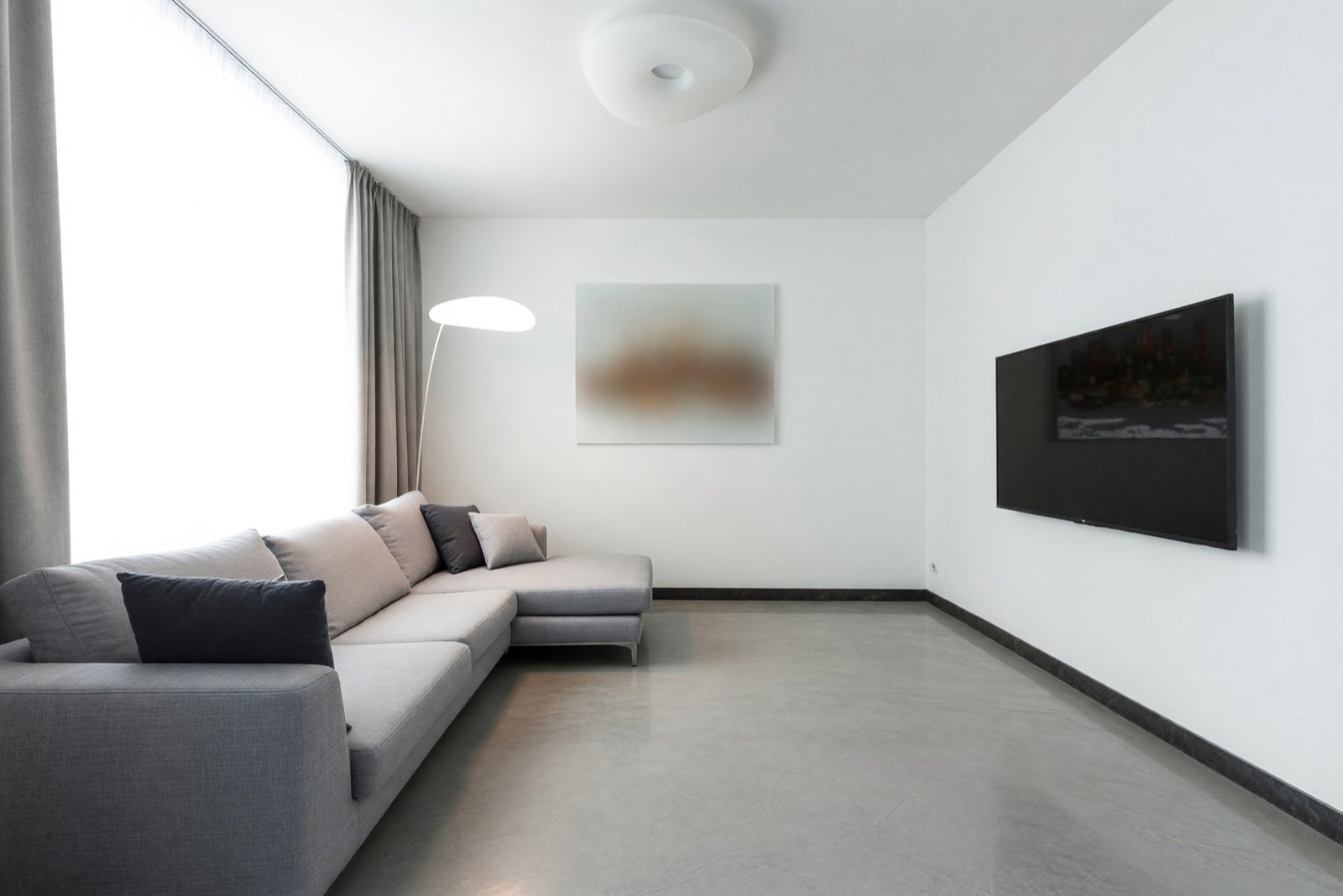
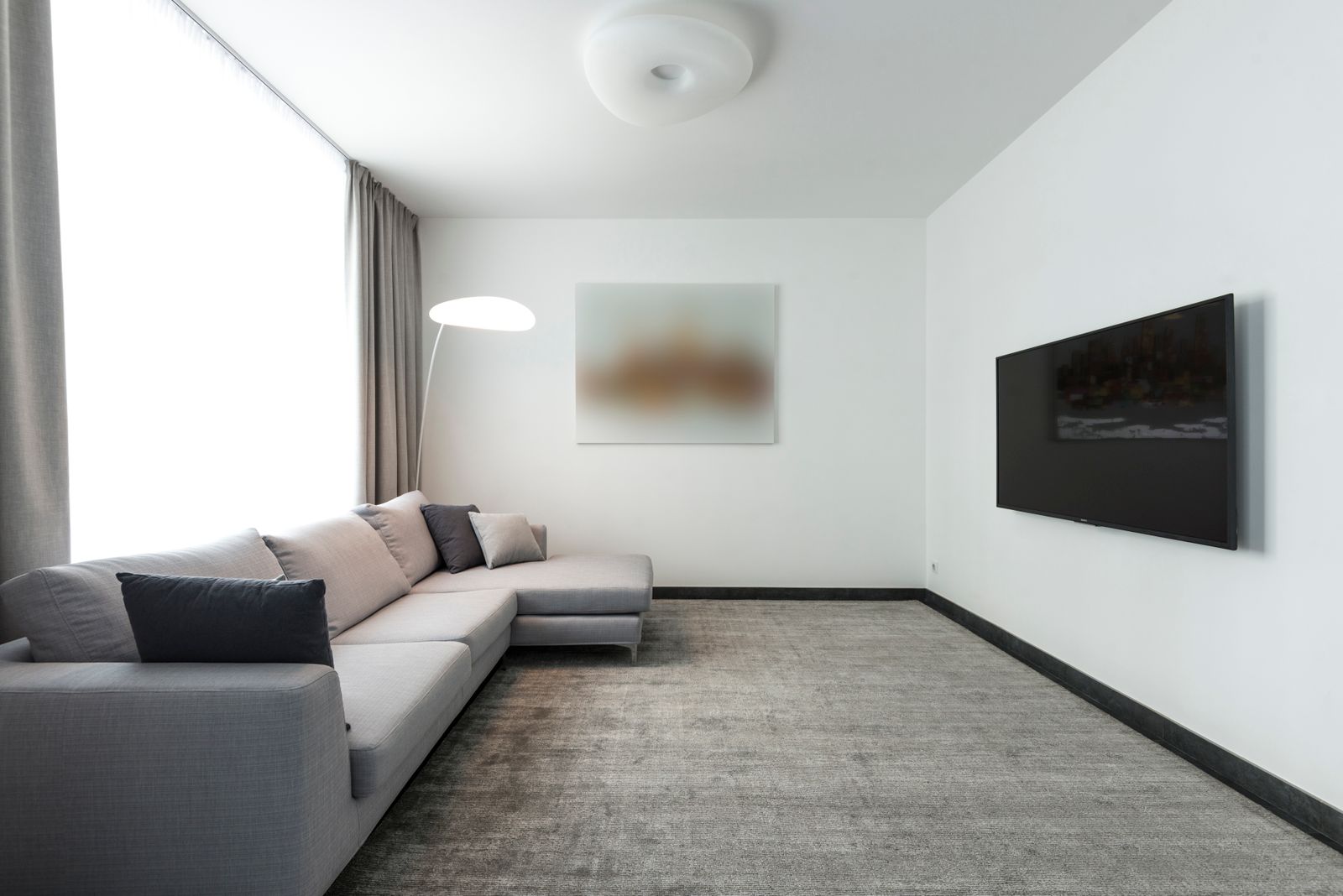
Concrete suits a white, modern room with few things in it. It is cool and flat, so add warmth with a wool or jute rug and wood furniture. It echoes the black baseboard, which keeps the room graphic.
5. Natural oak: a classic floor for a family room
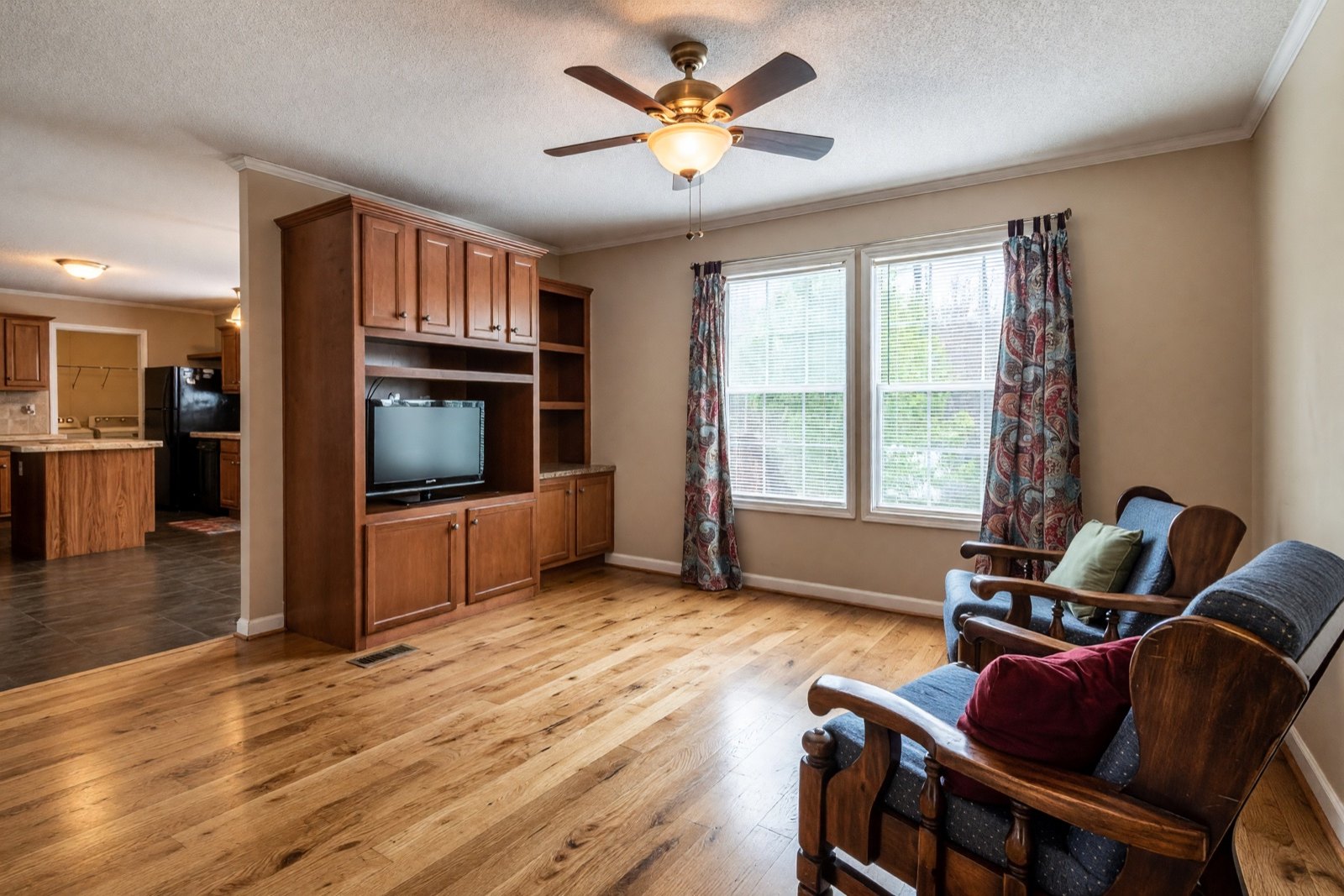
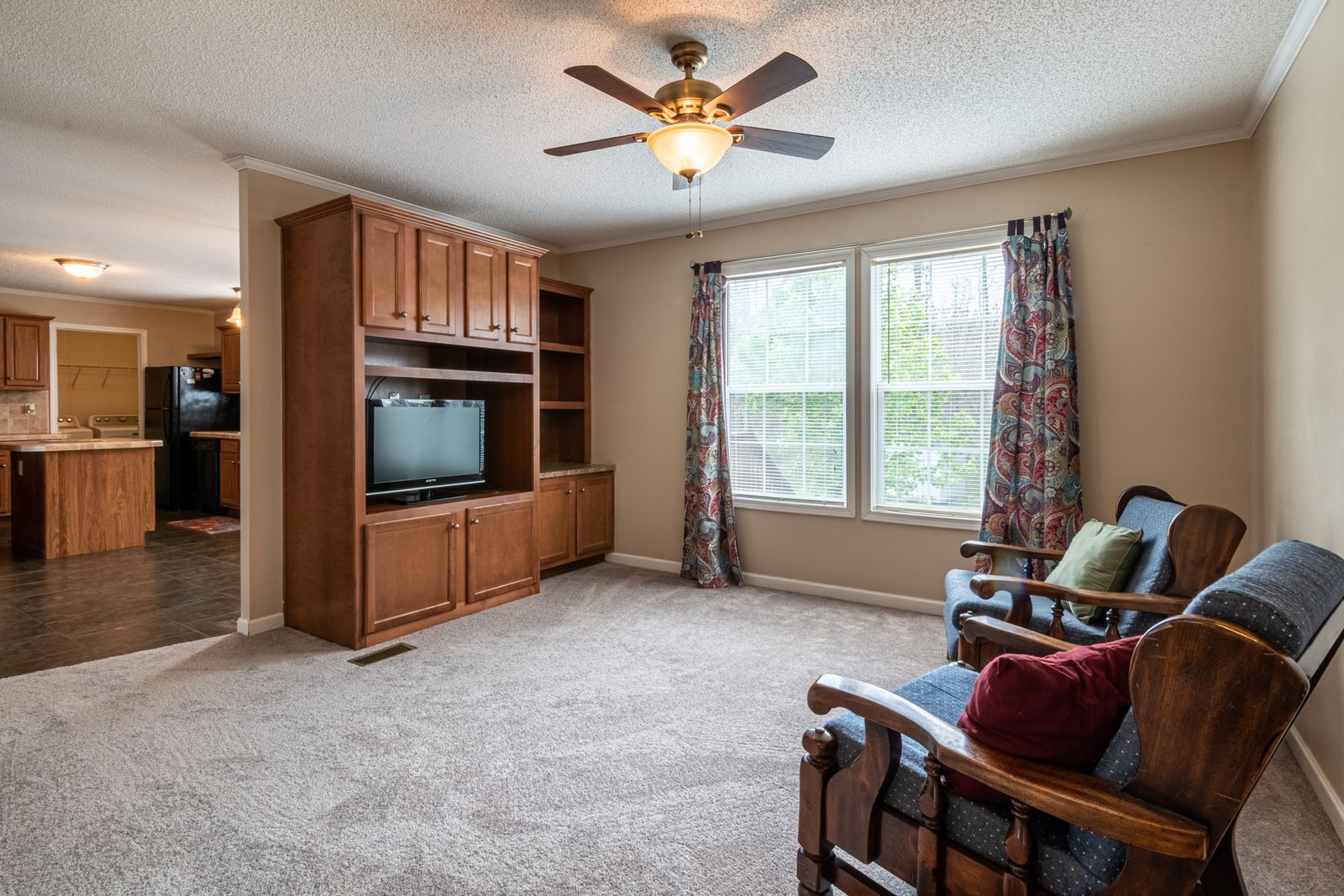
Natural oak is a safe match for oak cabinets and wooden furniture, since the tones sit in the same family. Keep the finish matte if you want the room to feel calmer, and write a matte or glossy wish in the optional floor note; the result may still vary. The dark kitchen floor beyond shows the edge where two floors meet.
6. Light terrazzo: a speckled floor for a plain room
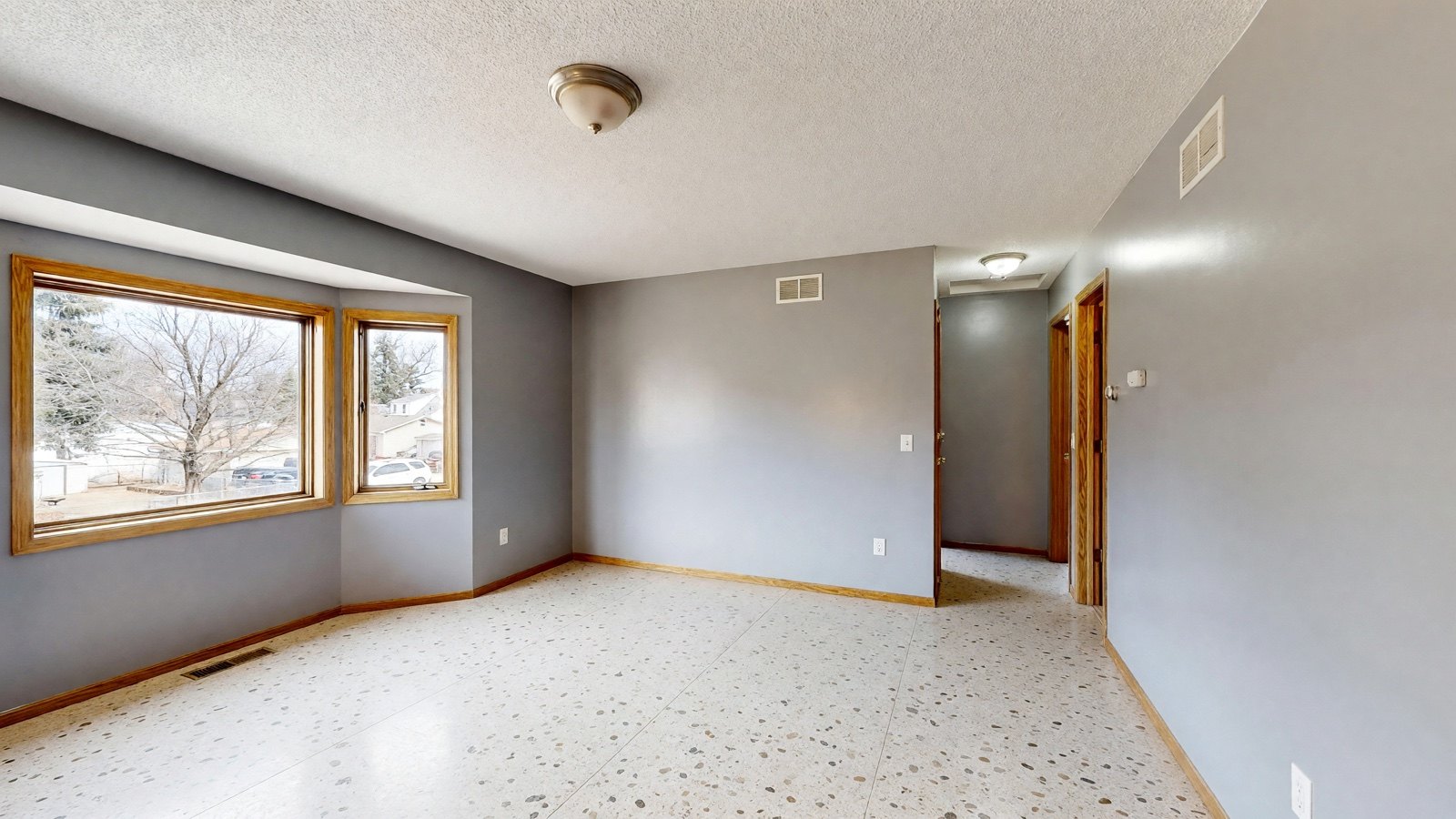
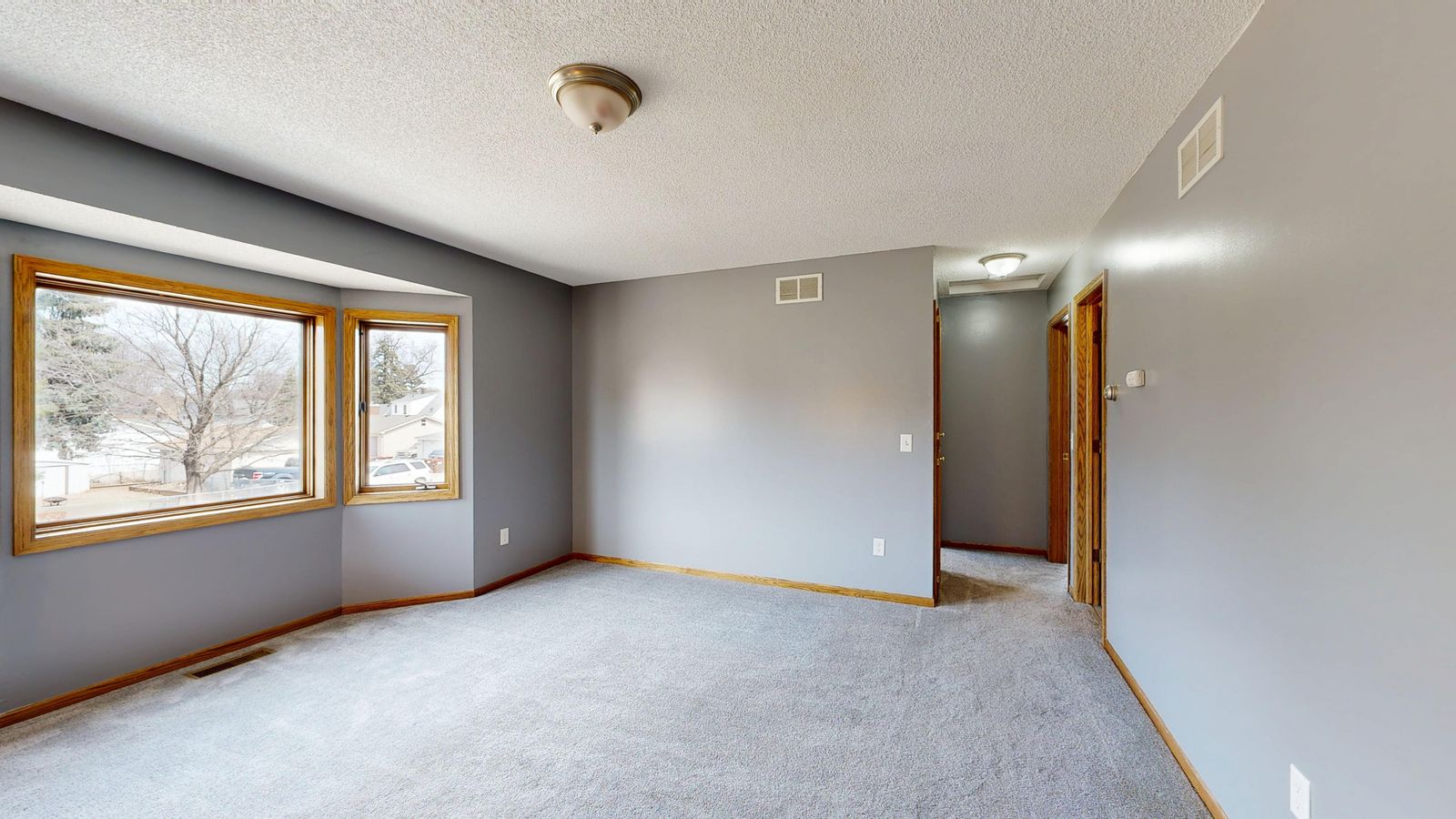
Terrazzo makes a gray room brighter and a little retro. The golden oak trim now stands out more, so decide whether to keep it or paint it. Terrazzo suits a room with a simple, uncluttered layout.
Living room flooring at a glance
| Floor | Look | Works with | Watch out for |
|---|---|---|---|
| Light oak | Warm, light, calm | Gray or cream walls, blue and gray upholstery | Can look yellow under warm lamps |
| Oak herringbone | Classic, patterned | Plain walls, simple furniture | Busy with patterned rugs |
| Walnut | Dark, rich | Gray-blue and cream walls, brass | Dark in a room with little daylight |
| Polished concrete | Cool, modern | White walls, wood furniture, wool rugs | Looks cold without a rug |
| Natural oak | Warm, traditional | Oak cabinets, wood furniture | Strong with orange walls |
| Light terrazzo | Bright, speckled | Gray, white or pastel walls | Strong with a lot of patterned decor |
What type of flooring is best for a living room?
Wood suits most living rooms, but the best type is the one that fits how you use the room. Here is each main type in one line, with its trade-off.
- Hardwood and engineered wood: warm, classic and long-lived, but it scratches and dislikes standing water. Engineered wood usually copes better with changes in humidity.
- Laminate: a wood look with a hard surface; water at the joints can damage it, and it can sound hollow underfoot.
- Vinyl plank: water-resistant and a little softer underfoot, so it suits busy or damp rooms; heavy furniture can dent it.
- Tile: very hard-wearing and easy to clean, but cold and hard underfoot, with grout lines to keep clean.
- Carpet: warm and quiet, but it holds dust and shows stains and worn paths.
Vinyl vs laminate for a living room
Choose vinyl plank if spills, damp or pets are likely, and laminate if the room stays dry and you want a firmer feel. Both can imitate oak well, and quality varies a lot within each type, so treat this as a rule of thumb. Compare a full-size sample in your own light, and ask how the planks behave around water. Floor Restyle has Oak-look vinyl and Gray oak laminate to try on your photo.
Living room flooring for pets
For a living room with pets, start with a floor that resists scratches and moisture and wipes clean. Vinyl plank and tile handle spills and accidents. A matte, mid-tone wood look with a little texture usually hides scratches and hair better than a glossy dark or very pale floor. Deep-pile carpet holds hair and odors, so a washable rug is easier. No floor is scratch-proof: hardwood will mark under claws, and trimmed nails and runners on the main paths help.
Flooring from the living room into the kitchen
In an open plan, one continuous floor usually looks calmer and can make both areas feel larger, as long as it can take water in the kitchen part. Wood-look porcelain tile and vinyl plank are common choices because they handle spills; solid hardwood is more at risk near the sink. Run the planks in one direction and use a transition strip only where the floor type or height changes, for example at a hallway. Long runs may need an expansion gap, so follow the maker's instructions. In Floor Restyle, choose Wet area to see materials such as Wood-look porcelain. For the kitchen side, see modern kitchen ideas.
Living room flooring trends for 2026
Living room floors tend to lean toward natural wood tones: lighter oak, wider planks and matte, lightly textured finishes. A floor stays for years, so pick a tone you would still like later and let rugs and furniture carry the trend. The Light oak and Natural oak tones above sit in this family.
Modern living room flooring
A modern living room floor is usually simple and calm: wide planks in a matte finish, polished concrete, microcement or pale terrazzo, with little pattern and thin transitions. The Polished concrete and Light terrazzo examples above show cooler versions, Light oak a warmer one. Add a rug so the room does not feel cold.
Common living room flooring mistakes
- Choosing from a small sample. Look at a large piece in your own light, morning and evening.
- Ignoring the undertone. A yellow-orange floor next to gray-blue or pink-toned furniture can look off.
- Forgetting the transition. Check how the new floor meets the kitchen, hall and stairs.
- Going too dark in a small room. A dark floor makes a room feel smaller unless the light is strong.
- Matching everything. Wood furniture on a wood floor of the same tone blends together; leave a little contrast.
Try living room flooring on your own photo
Upload a photo of your living room to Floor Restyle, choose Dry area, pick a material, and compare the new floor with your photo. Take the photo from the doorway in good light, with the floor as visible as you can, and clear small things off it. Floor Restyle changes the floor and aims to leave walls, furniture and the camera angle as they are.
The result is a design idea, not a flooring specification. Colors and textures look different on screen and in the room, so ask for a real sample before you buy. For wall colors that go with the floor, see living room paint colors. For a calm, natural look, see Japandi living room ideas. For a bright room with a lot of glass, see sunroom ideas. More rooms and styles are on the HomeCompose design ideas page.
Frequently asked questions
What is the best flooring for a living room?
Wood, in a tone that matches your furniture and light, is the most common choice; polished concrete or terrazzo suit a modern, plain room, and carpet suits a quiet, soft room. Choose by light, undertone and how the floor meets the next room.
Should the floor be lighter or darker than the walls?
Either works. A lighter floor makes a room feel bigger and brighter; a darker floor adds weight when the room has plenty of daylight. Avoid a floor and walls in the same mid tone.
Can I see a new floor in my own living room before I buy?
You can try one on a photo of your room in HomeCompose Floor Restyle as an idea. Then ask for a real sample and look at it in your own light before you buy.
What is the best flooring for a living room with pets?
Vinyl plank or tile is the easiest start: both cope well with moisture, are fairly scratch-resistant and wipe clean. A matte wood look with some texture also hides marks well. Hardwood can scratch, so use a rug on busy paths and keep claws trimmed.
Is it free to try?
Yes. You can start on the free plan, and it includes a limited number of designs.