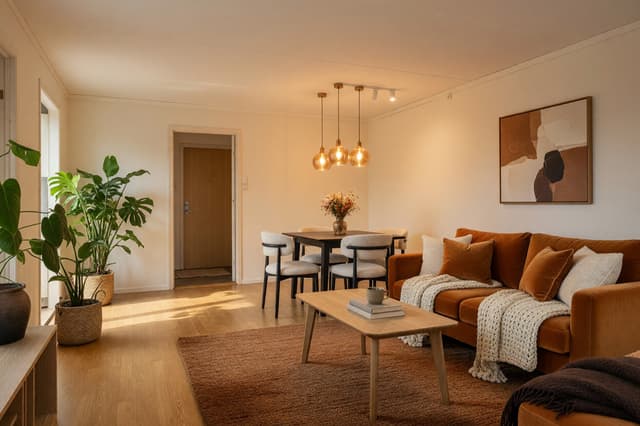
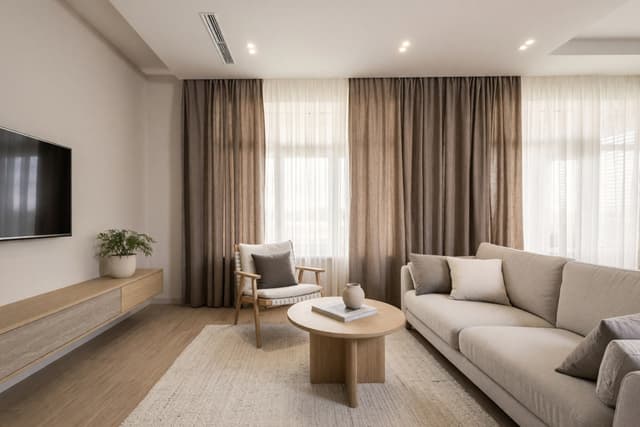
Small living room ideas
A small living room feels bigger when you keep the floor visible, choose light colors, buy furniture that fits the room and let light travel as far as it can. Below are six small living rooms shown before and after an AI redesign, with the colors, furniture and layout choices behind each change.
How do you make a small living room feel bigger?
- Light, quiet colors. Warm white, cream or pale greige on the walls and the big pieces, so edges blur instead of stopping the eye.
- Furniture on legs. A sofa, table or TV cabinet that shows a little floor underneath looks lighter than a block that sits flat on the ground.
- One large rug. A single rug makes the floor read as one area. Several small rugs cut it into pieces.
- Fewer, right-sized pieces. One sofa that suits the wall and one or two small tables beat a full matching set.
- Curtains hung high. Put the rod close to the ceiling, let the fabric reach the floor and keep its color near the wall color.
- Light from several places. A ceiling light plus a floor lamp and a wall light, with warm bulbs around 2700 K, avoids one harsh source.
- A clear path. Keep the way from the door to the window open so the eye, and you, can cross the room.
6 small living room makeovers
Each example starts from a real photo. HomeCompose is told to keep the room's shape, windows and camera angle, and the mode you pick decides how much else changes. AI can change small details, so treat every result as an idea.
1. A narrow living room in pale colors
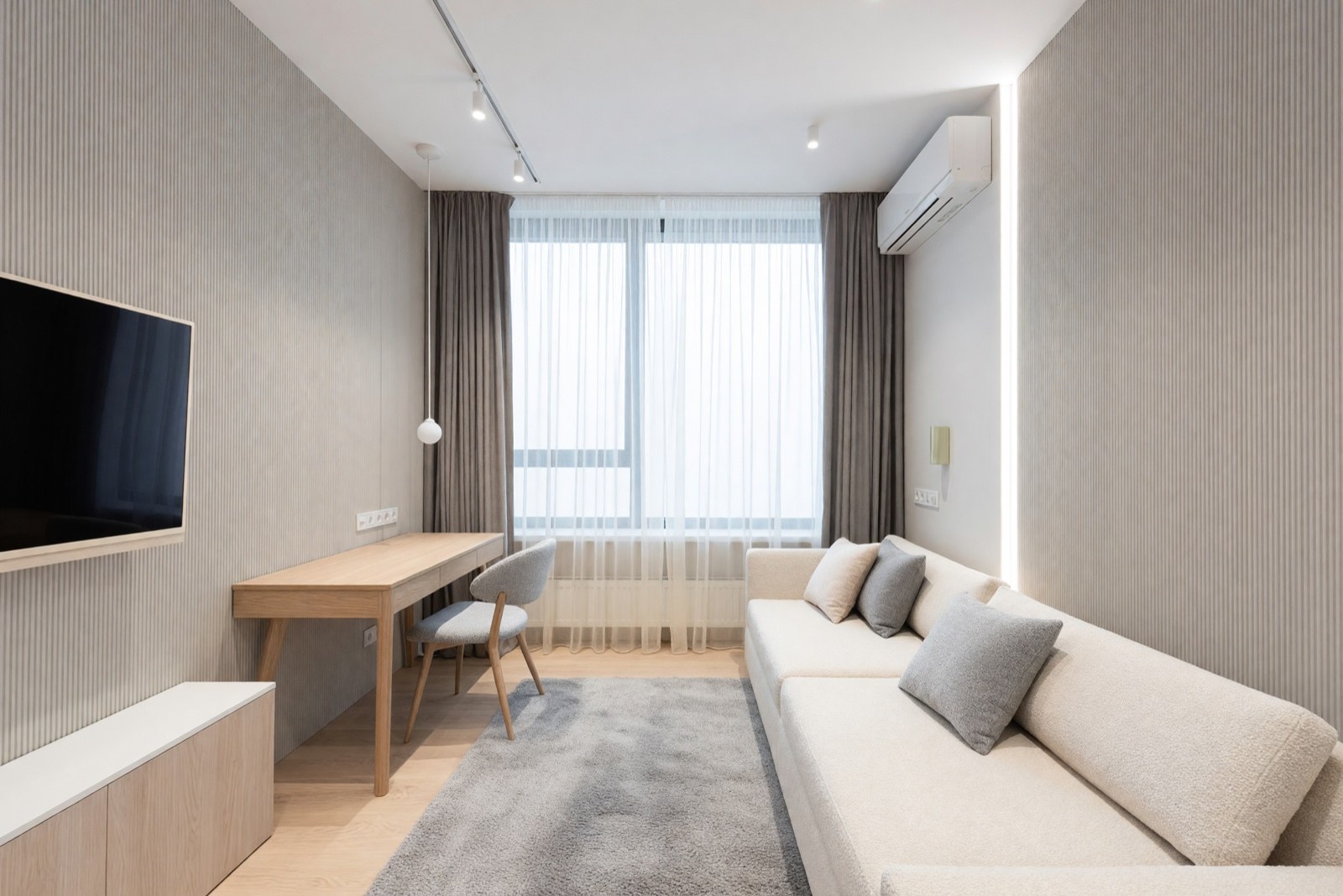
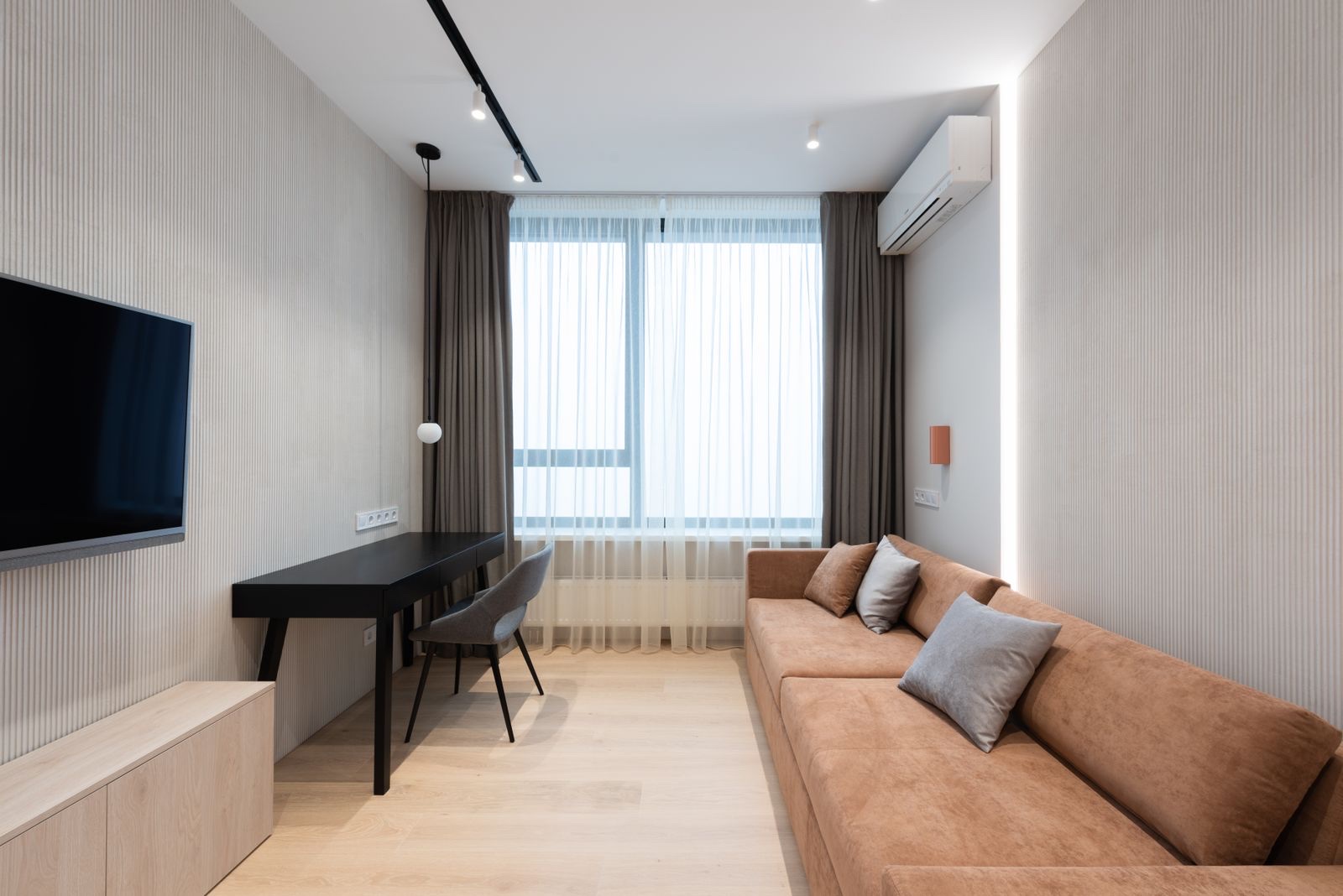
In a narrow room, a dark sofa and a black desk make the walls feel closer. This version uses the Scandinavian style with the Pearl Luster palette: a cream sofa and a pale desk stay close to the wall color, and a gray rug runs along the length of the room. The window and its curtains stay as they are, so daylight still reaches every corner.
2. A studio living area in one color family
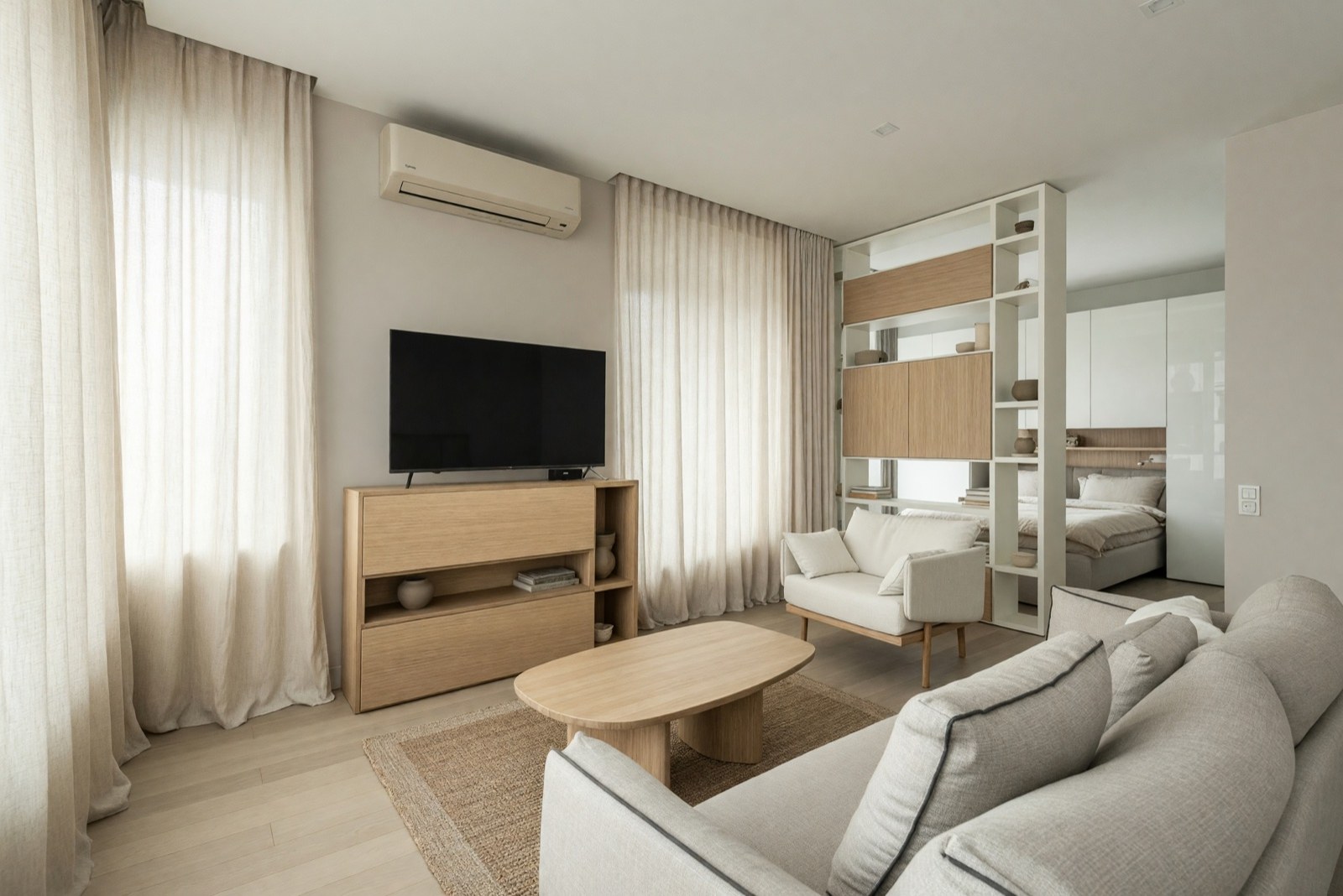
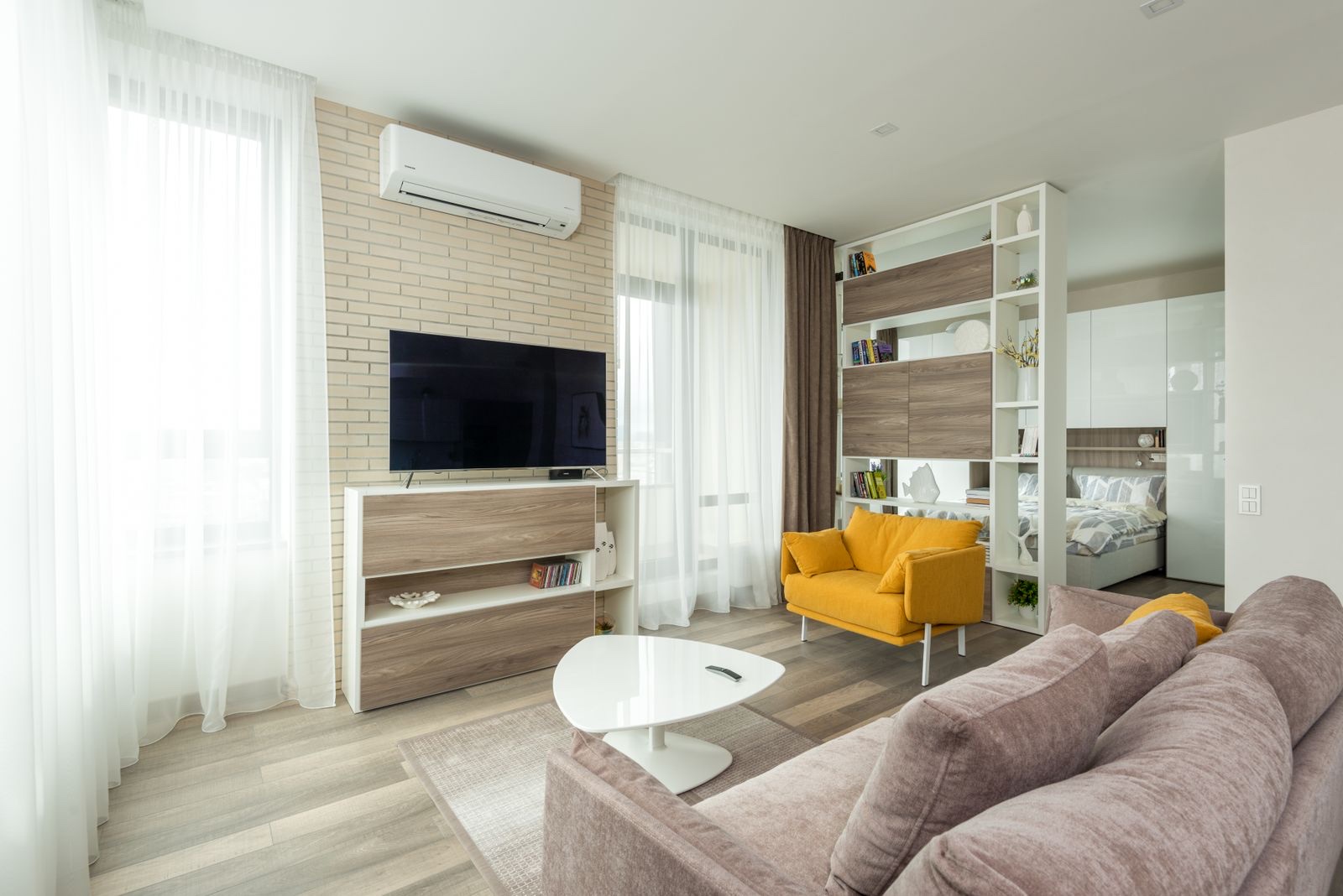
When the bed is in the same space as the sofa, one color family helps the two areas read as one room. The wall, sofa and curtains share a pale tone, and the TV cabinet and coffee table share one light wood. The open shelves of the divider let light pass through instead of closing the room off. This version uses the Japandi style with the Ivory Stone palette.
3. A long open-plan room with small changes
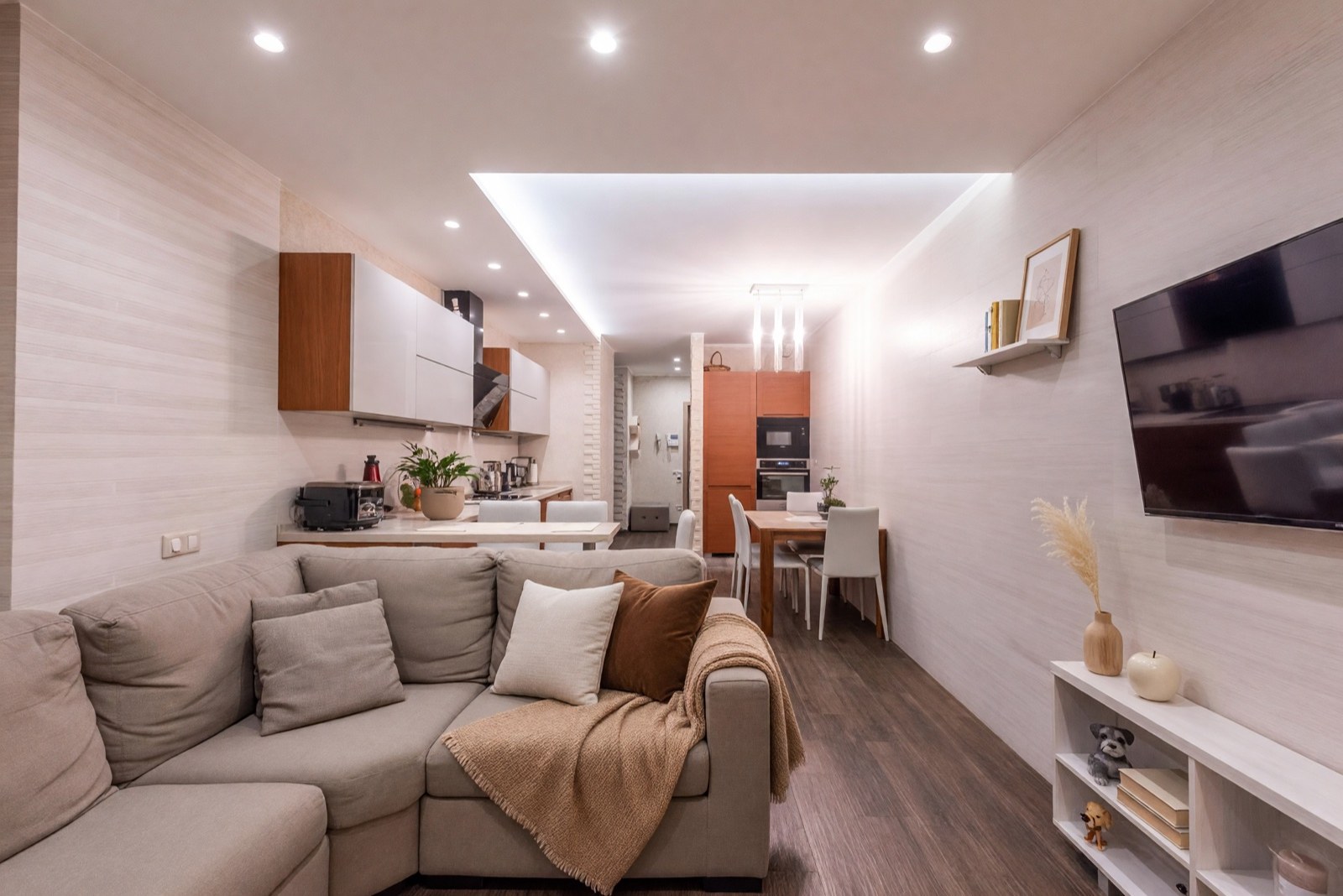
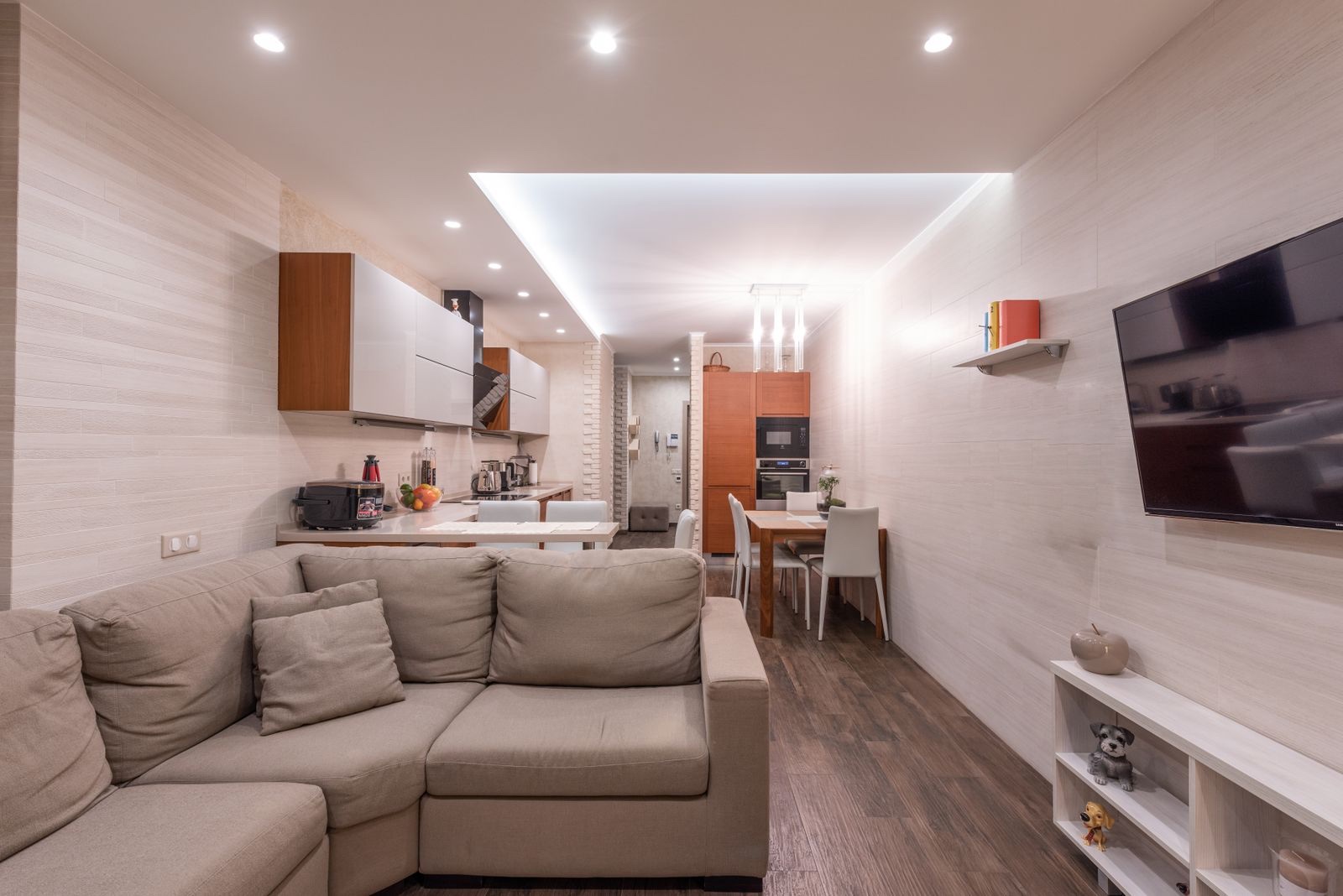
You do not always need new furniture. In a long open-plan room, a few textiles and small objects in the same warm tones tie the sofa area to the kitchen. Light Touch mode is made for this: it keeps your room as it is and only adds a few small accents in the style you choose, here Scandinavian with the Warm Ivory palette.
4. A studio with a sleeping nook: lighter walls, lighter wood
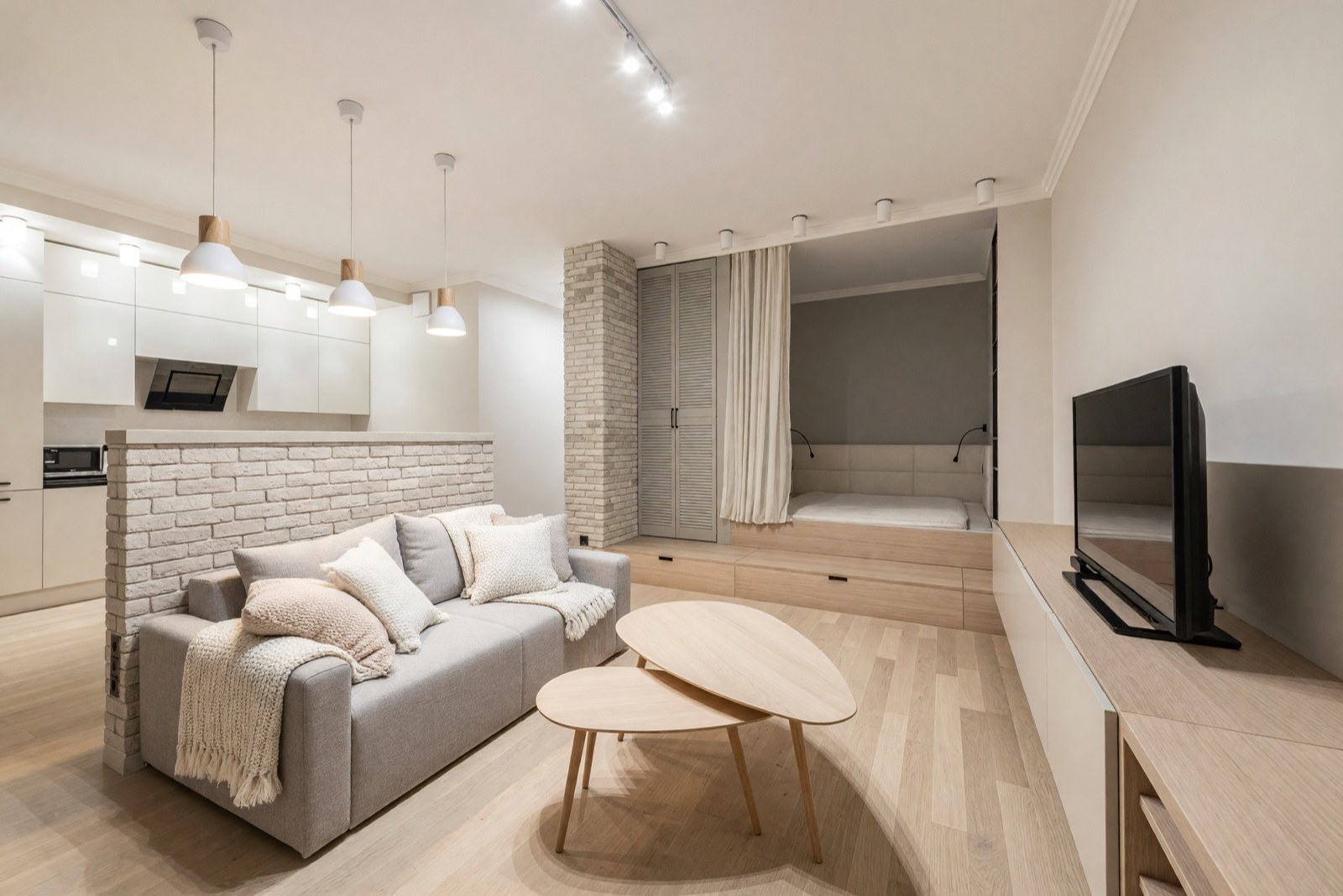
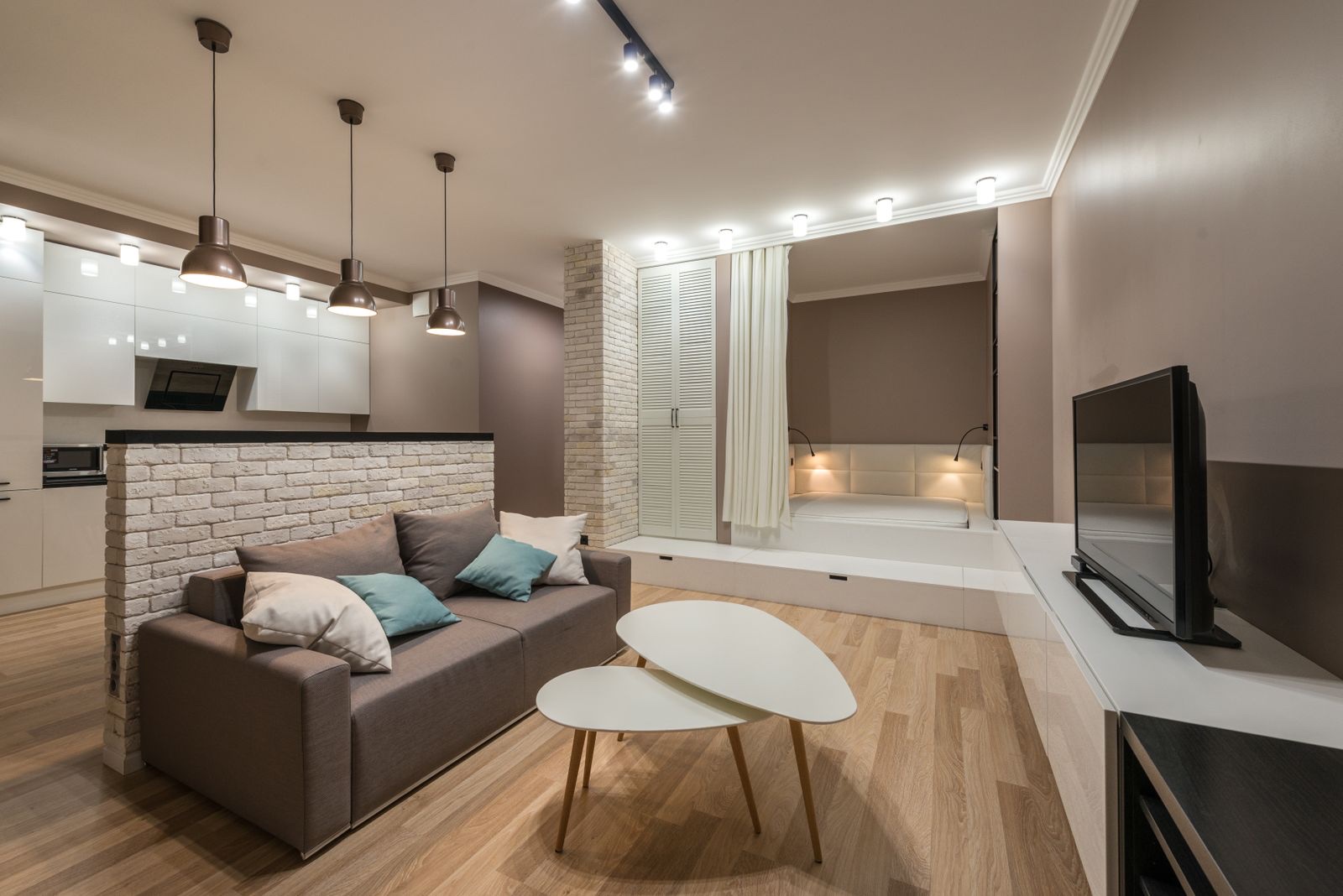
Dark walls close a small room in. Warm white walls, pale wood and white pendants lift this one, while the brick keeps its character. The sleeping area is a raised platform with drawers underneath: in a small home, storage under a platform or bed frees floor space. This version uses the Scandinavian style with the Pearl Luster palette.
5. Fewer, larger pieces in a room with French doors
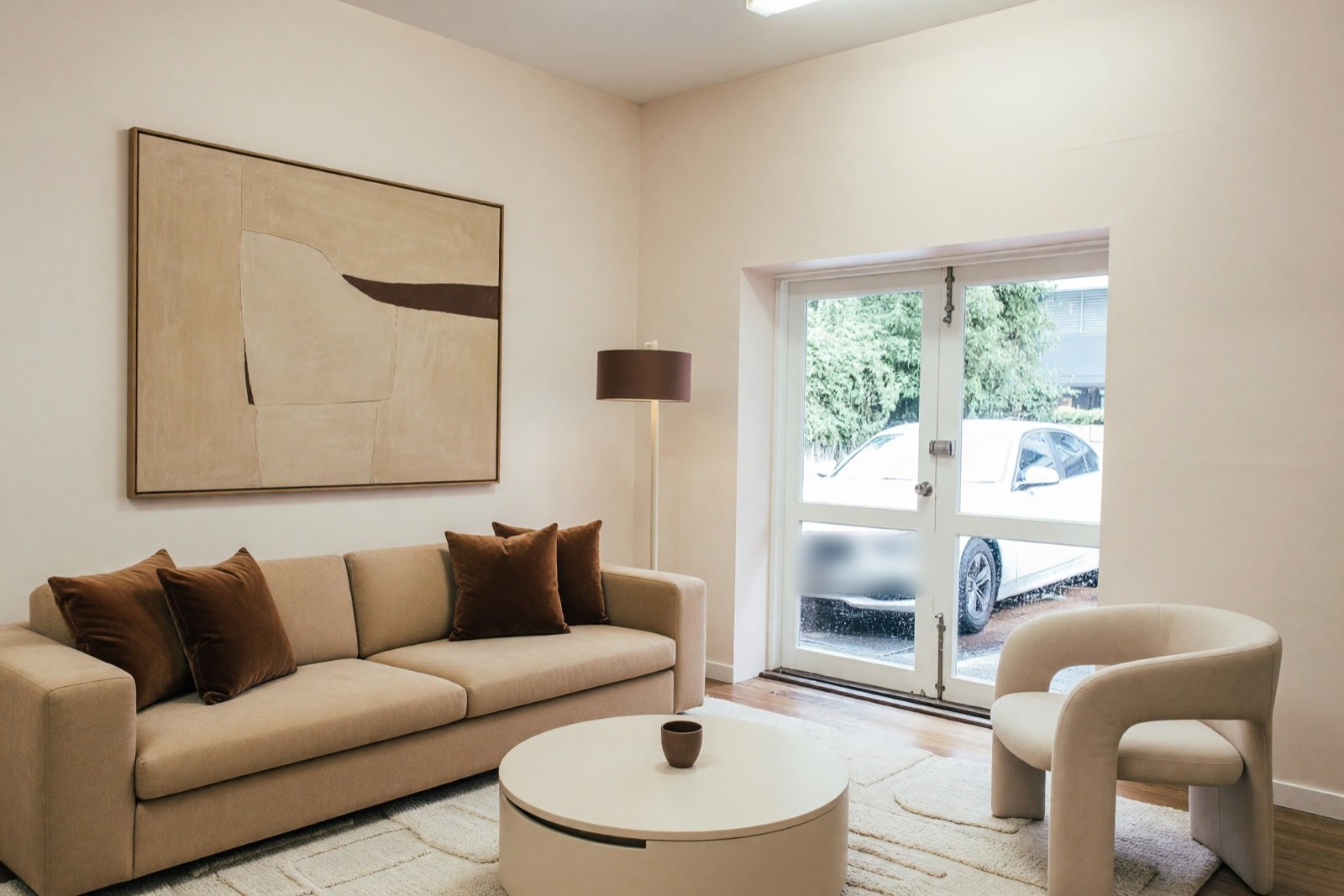
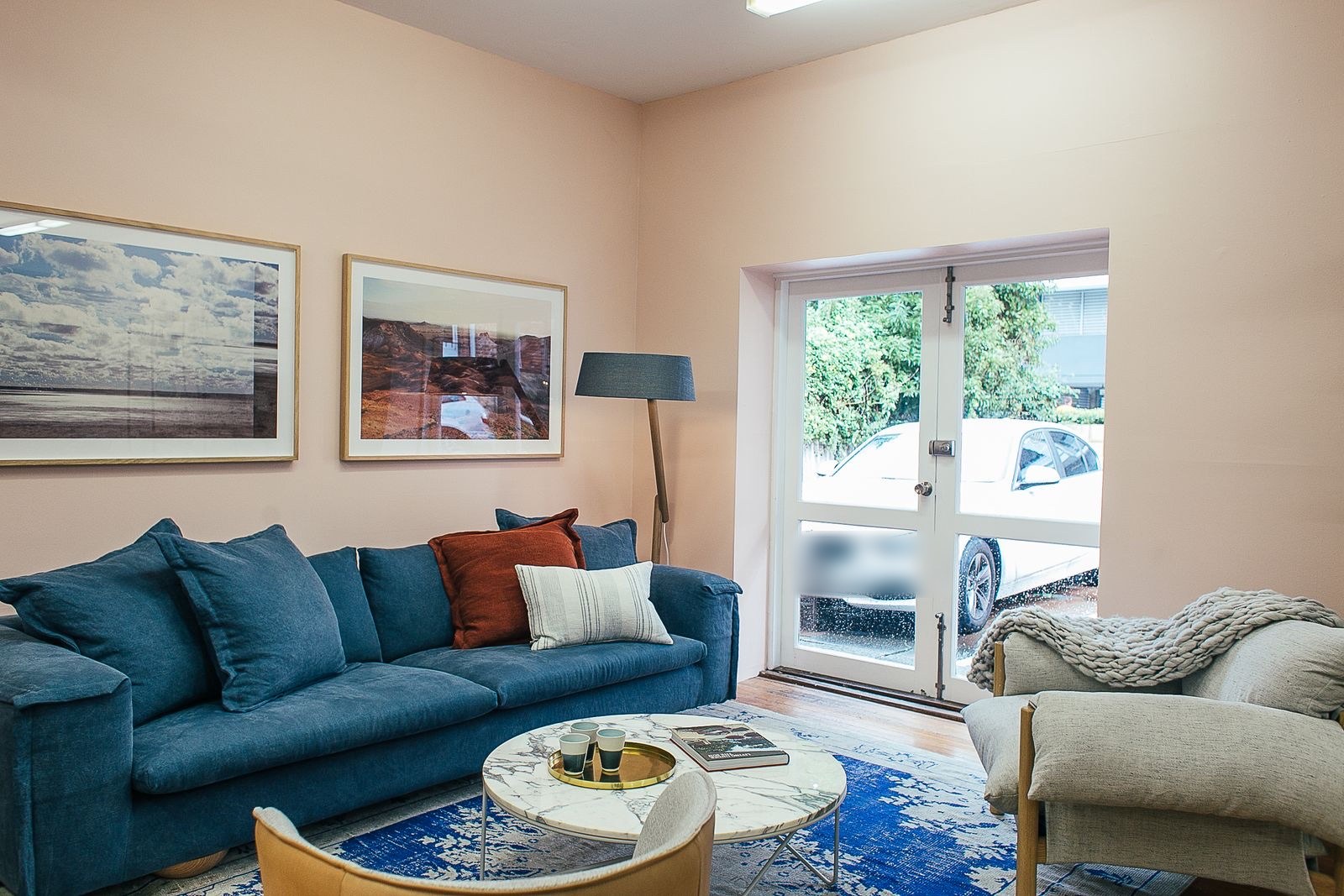
Fewer, larger pieces calm a small room. One big artwork instead of two small frames, one sofa color and a round table that is easy to walk around keep the eye from jumping. This version uses the Minimalistic style with the Warm Ivory palette.
6. Texture in a small loft corner
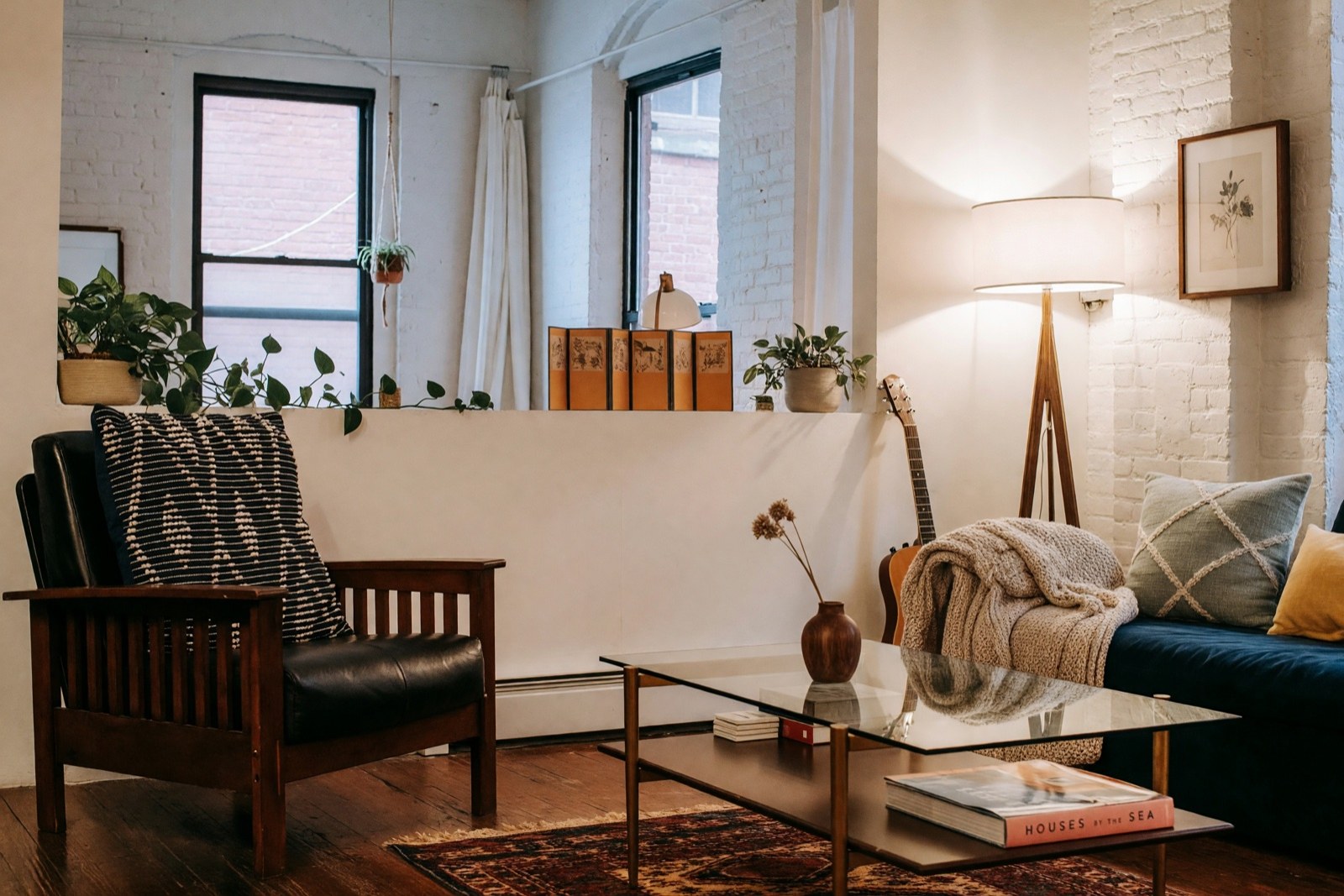
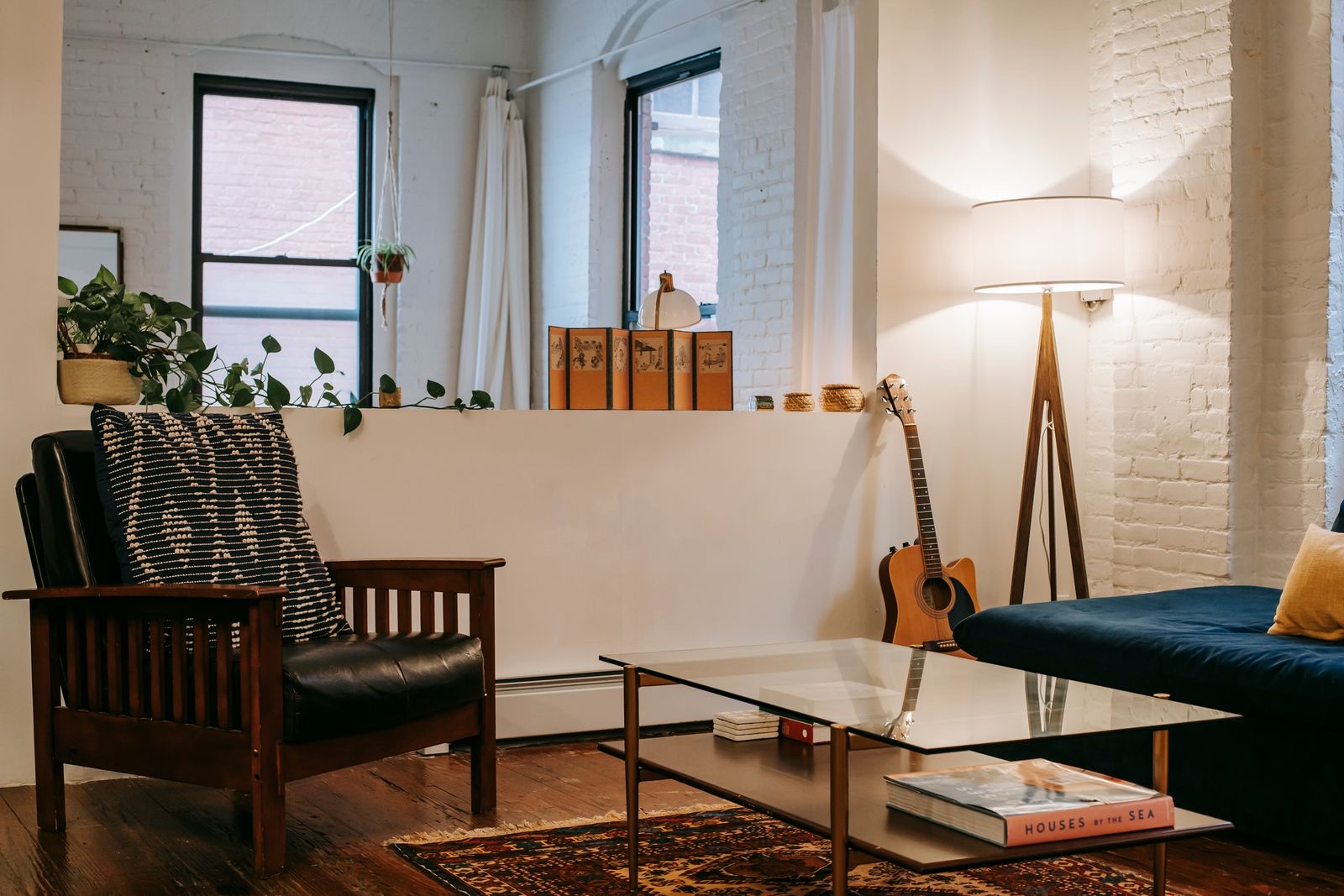
When the footprint is fixed, texture is what you can still add. The glass coffee table already keeps the floor visible, so a throw, one cushion and a few dried stems are enough. This version uses the Cozy style with the Earthy Hues palette.
Small living room color palettes
| Palette | Main colors | Materials that fit |
|---|---|---|
| Light and airy | Warm white, cream, pale greige | Light oak, linen, boucle |
| Calm neutral | Sand, stone, soft taupe | Jute, wool, matte ceramic |
| Warm accent | Cream with rust or caramel | Velvet, knit, walnut |
| Dark but cozy | Deep green or ink blue on one wall | Brass, dark wood, wool |
In HomeCompose, palettes such as Pearl Luster, Ivory Stone and Warm Ivory keep the result in the light, warm range used above. If you want a dark color, use it on one wall only and keep the rest light.
Small living room layout tips
- Anchor the room with one sofa. Pick the sofa first, then size everything else to it.
- Use the long wall. In a narrow room, put the sofa along the long wall so the walkway stays free.
- Pick one focal point. The TV wall, a window or a bookcase. Do not give the eye three.
- Use the walls. Wall shelves and wall lights free up surfaces and floor.
- Mind the walkways. Leave about 80 cm (30 in) wherever you walk.
If the furniture is right but the arrangement is not, Layout Boost tries a new arrangement of the main free-standing pieces while keeping the room. Clean results are not guaranteed, so check the result for missing or duplicated pieces.
Common small living room mistakes
- Furniture that is too big. An oversized sectional or a deep sofa eats a small room. Measure the room and the sofa before you buy.
- Too many small pieces. Lots of little tables and objects look cluttered. Fewer, larger items look calmer.
- Heavy, dark curtains. They shrink the window. Choose light fabric and hang it high.
- A rug that is too small. A small rug in the middle makes the seating feel disconnected. Let it reach the front legs of every seat.
- Everything against the window. Blocking the window with a tall bookcase or a sofa back removes the room's best light.
How do you make a small living room look beautiful?
Give the eye one clear place to land, then repeat a few things quietly. A small room looks finished when it has a focus, a few layers and little else.
- A focal point you can see from the door. One large piece of art or a mirror opposite the window, hung with its center at about 145 cm (57 in) from the floor, a common gallery rule of thumb.
- Light at three heights. A ceiling light, a lamp at seat level and one low glow on a shelf or table. In the evening the lower lights make the room feel layered, where a ceiling light alone looks flat.
- One color, repeated. Take an accent from the art or a cushion, such as rust or sage, and repeat it two or three times in the room, not everywhere.
- Fewer, bigger accessories. One large canvas or plant reads calmer than five small frames. Example 5 above swaps two framed photos for one large canvas.
Small living room ideas for 2026
Living room trends move slowly, and a small room suits the calm ones. The directions that fit a small space and are widely used at the moment are warm neutrals, natural materials such as oak, linen and jute, rounded shapes and soft, layered light. A modern small living room is mostly these same choices with clean lines and fewer objects. You can compare styles such as Scandinavian, Japandi and Minimalistic on a photo of your own room in Interior Design before you commit to one.
Small living room ideas for a TV, a dining table, a budget and kids
Small living room with a TV
Put the TV on the wall you face from the sofa, away from the window, so daylight does not glare on the screen. Mounting it on the wall or using a low cabinet on legs keeps the floor visible. Aim for the middle of the screen at about eye level when you are seated. Examples 1 and 3 above both keep a wall-mounted TV, so the TV wall also becomes the room's focal point.
Small living room with a dining table
Use a small round or drop-leaf table and mark the dining zone with its own light. A round table about 90 cm (36 in) across seats two comfortably and four in a squeeze; leave about 80 cm (30 in) between its edge and the wall or sofa so chairs can pull out. Hang one pendant over it, put the sofa on a rug, and repeat one wood or color in both zones so they read as one room. Example 3 above is a long room where a dining table sits at the far end, past the sofa. For more table ideas, see dining room ideas.
Small living room on a budget
The cheapest changes are the ones you see most: wall color, textiles, lighting and fewer objects. Start by clearing surfaces, then repaint one wall, swap the curtains and cushions for lighter ones and change cold bulbs for warm ones. Examples 3 and 6 above show how far cushions, a throw, a plant and a print go when the furniture stays. To see your room without the clutter first, Cleanup removes stray items from a photo and keeps your furniture where it is.
Small living room with kids
- Low, closed storage. A bench or low cabinet with baskets lets a child tidy up alone and keeps toys off the floor.
- Rounded edges. A round or oval coffee table, or a large soft ottoman, is gentler than sharp corners.
- Washable fabrics. Removable sofa covers and a washable rug hide spills better than delicate fabrics.
- Open floor. Keep the middle of the room free to play, and fix tall bookcases to the wall following the maker's advice.
Try a small living room on your own photo
Upload a photo of your living room to Interior Design, choose Living room, a style and a palette, then how much should change: Light Touch keeps your furniture and adds small accents, Structural Preservation refreshes the furniture, textiles, lighting and finishes, and Bold Interior goes further and redoes the flooring and wall finishes too. If the room is empty, Virtual Staging furnishes it in the style you choose (Pro plan).
The result is a design idea, not a shopping list or a construction plan. Check sizes before you buy. For a warmer take, see cozy living room ideas, or for a calmer one, Japandi living room ideas. For a light, airy style in more rooms, see Scandinavian interior design. For a small bathroom, see small bathroom ideas. More rooms and styles are on the HomeCompose design ideas page.
Frequently asked questions
What colors make a small living room look bigger?
Light, warm ones: warm white, cream, sand and pale greige. Use the same tone on the walls and the largest piece of furniture, and add contrast in small doses with cushions or art.
Should I use fewer or smaller pieces of furniture?
Both. Choose a sofa that fits the wall, and one or two small tables on legs. A few right-sized pieces look more spacious than a full matching set.
How do I arrange furniture in a small living room?
Start with the sofa, keep a walkway of about 80 cm (30 in), leave the window clear and choose one focal point. Layout Boost can suggest another arrangement from a photo of your room.
What is the 3-5-7 rule for decorating?
It is a designer rule of thumb, not a standard: group accessories in odd numbers, such as three, five or seven, because uneven groups tend to look more natural than pairs. In a small living room, use it on one surface, for example three objects of different heights on the coffee table, and leave the other surfaces clear.
Is it free to try?
Yes. Free to try.