Mediterranean house exterior ideas
A Mediterranean house exterior pairs warm, textured walls with a terracotta roof, wood doors and sun-loving planting. Below are six Mediterranean house exterior ideas shown on real ordinary houses, before and after, with what each change does and which details need more than paint. The examples use Preserve Structure, which is designed to keep existing materials, but in these photos the AI still redrew the walls and roof, so results can differ from a simple repaint.
What makes a house look Mediterranean?
- Warm, textured walls. Lime-washed render or plaster in cream, sand, ochre or soft peach, rather than white vinyl or gray siding.
- A terracotta roof. Curved clay tiles in orange-brown tones are the strongest single cue.
- A warm wooden door. A stained wood front door, often with wrought-iron details, replaces a painted black or white one.
- Shutters and lanterns. Wooden shutters in brown or green, and iron or bronze wall lanterns, add character.
- Planting. Lavender, olive trees, grasses and a flowering climber such as bougainvillea finish the look.
- Shape. Arches, courtyards and deep porches are part of a true Mediterranean house, but they come from the building itself, not from paint.
6 Mediterranean house exterior ideas, before and after
Each example starts from a real photo of an ordinary house, shown before and after AI gives it a Mediterranean treatment in Exterior Design with Preserve Structure, which keeps the shape of the building and is designed to keep existing materials. In these photos the AI still redrew the walls and roof, for example as render and tile, and on your own house the result may keep its brick or shingles; for a stronger change, use Bold Exterior. AI can also change small details, such as windows, plants and trim, so compare each pair closely. The render and clay-tile looks here are visual ideas: on a real house they mean new cladding or a new roof, which needs a builder. Test real paint and tile samples before you decide. The photos were checked for legible house numbers and signs, and any found were removed.
1. Brick to cream render: a tile roof, brown door and lavender
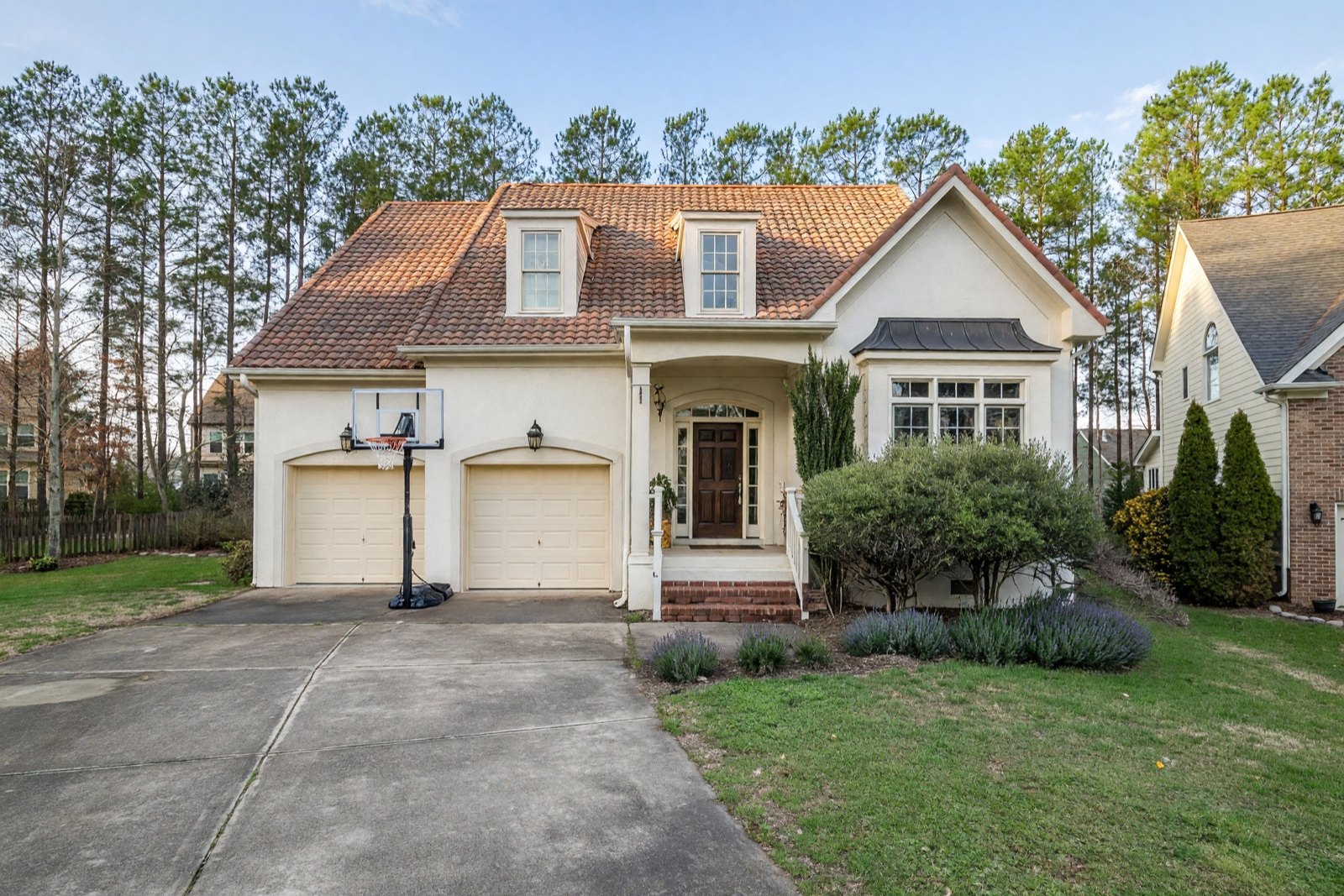
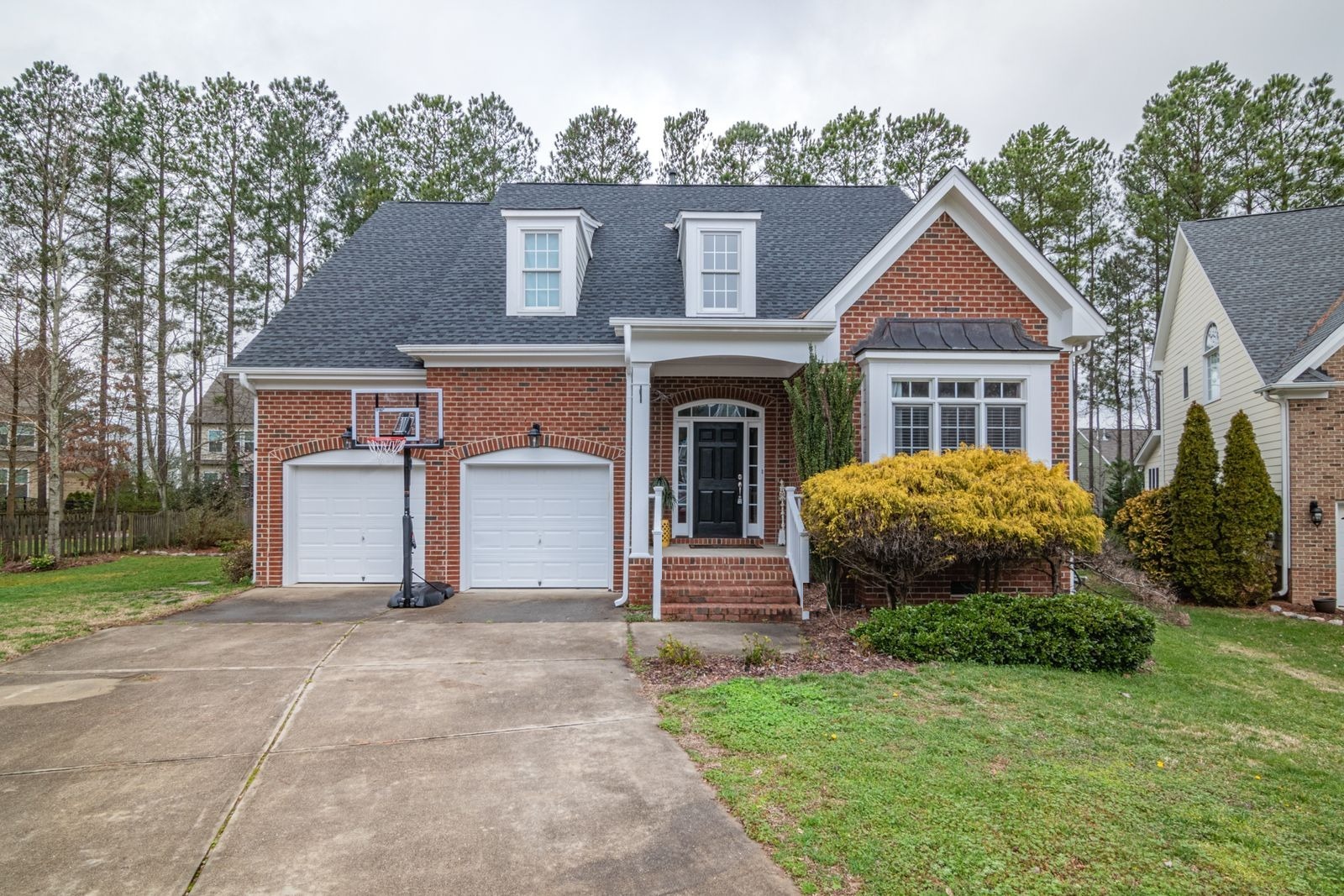
Here the walls change most: the brick reads as cream render, which with the roof is the strongest Mediterranean cue. A terracotta-toned tile roof, cream garage doors and a dark wood front door finish the look, and lavender replaces the yellow shrub's bright color. Compare the details closely, because the brick arches, the trim, the shrubs and the sky were redrawn. Render over brick is new cladding and a tile roof is a new roof on a real house, so both need a builder; test real samples first.
2. Terracotta roof: a brick ranch with brown shutters
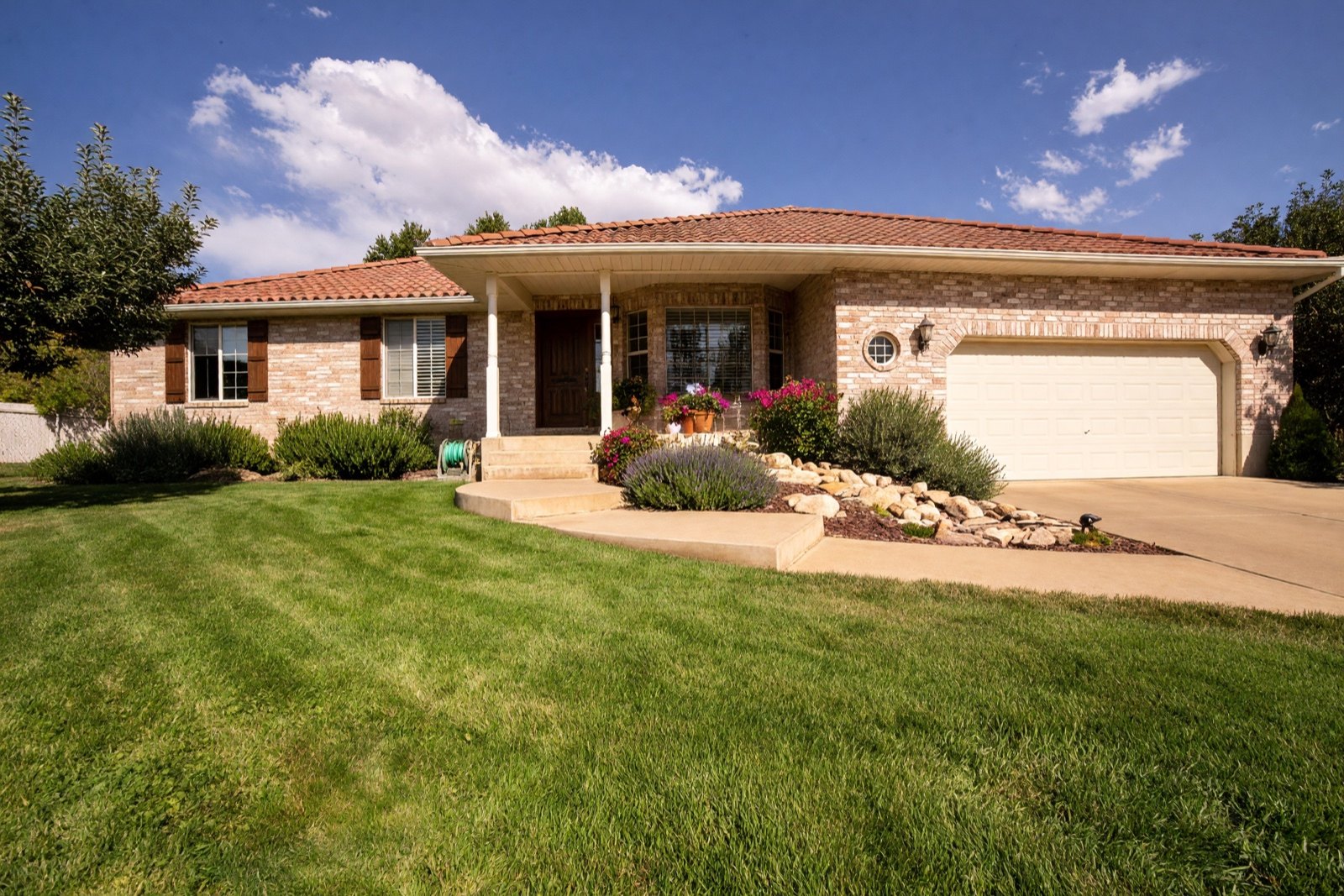
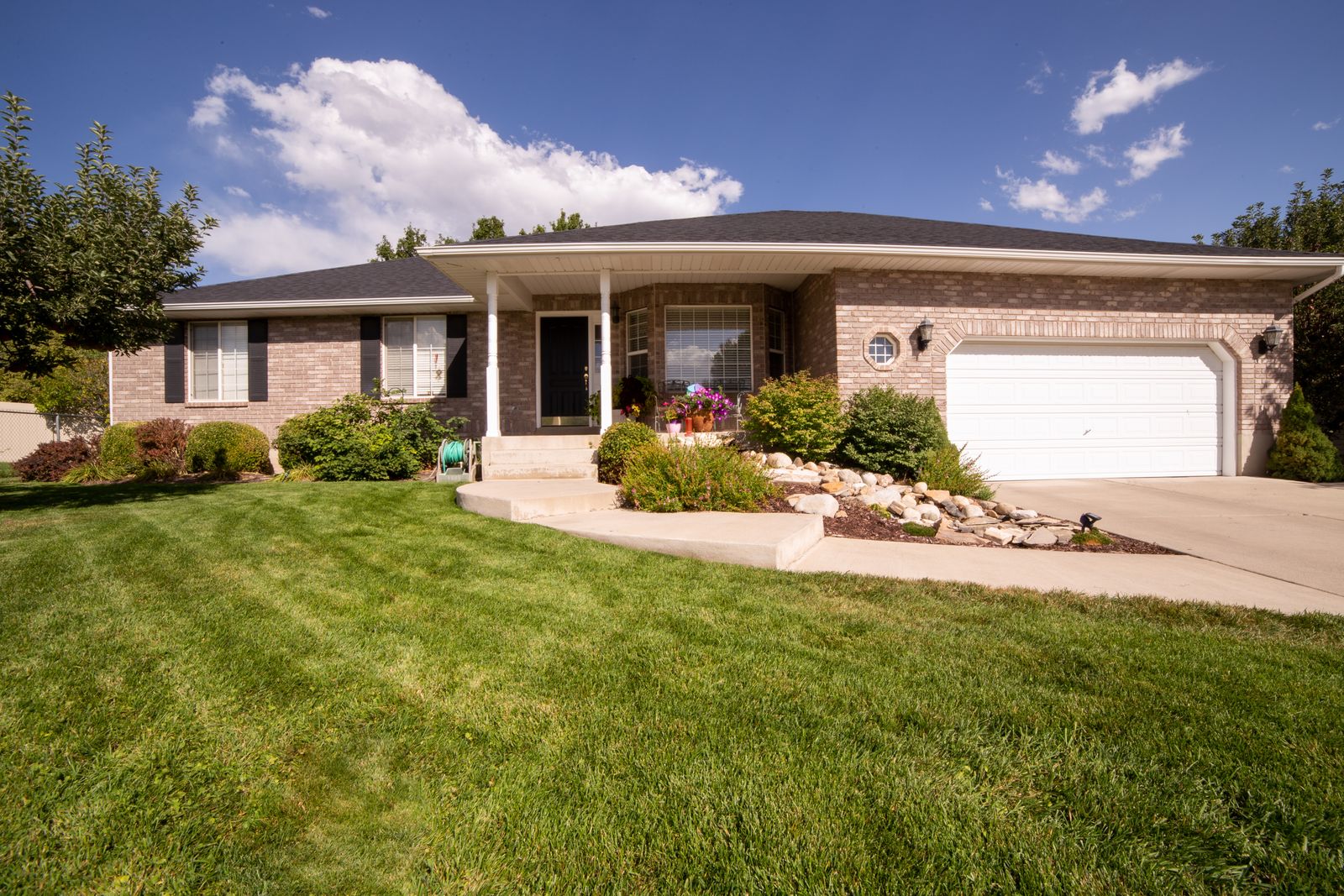
The roof changes the whole house. Terracotta against pale brick, with brown shutters and a wood door, is a quiet Mediterranean look that suits a single-story house. Swapping shingles for real clay tile is a roofing job for a builder. Keep the lawn simple so the roof stays the focus.
3. Peach render: a green house made warm
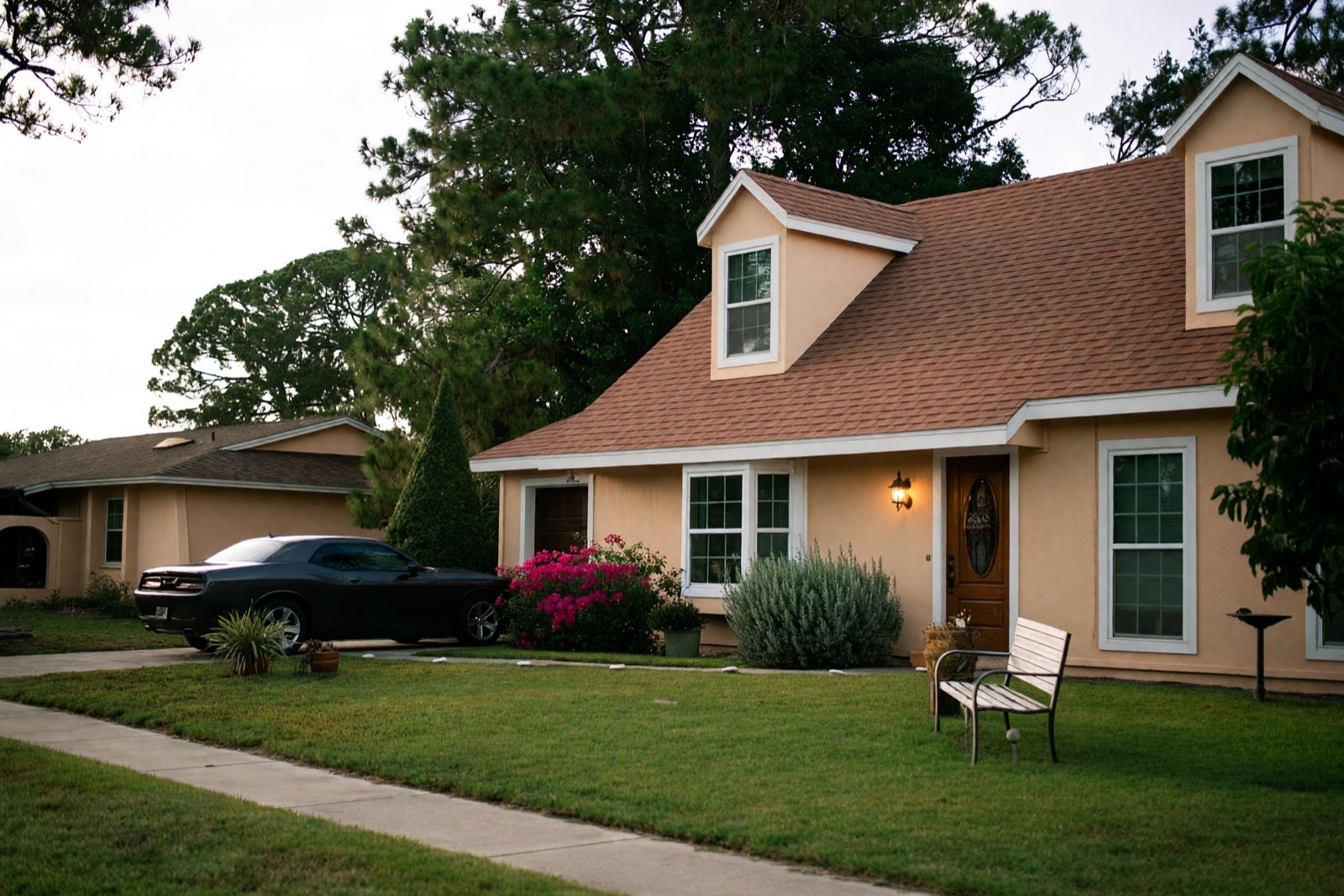
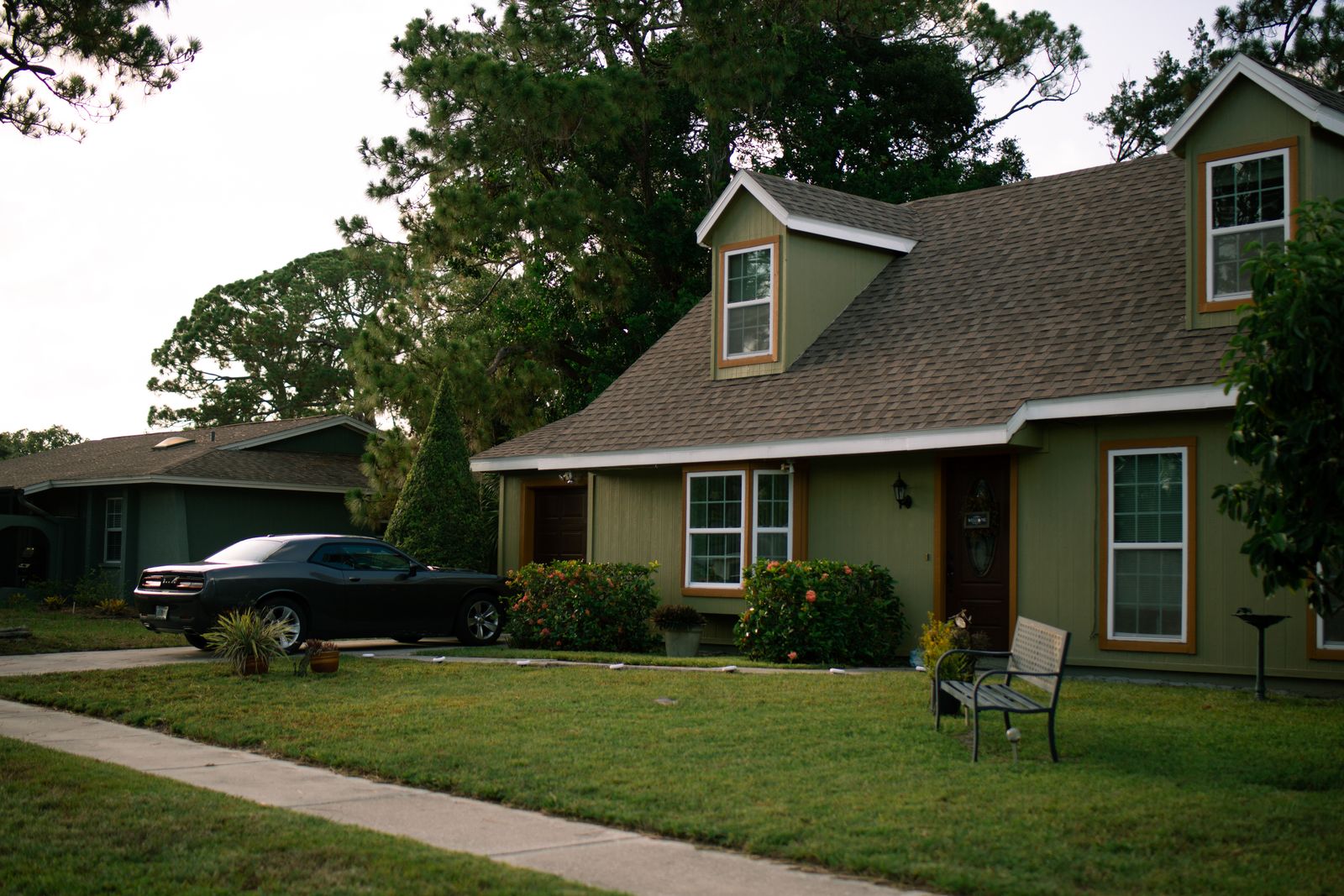
Peach and terracotta sit close together on the color wheel, so the house looks soft rather than orange. Trees and lawn keep it from feeling too hot. Check the new color next to the neighbors' houses before you commit.
4. Cream and green: a porch bungalow with a red-brown roof
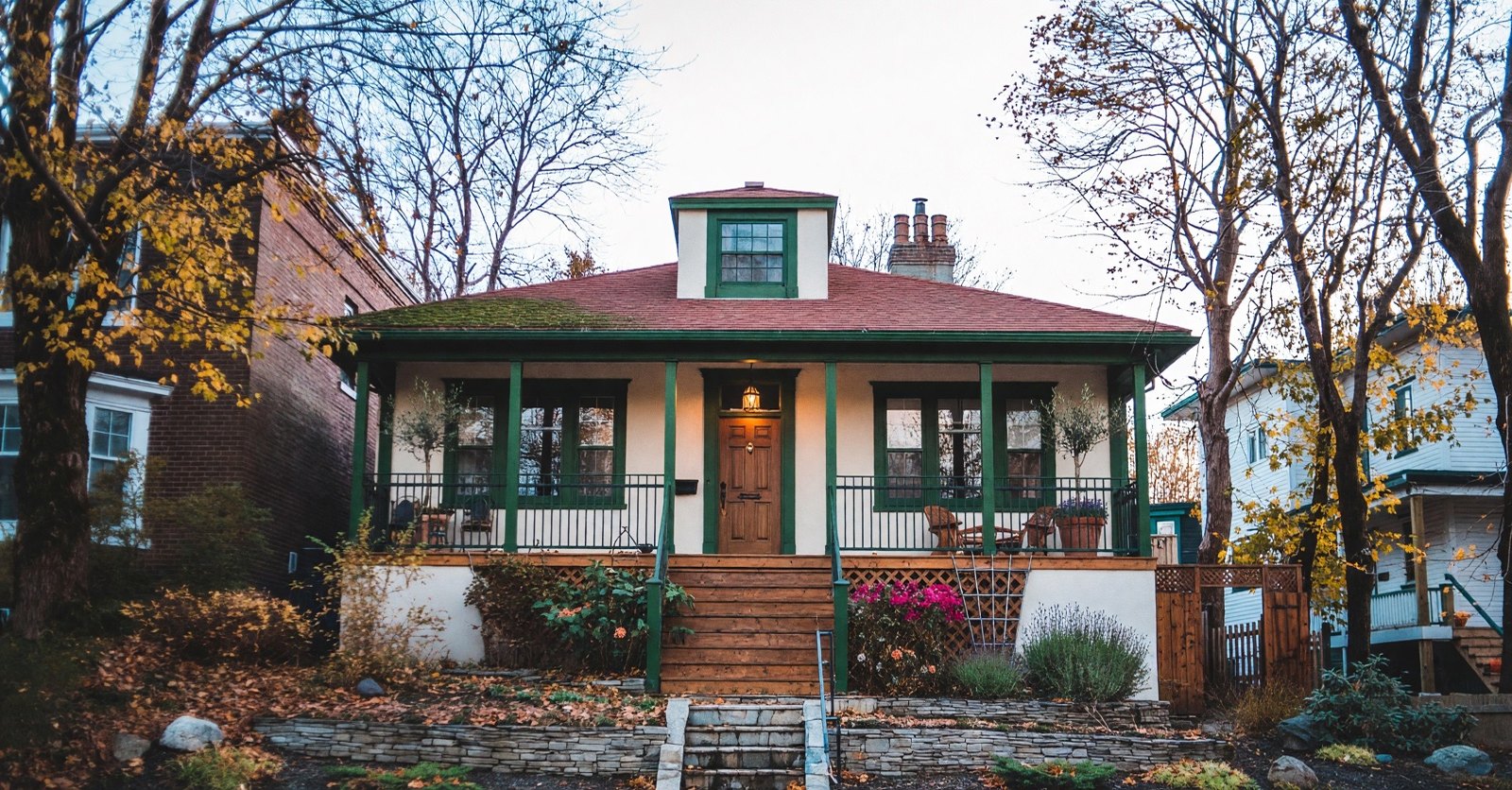
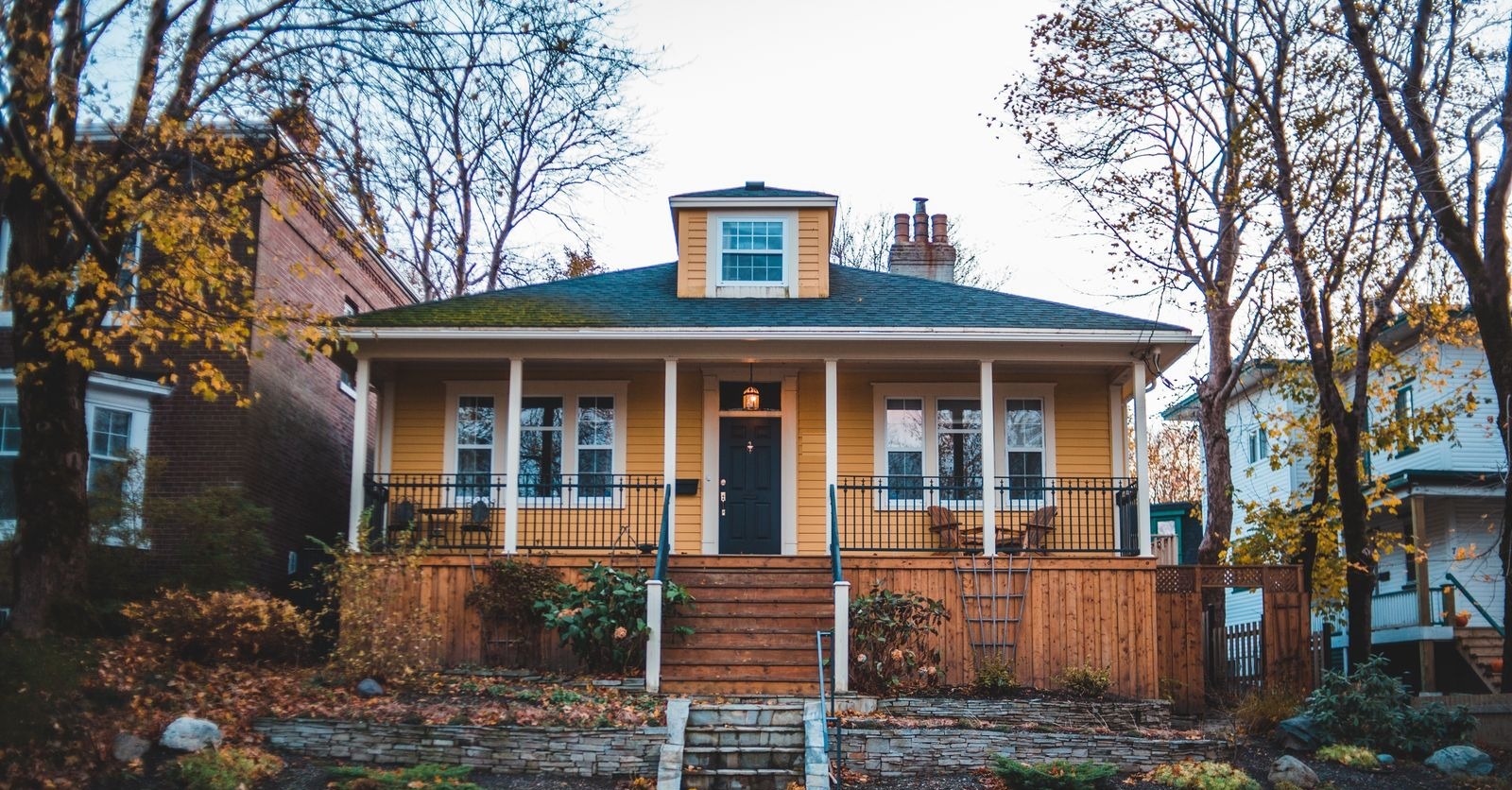
Yellow siding is already warm, so cream render, a red-brown roof and dark green trim move the house toward Mediterranean without changing its shape. Dark green posts and frames against cream are a classic pairing, and potted olive trees and lavender add the planting. The roof still looks like shingles, so it reads as terracotta in color, not as clay tile. Render is new cladding and clay tile is a new roof on a real house, so both need a builder.
5. Cream and brown: from white brick to sun-warmed render
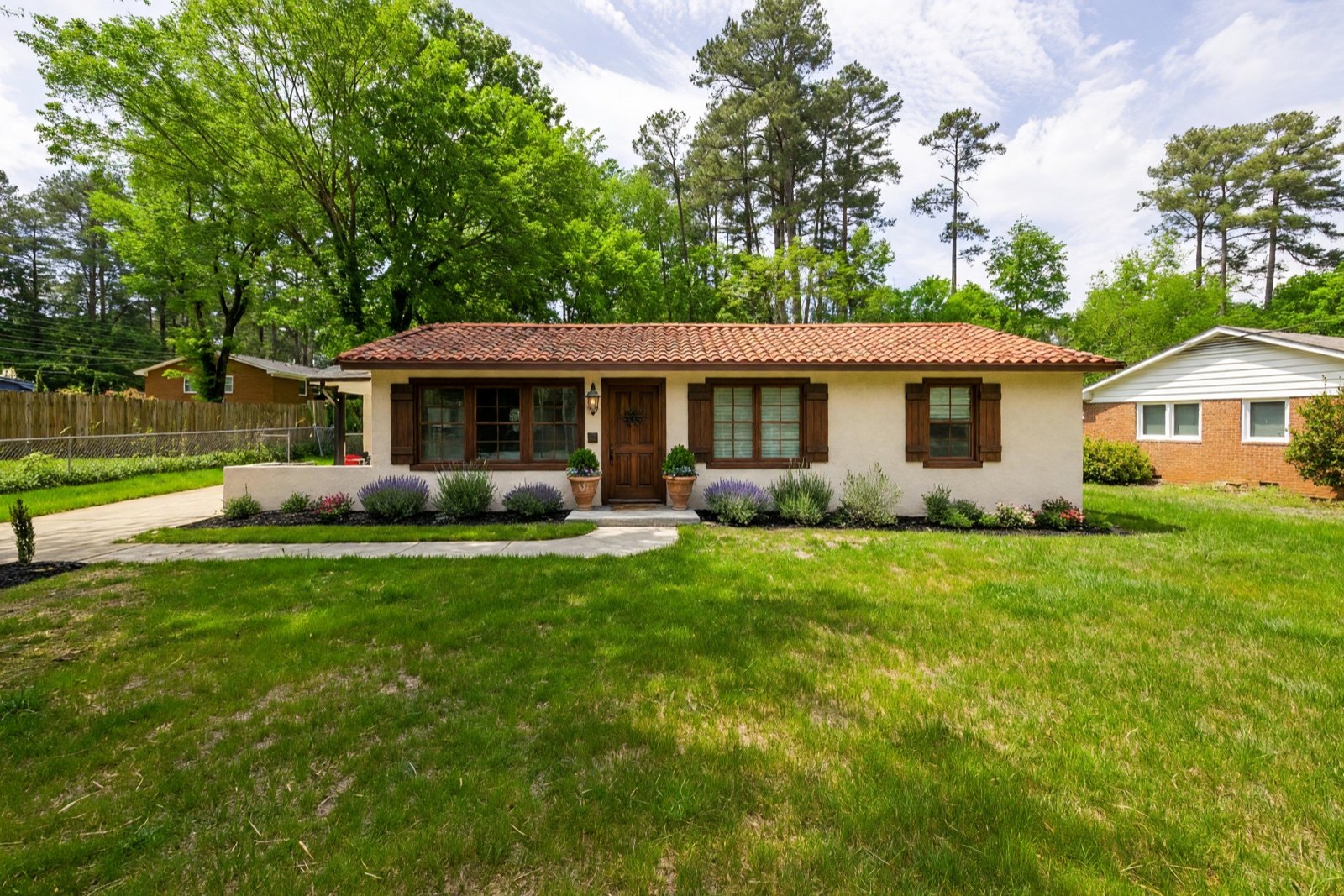
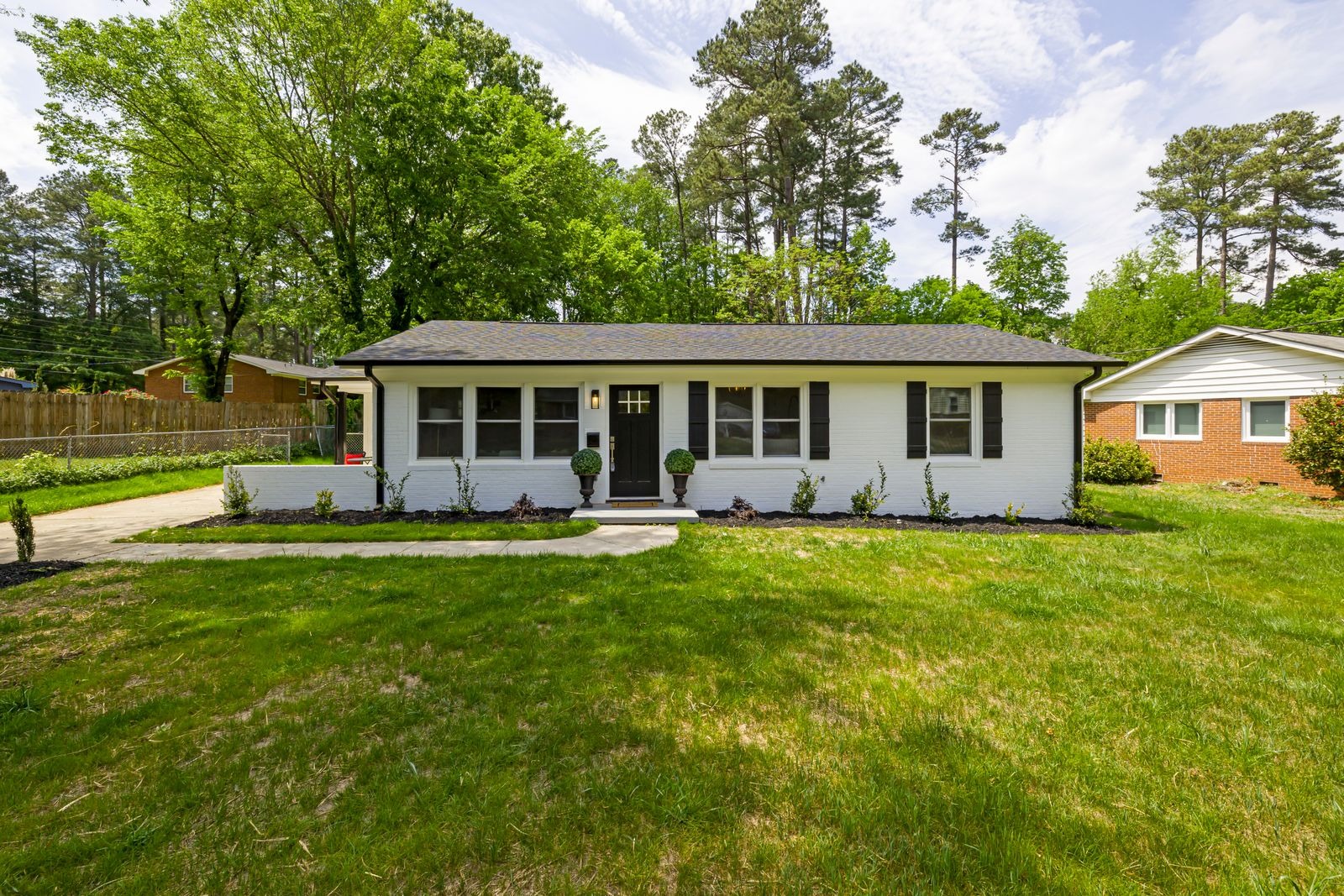
White brick looks crisp, and cream looks sun-warmed. Brown shutters, window frames and a wood door soften the front, and lavender in the bed is the quickest planting change. Compare the windows closely: the AI redrew the frames and added divided panes, so trim and proportions can shift. Render and tile are a new finish and a new roof on a real house and need a builder.
6. Cream siding and tile: a two-story colonial
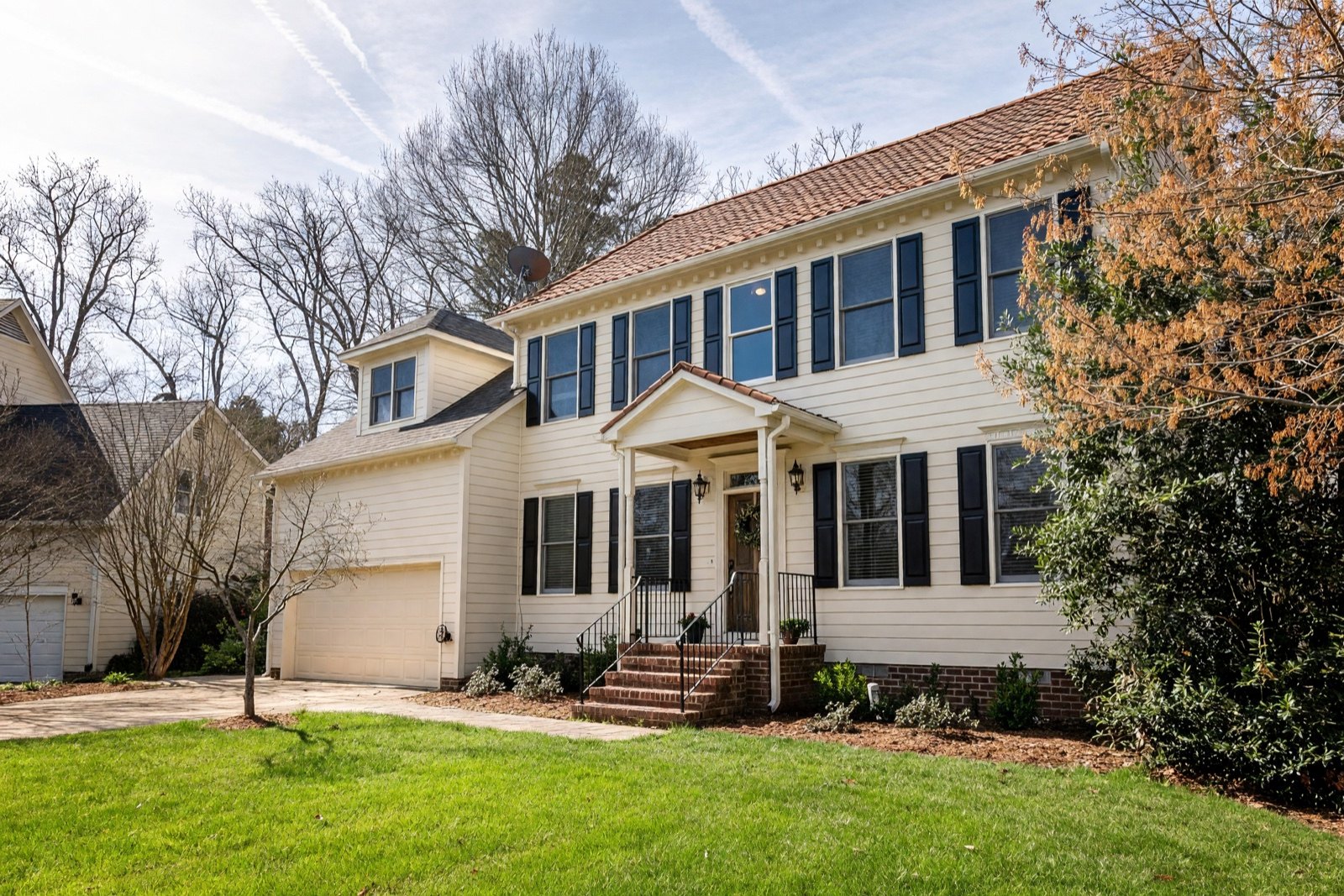
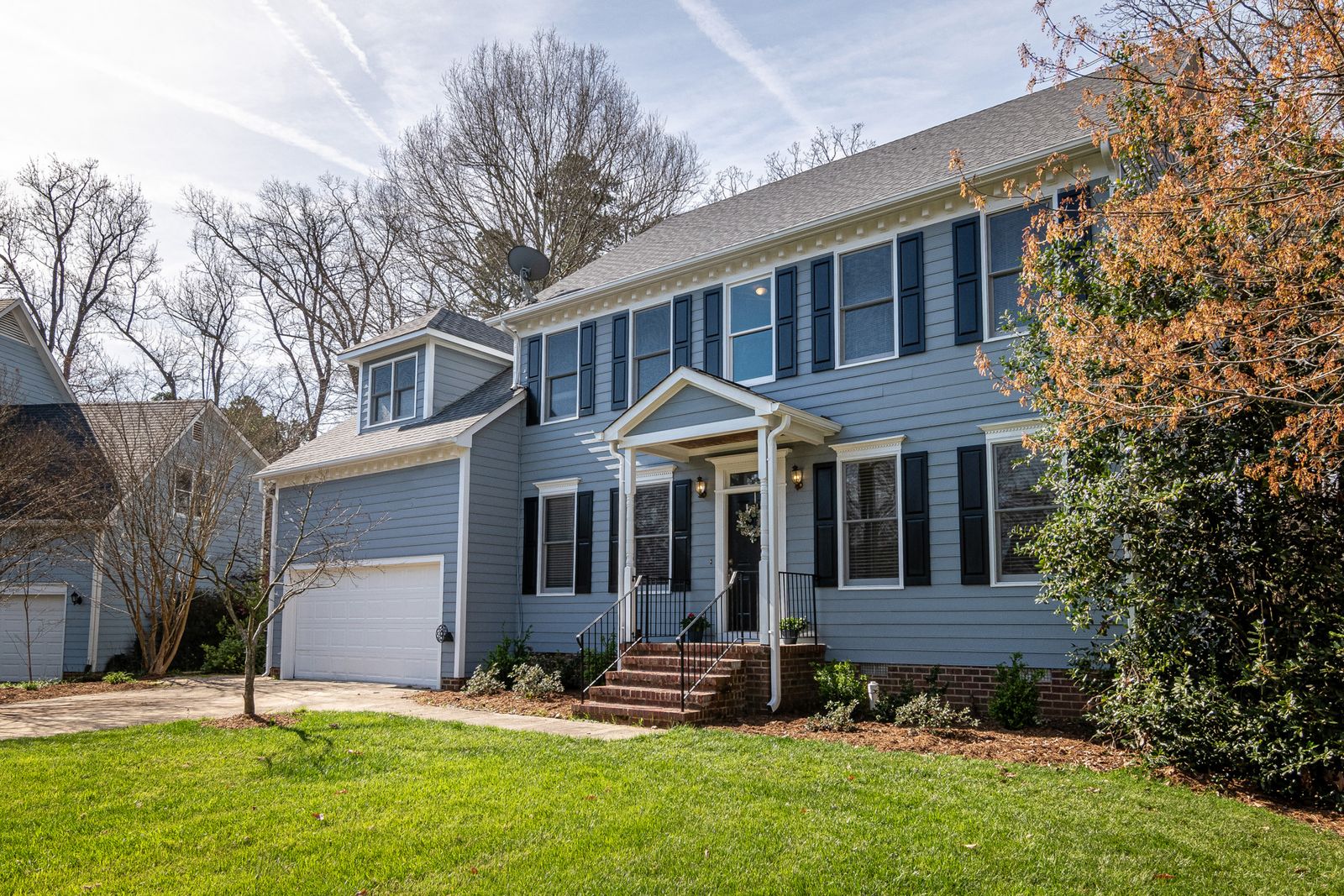
A classic colonial shape is formal, and the cream and terracotta soften it. Black shutters stay crisp against cream, though in a real Mediterranean look they would be brown or green. The lower garage-wing roof stays gray here, so check every roof section on your own photo. This pair shows how far color alone can go before the shape of the house limits it.
Mediterranean exterior elements at a glance
| Element | Mediterranean look | Good with | Watch out for |
|---|---|---|---|
| Walls | Cream, sand, ochre or peach render | Terracotta roof, wood door | Peach can turn orange in strong sun |
| Roof | Terracotta clay tile | Cream and sand walls | Heavy on a small house |
| Door and shutters | Warm wood or deep green | Cream render, iron lanterns | Black shutters stay a suburban cue |
| Garage door | Cream, sand or wood-look | Brick and render | A white door stands out against warm walls |
| Lighting | Wrought-iron or bronze lanterns | Wood doors | Cool white bulbs look harsh |
| Planting | Lavender, olive, grasses, bougainvillea | Terracotta and cream | Needs sun and little water |
Common Mediterranean exterior mistakes
- Mixing styles. Terracotta tile over cool blue or gray siding can look pasted on; start from the shape of the house.
- Too much orange. Terracotta roof, peach walls and orange brick together overwhelm; keep one warm color dominant.
- Keeping cool details. Black frames, gray gutters and cool white lights fight a warm palette.
- Forgetting the neighbors. Check how the new color sits next to the houses on either side.
- Skipping real samples. Test render, paint and tile samples in morning and afternoon light.
Where are Mediterranean-style homes found?
Mediterranean-style homes are most often associated with warm, sunny regions: the coasts of southern Europe and, in the US, areas such as California, Florida, Texas and Arizona. The style appears wherever people like it, though, and render-and-tile houses turn up well outside hot climates. This is a general pattern, not a count or a ranking. Thick, light-colored walls and clay roofs suit strong sun, which is part of why the look took hold there. If you live somewhere with hard frosts, ask a local builder how render (stucco) and clay tile hold up before copying the look literally.
Modern Mediterranean exterior ideas
A modern Mediterranean house keeps the warm palette and simplifies the detail. These are the usual differences:
- Walls. Smooth cream or sand render with clean edges, instead of heavily textured plaster.
- Roof. A low-pitched or plain tile roof without decorative trim.
- Openings. Larger, simpler windows and a plain wood or dark-framed door.
- Metal and light. Wrought iron as a simple railing or one lantern, not scrollwork.
- Planting. A few olive trees, grasses and lavender in tidy groups.
Preserve Structure is designed to keep the shape of your building, so it should warm the colors and finishes rather than turn a traditional roofline into a flat one, though the AI can still redraw details, so compare the result closely. A new roofline is a building job.
Courtyards, house plans and floor plans
A courtyard is an open space enclosed by the house or a wall, usually with paving, shade planting and a focal point such as a small fountain or a tree. It is part of the layout, so a photo of the front of a house cannot add one. If you already have a patio or yard, Garden Design can show paving, planting and mood ideas on your photo. This page shows exterior looks, not plans, and it does not list homes for sale; for a floor plan with a courtyard, ask an architect or a plan designer.
Try a Mediterranean exterior on your own house photo
Upload a straight-on daylight photo of your house to Exterior Design, choose House and the Mediterranean style, then Preserve Structure to keep the shape of your building and, by design, its existing materials while it changes colors, finishes, lighting and planting. The AI can still redraw walls and roof as render or tile, as in the examples above, and your result may keep its brick or shingles; for a stronger change, choose Bold Exterior. Preserve Structure does not add arches, courtyards or a new roof structure; those come from the building.
The result is a design idea, not a construction plan or a material specification. Colors look different on screen and on the house, so test real samples before you buy. For palettes, see house exterior color ideas. For a different style, see modern farmhouse exterior ideas. For a small garden around the house, see small backyard garden ideas. More exteriors and rooms are on the HomeCompose design ideas page.
Frequently asked questions
What makes a house look Mediterranean?
Warm, textured walls in cream, sand or peach, a terracotta tile roof, a warm wooden door with iron details, brown or green shutters, and planting such as lavender, olive and bougainvillea.
Can I give my house a Mediterranean look without rebuilding?
Partly. Paint or render, roof color, doors, lighting and planting can change the look. Arches, courtyards and a real tile roof change the building and need a builder.
Which colors suit a Mediterranean house exterior?
Cream, sand, ochre and soft peach for the walls, with terracotta on the roof and brown or deep green on doors and shutters. See house exterior color ideas for more palettes.
Is it free to try?
Yes. You can start on the free plan, and it includes a limited number of designs.
How much does a Mediterranean-style house cost?
There is no single figure. The cost depends on the size of the house, the region, the materials and the builder. Stucco (render) walls and clay roof tiles can cost more than basic siding and shingles, and clay tile is heavy, so the roof structure may need checking too. Ask local builders for written quotes. An AI picture of your own house is a design idea, not a cost estimate.