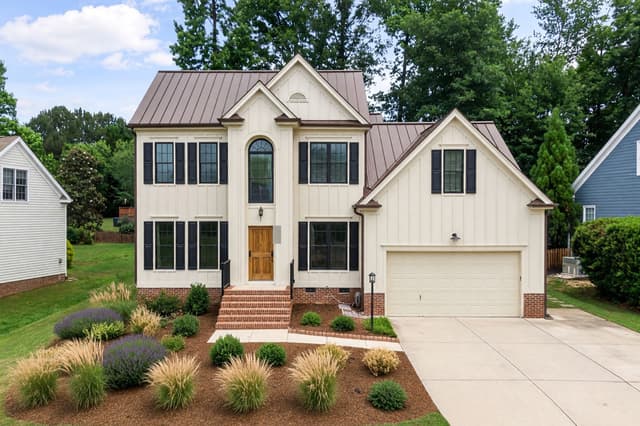
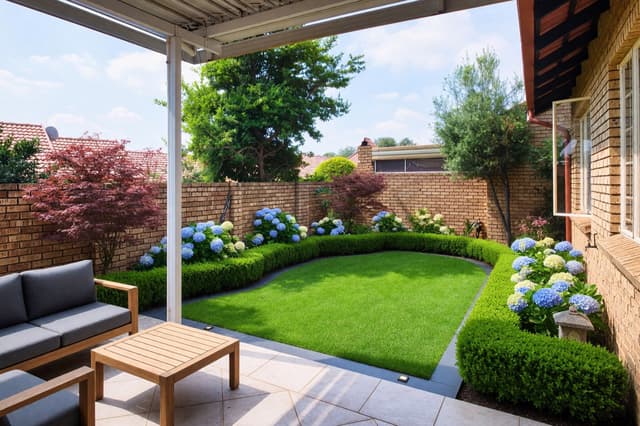
House exterior color ideas
A good exterior color scheme has three parts: a main wall color, a trim color and one accent for the front door, all chosen to suit the roof. Combinations that work on many houses include white with black shutters, greige with taupe, cream with navy, sage green with cream, and charcoal with natural wood. Below are six real houses recolored with HomeCompose, plus how light and climate change what you see.
How to choose exterior house colors
- Start with what stays. The roof, brick, stone and window frames are costly to change, so choose paint that suits them.
- Use three roles. One color for the walls, one for trim, gutters and frames, and one accent for the front door.
- Match the undertone. Brown or red roofs suit warm whites, creams and greiges; gray or black roofs suit cooler whites, grays and blues.
- Go a shade deeper. Colors look lighter in full daylight than on a small paint chip.
- Check the street and the rules. Your house is seen next to its neighbors, and some neighborhoods and historic areas limit exterior colors.
6 house exterior color combinations
Each example starts from a real photo and uses the Preserve Structure mode: it is told to keep the house's shape and materials and to change colors and finishes, with small updates to lighting and planting. That makes it a preview of a repaint, though small details such as the roof tone or window grid bars can still change.
1. White with black shutters and door
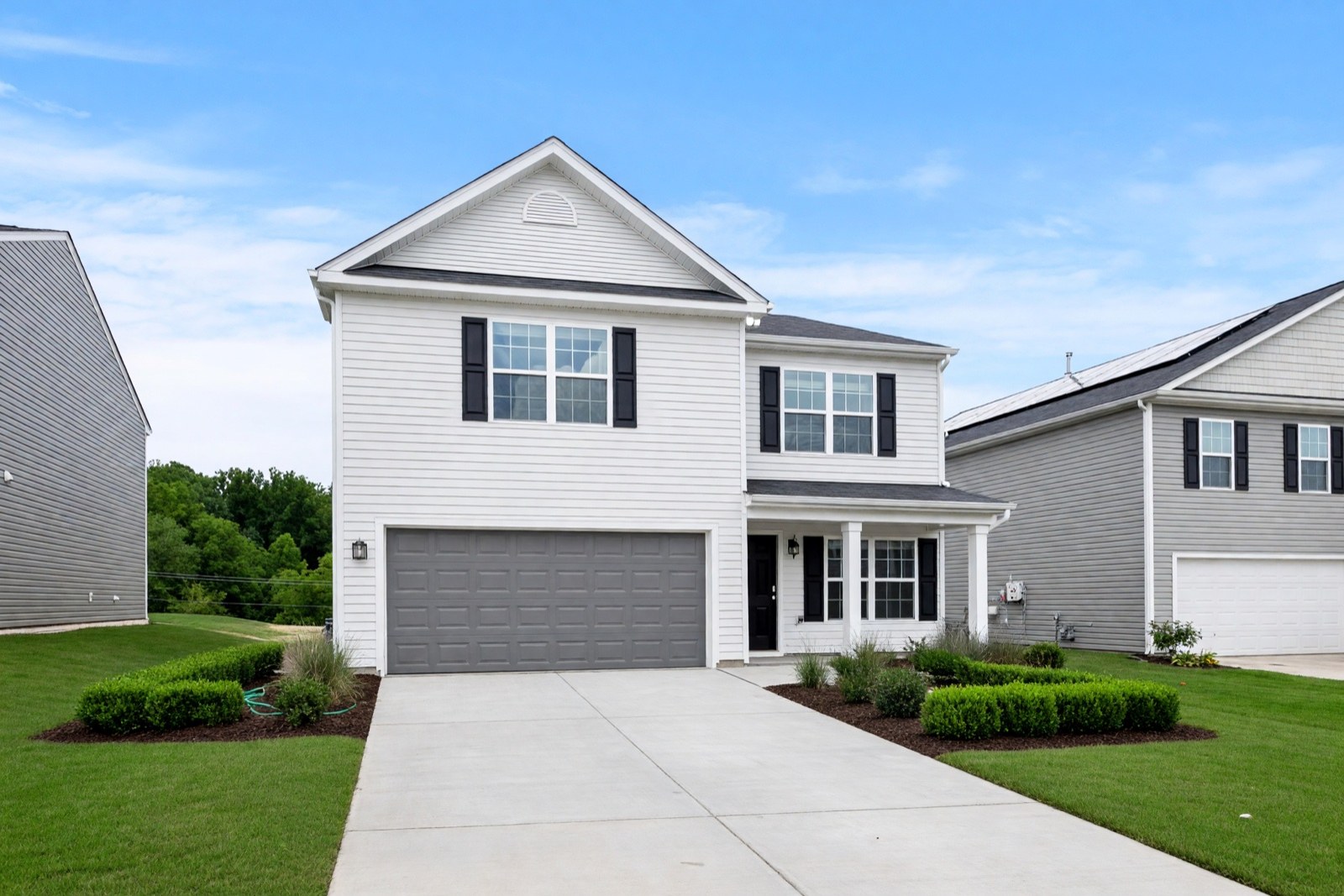
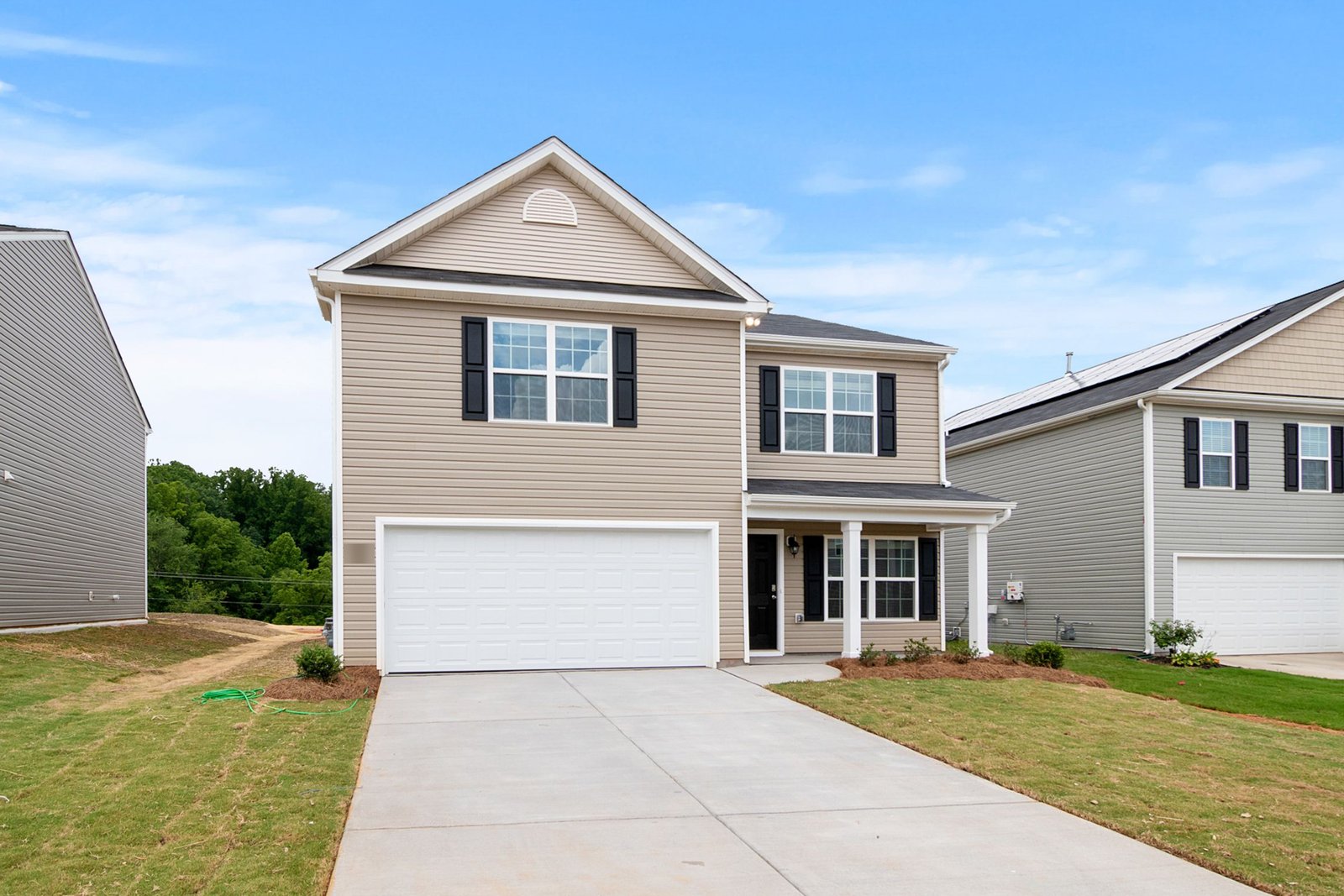
Crisp and graphic. White walls and trim with black shutters, a black door and a gray garage door suit almost any roof. Pick a white with a little warmth so it does not glare in strong sun.
2. Greige with taupe trim and a dark door
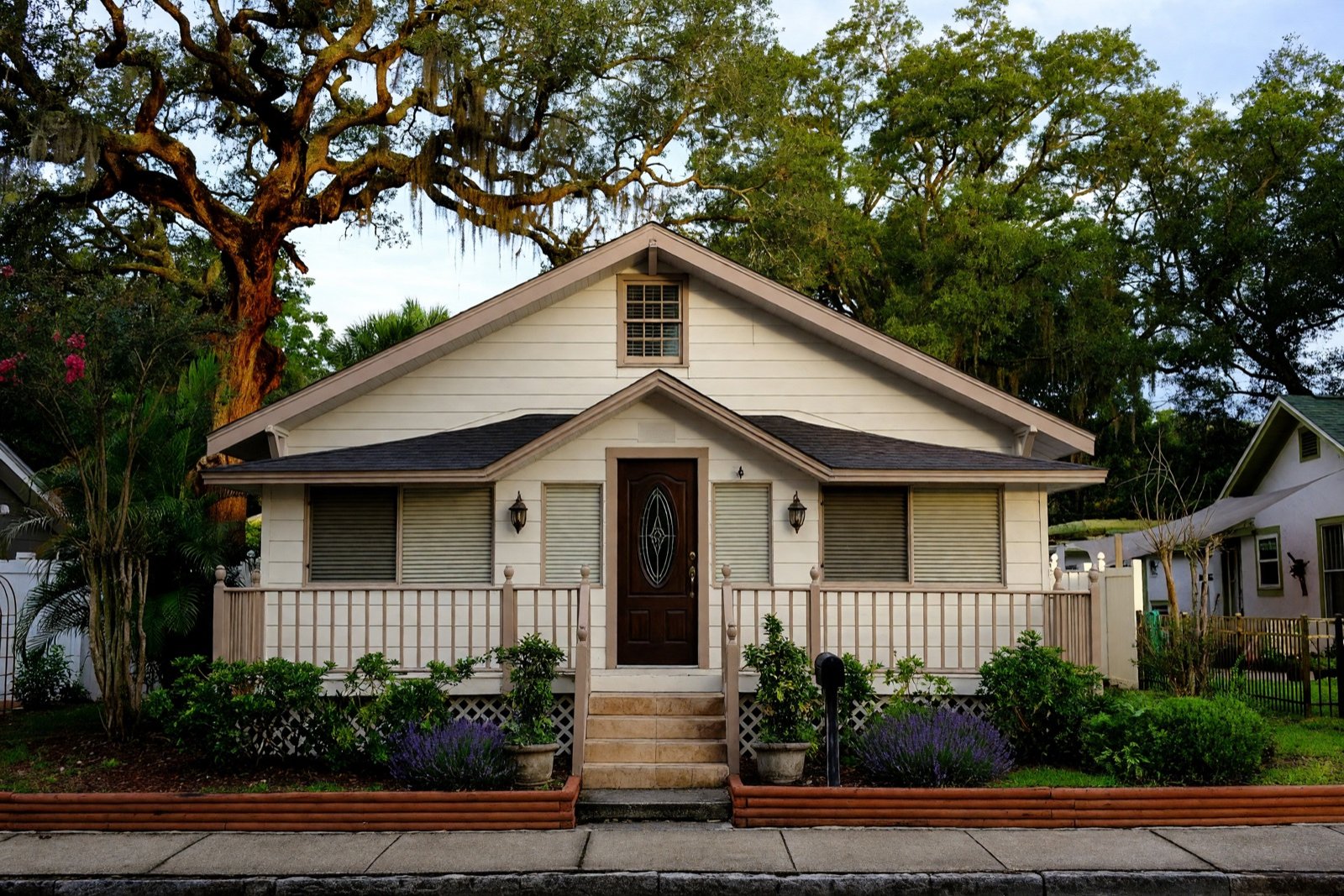
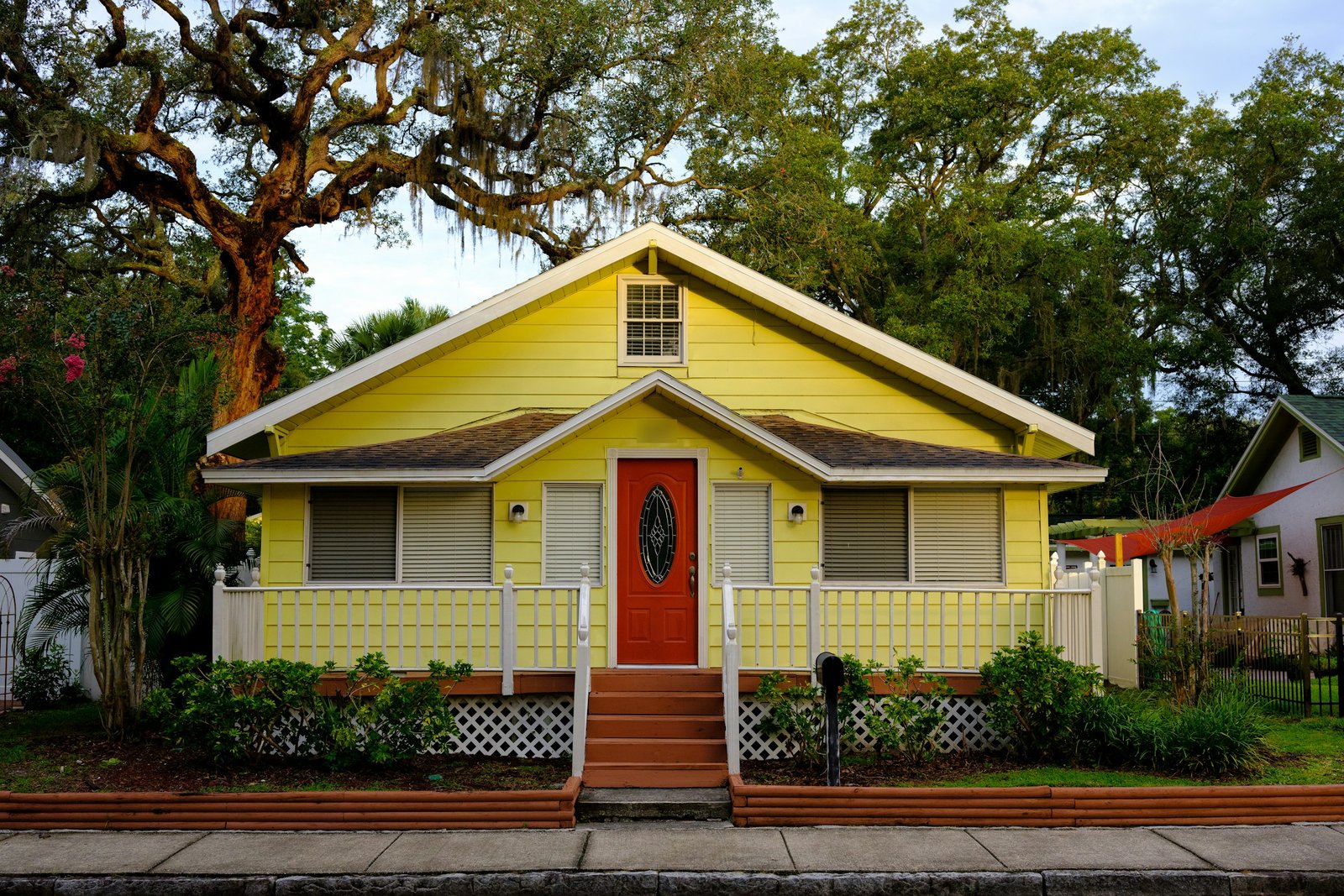
Greige, a mix of gray and beige, is easy to live with: it hides dust better than white and works with brown or gray roofs. Taupe trim keeps it soft, and a dark brown or black door adds a focal point.
3. Cream with navy shutters and door
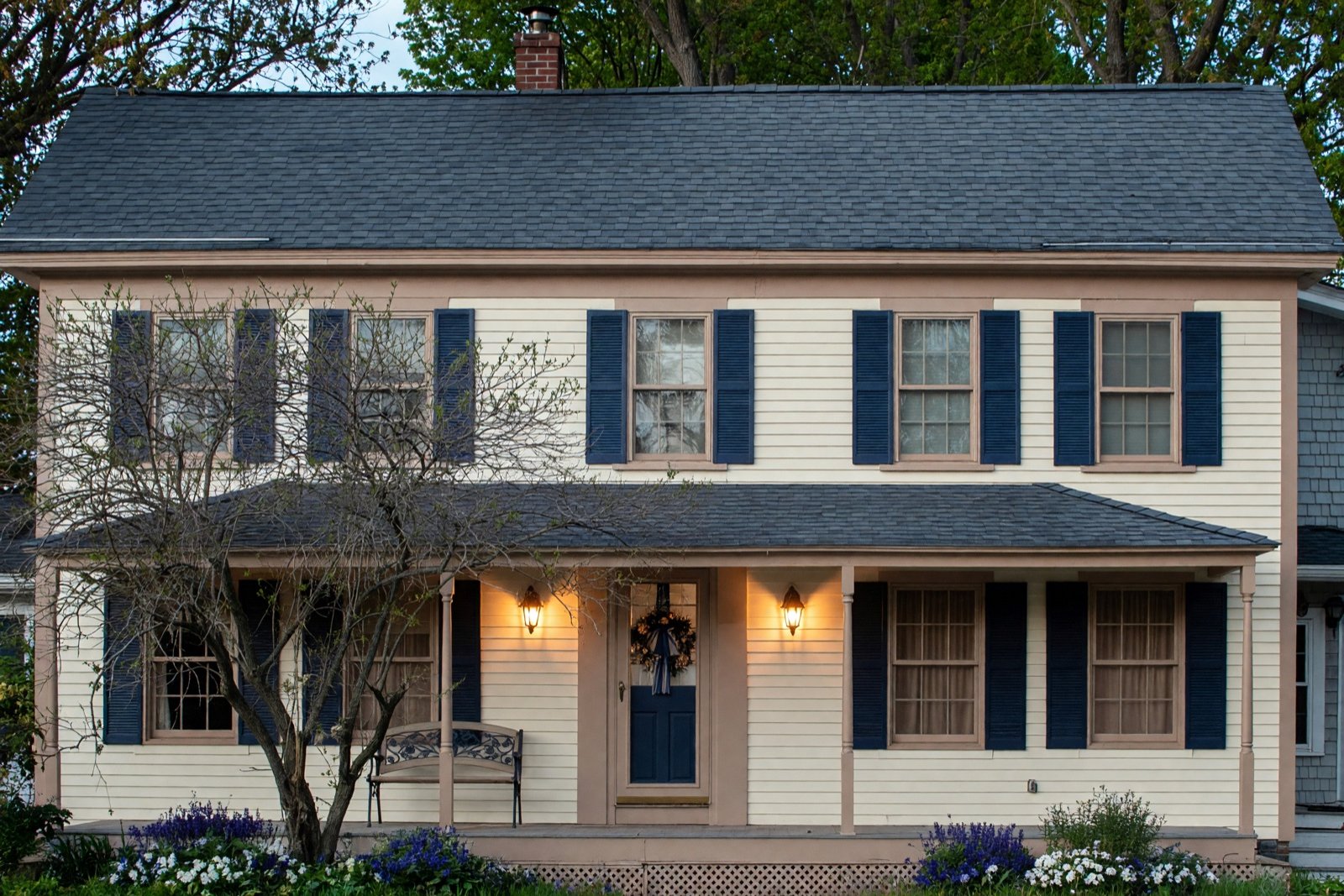
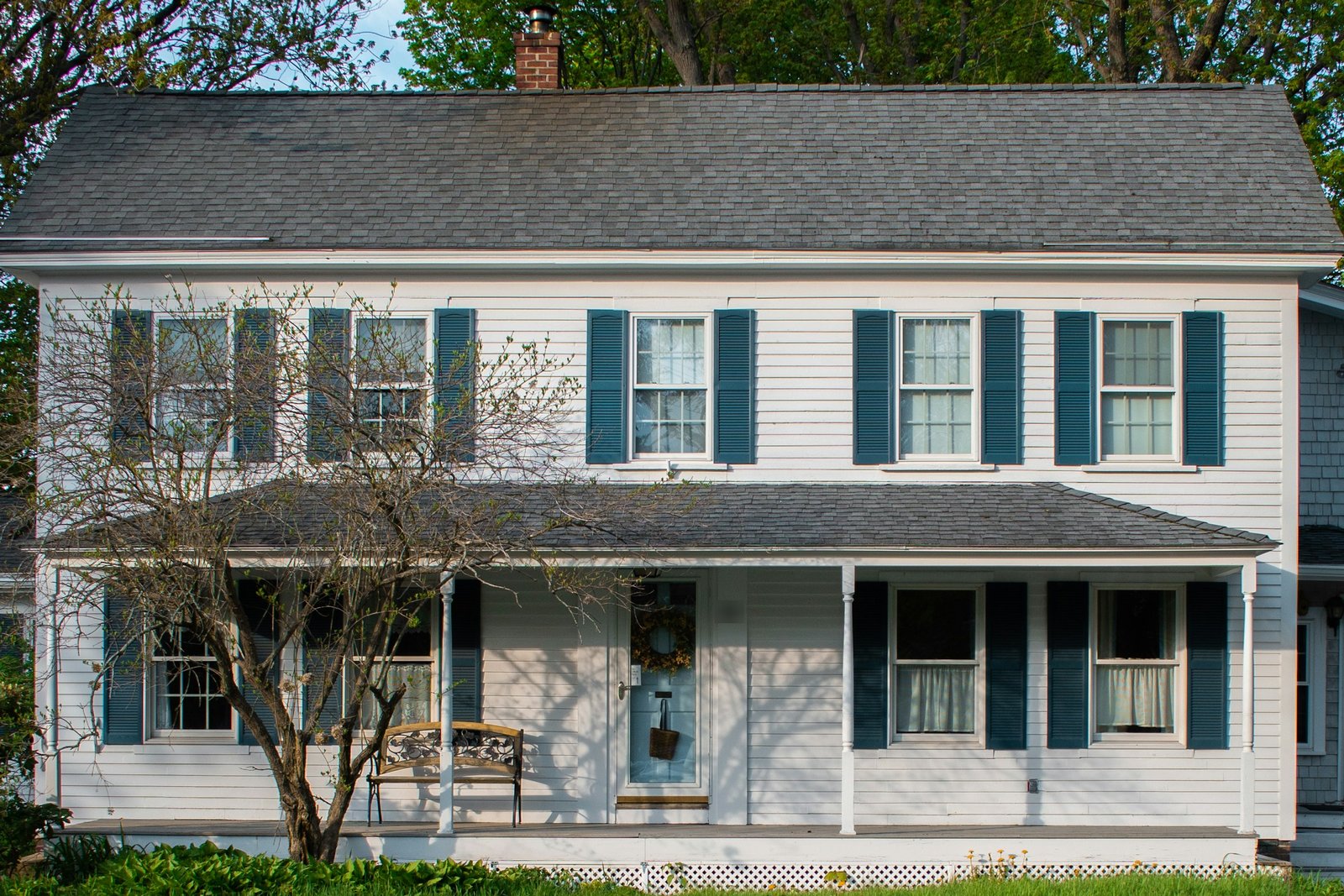
Cream walls and tan trim are softer than white, and navy shutters and a navy door give them a crisp edge. They sit well under a gray or black roof, and lanterns by the door add warmth.
4. Sage green with cream trim
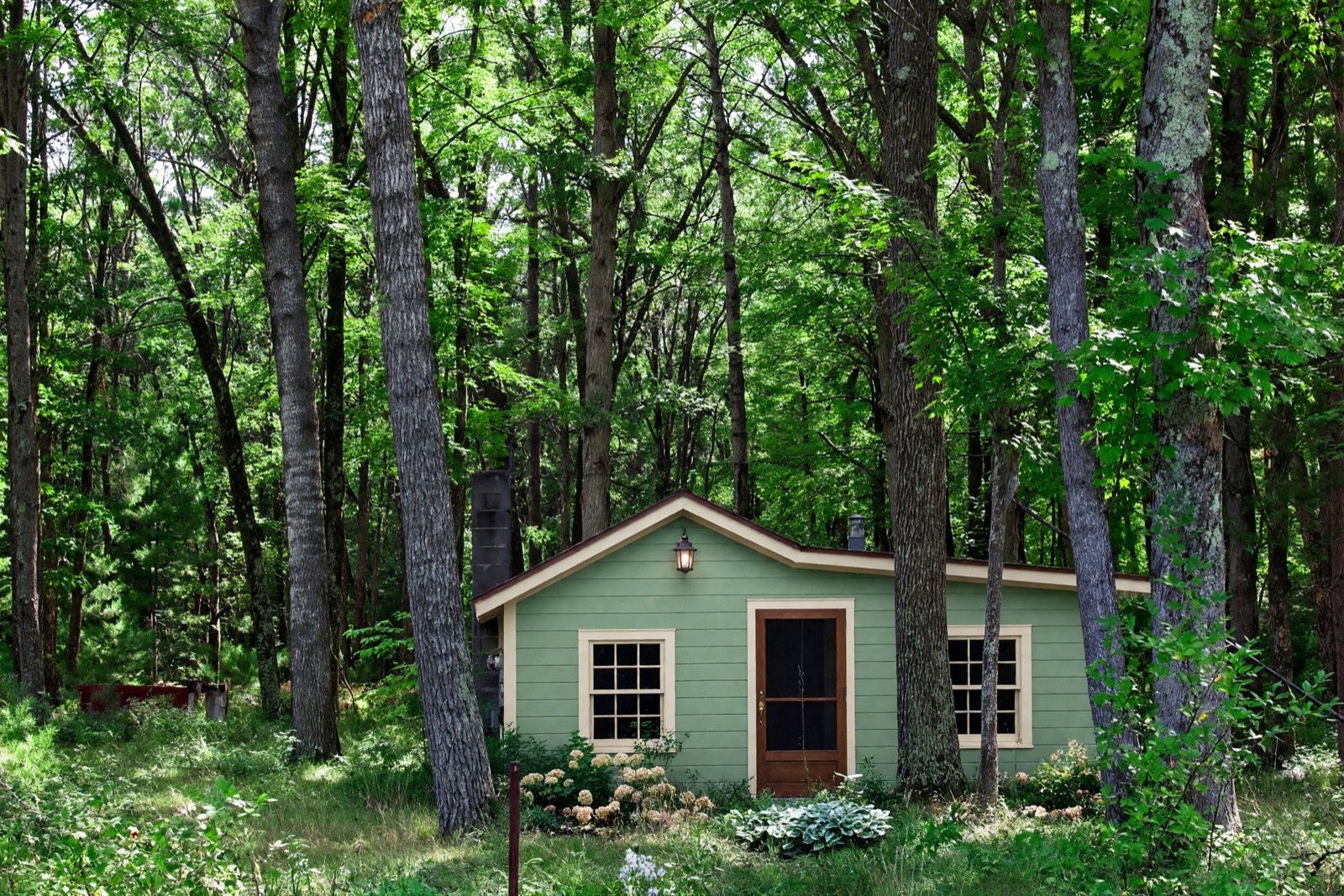
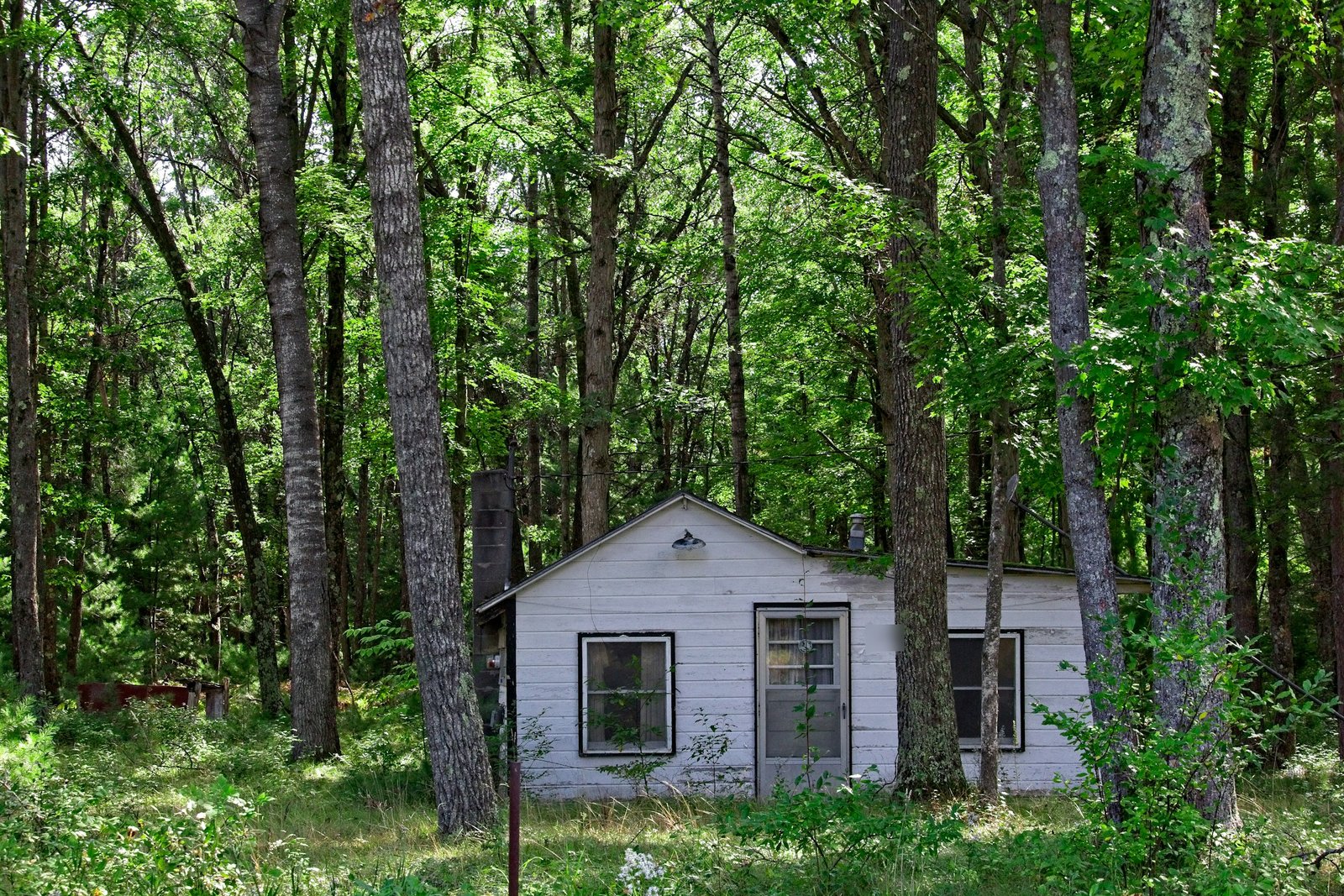
Muted greens sit naturally among trees and planting. Sage or olive walls with cream trim and a wood door feel calm and suit cottages and older houses.
5. Charcoal with natural wood
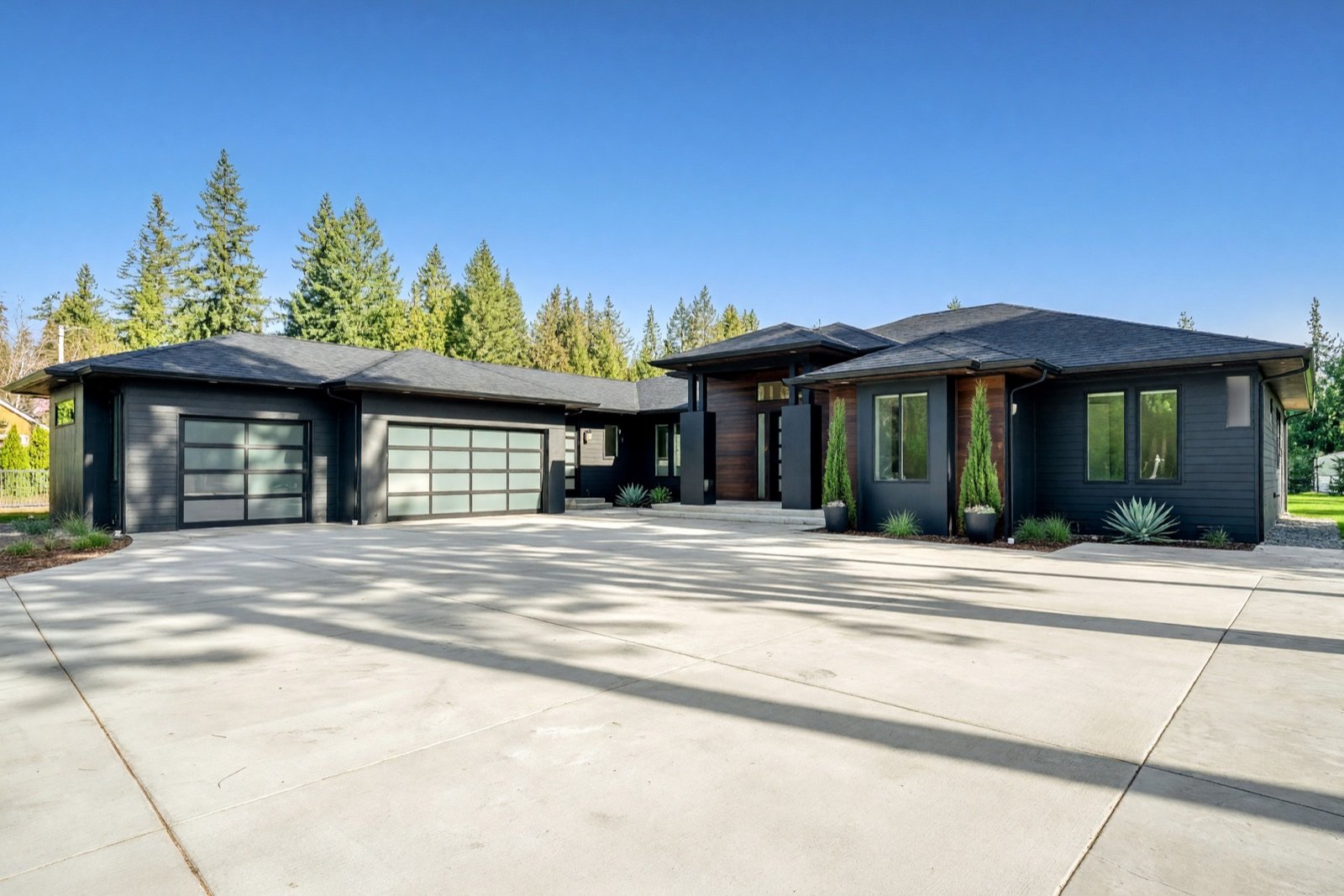
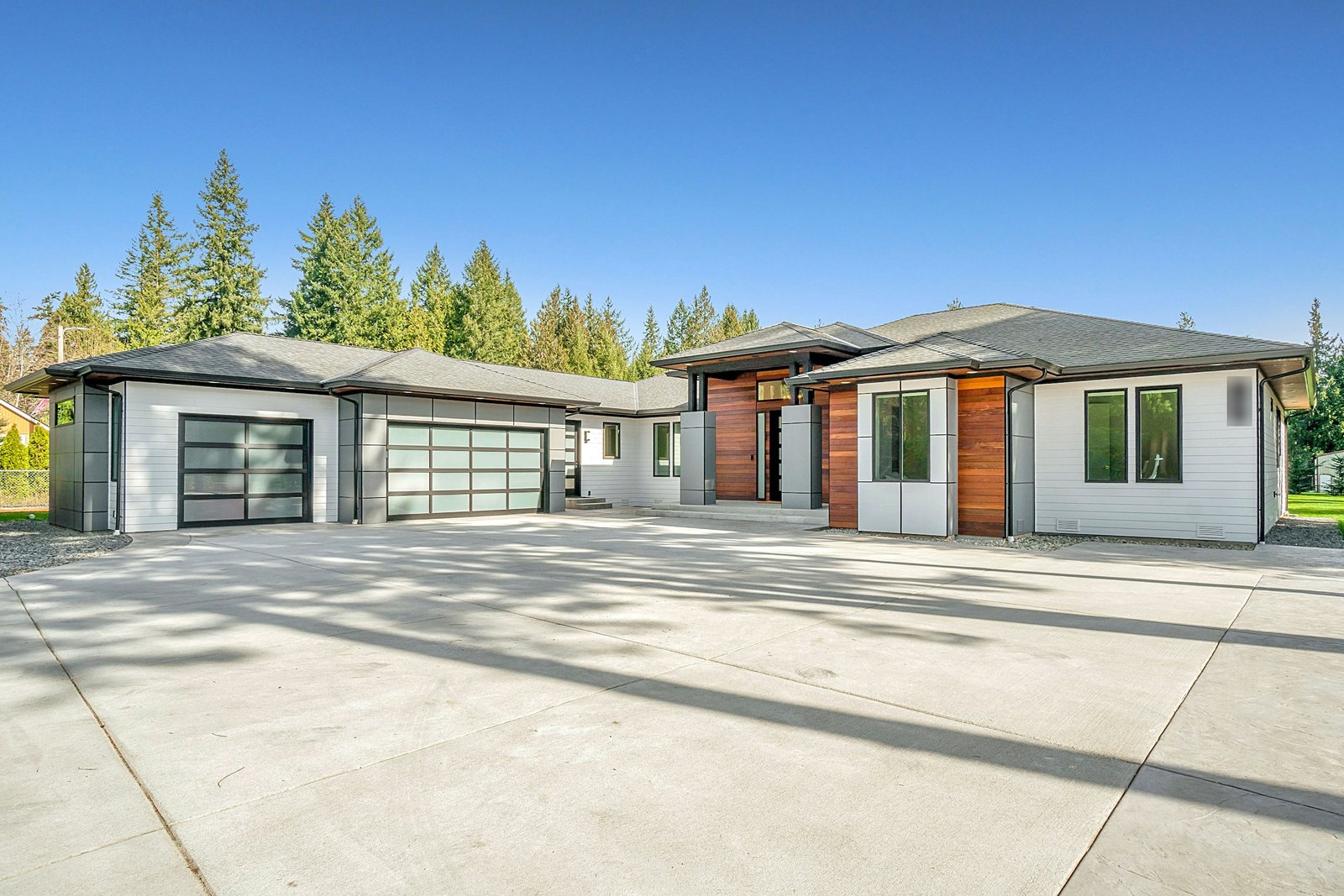
Charcoal walls make a strong modern statement and recede into a green setting. Natural wood boards around the entry keep them from feeling heavy.
6. Terracotta and warm earth tones
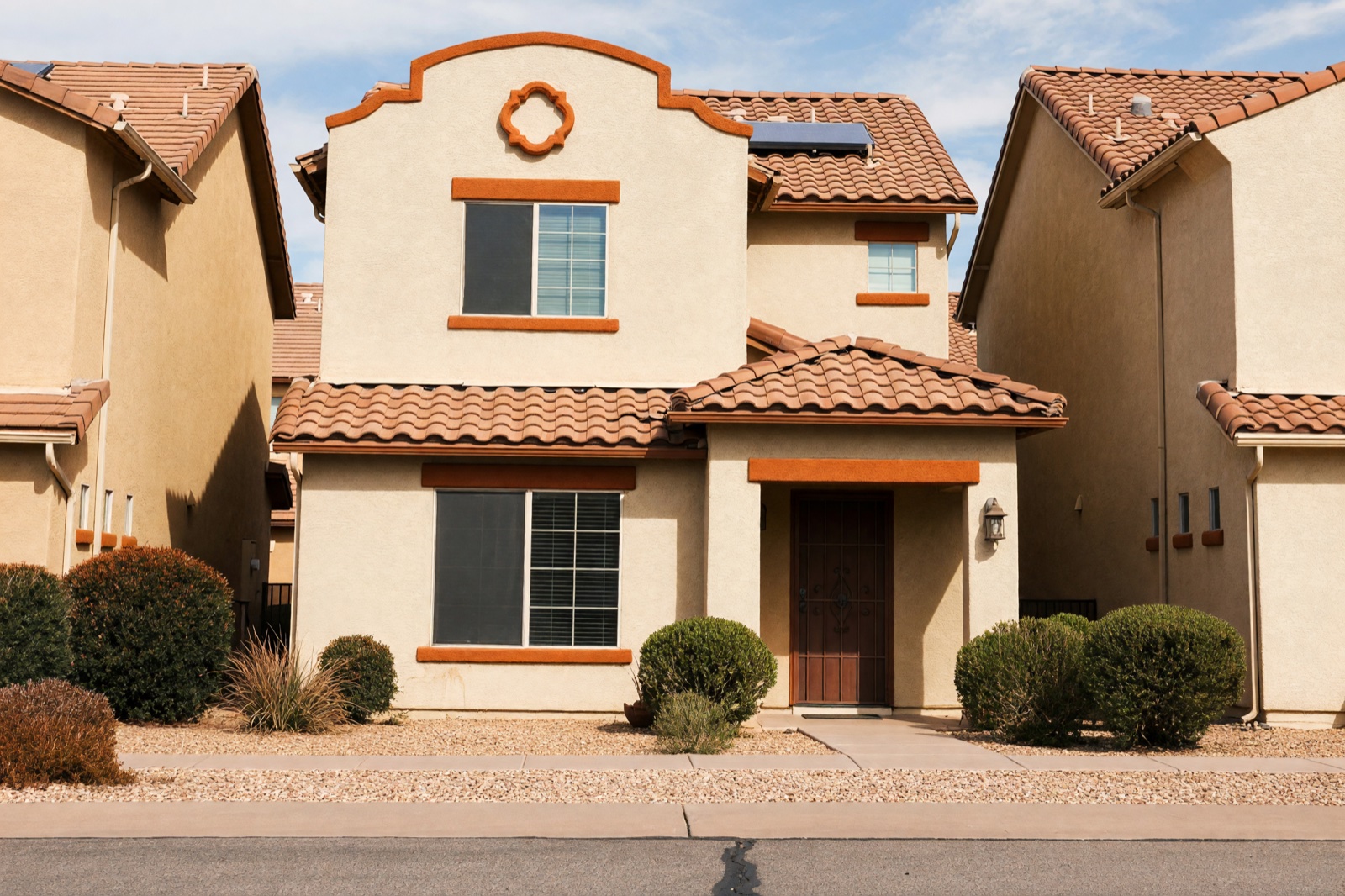
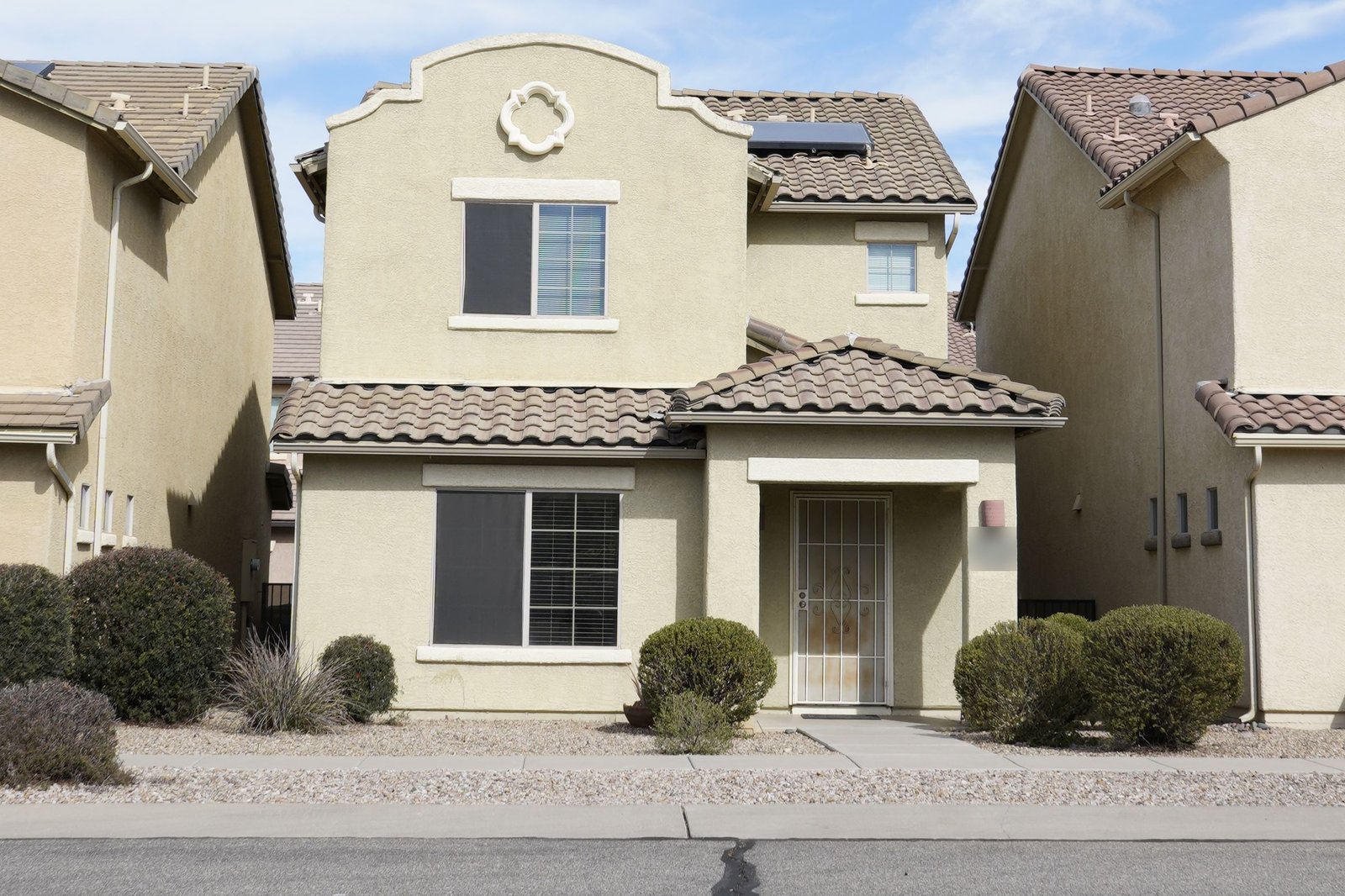
In sunny, dry climates, earth colors such as terracotta, sand and ochre hold up well in strong light. Pair sand walls with terracotta or off-white trim and dark wood or iron details.
Exterior color combinations at a glance
| Walls | Trim | Front door | Roof it suits |
|---|---|---|---|
| Soft white | White, with black shutters | Wood or black | Most roof colors |
| Greige | Taupe or white | Dark brown or black | Brown, gray, black |
| Cream | Tan | Navy | Gray, black |
| Sage green | Cream | Wood | Brown, gray, green |
| Charcoal | Charcoal or black | Black or natural wood | Black, dark gray |
| Terracotta or sand | Terracotta or off-white | Dark wood | Clay tile, brown |
How light and climate change exterior colors
- Strong sun washes colors out. Mid-tones and earth colors hold up better than very pale or very bright ones.
- Cloudy climates and shady walls make colors look darker and cooler. Slightly warmer, cleaner shades keep a house from looking dull.
- Heat and fading. Dark colors absorb heat, so check that your siding is rated for them. Deep, saturated colors also tend to fade sooner in strong sun.
- Surroundings reflect onto your walls: trees, lawns, red brick and the house next door all shift how a color reads.
To see one scheme in different light, Swap the Sky & Weather shows the same photo under an overcast sky or at golden hour (Essential and Pro plans). Treat it as a rough preview; only real samples show true color.
What are the best exterior house colors?
There is no official top five and no single best color. The best exterior color is the one that suits your roof, your surroundings and the light on your street. Five families are widely used because they work with many houses:
- White and warm white. Crisp and classic. Choose one with a hint of warmth so it does not glare in strong sun.
- Soft gray or greige. Easy to live with, and it pairs with brown, gray or black roofs.
- Deep blue. Navy shutters and doors look sharp against cream or white trim, and navy also works on the whole house.
- Green, from sage to forest. Sits naturally among trees and planting.
- Black or charcoal. Usually an accent on the door, frames and shutters. Charcoal on the whole house is a bolder, more modern choice.
To choose between them, start with the roof and anything that stays, then think about the trees, brick and neighbors around the house. The examples above show these colors on real houses, each as a before and after.
Which exterior color is the most beautiful?
That is personal, and it depends on the house, so no color wins every time. A better test is how a color looks on your own walls. Paint a large sample patch, roughly three feet (1 m) square, on a sunny side and a shady side, then look at it from the street in the morning, at midday and in the evening. The color you still like at all three times is usually the one to keep.
Trendy exterior colors for 2026
Trends give a direction, not a rule. Recent exterior schemes lean toward earthy, warm neutrals such as sand, clay and warm greige, muted greens, and dark accents on the door, frames and trim. Exterior paint is meant to last for years and the house stays on its street, so choose a color you will still like in ten years and keep the trendier shade for a detail such as the front door. For sunny, earthy palettes, see Mediterranean house exterior ideas.
Exterior colors for a small house
Lighter colors tend to keep a small house feeling open, because they reflect more light. Use one wall color and a trim a shade lighter, so the house reads as one calm shape instead of being cut up by strong contrast. A darker front door still gives it a focal point. Dark walls can work on a small house too, especially among trees, but test them first. Planting does a lot for a small frontage as well; see front yard landscaping ideas.
Simple and modern exterior colors
A modern exterior comes from clean lines and few colors, not from one particular shade. Pick one wall color in white, warm gray or charcoal, a matte or low-sheen finish, and black or dark window frames. Keep the trim the same as the walls or very close to them, and let one natural wood element, such as the door or the entry boards, add warmth. Example 5 above, charcoal with natural wood, is built the same way.
Test colors on your own house
Upload a straight-on daylight photo of your house to Exterior Design, choose your building type and a style that suits it, then a palette such as Millennial Gray, Twilight Blues or Earthy Hues, and Preserve Structure to keep the house's materials and change colors and finishes. To compare shades of one color, the Paint tool applies one color you pick to the facade walls and leaves the trim, doors and roof as they are.
AI can change small details of the house, and screens shift color. Use the images to narrow your choice to two or three schemes, then paint large samples on the wall and check them in morning and afternoon light. For a full style change, see modern farmhouse exterior ideas; the HomeCompose design ideas page has more exteriors and rooms. For the fence around the house, see garden fence ideas. For the front door in particular, see front door colors.
Frequently asked questions
What color goes with a brown roof?
Warm colors: cream, warm white, greige, beige, sage or olive, with off-white or dark brown trim. Cool blue-grays can clash with a brown roof's warm undertone.
Will the colors in the image match real paint?
Not exactly. Screens, photos and AI all shift color. Use the image to choose a direction, then test real samples on your wall in daylight before you buy.
What are the top 5 exterior house colors?
There is no official list. White or warm white, soft gray or greige, deep blue, green from sage to forest, and black or charcoal as an accent are five widely used families. Choose by your roof, surroundings and light, as described in "What are the best exterior house colors?" above.
Is there an exterior house color visualizer?
Yes. HomeCompose previews exterior colors on a photo of your own house. Paint repaints the facade walls in a color you pick (choose Exterior), and Exterior Design tries a full scheme with walls, trim and door. A picture on screen is not a paint chip, so test a sample outdoors before you buy.
Is it free to try?
Yes. Free to try.