Small backyard garden ideas
A small backyard works well with a simple plan: one place to sit, a path that leads somewhere, planting along the edges and a few lights for the evening. Gravel, raised beds and easy-care plants keep the work down. Below are six real small yards redesigned with HomeCompose, with the layout idea behind each one.
How to plan a small backyard
- Split it into zones: a place to sit, a place to grow and a corner for trash cans, each with its own surface.
- Give the path a purpose. Lead it to a bench, a table or a gate. Gravel and stepping stones let rain soak into the ground.
- Plant the edges, keep the middle open. Beds along fences leave room to move and make the yard feel wider.
- Use height. A small tree, climbing plants or tall planters add privacy without using ground space.
- Limit the materials. Two or three surfaces and one fence color look calm in a small space.
6 small backyard makeovers
Each example starts from a real photo. Most use Full Makeover, which is told to keep the house, fences and large trees and redesign the ground inside them, though details such as a fence can still change. The first uses Bold Design and the fifth Light Touch, which only adds pots, planters and lights.
1. A patio and lawn in clear zones
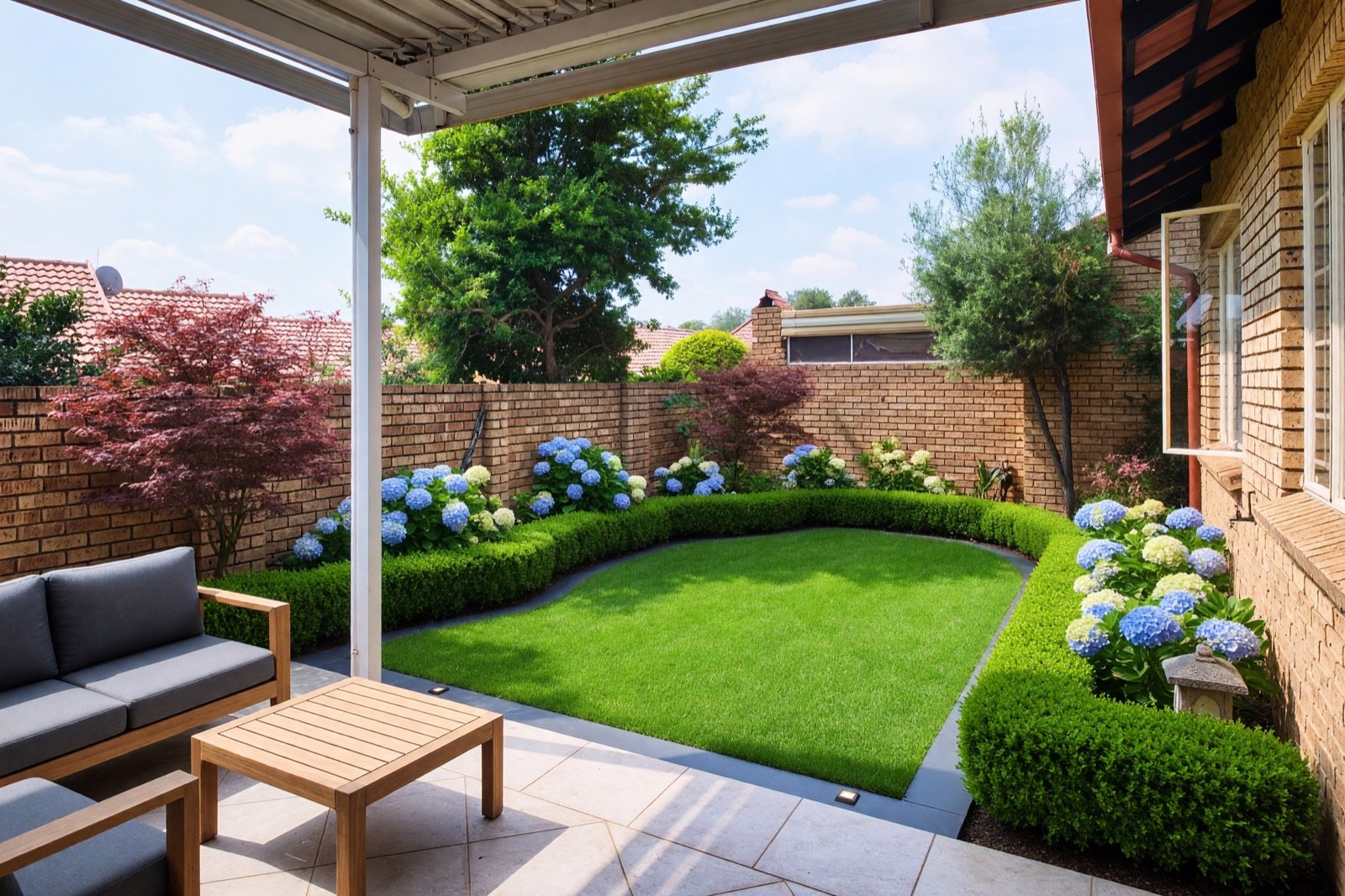
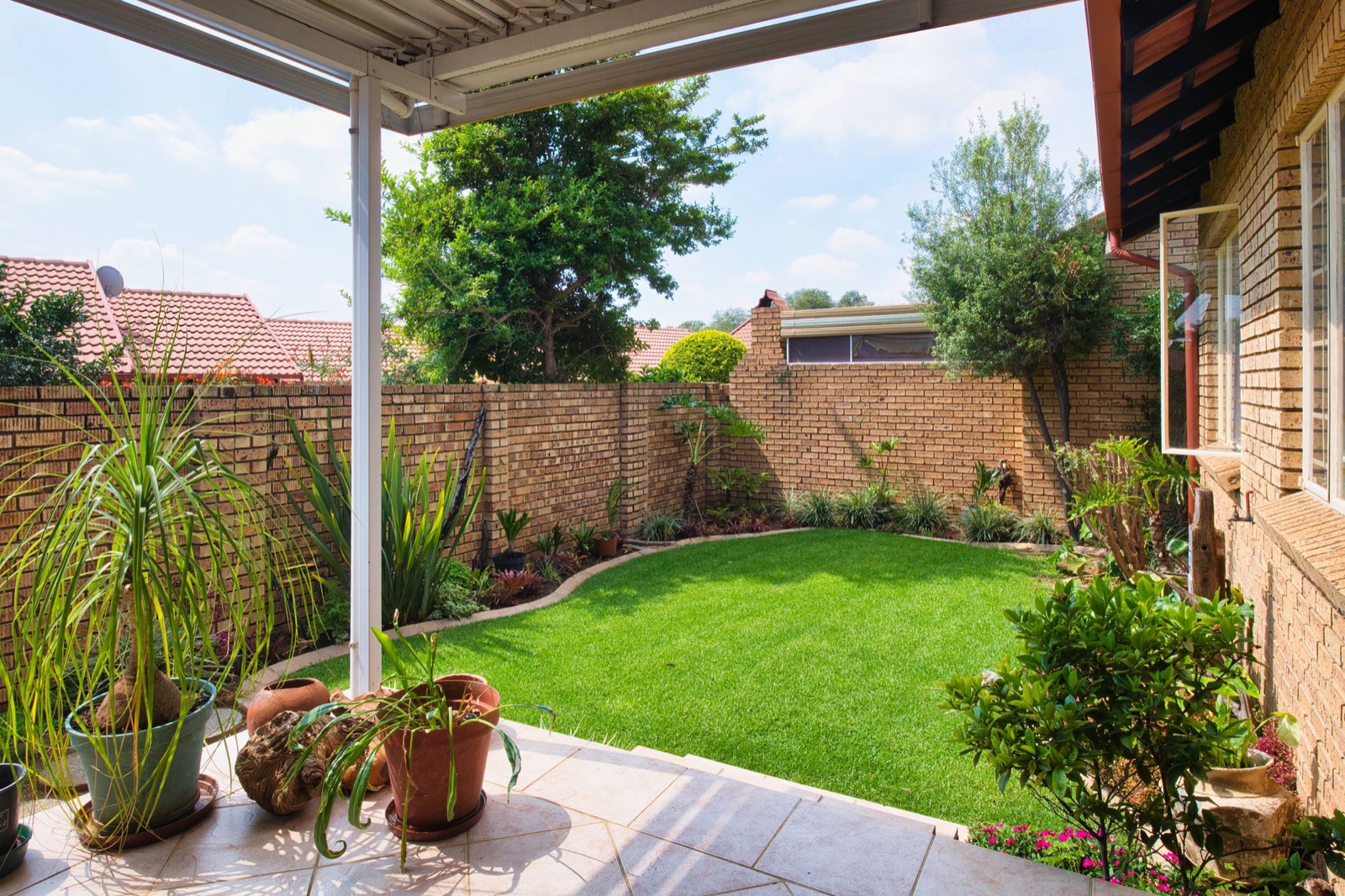
A simple small-yard layout: a paved area by the house for sitting, a small lawn with a clean edge and deep borders along the walls. Boxwood keeps the beds in shape all year, and small Japanese maples add color.
2. Raised beds for herbs and vegetables
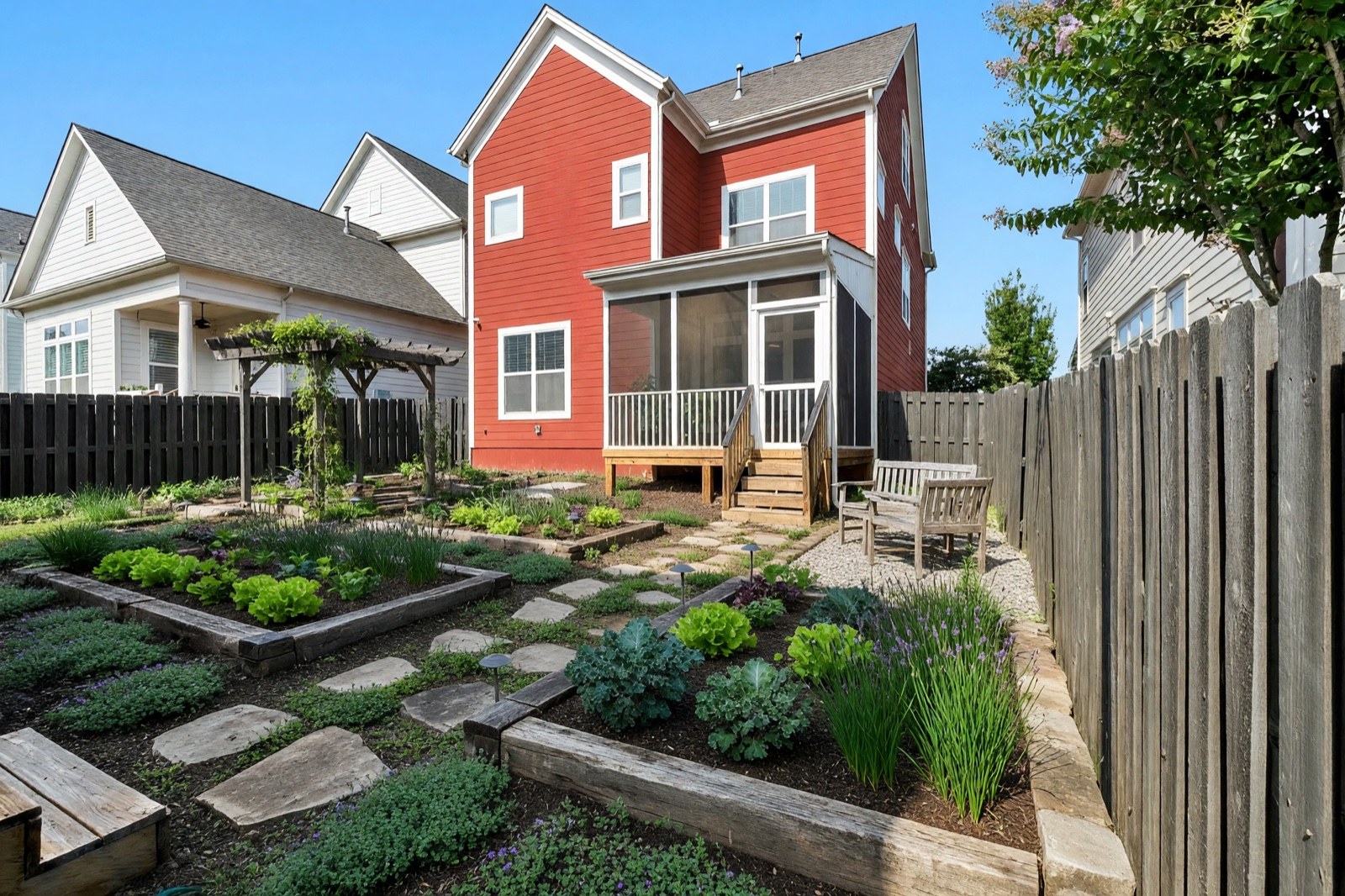
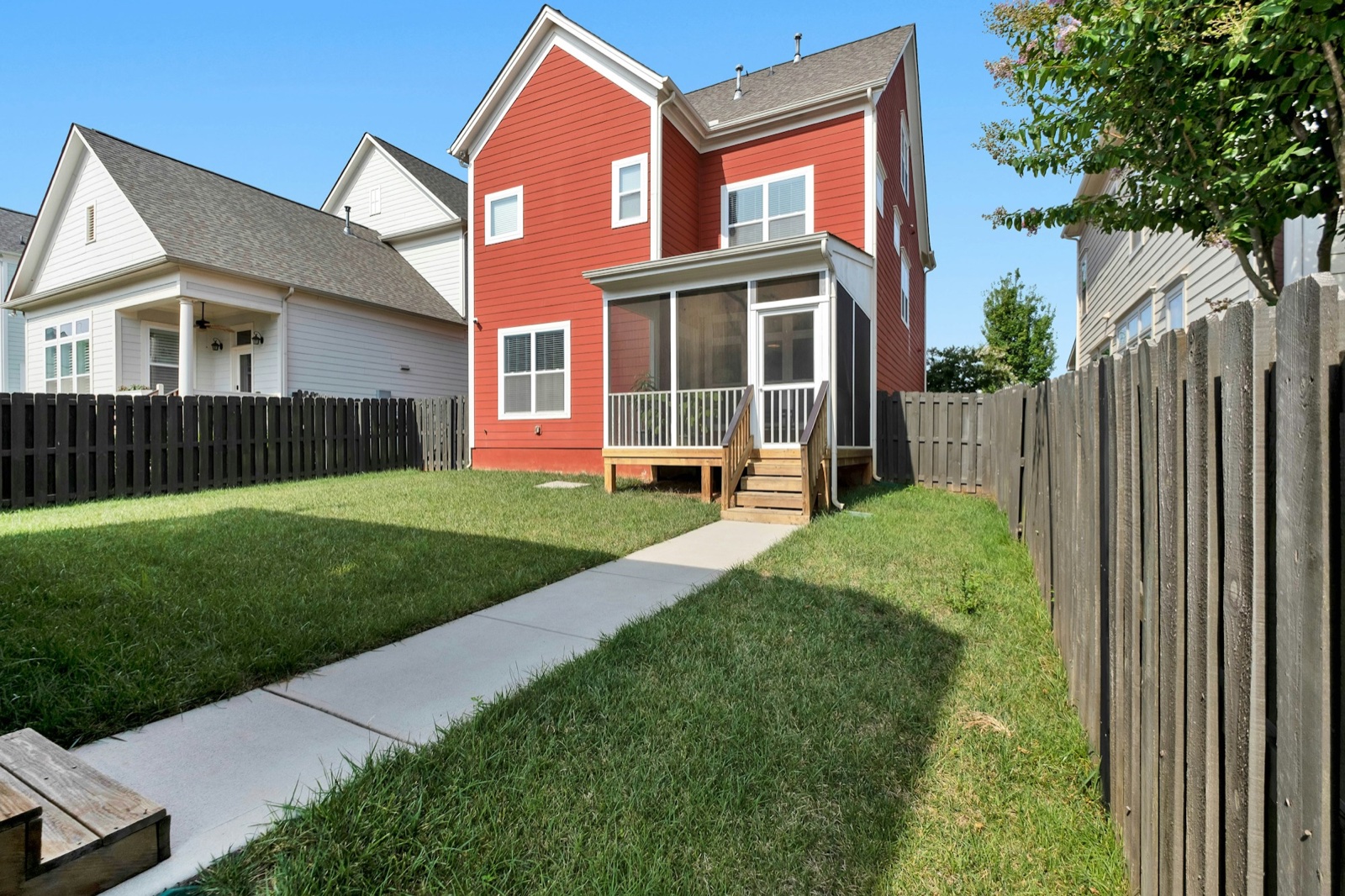
Raised beds turn a sunny strip along a fence into a kitchen garden. They drain well, warm up early in spring and save bending. Against a fence, keep beds 60 to 90 cm (2 to 3 ft) deep so you can reach the back.
3. A pergola and climbing plants for privacy
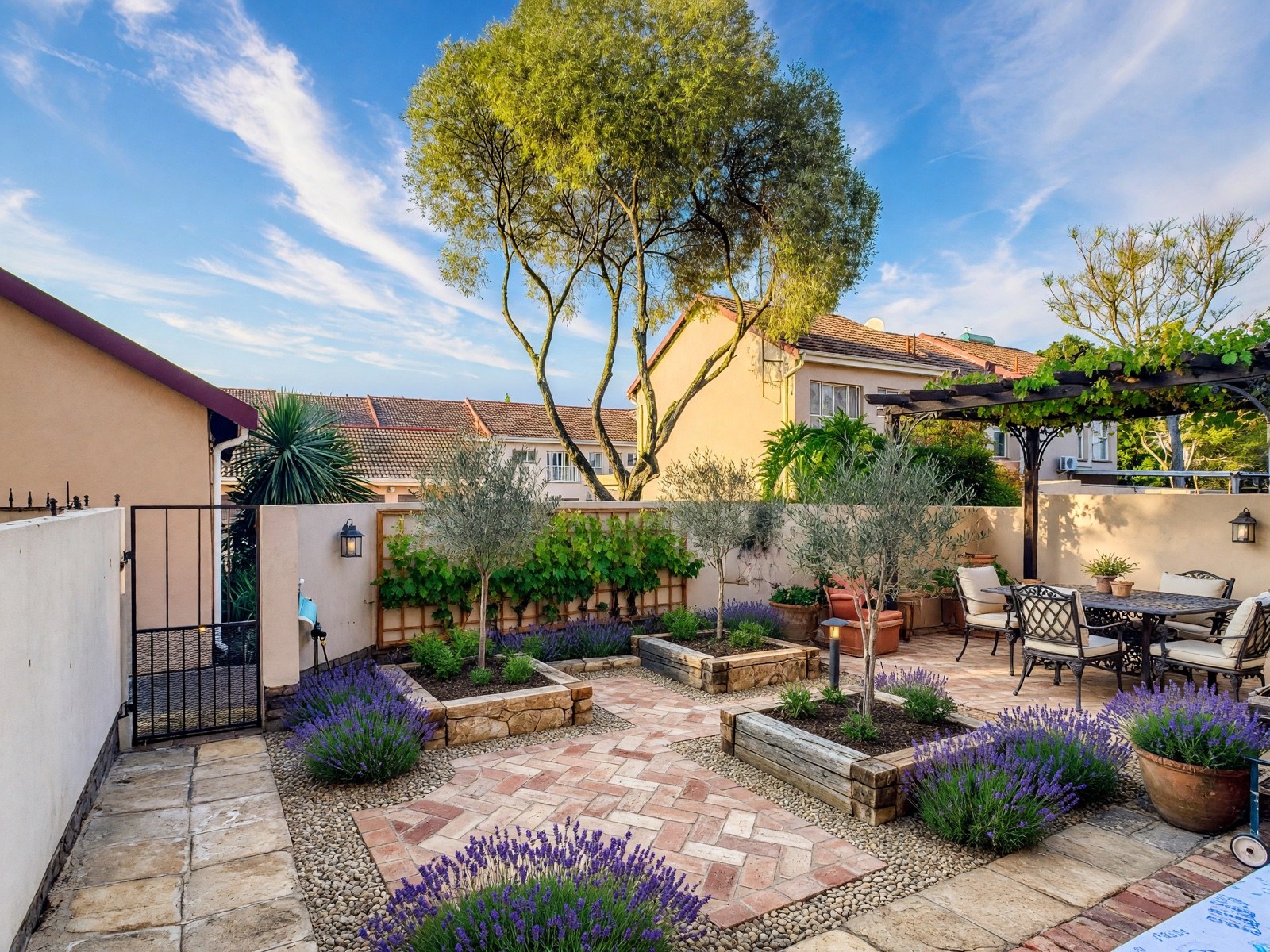
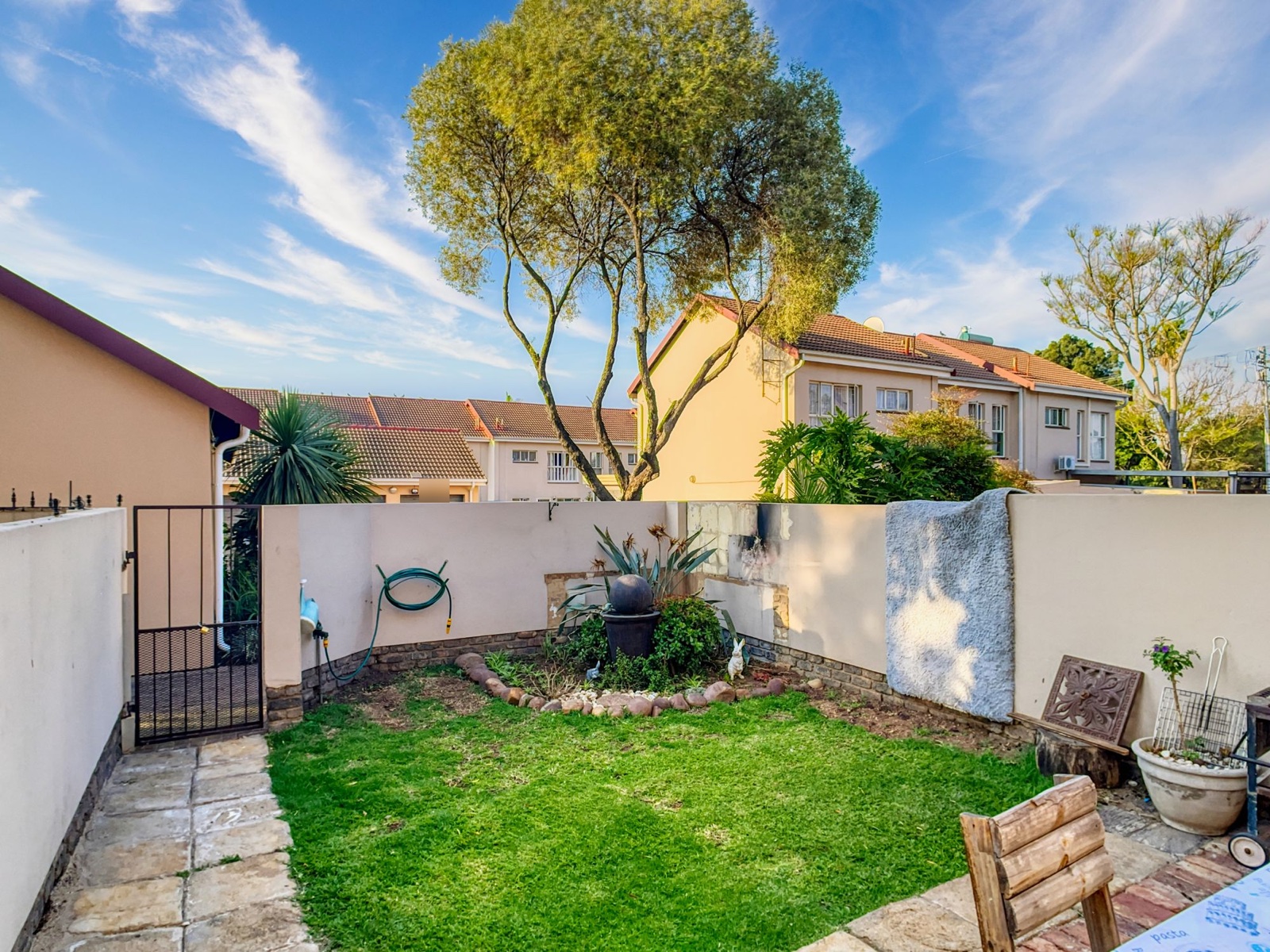
When neighbors' windows look into the yard, a pergola over the seating area and climbing plants on a trellis give privacy without a taller fence. A grapevine shades the table in summer and lets light through in winter. Check local rules first, as some areas limit structures near a boundary.
4. A stepping-stone path through shade planting
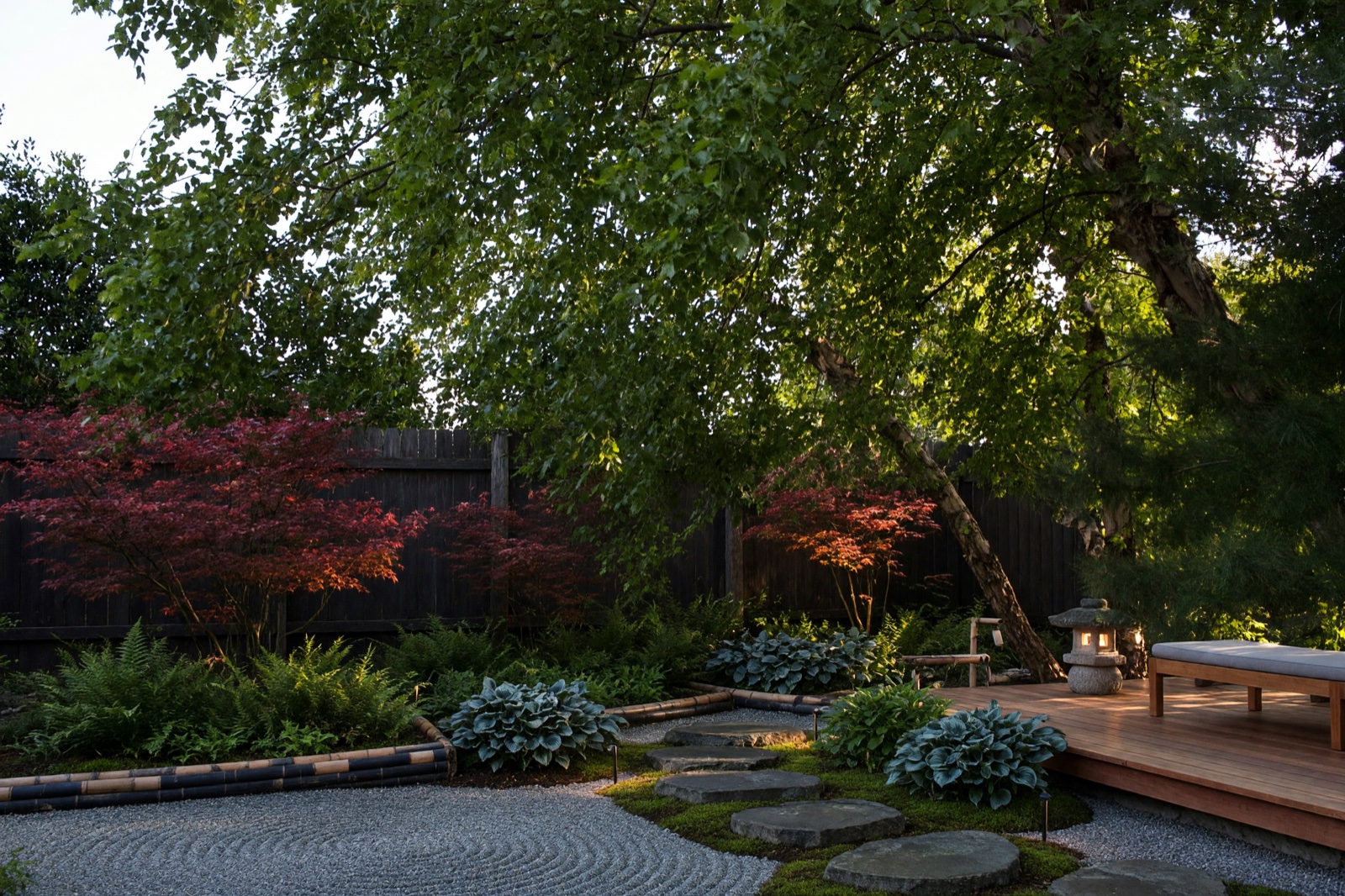
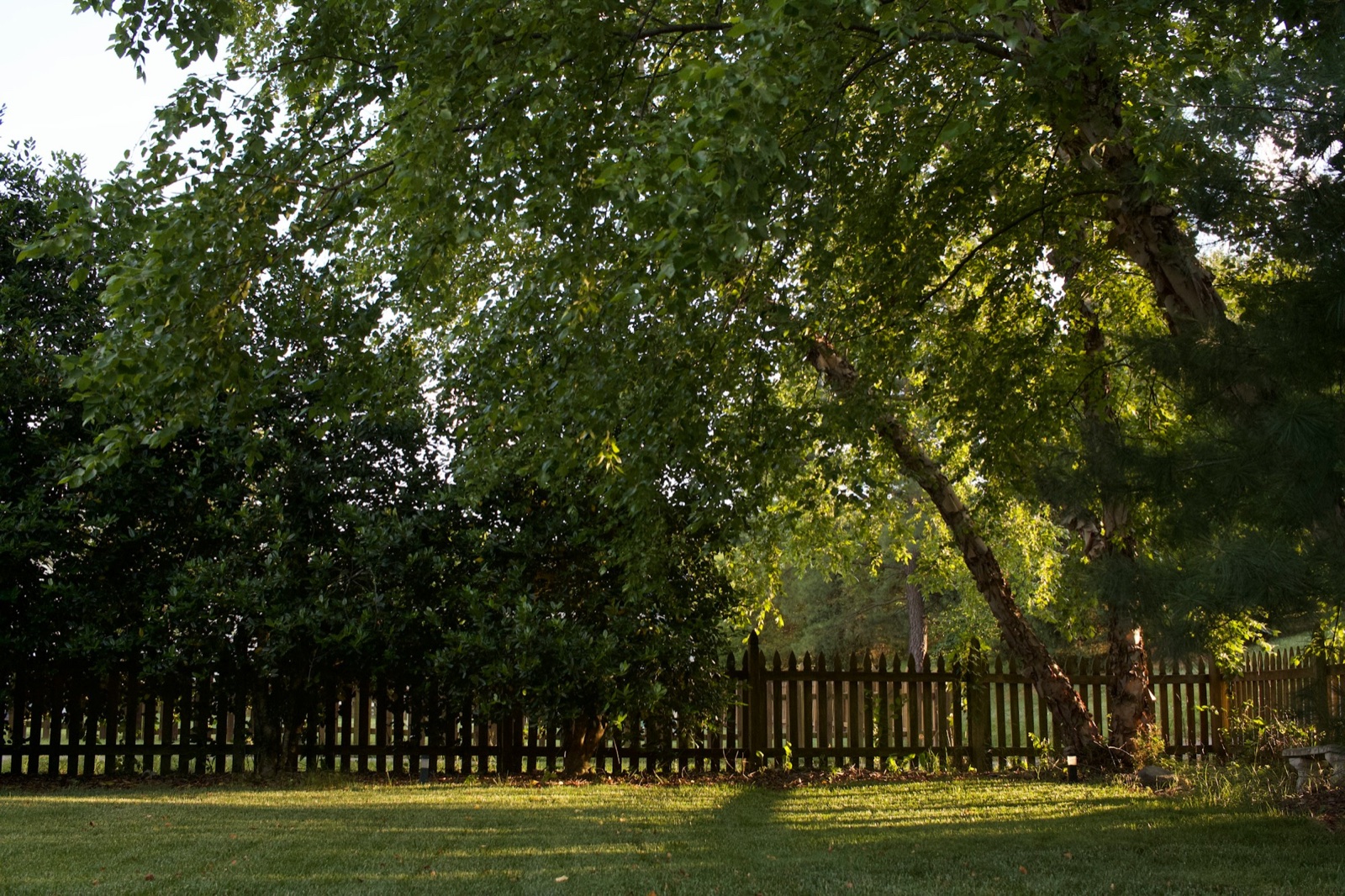
Grass struggles under a large tree. Replace it with pale gravel and flat stepping stones, then plant ferns, hostas and other shade plants in layers, low at the front and taller at the back.
5. Pots, planters and lights when you can't dig
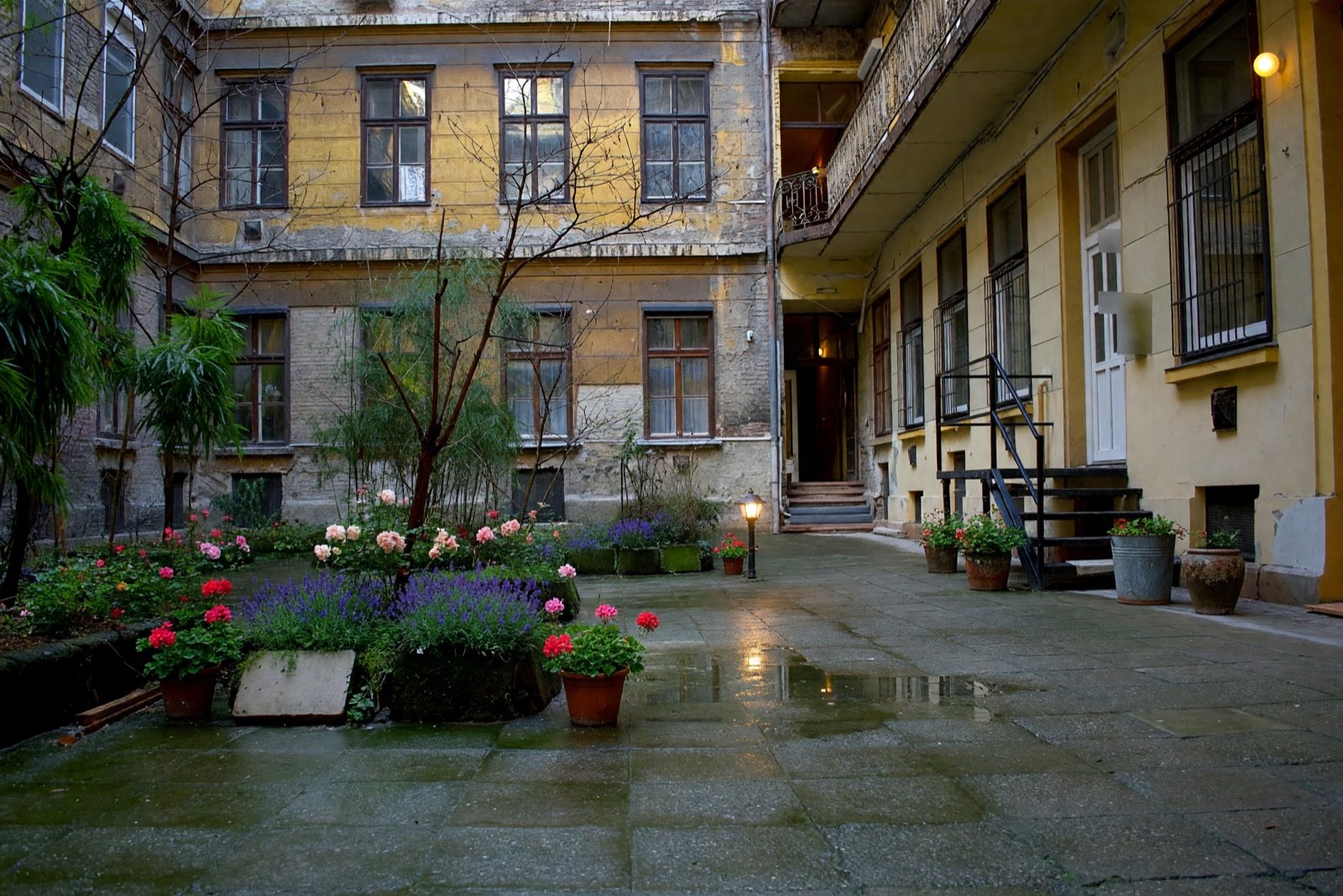
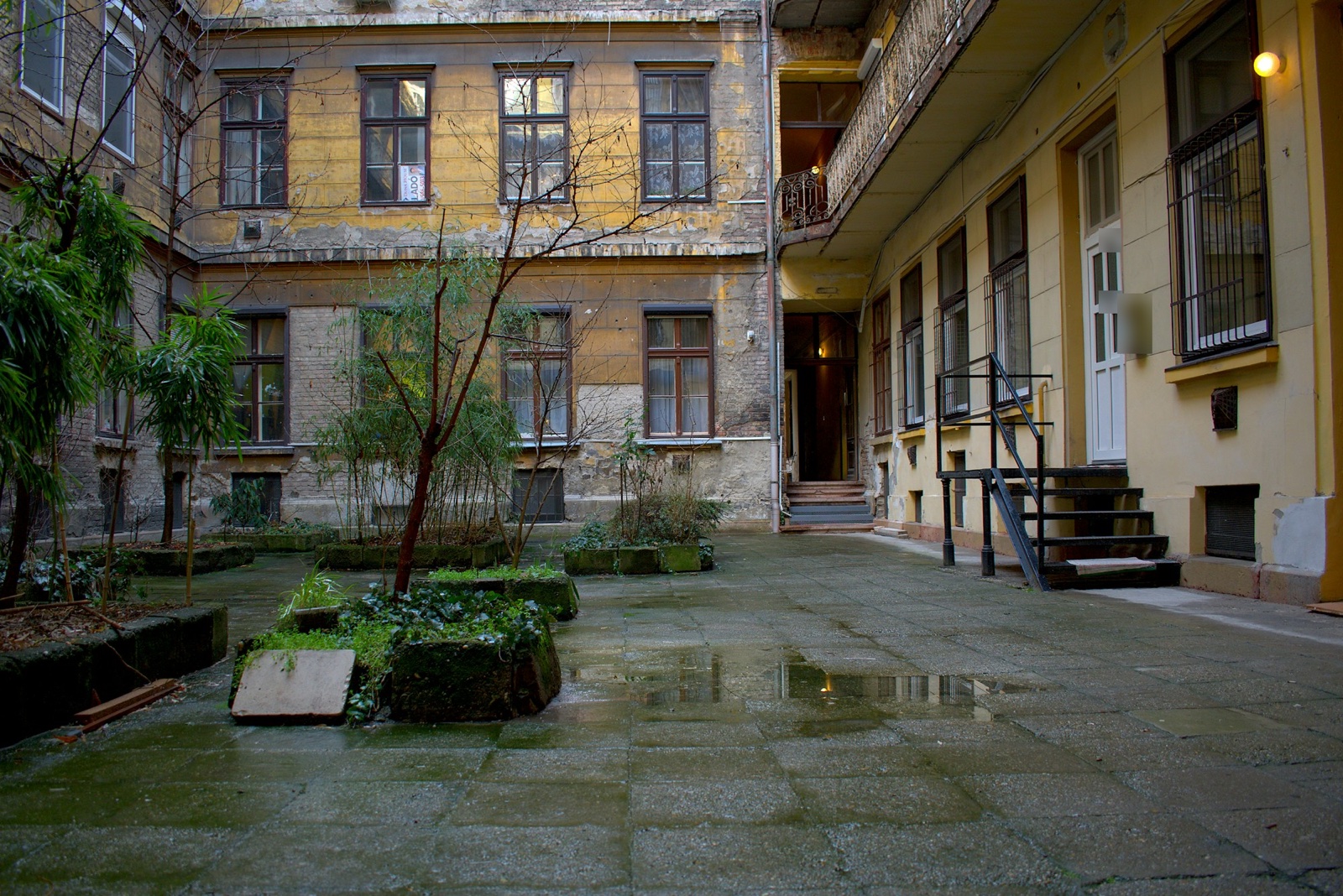
If you rent or the yard is all paving, containers do the work. Group pots in odd numbers and different heights, and keep to one pot color so the group looks planned.
6. A lawn-free garden for dry, sunny yards
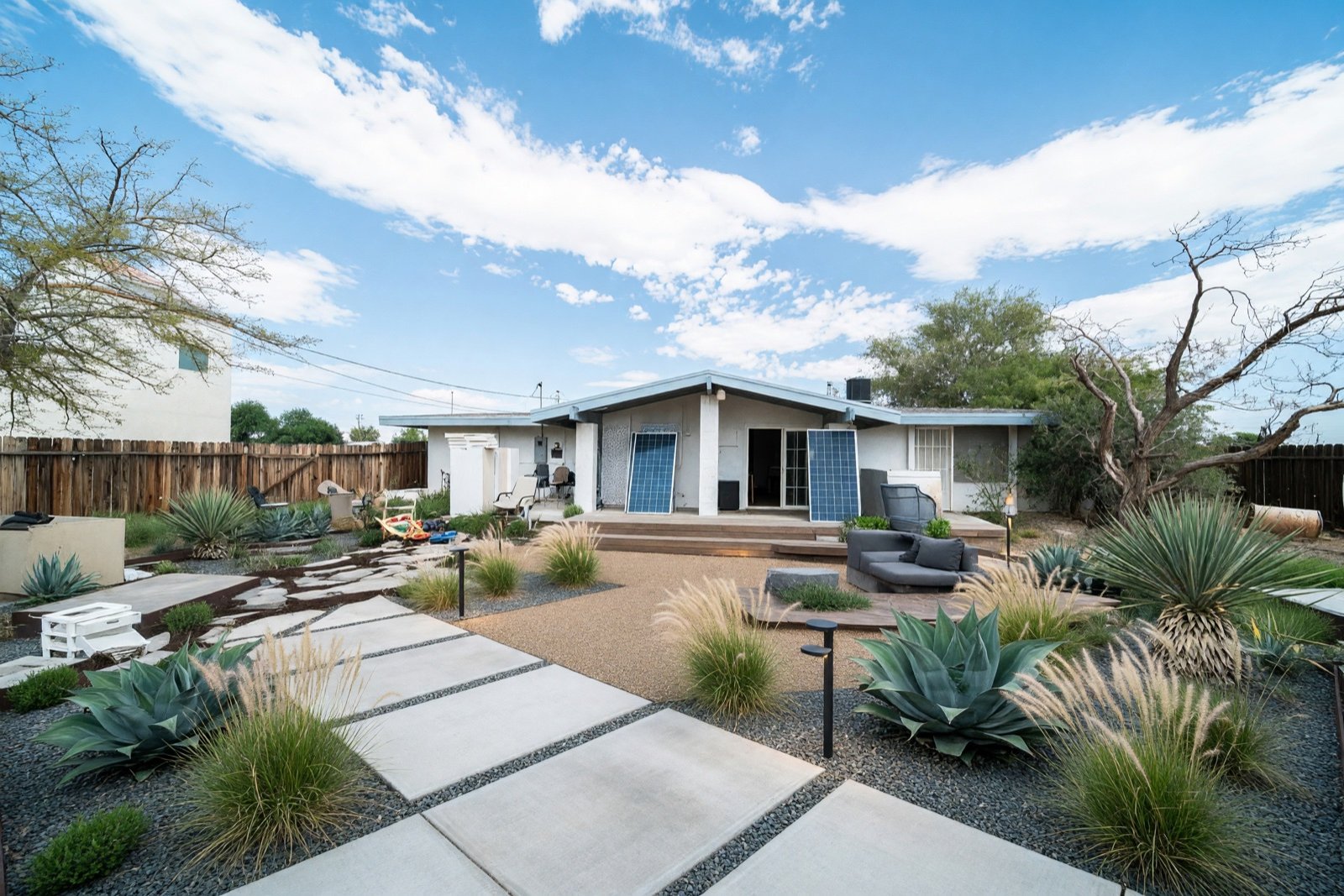
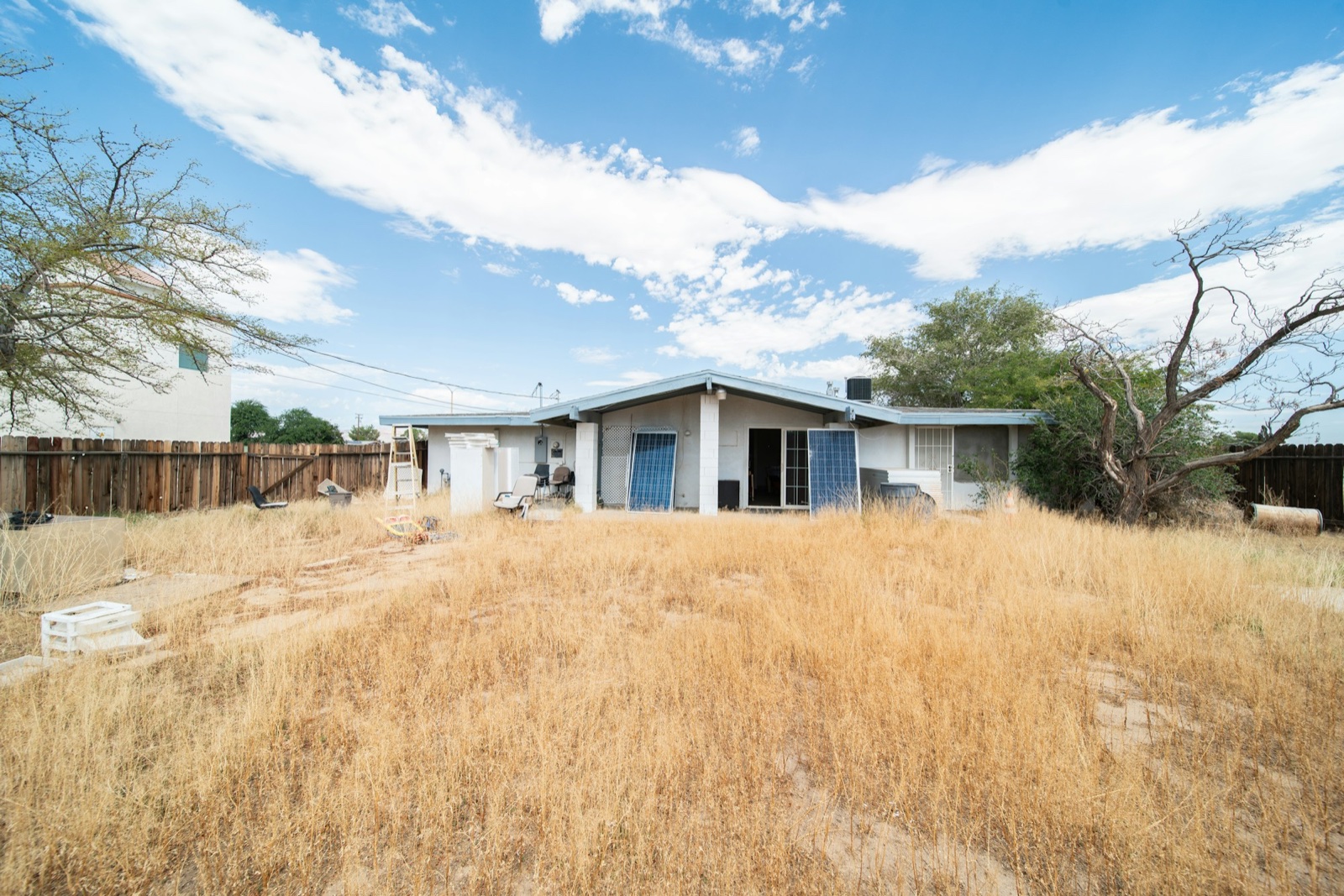
A dry lawn in full sun can become gravel, flat stones and groups of drought-tolerant plants such as agave, yucca and ornamental grasses, with no mowing and little watering once they are established. In a wetter or colder climate, use hardy grasses, sedum and evergreen shrubs instead.
Small backyard lighting ideas
- Light the path and steps first, with low lights pointing down.
- Hang string lights or a lantern over the table to mark the dining zone.
- Uplight one tree or vine to add depth after dark.
- Choose warm white light, around 2700 to 3000 K. Wired lights need an outdoor-rated circuit fitted by a qualified electrician.
Low-maintenance planting for a small yard
Plant choice depends on your climate, your soil and the sun each spot gets. A plant that thrives in a dry Mediterranean garden may not survive a cold winter, so check your hardiness zone or ask a local garden center before you buy. Plant in groups of three or five, cover bare soil with mulch or gravel, and water with a drip line on a timer.
Best layout for a small garden
The best layout for a small garden is the simplest one: a single main use, one path and planting around the edges. For a bigger plot, see backyard design ideas. Work in this order:
- Measure first. Pace out the length and width, mark the sun, the door, taps and drains, and sketch the outline on paper. A photo is not a scaled plan, and the AI image will not match your real dimensions.
- Pick one main use: dining, a play patch or growing food. A small yard rarely does all three well.
- Run one path from the door to that use.
- Plant the edges and keep the middle open.
- Add layers and height, then one focal point to look at from the door, such as a bench, a large pot or a small tree.
The 70/30 rule and the 3-5-7 rule
Both are loose rules of thumb, not standards, and sources describe them differently. For the 70/30 rule there is no single official definition. One commonly cited version is about 70% planting and 30% paving, or the reverse for a garden built around a patio. Treat it as a starting ratio and adjust it to how you use the space.
The 3-5-7 rule is usually explained as grouping plants in odd numbers, so three, five or seven of one kind rather than pairs or single plants in a row. In a small yard, one group of three large plants looks calmer than seven different singles.
How to landscape a very small backyard
In a very small backyard, do one zone well instead of several badly. Build the seating in, as a bench along a fence, and choose a few large pots rather than many small ones. Train a climbing plant up a trellis, use pale paving and fence colors to bounce light, and consider a weatherproof mirror set among plants. Keep clutter out of sight: one closed box for tools, toys and cushions does more than extra decoration.
Small backyard garden ideas on a budget
The cheapest changes need no building: paint, containers, climbers, gravel and plants you grow yourself. Costs vary by region and material, so price your own list at a local supplier before you start.
- Paint the fence or wall one color. See garden fence ideas for color examples, and try shades on your photo in Paint first.
- Use containers instead of beds, in one pot color.
- Grow climbers from seed, such as sweet peas, up a simple trellis.
- Lay gravel or mulch paths with an edging strip.
- Start plants from cuttings, seed or divisions, and swap with neighbors.
- Do one zone this season and the rest next year.
Small backyard with grass or without
Keep a small patch of grass only if someone will use it. A little lawn is quick to mow, but it still needs edging and watering in dry weather. For a garden with no grass, the usual options are gravel, paving, low groundcover such as creeping thyme between stepping stones, or a mix of these, as in the lawn-free example above. For the same question at the front of the house, see front yard landscaping ideas.
Artificial turf stays green without mowing, but it gets hot in full sun, drains well only on a properly prepared base and offers little to insects or soil life. Check local rules, your lease or any homeowners' association before you remove a lawn or lay turf.
Try a small backyard layout on your own photo
Photograph the whole yard from the back door at eye level in even daylight. In Garden Design, choose a style, how much should change and one or more plants: Preserve Structure keeps your layout, Full Makeover shows a new one. Paint recolors garden walls and fences, and Floor Restyle tries new paving or decking.
The image is a design idea, not a planting or construction plan, and AI can change small details such as the height of a fence, so check with a landscaper before you dig or build. For the front of the house, see house exterior color ideas and modern farmhouse exterior ideas. If the garden has room for a small deck, see deck ideas. If your outdoor space is a balcony rather than a garden, see balcony ideas. The HomeCompose design ideas page has more outdoor and indoor ideas.
Frequently asked questions
How can I make a small backyard look bigger?
Keep the middle open, plant the edges, use few materials and add height. A path that curves out of sight makes a yard feel longer.
What is the lowest-maintenance small garden?
Gravel or paving with evergreen shrubs and grasses suited to your climate. A lawn needs regular mowing.
Will the plants in the image grow in my garden?
Not necessarily. The image shows how plants could look, not whether they suit your climate, soil or light. Ask a local garden center before you buy.
What is the 70/30 rule for gardening?
There is no single official definition. One commonly cited version is about 70% planting and 30% hard surface, or the reverse for a garden built around a patio. Treat it as a rough starting ratio.
Is it free to try?
Yes. Free to try.