Bathroom tile floor ideas
Bathroom tile floor ideas come down to a few choices: tile size, light or dark, pattern, grout color and how the floor behaves when wet. Below are six tile floor ideas for a bathroom, shown on real photos before and after a new floor in Floor Restyle. The tool changes only the floor: wall tile, shower walls and fixtures are not part of it. In the sixth photo, two small stickers on the shower glass were blurred.
How do you choose a bathroom floor tile?
- Pick the size for the room. Small tiles and mosaics have many joints and follow a sloped shower floor more easily. Large tiles mean fewer joints to clean and a calmer look.
- Think about light. A pale floor bounces daylight around a small room. A dark floor adds weight and suits a room with a big window, but it tends to show dust, hair and water spots.
- Choose the grout on purpose. Grout close to the tile color calms a pattern. A light grout on a dark tile, or the reverse, draws every line.
- Look at the finish. Glossy and polished surfaces usually feel slipperier when wet than matte or textured ones. Check the maker's slip-resistance information for the exact tile, not a picture.
- Plan the edges. Look at where the floor meets the wall, the tub, the shower threshold and the door. A clear, straight change reads better than a random one.
- Know what lies underneath. Waterproofing, drainage falls and underfloor heating are decided under the tile. A qualified installer has to plan and check them.
6 tile floor ideas for a bathroom, before and after
Each example starts from a real bathroom photo. In Floor Restyle the area type is set to Wet area and one material is chosen from the list. The tool is told to change only the floor, so the wall tile, shower walls and fixtures are meant to stay as they are. It is not perfect: AI can redraw shadows, reflections and small details nearby, so compare each pair closely and treat every result as an idea.
1. Light gray terrazzo: a pale, speckled floor
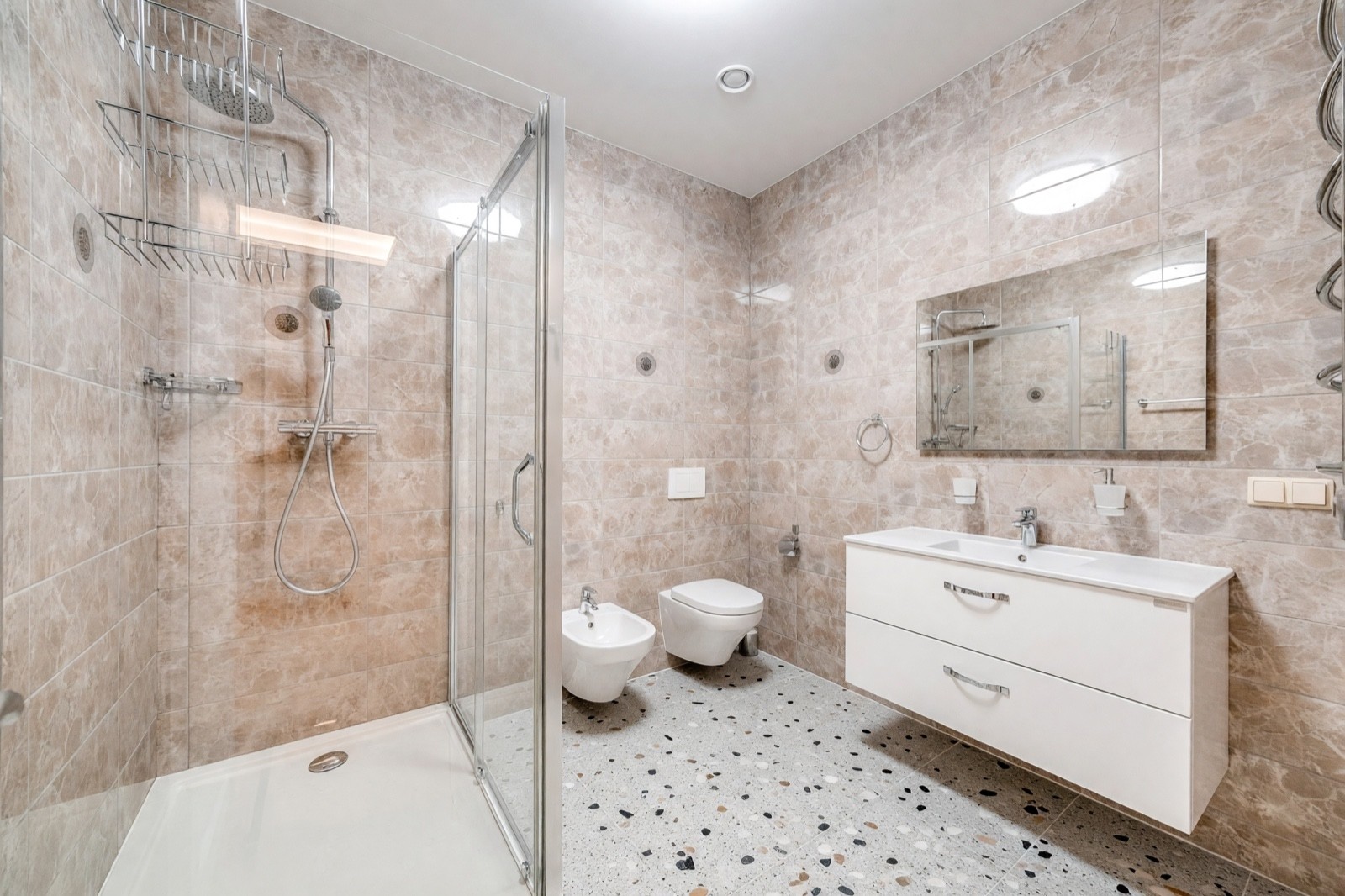
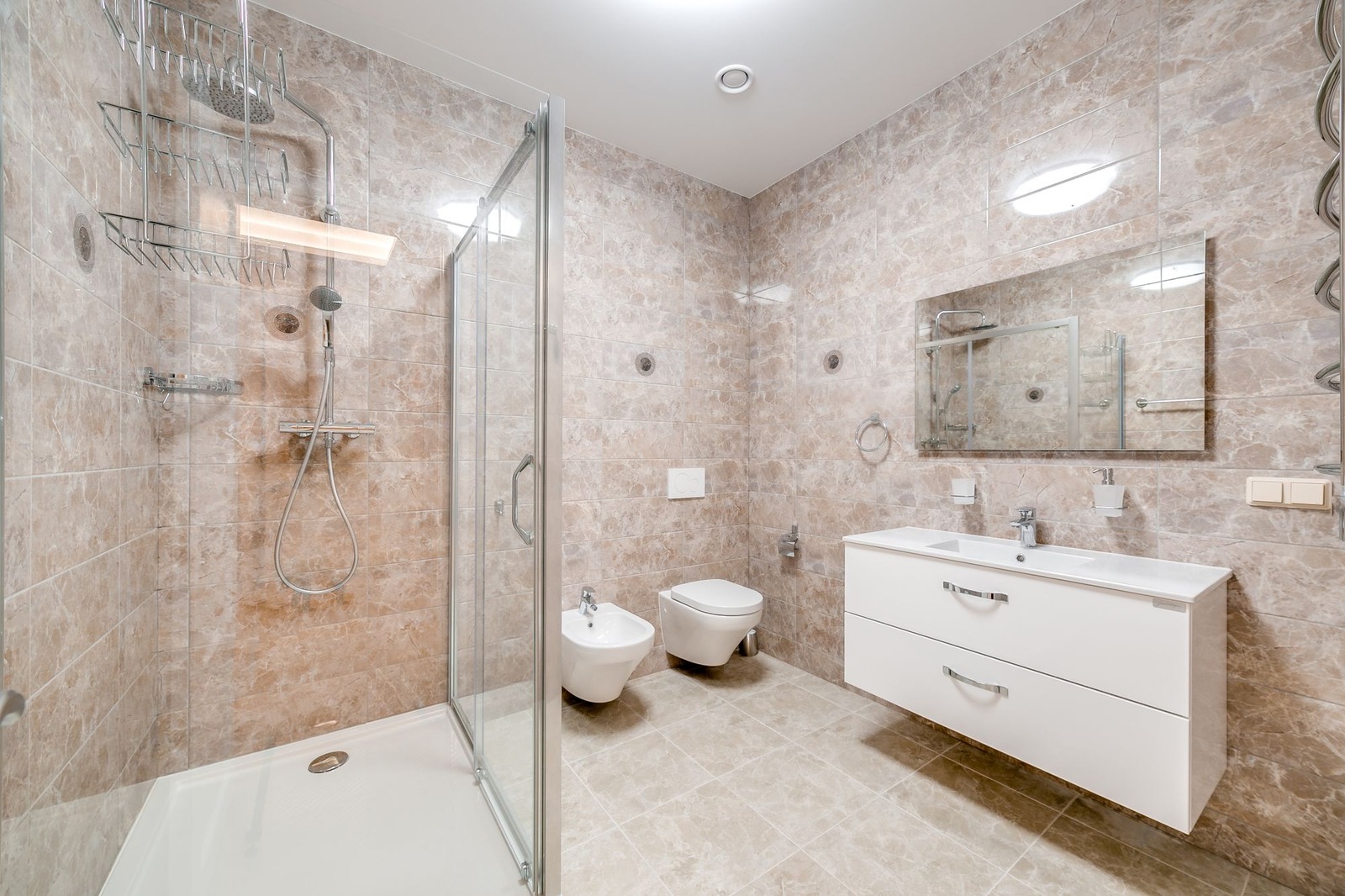
Terrazzo brings light and a little pattern to the floor without a strong color. Here the walls already have a veined look, so two busy surfaces compete. Terrazzo works best next to plain or one-tone walls. The picture draws no tile joints and the shadows are the AI's guess, so look at real samples before you decide.
2. Sage herringbone tiles: green for a narrow bathroom
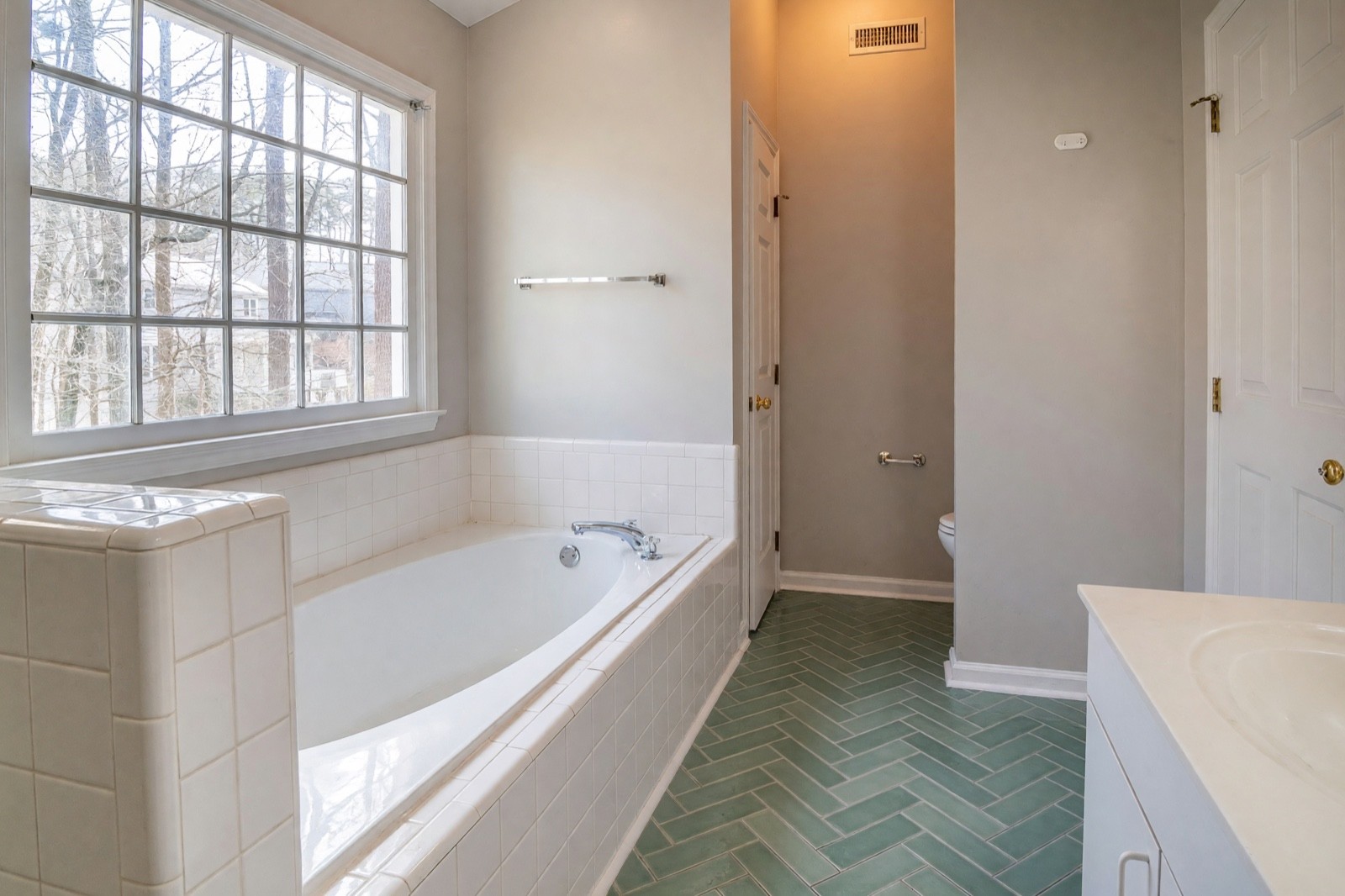
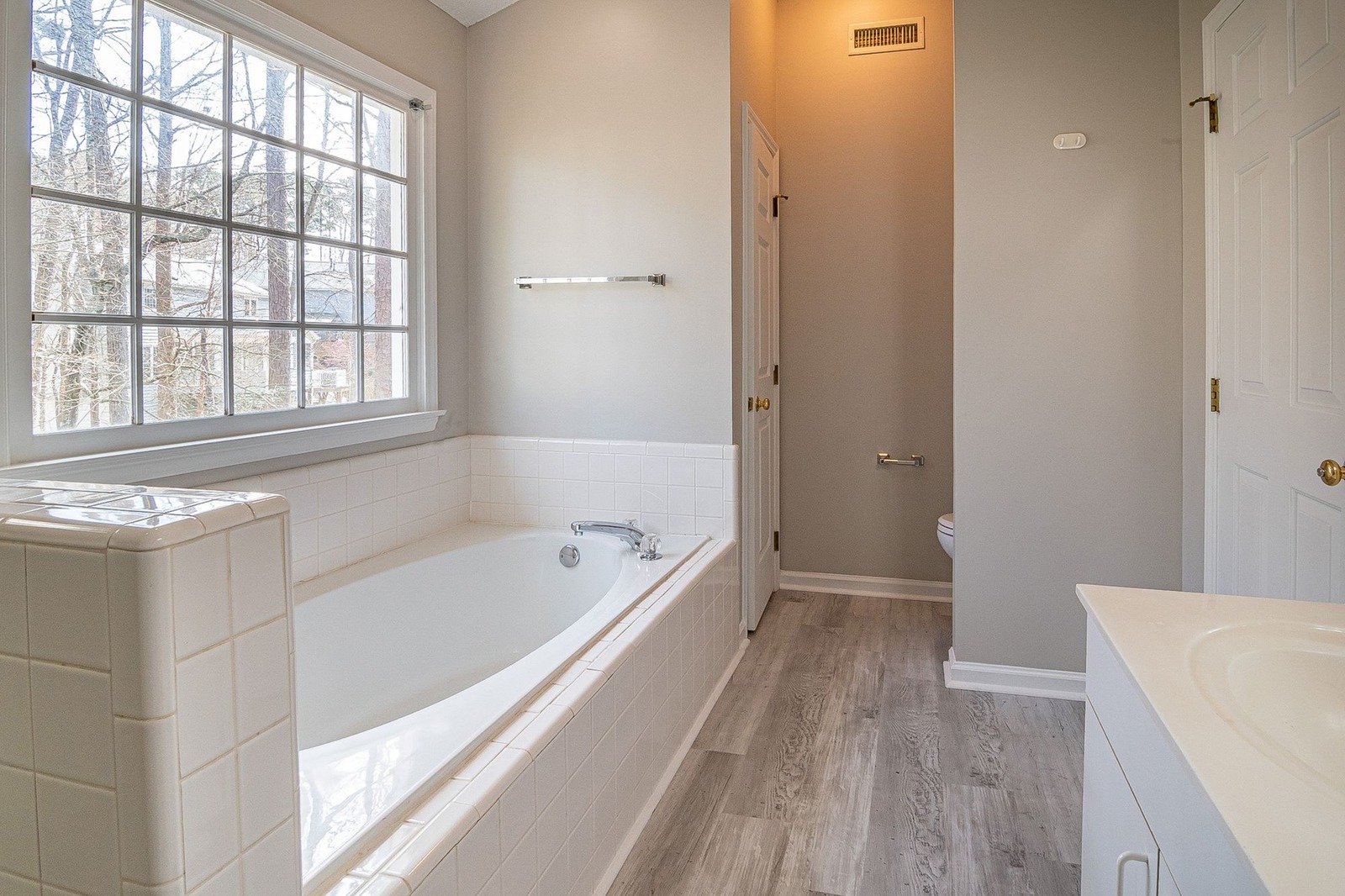
The zigzag lines run toward the nook and pull the eye down a long, narrow room. Sage looks calm against gray walls and white tile. Pale grout shows the pattern; grout close to the tile color would soften it. Herringbone needs careful cutting at every edge, so ask an installer how it would work in your room. Tile size and pattern direction are drawn by the AI, not planned.
3. Checkerboard mosaic: black and white, shower included
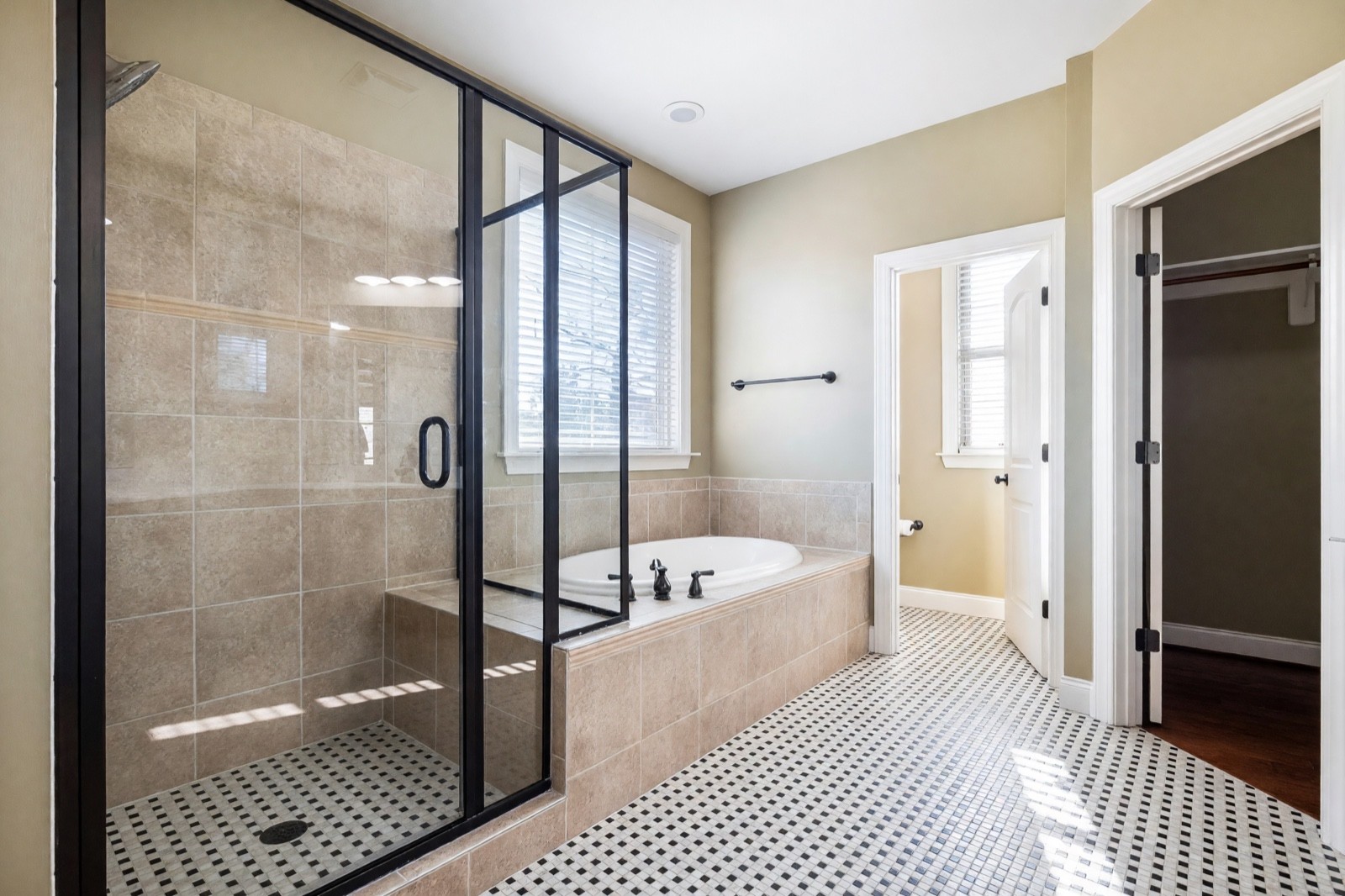
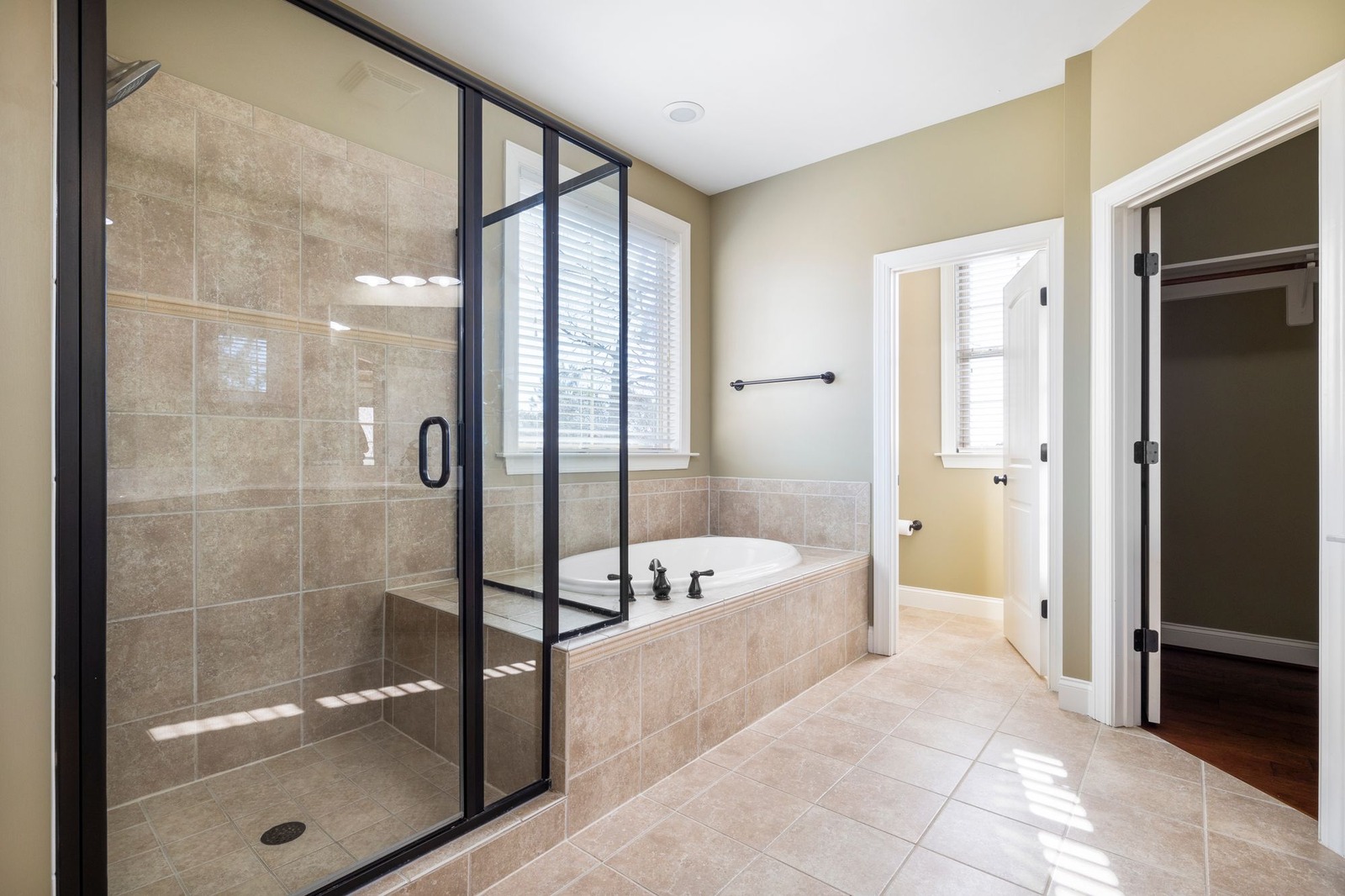
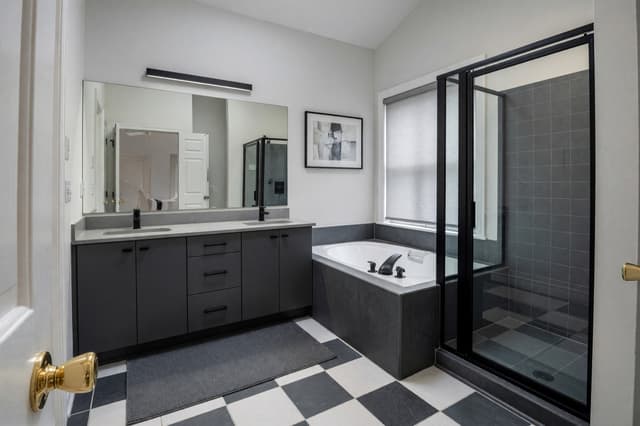
A small mosaic gives a classic, graphic bathroom, and the same floor running into the shower makes the room read as one space. It is busy against warm tan walls, and every joint is one more line to clean. A first try with Natural slate also turned the tub deck and steps dark, so this result comes from a second try. That is why it pays to check every surface next to the floor.
4. Carrara marble: light for a dark room
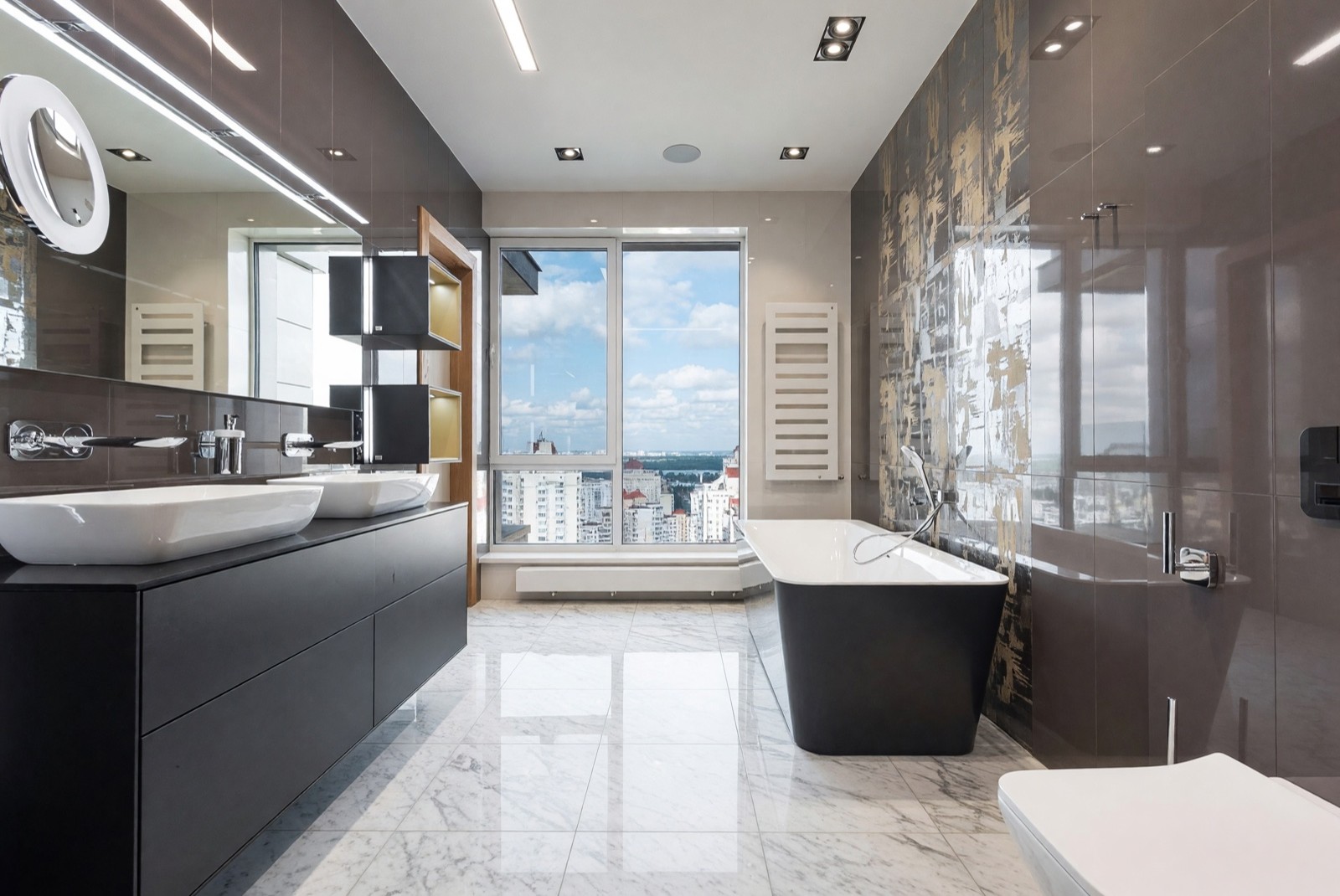
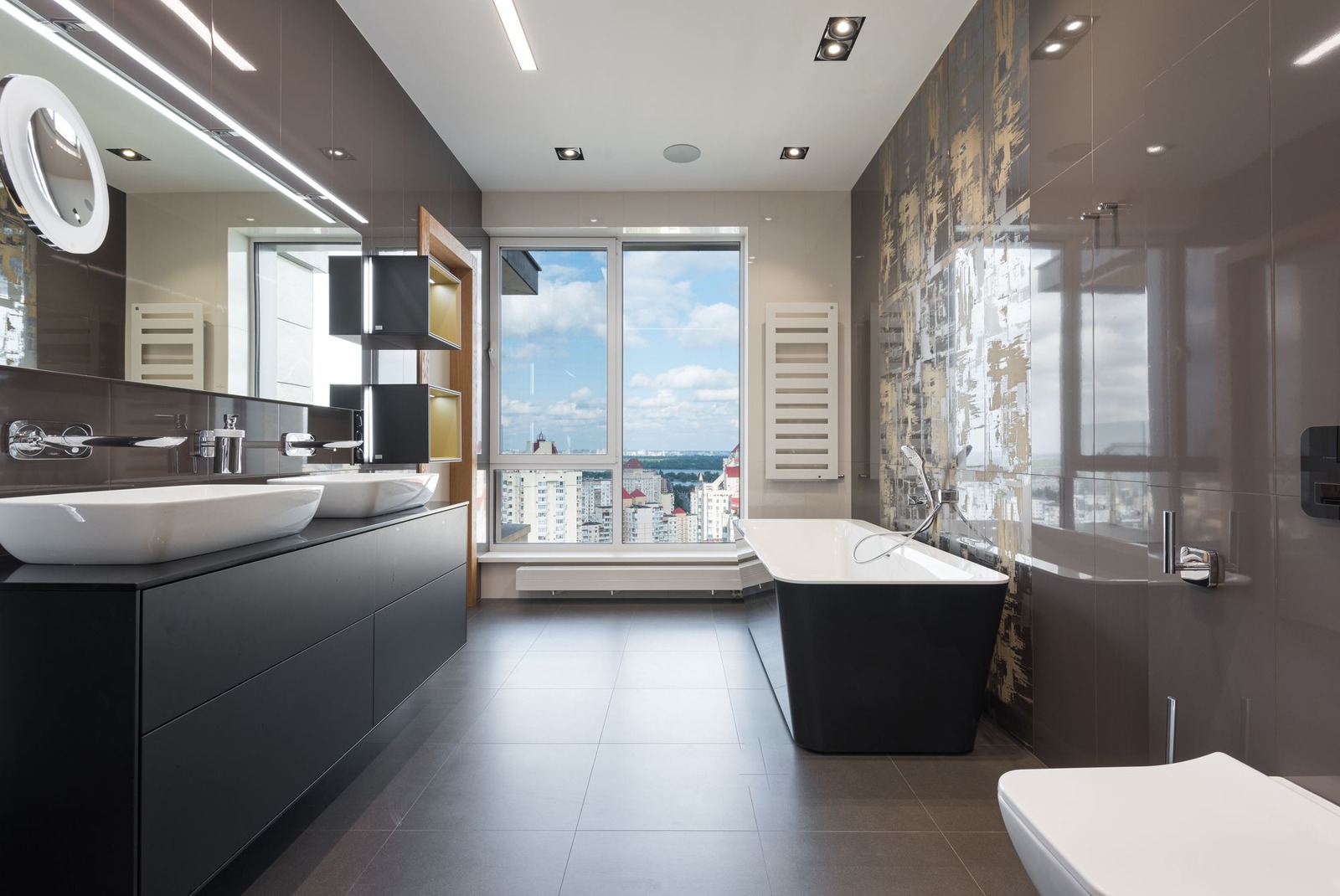
A pale floor lifts a bathroom with dark walls and a dark vanity. The app's Carrara marble is meant to look honed, but this result looks polished. Polished stone is usually slipperier when wet, and natural stone needs sealing and care, so ask the supplier about both. The app also has Marble-look porcelain if you want the look in a tile.
5. Patterned cement tiles: a bold floor against dark walls
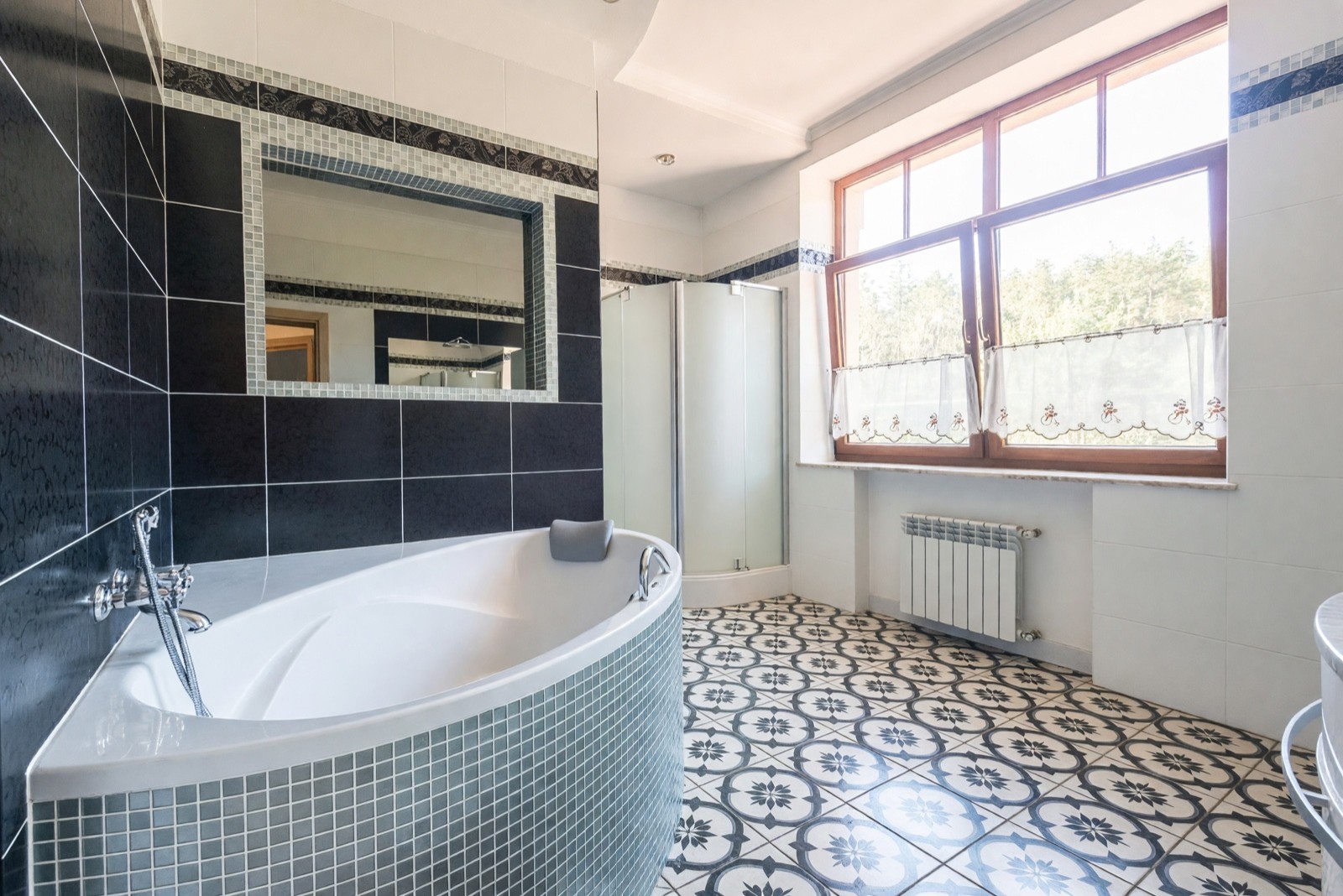
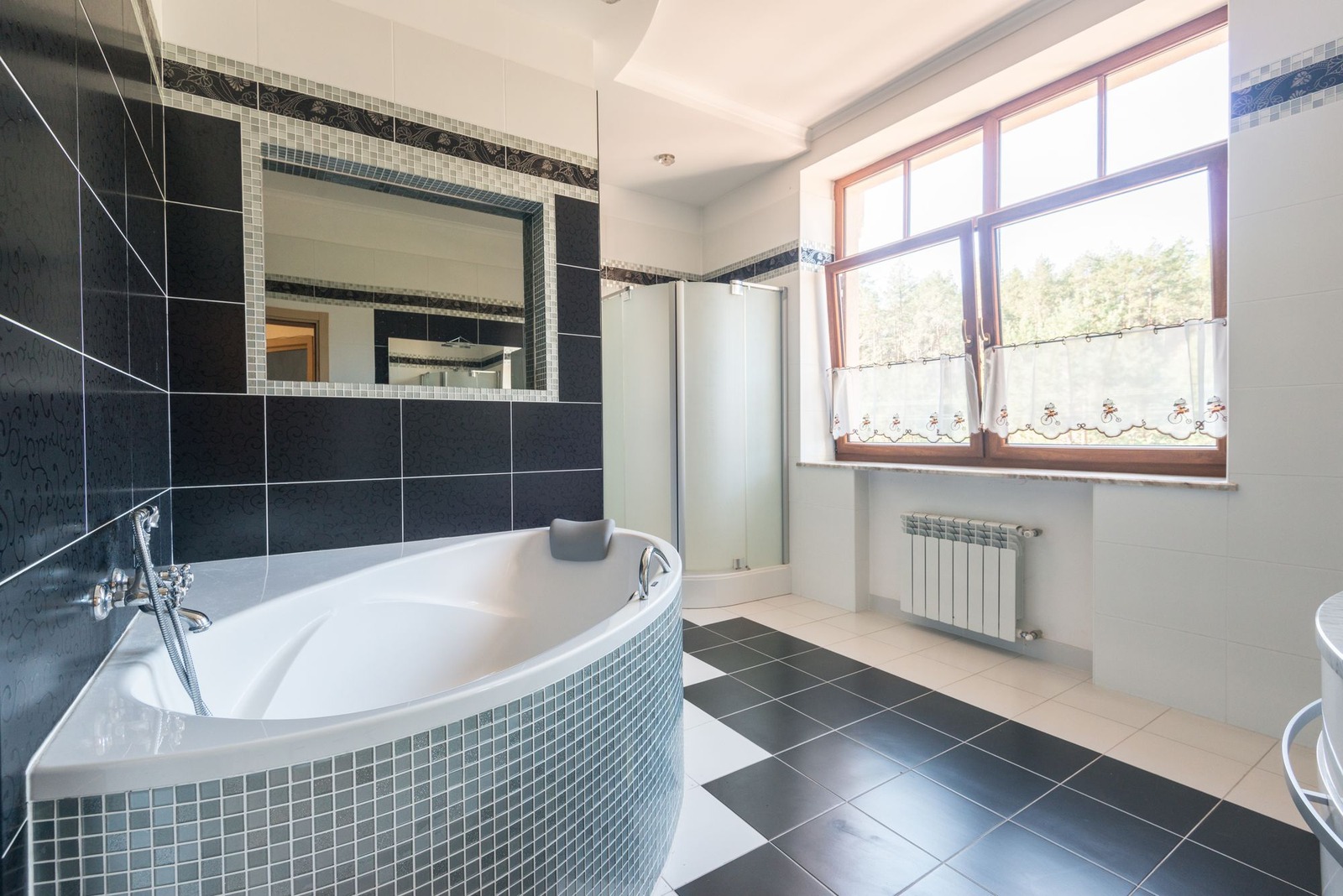
Patterned tiles work best when the walls stay calm. Here the dark and white walls already tell a black-and-white story, and the pattern continues it. The scale and the motif are invented by the AI; real patterned tiles come in set designs and sizes, so choose from a real catalog. Cement tiles usually need sealing, so ask about care for a wet floor.
6. Wood-look porcelain: warm wood tone without real wood
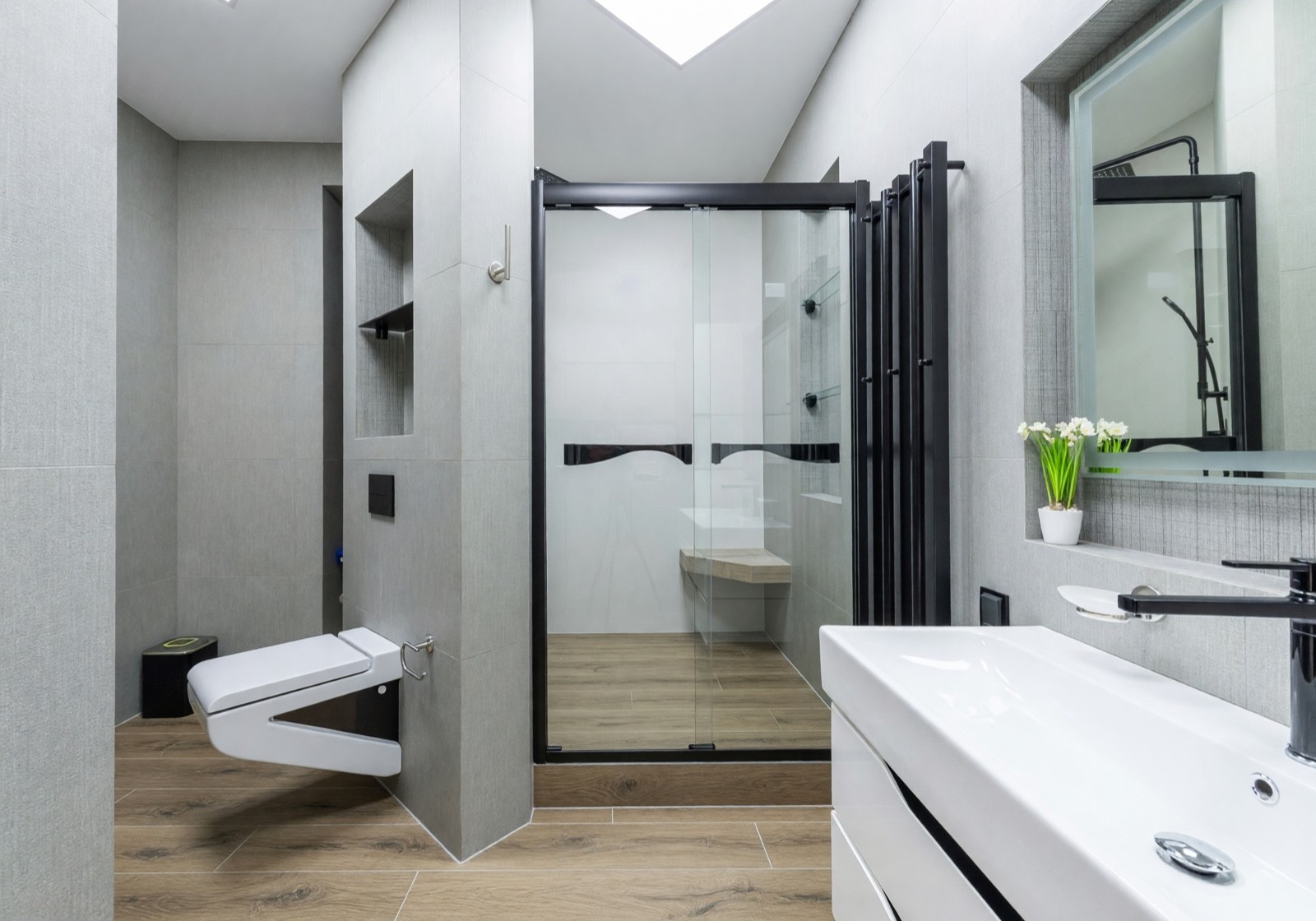
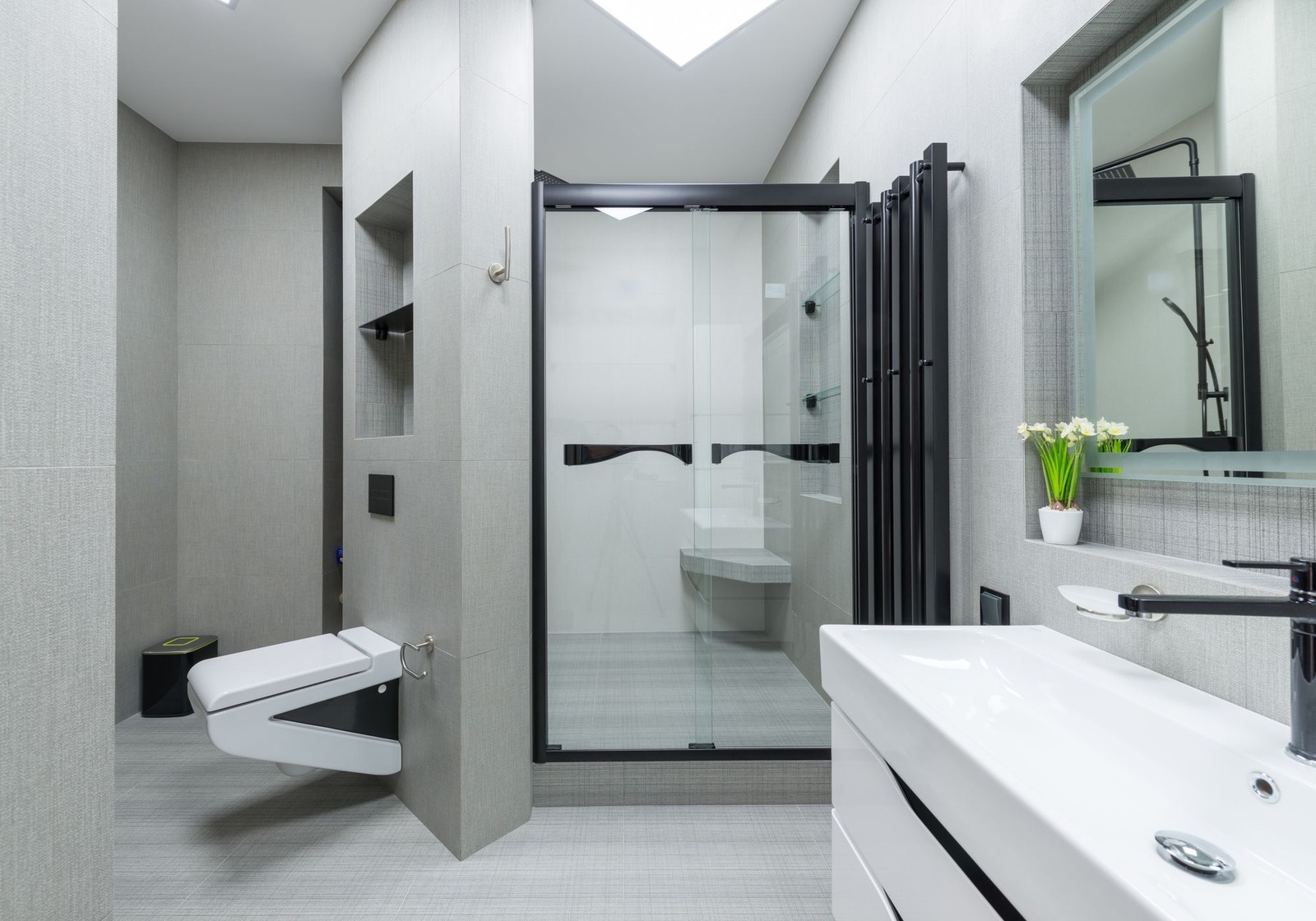
Real wood and a wet floor are a hard pair, so a wood-look tile is the usual way to get this tone in a bathroom. The warm planks soften the gray tile walls. Notice the shower bench: the new look spilled onto a nearby surface. If the floor changes something you did not ask for, run it again or choose another material.
Bathroom floor looks at a glance
| Floor look | Good for | What to check |
|---|---|---|
| Light gray terrazzo | Plain walls, pale and calm rooms | Real joints and finish; busy next to veined walls |
| Sage herringbone tiles | Long, narrow rooms, gray or white walls | Cutting at the edges; grout color |
| Checkerboard mosaic | Classic, graphic bathrooms; sloped shower floors | Many joints to clean; busy with patterned walls |
| Carrara marble | Dark rooms that need light | Polished versus honed, sealing, slipperiness when wet |
| Patterned cement tiles | Calm walls and a bold floor | Real pattern sizes; sealing and care |
| Wood-look porcelain | Warm tone in a gray or white bathroom | Grip of the exact tile; how the planks meet the shower |
Which tile floor ideas suit a small bathroom?
In a small bathroom, a pale floor and a floor that runs into the shower without a break usually make the room feel larger. A bold pattern can still work on a small floor, as the mosaic and cement tiles above show, but keep the walls quiet. For wall tile, storage and fixtures, see small bathroom ideas.
What type of tile is best for a bathroom floor?
Porcelain is the usual first choice for a bathroom floor, because it is dense and takes up very little water. The other options each have a catch:
- Ceramic is fine for a dry or lightly used floor. For a floor that gets wet, check the maker's rating.
- Natural stone looks rich, but it needs sealing and regular care.
- Vinyl tile is not a tile in the strict sense. It is often warmer and softer underfoot, but make sure the product is made for wet rooms.
- Mosaic suits a shower floor, because its many joints follow a slope.
Whichever you choose, look for the slip and water ratings on the box or the data sheet, and ask the supplier if they are missing.
How do you get a non-slip bathroom floor?
A non-slip bathroom floor starts with a tile that has a slip-resistance rating, not just a rough look. Three things help: the maker's rating, a matte or lightly textured surface, and smaller tiles, because more grout lines usually give more grip underfoot. A shower floor needs a rating suited to wet, bare feet, so ask the supplier which rating they mean. The pictures on this page cannot show grip. Adding "matte finish" as a floor note in Floor Restyle changes how the floor looks, not how it feels.
Are white tiles a good choice for a bathroom floor?
White or light tile reflects light and makes a small bathroom feel brighter, but it shows dirt, especially in the grout. A mid-tone grout, such as a light or warm gray, hides marks better than white grout and still looks clean. Glossy white also shows water spots and can feel slippery when wet, so a matte or lightly textured white is easier to live with.
Current bathroom floor tile trends and modern ideas for 2026
Trends change, so treat this as a snapshot, not a rule. A few looks keep coming up in modern bathroom floors:
- Large tiles with few grout lines. They give a calm surface and fewer joints to clean.
- Stone and terrazzo looks, like examples 1 and 4 above.
- Warm neutrals instead of cool grays.
- Subtle texture rather than a high gloss.
- A pattern in one place. Simple hexagon or rectangular tiles laid in a pattern, like the herringbone in example 2, work well when the walls stay calm.
For a clean, modern look, run one tone from floor to wall. A look that suits your light and your walls will last longer than one copied from a photo. For more on trying looks from a photo, see the AI bathroom design guide.
Should the shower floor match the bathroom floor?
Often it can, or it can be a smaller version of the same material. Running the same floor into the shower makes the room read as one space, as in example 3. The shower floor slopes toward the drain, and a large tile may not follow that slope, so a small mosaic in the same color is a common answer. Waterproofing and the slope are for a licensed tiler or plumber to plan.
What a picture cannot tell you about a bathroom floor
The picture shows a look. It does not show tile layout, size or grout lines as a plan, and it does not check slip resistance, waterproofing, drainage falls, underfloor heating or the height where the floor meets the shower or door. Floor Restyle draws the Wet area look, but it does not know whether a real tile suits a wet floor. A professional has to check those details, and the maker's product data should say how a tile is rated. Rugs, mats and objects on the floor may be redrawn, and shadows and reflections change with the new surface.
Common bathroom floor tile mistakes
- Choosing from a picture alone. Look at a large piece of the real tile, wet and dry, in your bathroom light.
- Forgetting grip. A glossy or polished tile can be slippery when wet. Check the product data.
- Mixing busy floor and busy walls. Let one of them be quiet.
- Ignoring the edges. Plan how the floor meets the tub, shower threshold, door and the next room.
- Skipping the layers underneath. Waterproofing and drainage need a professional, whatever the floor looks like.
- Going dark without light. A dark floor in a small bathroom with no window can feel heavy.
Try bathroom floor tile ideas on your own photo
Photograph the bathroom from the doorway in good light, with the floor as visible as you can. Lift mats and clear small things off it. In Floor Restyle, choose Wet area, pick a material, and add a floor note if you want, for example a matte finish. Compare the result with your photo.
Floor Restyle changes only the floor. To restyle the whole bathroom, including walls and fixtures, use Interior Design with Bathroom and a mode such as Bold Interior, and see bathroom makeover ideas. The same tool works in other rooms, with the Dry area choice: see living room flooring ideas. The result is a design idea, not a tile plan. Ask for real samples and a professional's advice before you build.
Frequently asked questions
Which floor tile looks best in a small bathroom?
A light, calm floor usually makes a small bathroom feel larger, and a floor that continues into the shower keeps the view unbroken. Small mosaics suit sloped shower floors. Pick by light, grout and grip, and check real samples.
What color grout should I use on a bathroom floor?
Grout close to the tile color gives a calm look. A contrasting grout draws every line, which suits a pattern but shows more. Darker grout tends to hide dirt better, so ask the installer about cleaning.
Can I see a new bathroom floor before I buy the tile?
You can try one on a photo of your bathroom in HomeCompose Floor Restyle as an idea. Then look at a real sample, wet and dry, in your own light before you buy.
Does Floor Restyle change the wall tile or the shower walls?
It is told to change only the floor, and the shower floor if it is visible. Wall tile, shower walls and fixtures are meant to stay, but AI can redraw or tint small neighboring details, like the shower bench in example 6. For the whole bathroom, use Interior Design.
Is it free to try?
Yes. You can start on the free plan, and it includes a limited number of designs.