Garden fence ideas
A garden fence sets the boundary and frames everything inside it, so both its type and its color matter. Below are six garden fence ideas shown before and after on real photos: three repaints of an existing fence and three new fence types, then a table of what each idea is good for and what to check before you build.
How do you choose a garden fence?
- Decide the job first. Privacy from a neighbor, a boundary line, a safe space for children or pets, or a backdrop for planting. Each job points to a different fence: a solid panel for privacy, a low picket for a boundary, an open metal fence when you want to keep the view.
- Think about where it stands. A front fence is seen from the street and usually kept low and open. A back or side fence can be taller and plainer, because it mostly faces your own garden and the neighbors.
- Match it to the house. Take one tone from the door, the roof or the window frames. A fence in the same family as the house looks planned; one in a clashing color looks added on.
- Look at both sides. You see one face from the garden and the neighbors see the other. Fences that look the same from both sides, such as slats with gaps, avoid the question of which side is the good one.
- Plan for the planting. A dark fence makes leaves and flowers stand out. A light fence brightens a corner but competes with pale blooms.
- Check the rules last, but check them before you buy. Height, boundary position and permits are local; see the checklist further down.
Garden fence types in plain words
- Solid privacy panels. Closed vertical boards that block the view. They give the most screening and catch the most wind, so the posts matter.
- Horizontal slats. Narrow boards laid sideways on slim posts, with or without thin gaps. A modern, tidy line that suits simple houses.
- Picket fences. Low boards with gaps and pointed or rounded tops. They mark a boundary and keep the garden visible; they give almost no privacy.
- Lattice. A criss-cross panel, often used as a strip on top of a solid fence. It adds height without making a wall and gives climbing plants something to hold.
- Metal or wrought-iron look. Slim bars or a laser-cut screen. Open bars keep the view and the light; a solid screen such as a Corten one gives privacy and a rust-brown surface.
- Living hedge. A fence made of plants. It softens a boundary and suits wildlife, but it takes years to fill in and needs trimming.
- Fence plus planting. Climbers, grasses or a row of shrubs in front of a plain fence. A way to change the look of a fence you already have: you change what you see, not the fence.
6 garden fence ideas, before and after
Each example starts from a real licensed photo of a garden or front garden, shown before and after AI changes the fence. Examples 1 to 3 repaint an existing fence in Paint, with the Garden paint area chosen. In that area Paint is told to color only the visible garden walls, fences, gates, pergolas and sheds, and to leave the house, the ground, the plants and the furniture alone. Examples 4 to 6 replace the fence with a different type in Magic Edit (Pro plan), where you describe the change in one sentence. The street name plate on the fence in example 5 is blurred in the before photo for privacy.
AI can also change small details, so compare each pair closely and treat every result as an idea, not a plan.
1. Sage: a soft green for a weathered gray picket fence
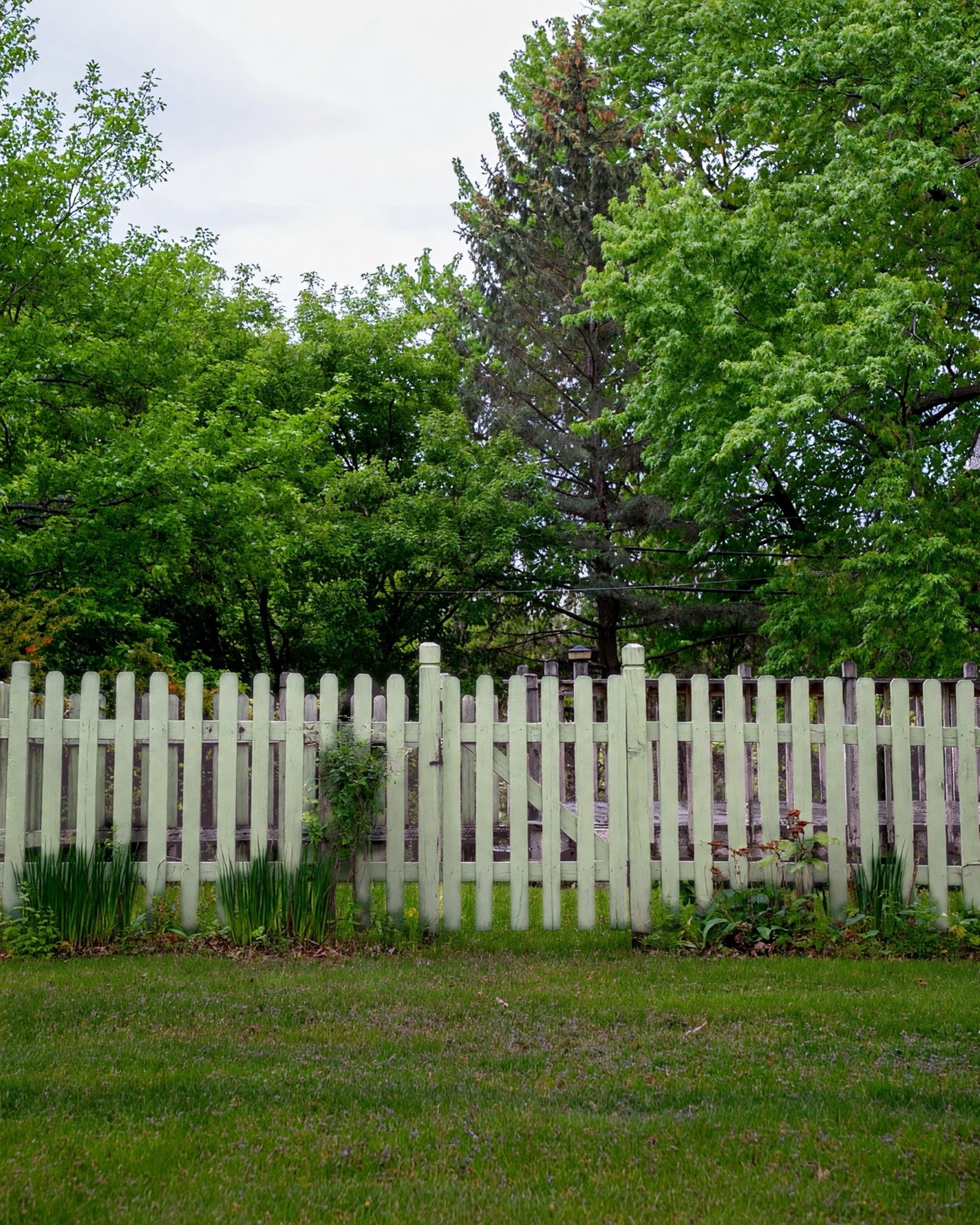
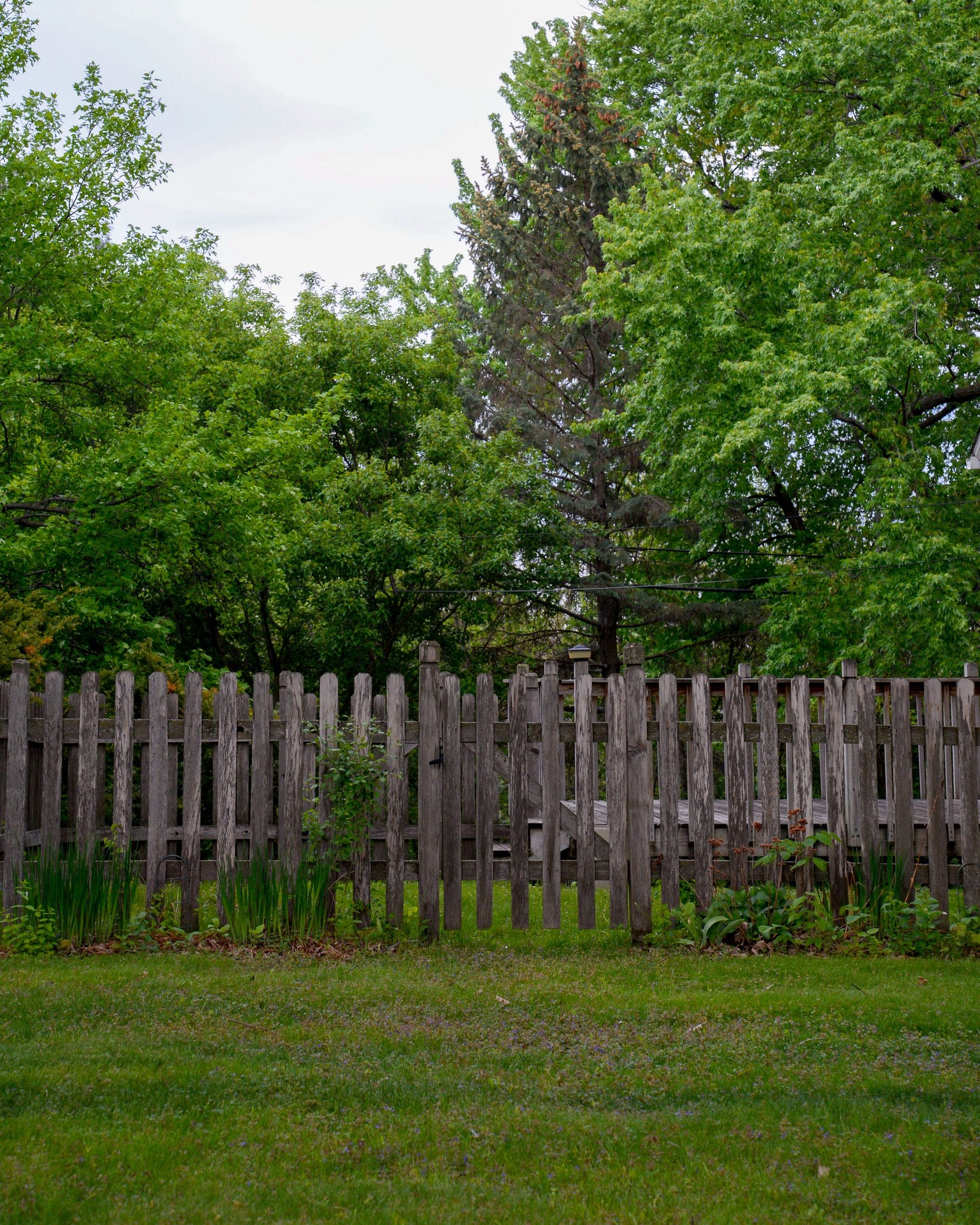
Gray wood and green leaves already sit well together, so a pale sage reads as a calm step rather than a contrast. The picture also makes the boards look new and straight. A real repaint will not: old boards need cleaning and repair before they take paint, and a light color shows splashes and dirt faster than a mid tone.
2. Charcoal: a dark fence in front of tall green planting
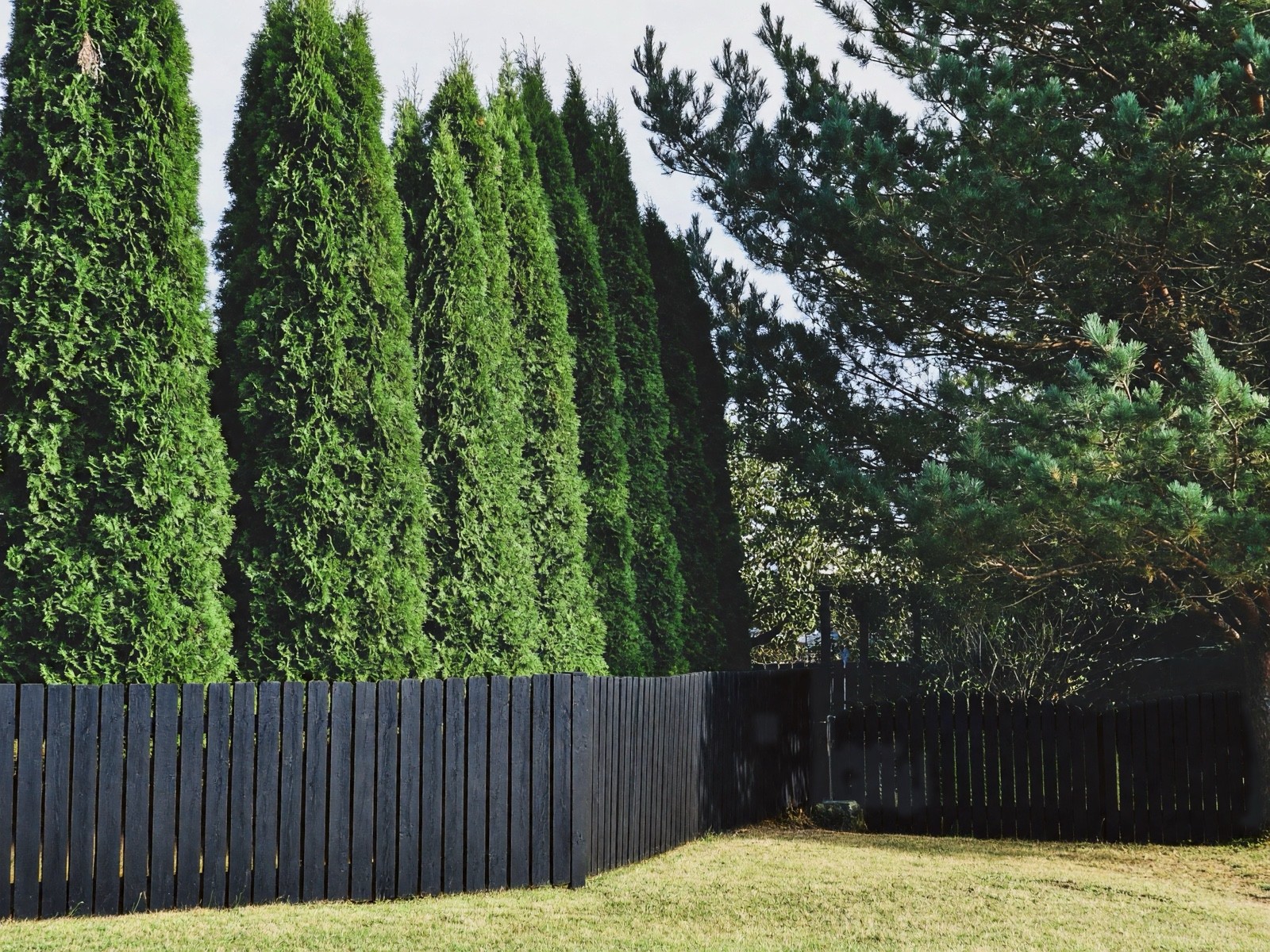
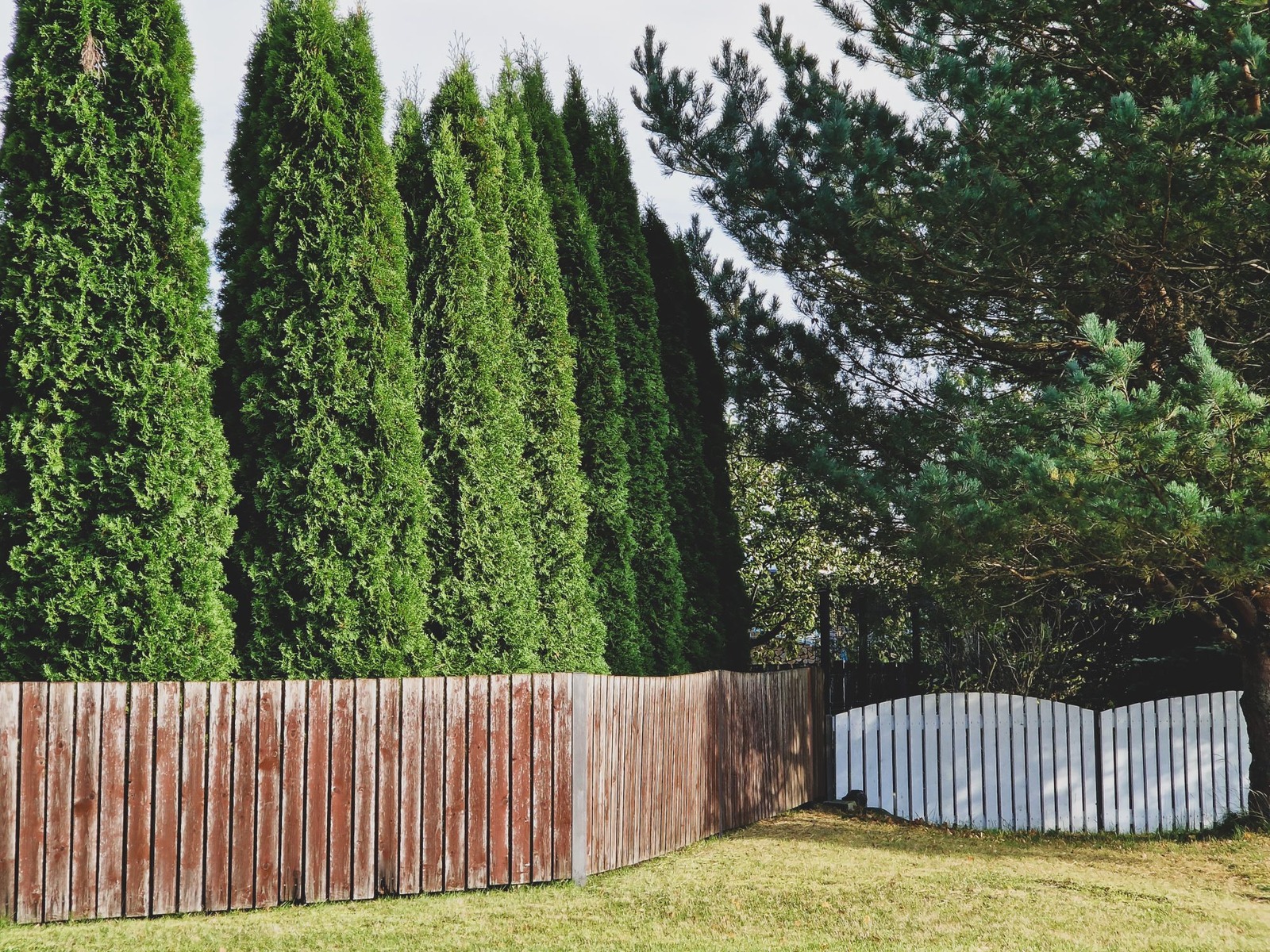
A dark fence works as a backdrop: the green of the thujas looks fresher against charcoal than against brown. Two things to take from it. The Garden area changes every fence it finds, so a fence you want to leave as it is should be out of the frame. And a very dark color loses detail in shade, so look at a sample in both sun and shade before you commit.
3. Chalk white: a gate and stone pillars
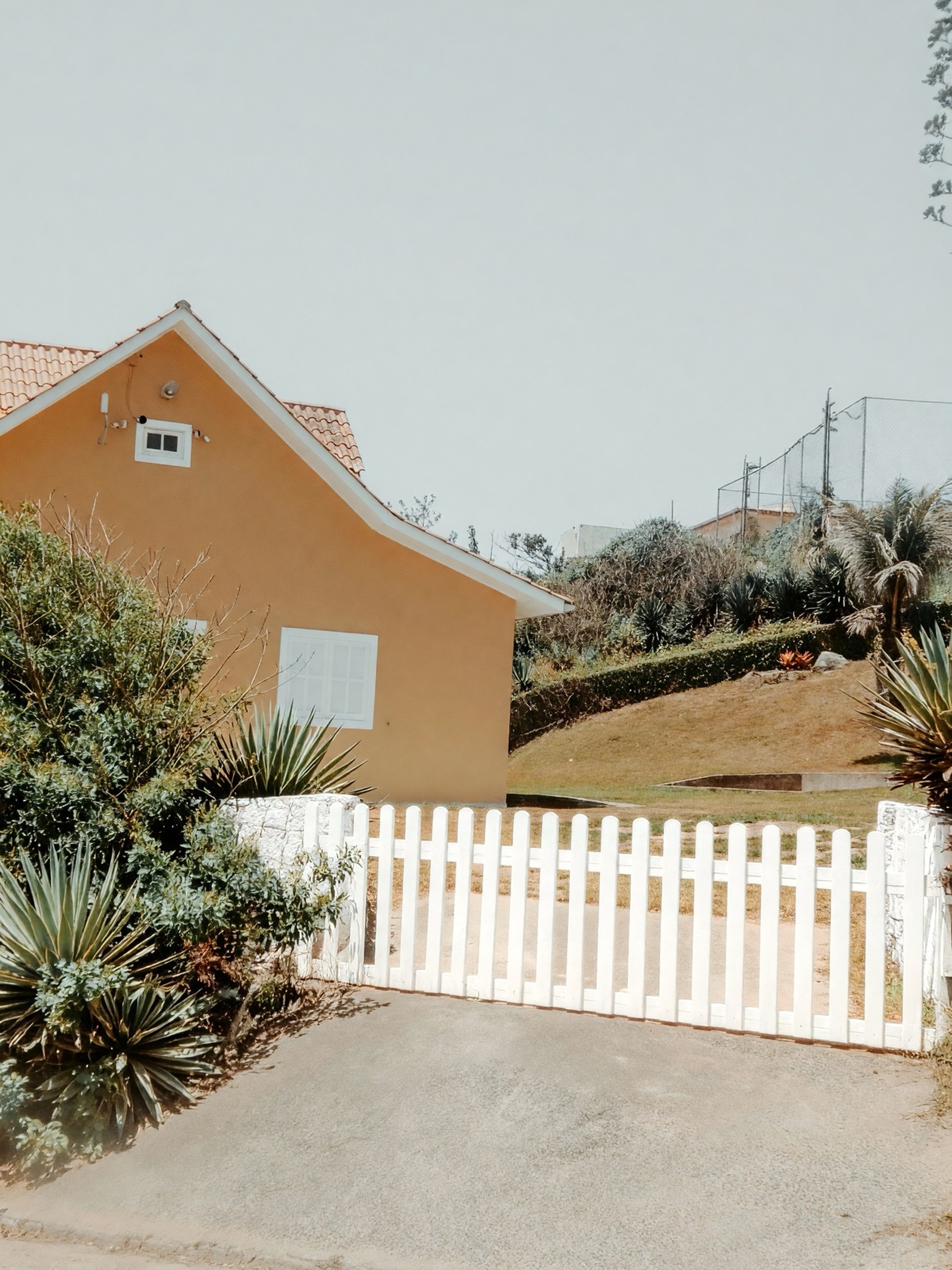
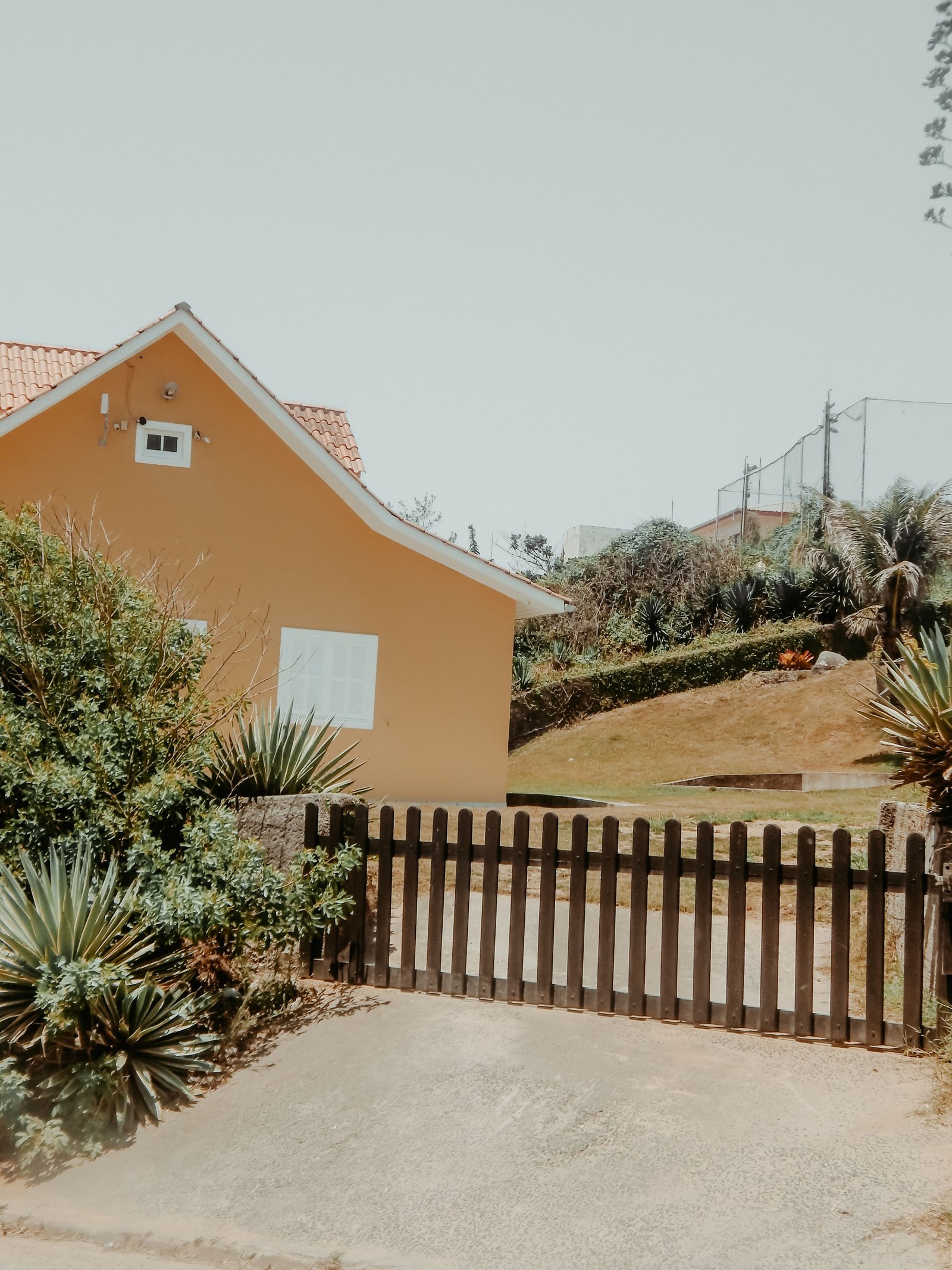
White picks out an entrance and lifts a dark gate against the green. It also shows the catch of the Garden area: the stone pillars count as garden walls, so they changed color with the gate. If you want to keep natural stone, treat the pillars as a separate decision.
4. Horizontal slats in cedar instead of a white picket fence
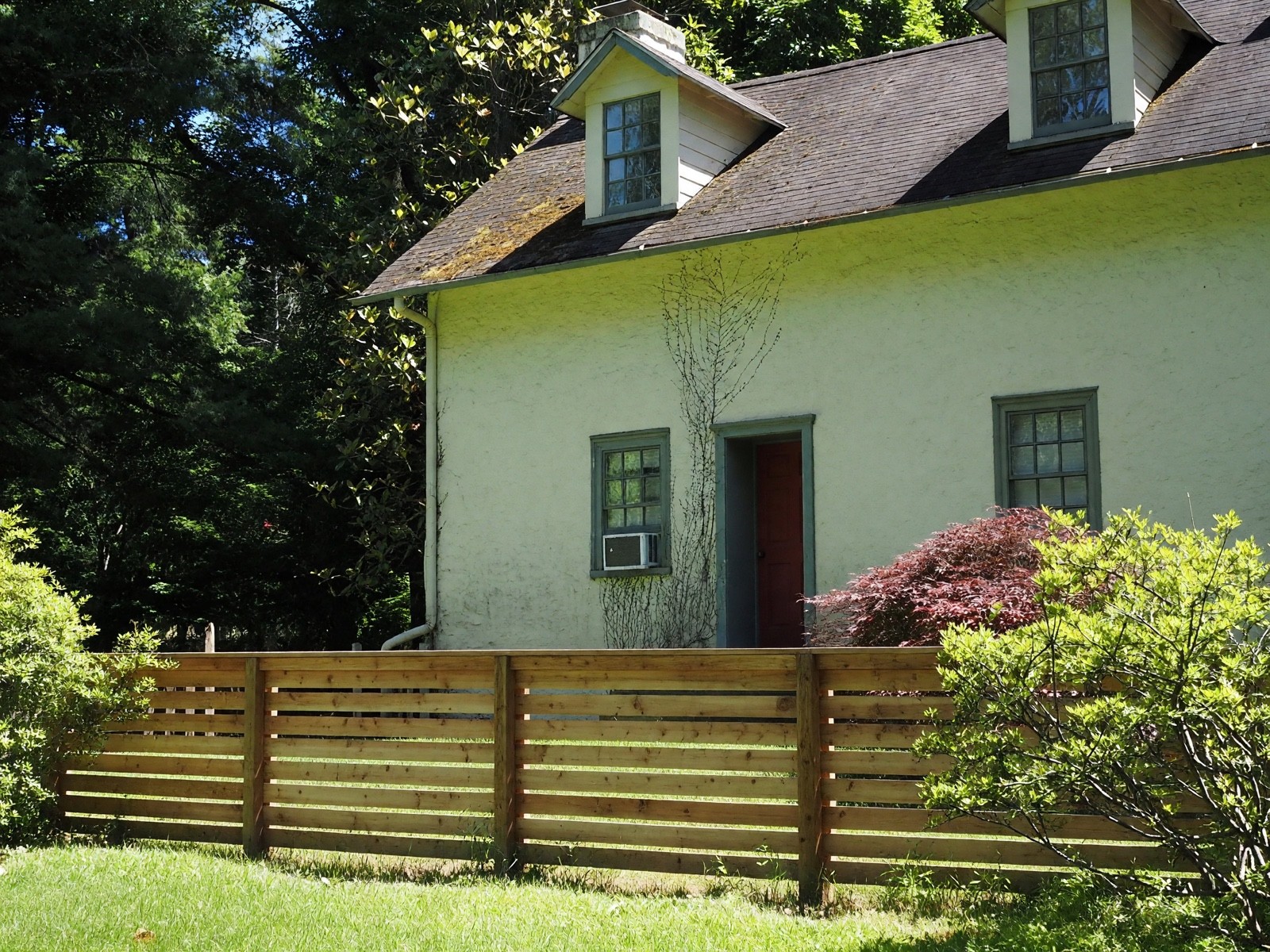
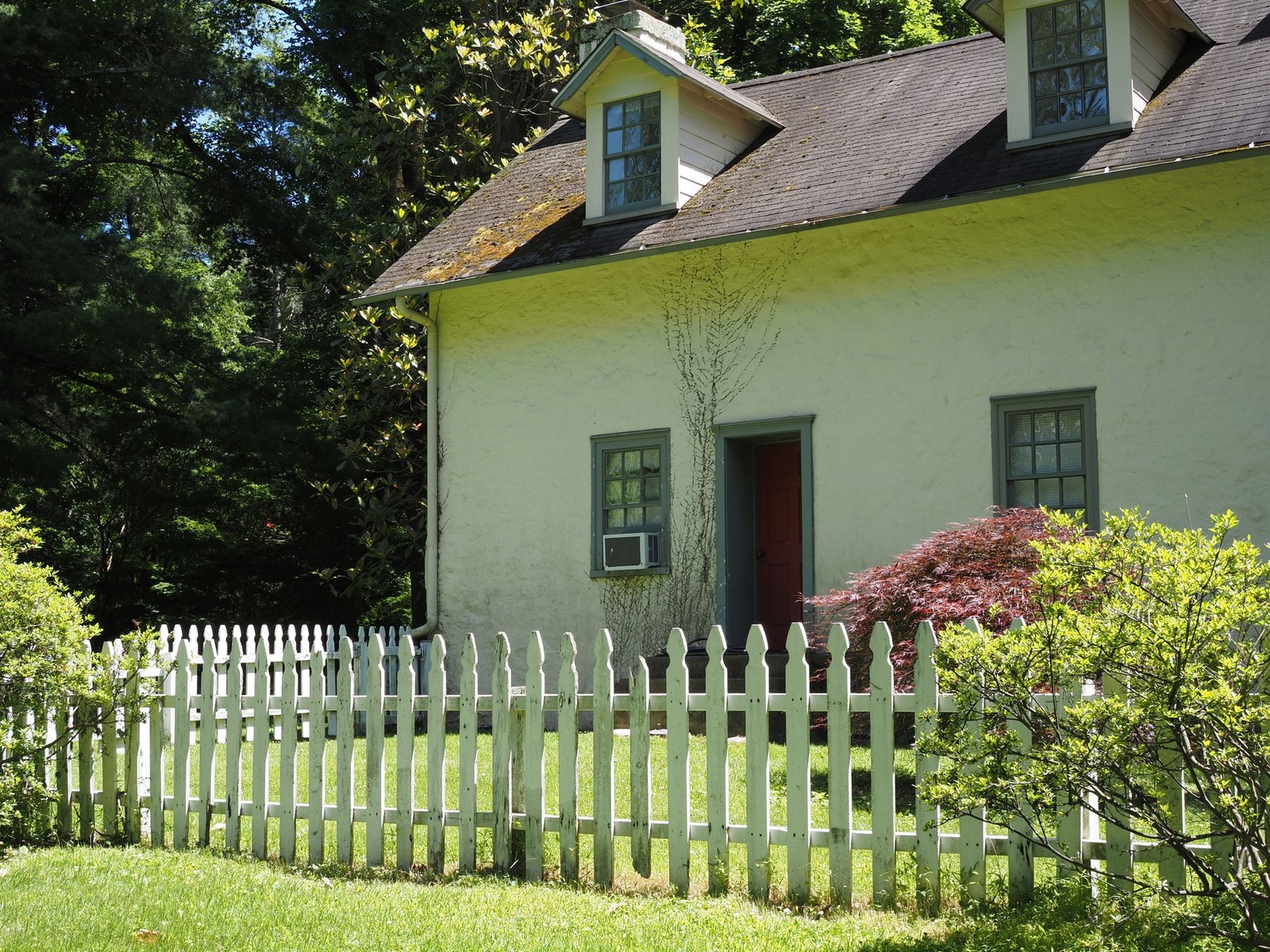
A slat fence draws one long line, which is why it looks modern next to a plain cottage. The thin gaps keep it from feeling like a wall. In the picture the new fence is taller than the picket it replaced and it hides the lawn and the doorstep. In a real garden that height is your decision, not the AI's, so pick it on site and measure it.
5. White picket instead of solid brown metal panels
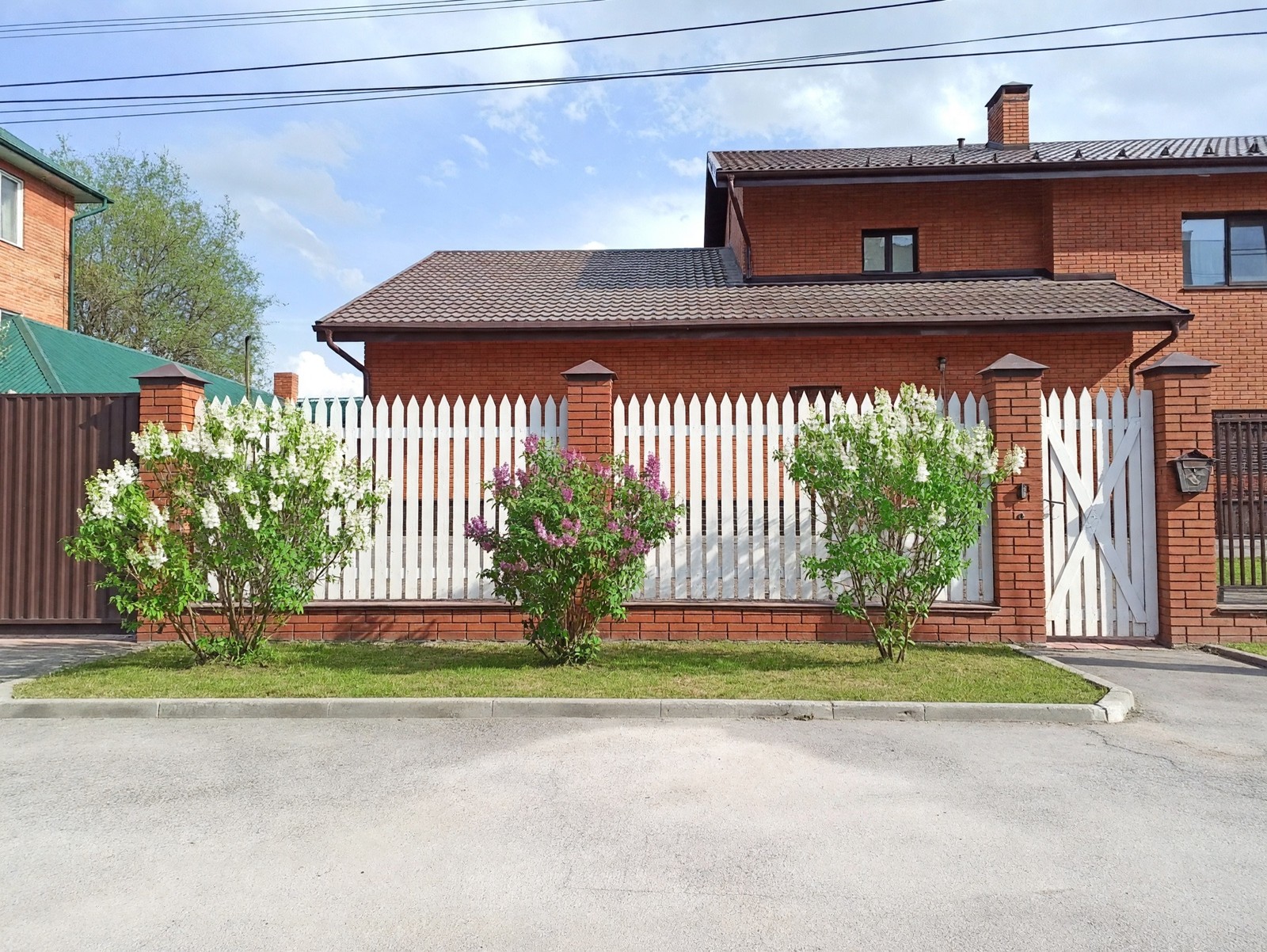
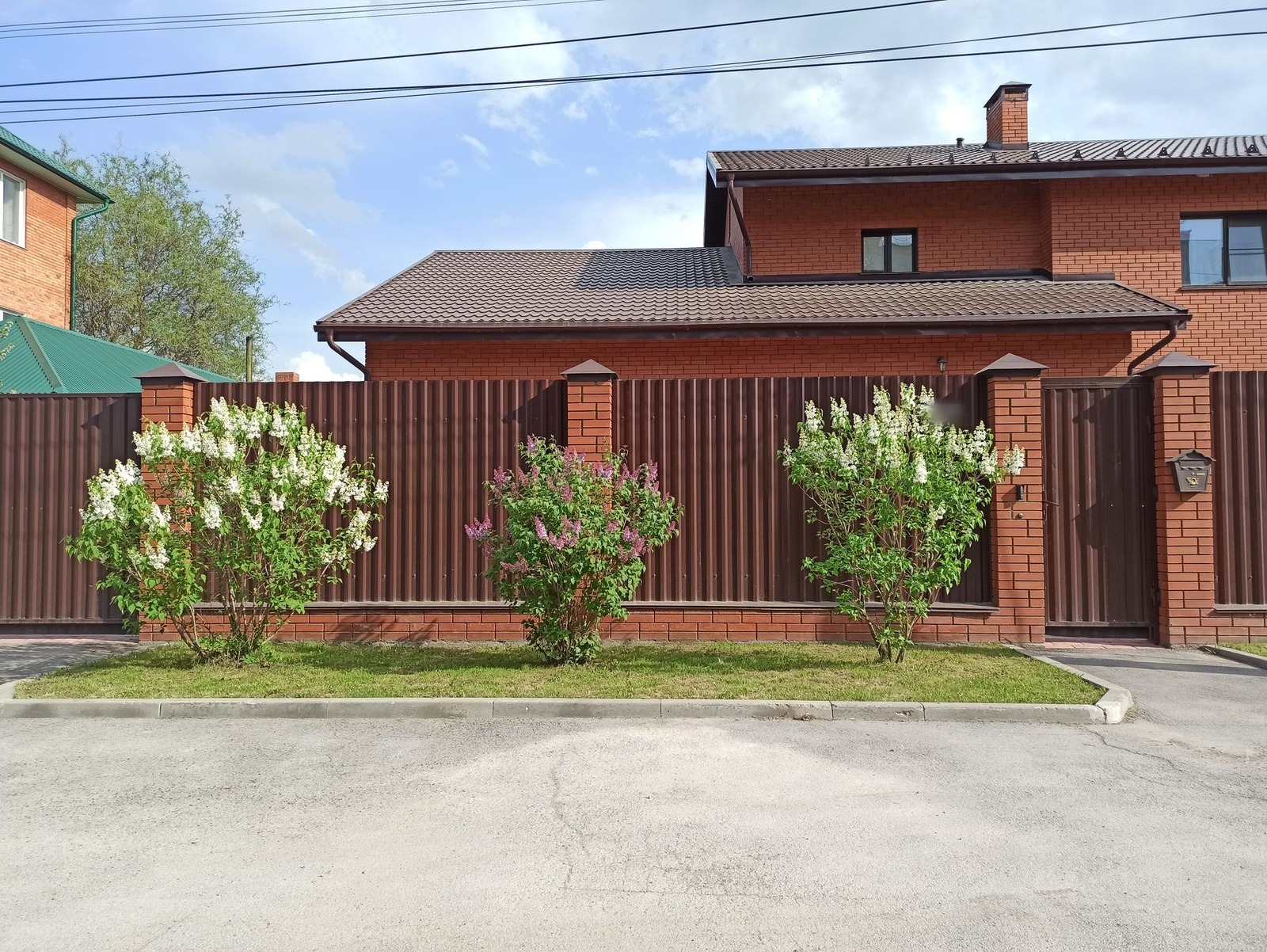
Swapping a solid panel for a low picket opens the street view and lets the lilacs be seen against white. The catch is what the AI has to invent behind it. In a first try with a looser sentence it drew a new window on the wall behind the fence and changed the neighbor's house. Adding a line that said no new windows and nothing else behind the fence may change helped, though a faint rectangle still appeared. When you use Magic Edit for a fence, say what must stay.
6. A solid cedar fence with a lattice top
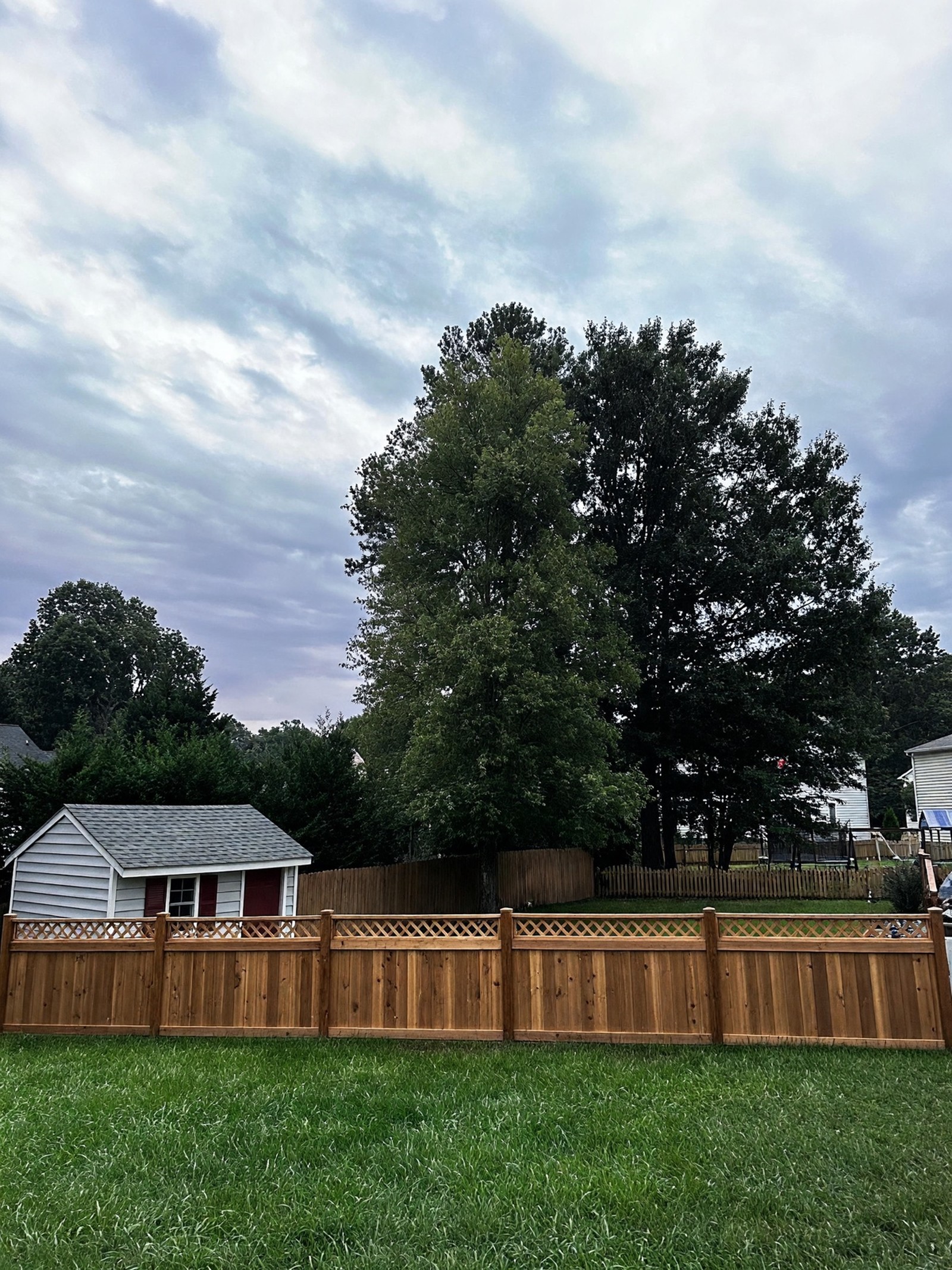
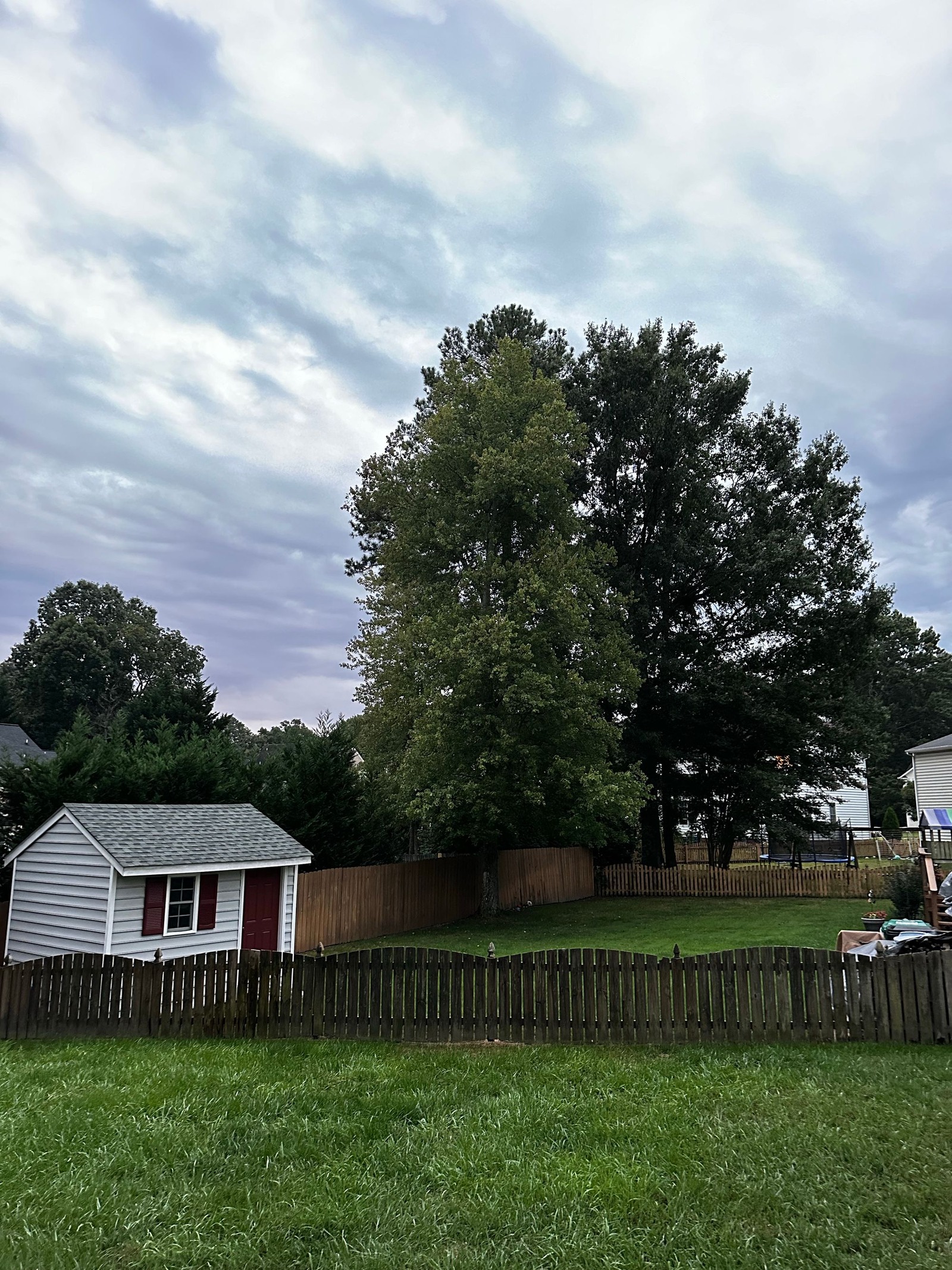
Solid boards give privacy at eye level, and the lattice strip adds height while letting some light and air through. It is also a place to train a climber. In a first try the AI made the fence so tall that it hid the shed and half the lawn; asking for it to be exactly as low as the old one got closer, but it is still taller. The AI does not measure, so take the height from your own tape and your local rules.
Can you try a fence material on your fence?
Yes, with Color & Texture (Essential and Pro plans). Upload the photo, choose the Exterior type of space, tap the fence, then pick a material from the Fences and gates group. The materials in that group are Wood fence, Horizontal slat fence, Iron railing, Gabion, Bamboo fence, Corten screen and Brick wall.
There is no picket fence or lattice panel in that list. For those two, describe the fence in Magic Edit (Pro plan) as in examples 5 and 6, or repaint what you have in Paint. A material picked in Color & Texture changes the surface of the fence you tapped; it does not know where your boundary is.
Which color should a garden fence be?
Dark colors such as Charcoal, Forest or Black recede and push the planting forward, and they hide small marks. In a small or shaded yard they can feel heavy, so use them where there is daylight. Light colors such as Chalk white or Sage brighten a corner and can make a small yard feel a little wider, but they show dirt and compete with white flowers. Natural wood tones are the easiest next to plants and need no color decision at all.
Take one tone from the house and test a sample on one board in sun and shade. Colors look different on a screen and on a fence, and the same paint changes from morning to evening.
Garden fence ideas at a glance
| Fence idea | Why it works | What to check |
|---|---|---|
| Repainted existing fence | Changes the whole look without changing the structure | Old boards need cleaning and repair first; test the color in sun and shade |
| Horizontal slats | One clean line; thin gaps keep it from feeling like a wall | Height, post spacing and the gap size you want |
| White picket | Marks the boundary and keeps the garden in view | Almost no privacy; painted wood needs regular touch-ups |
| Solid panel with a lattice top | Screens the view at eye level and lets in light above | Height limits, wind load on solid panels, how the posts are set |
| Metal or wrought-iron look | Slim and open, so the view and the light stay | Little privacy; ask how the metal is protected from rust |
| Living hedge | Soft, green and quiet; suits wildlife | Years to fill in, regular trimming, where the roots and spread go |
| Fence plus planting | Climbers or grasses soften a plain fence | Sun for the plants, and access to the fence for repairs |
How high should a garden fence be, and where does it go?
Treat these heights as starting points only. Many people keep a front fence low, around 1 m (3 ft), so the garden and the house stay visible, and make a back or side fence taller, around 1.8 m (6 ft), for privacy. Your area may set a different limit, and corners and shared boundaries often have their own rules, so ask the local building or planning office.
- Along the neighbors. Stand where you sit, find the neighbor's window and put the screen on that line instead of making the whole fence tall.
- At the front. A low, open fence or a hedge keeps the garden friendly to the street. Paint it a tone from the front door.
- Around a pool or a vegetable bed. These are ideas to try on a photo, not safety advice. A fence around a pool is usually regulated, so look up the local rules first. A bed needs a fence without gaps at ground level if pests are the problem.
What is the best type of fence for a garden?
The best type is the one that suits the job, so start with what the fence must do. Use this as a quick guide, then check the details with a fence builder or your local office.
- Privacy: solid vertical panels, or horizontal slats with thin gaps.
- Keeping pets in: enough height for the animal and gaps too small to squeeze through, checked at ground level too. A dog that digs or jumps needs more than a decorative fence.
- A decorative border: low and open, such as a picket fence or slim metal bars.
- A windy spot: slats or a lattice top let some air through, while a solid panel catches wind like a sail.
- Keeping the view: open metal bars or a low hedge.
Wood or metal for a garden fence?
Neither is better everywhere. Wood is warm, easy to repaint and can be repaired board by board, but it often needs a fresh coat of paint or stain every few years and can rot where it meets the ground. Metal stays slim and open and keeps the view, but it can rust where the coating is chipped and is usually harder to adjust on site. Solid screens suit privacy, open bars suit a border.
What is the cheapest way to fence a garden?
The cheapest way is usually the simplest structure that does the job, but the real cost depends on the material, height, length, ground, labour and where you live, so there is no single answer.
- Simple wire or mesh on posts is usually among the lower-cost options in many places. It marks a boundary and keeps the view, but gives no privacy.
- Basic wood panels or boards are often the next step up and give screening.
- Metal and masonry such as brick, stone or gabion usually cost more.
- A young hedge can be a low-cost start, but it takes years to fill in and needs trimming.
Compare the cost over the life of the fence, not only the first price: paint or stain, repairs and replacement add up. Get local quotes before you decide. To choose a look before you buy anything, try fence types in Magic Edit (Pro plan) or colors in Paint on your own photo.
Easy, short and simple garden fence ideas
For a small garden border, keep the fence low, open and simple. These ideas mark an edge rather than screen a view:
- A low picket fence at about knee to waist height.
- Rope or wire strung between posts for a light line around a bed.
- Woven willow or wattle edging for a natural border round planting.
- A low clipped hedge as a living fence.
A low fence will not keep out larger animals or give privacy. For layouts of small plots see small backyard garden ideas, and for a low, open fence at the front see front yard landscaping ideas.
What to check before you build, and common mistakes
- Whose fence is it? Know where the boundary runs and agree with the neighbor before you replace a shared fence.
- Rules and permits. Height, position and materials can be regulated. Ask the local office; the picture cannot.
- Posts and ground. Posts need a firm footing, and in cold climates that depends on how deep the ground freezes. A fence on a slope or next to a wall needs a plan, not a guess.
- Underground lines. Call your local utility locate service before you dig.
- Gates. Plan which way they swing and how wide they must be for a wheelbarrow or a mower.
- Copying the picture's height. In the examples new fences came out taller than the old ones. Measure on site.
- Choosing a color from a screen. Test a sample outdoors in daylight.
- A solid fence in an exposed spot. Wind pushes on it like a sail; open slats or a lattice top let some air through.
- Ignoring the back. Paint and stain both sides if you can reach them, and leave room to do it.
Can you build a garden fence yourself?
Many people can build a simple low fence themselves, but do the checks first and keep a tall solid fence for a builder.
- Confirm where the boundary runs and talk to your neighbors before you start, and ask your local office about height and permits.
- Where a locate service exists, call it before you dig for buried lines.
- Mark the line with string and space the posts evenly.
- Set each post firmly and check it with a level, because a loose or crooked post is a common reason a fence leans.
What the pictures can and cannot tell you
The pictures show the look only. They do not know your heights, your boundary, your soil or your local rules. In these six examples the AI painted a second fence we had not asked about, painted stone pillars along with a gate, invented a rectangle on a wall behind a fence, added a bar grille where an old panel stood, and drew new fences taller than the old ones. Plants, bins and sheds near the fence may be redrawn too. Use the result to compare colors and shapes, then check the details with a fence builder or your local office.
Try a garden fence idea on your own photo
Stand a few steps back, level with the fence, so the whole fence line, the posts and the gate show in even daylight. Avoid strong shadows across the boards. In Paint, choose the Garden paint area and a color. To change the fence type, describe it in Magic Edit (Pro plan) and say what must stay. To try a fence material on the fence you tap, use Color & Texture (Essential and Pro plans).
For the planting and layout around the fence, see backyard design ideas and small backyard garden ideas. For the front of the house, see front yard landscaping ideas. For the color of the house wall behind the fence, see house exterior color ideas. More outdoor and indoor ideas are on the HomeCompose design ideas page.
Frequently asked questions
What is the best garden fence for privacy?
Solid vertical boards or closely spaced horizontal slats screen the most. A lattice top adds height and lets light in, and a hedge screens too but takes years to fill in. Privacy depends on where you sit, so find the line from your seat to the neighbor's window and make sure the screen covers it.
What color should a garden fence be?
Dark colors such as charcoal make plants stand out and hide marks. Light colors such as white or sage brighten a small or shaded corner but show dirt. Take one tone from the house and test a sample in sun and shade before you paint the whole fence.
How high can a garden fence be?
It depends on where you live, which side of the house it is on and whether it stands on a shared boundary. Common starting points are about 1 m (3 ft) at the front and 1.8 m (6 ft) at the back, but ask your local building or planning office for the limit that applies to you.
Can I see a new fence on my own photo before I build?
Yes. Paint tries a new color on an existing fence, and Magic Edit (Pro plan) swaps the fence type from one sentence. Both show the look only: they do not know the real height, the boundary or the ground, and they may redraw things near the fence.
Is it free to try?
Yes. You can start on the free plan, and it includes a limited number of designs.