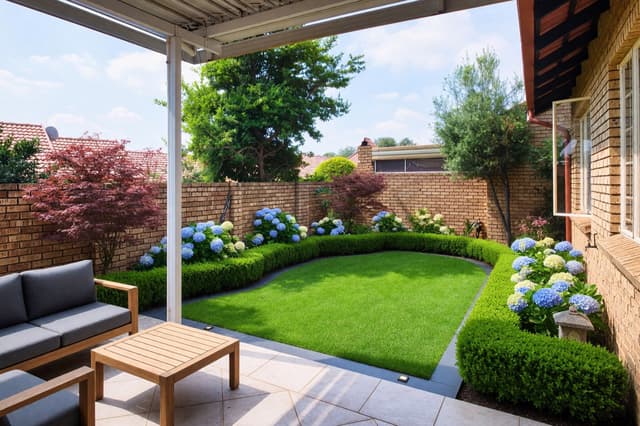
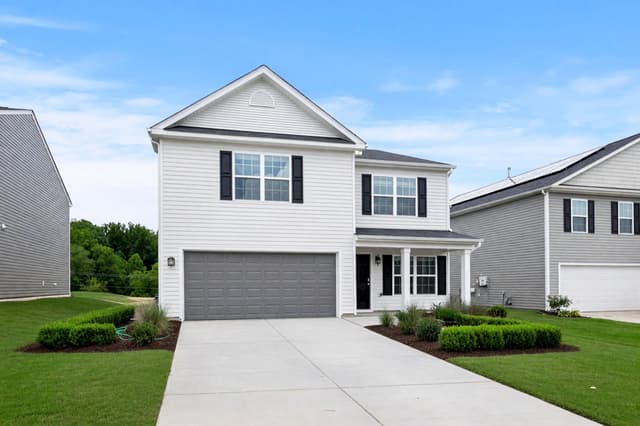
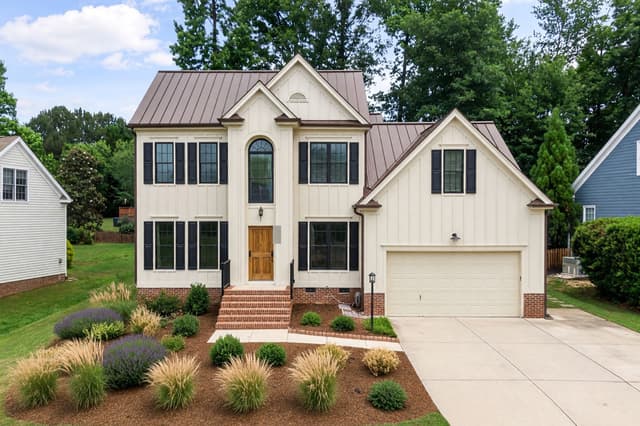
Front yard landscaping ideas
A good front yard does three things: it shows where the door is, softens the line where the house meets the ground, and takes less work than the lawn it replaces. Below are six front yard landscaping ideas on real house fronts, shown before and after, with the reasoning behind each one and what to check before you plant. This page is about the front; for the back, see small backyard garden ideas.
How do you plan a front yard?
- Start at the door. Give visitors a clear route from the curb or driveway to the entrance, wide enough for two people side by side, about 1.2 m (4 ft). A curve needs a reason, such as a tree or a bed to walk around. On a narrow lot, a straight path is fine.
- Plant the foundation, don't hide it. A bed along the house softens the corner where wall meets ground. Make it at least 1 m (3 ft) deep, and set shrubs back from the wall by about half their mature width.
- Layer by height. Low plants at the front, medium ones behind, tall ones near the house or fence. Groups of three or five look planned; one of each looks random.
- Give the beds a clean edge. A cut edge, a steel strip or a row of stones keeps lawn and mulch apart and makes even a simple bed look finished.
- Light the path and the steps. Low lights pointing down are enough. Lit steps are also safer after dark.
- Keep your sightlines. Plants beside a driveway or at a corner should stay low enough to see people and cars. Some areas limit their height, so ask your city.
6 front yard landscaping ideas, before and after
Each example starts from a real photo of a house front and was redesigned in Garden Design. The mode decides how much changes: Light Touch only adds a few accents, Preserve Structure keeps the layout, walls, fixed paths and mature trees, and Bold Design reworks beds, lighting, outdoor furniture and replaceable paving. Even so, paths and edging can change, and the AI draws plants full-grown and often in flower, so a young planting would look smaller. House numbers, a small security-company yard sign and the cab window of one truck are blurred in the before photos for privacy.
1. A curved path and hedged beds across a big lawn
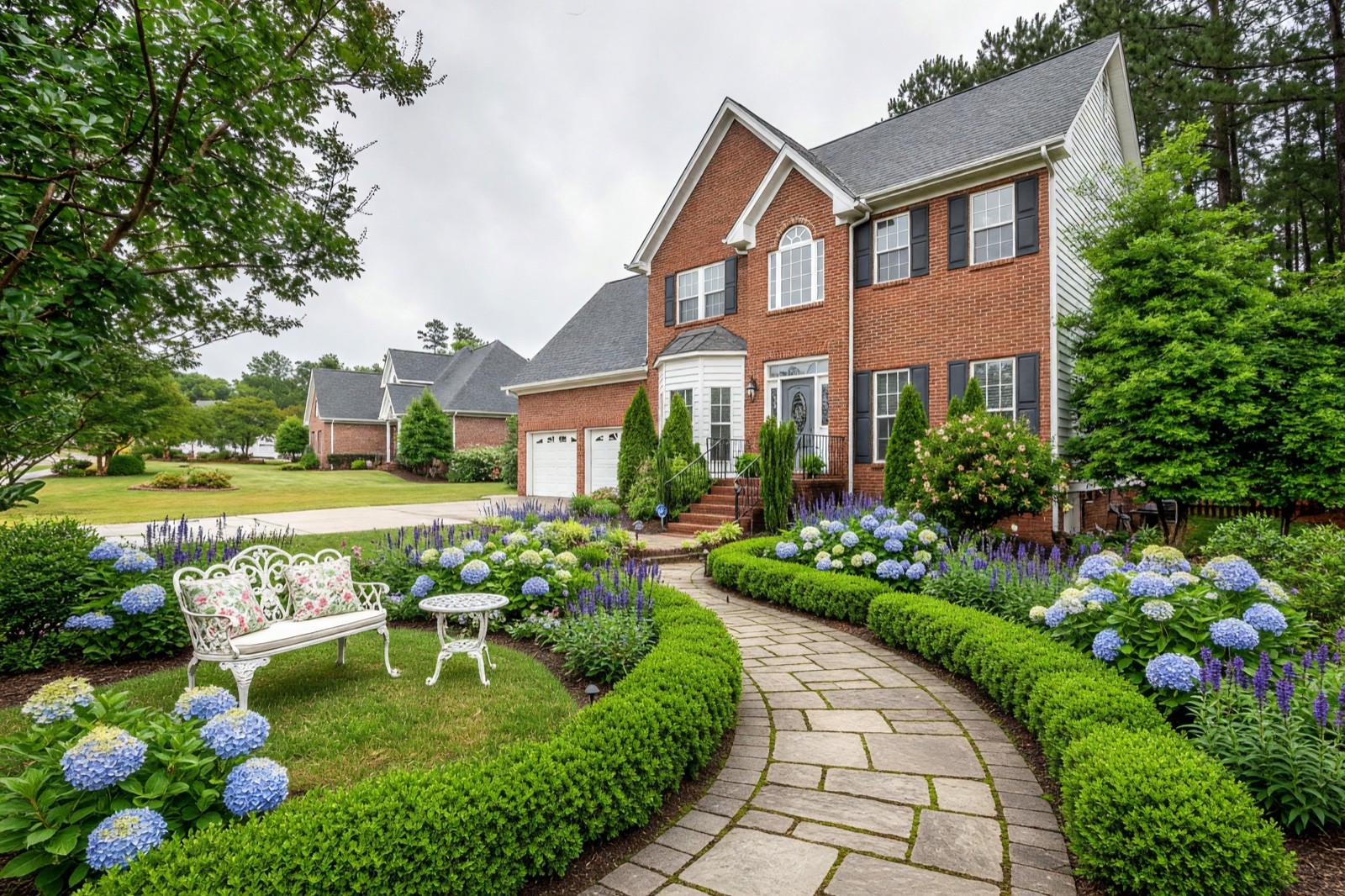
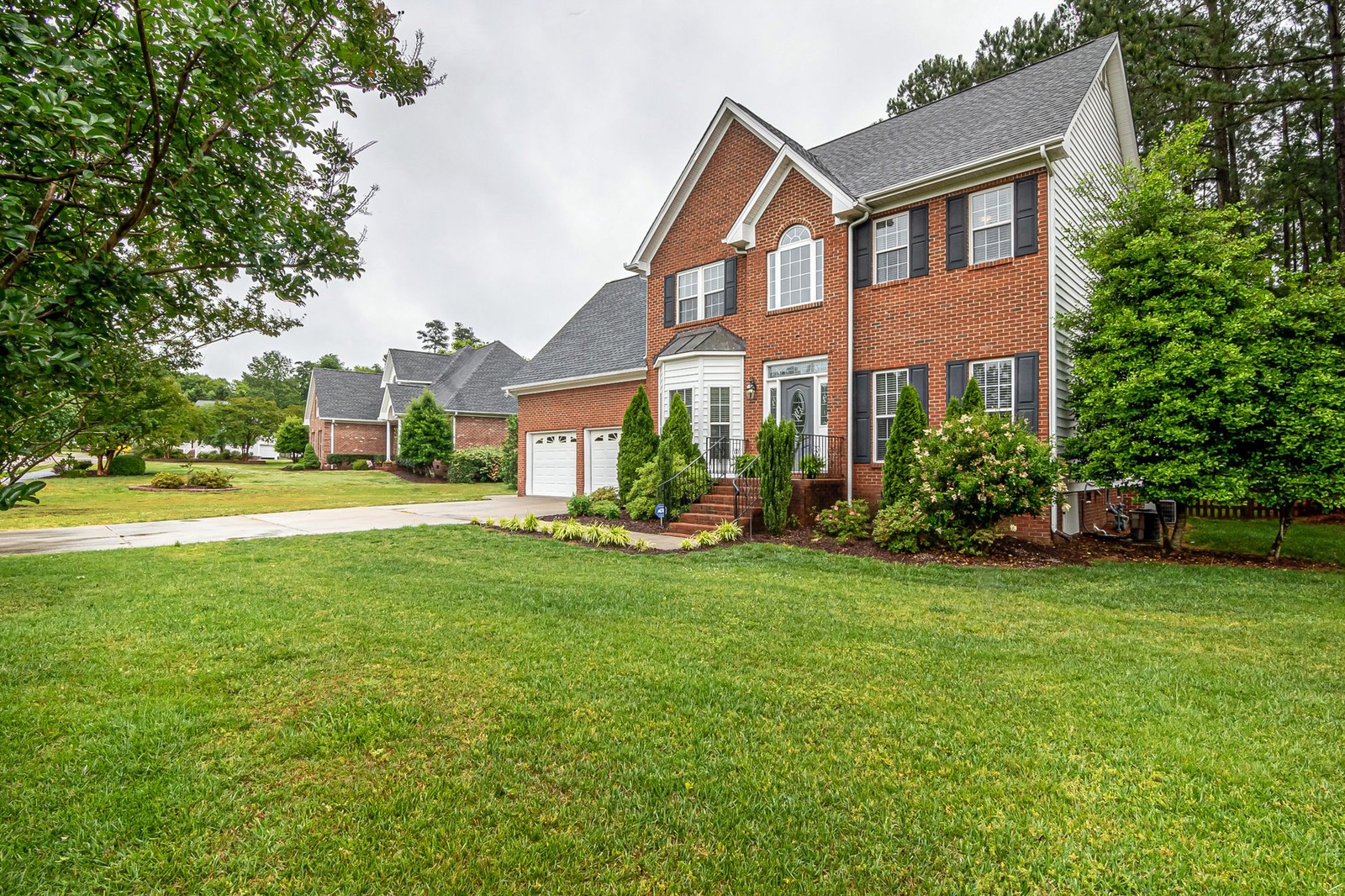
On a very wide lawn, a curved path with a hedge on each side gives the entrance a clear approach and turns an empty expanse into something to look at. Boxwood holds its shape all year, and the hydrangeas add color in summer. The picture also adds a small lawn island with a bench, an AI addition rather than a plan. In real life, leave room to walk beside the hedge so it can be trimmed.
2. A layered bed along a low ranch house
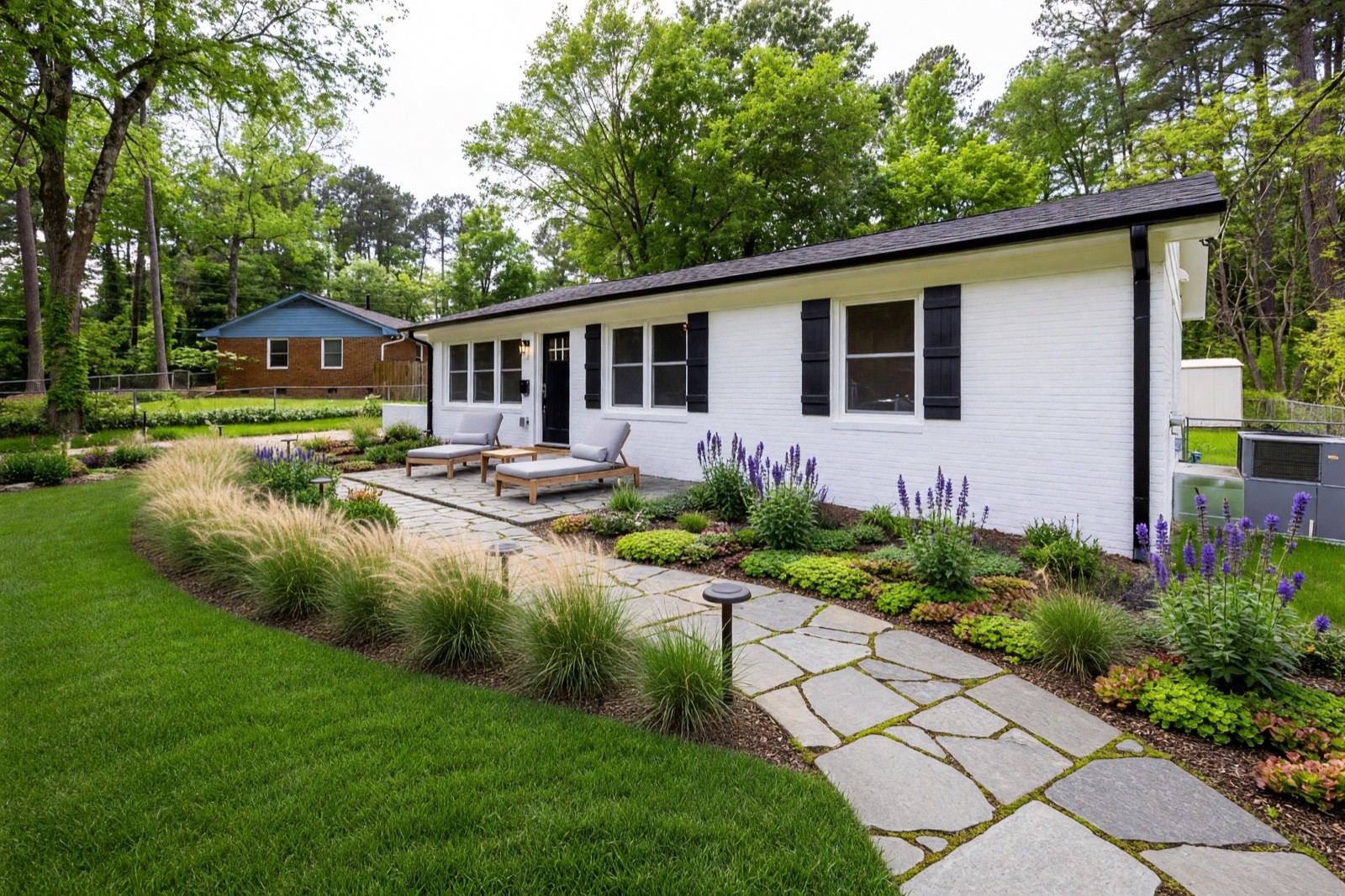
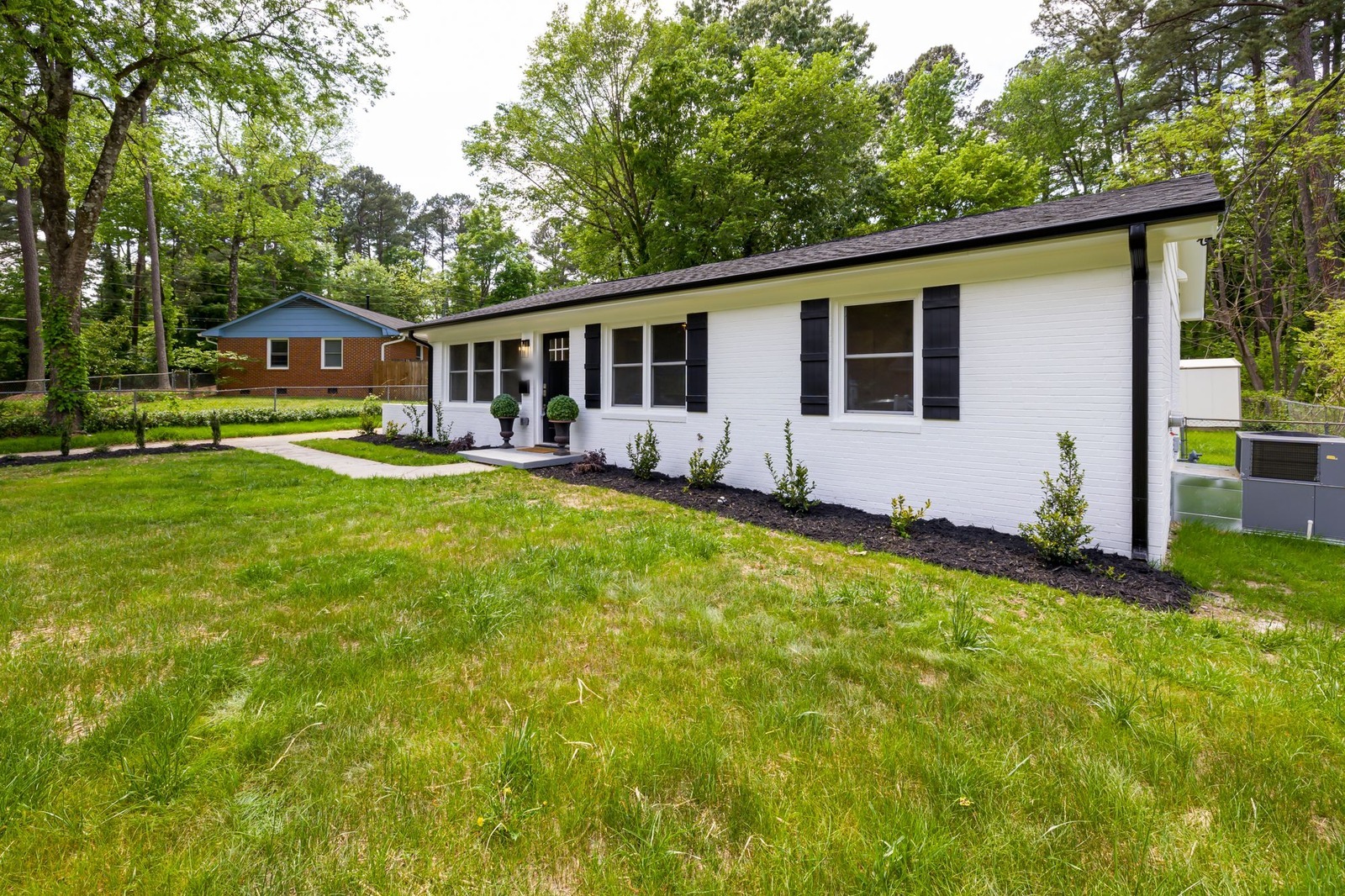
A long, low facade gains a lot from one deep bed. Planting in three layers, grass at the outer curve, a mat of sedum and tall salvia against the wall, gives the bed depth from the street. Keep the lawn edge in wide, gentle curves so a mower can follow it. The lounge chairs by the front door are an AI addition; the useful part is a landing area at the door. Plan the real entry walk, steps and any step-free access on site.
3. One new bed beside the driveway
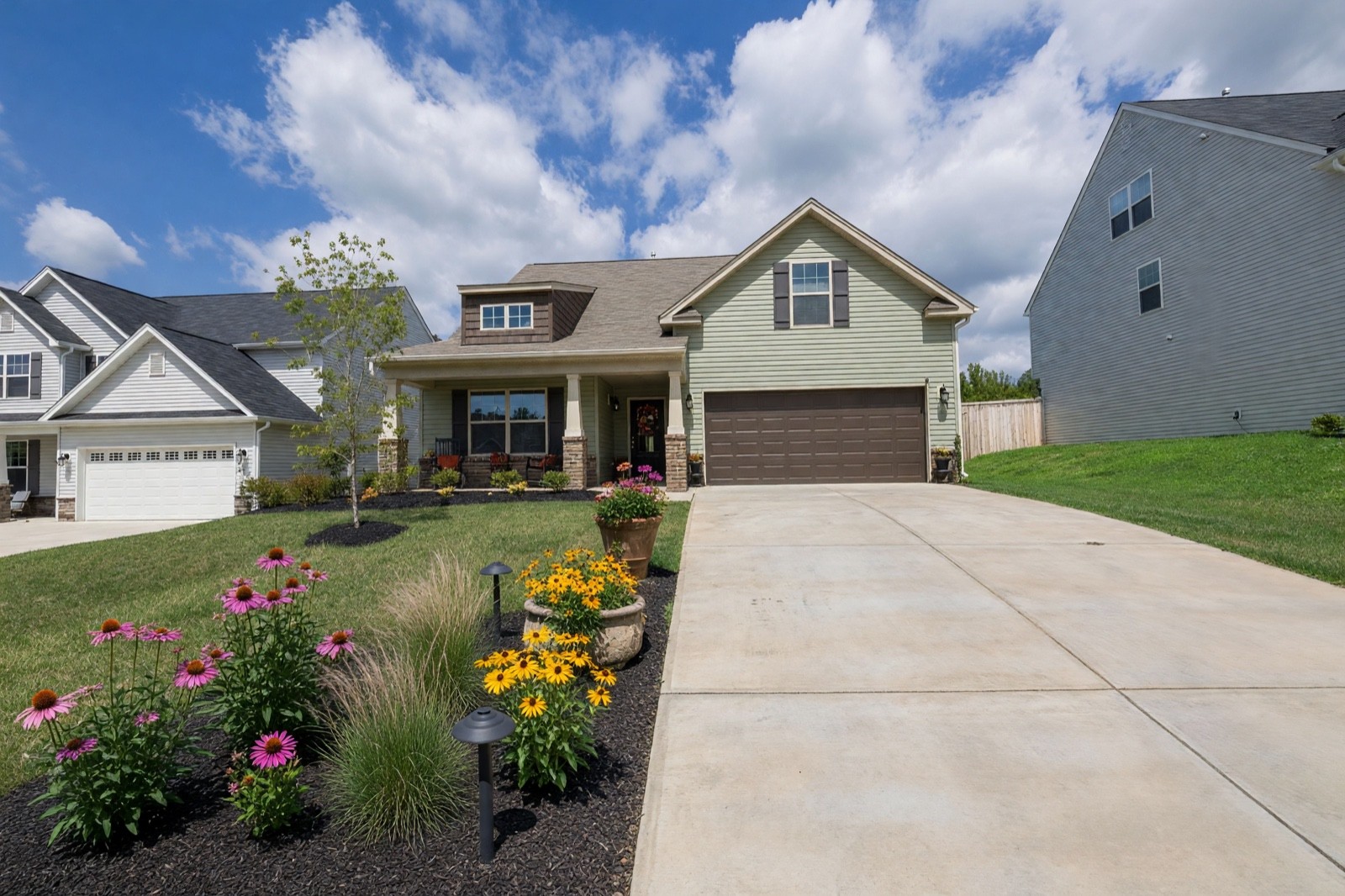
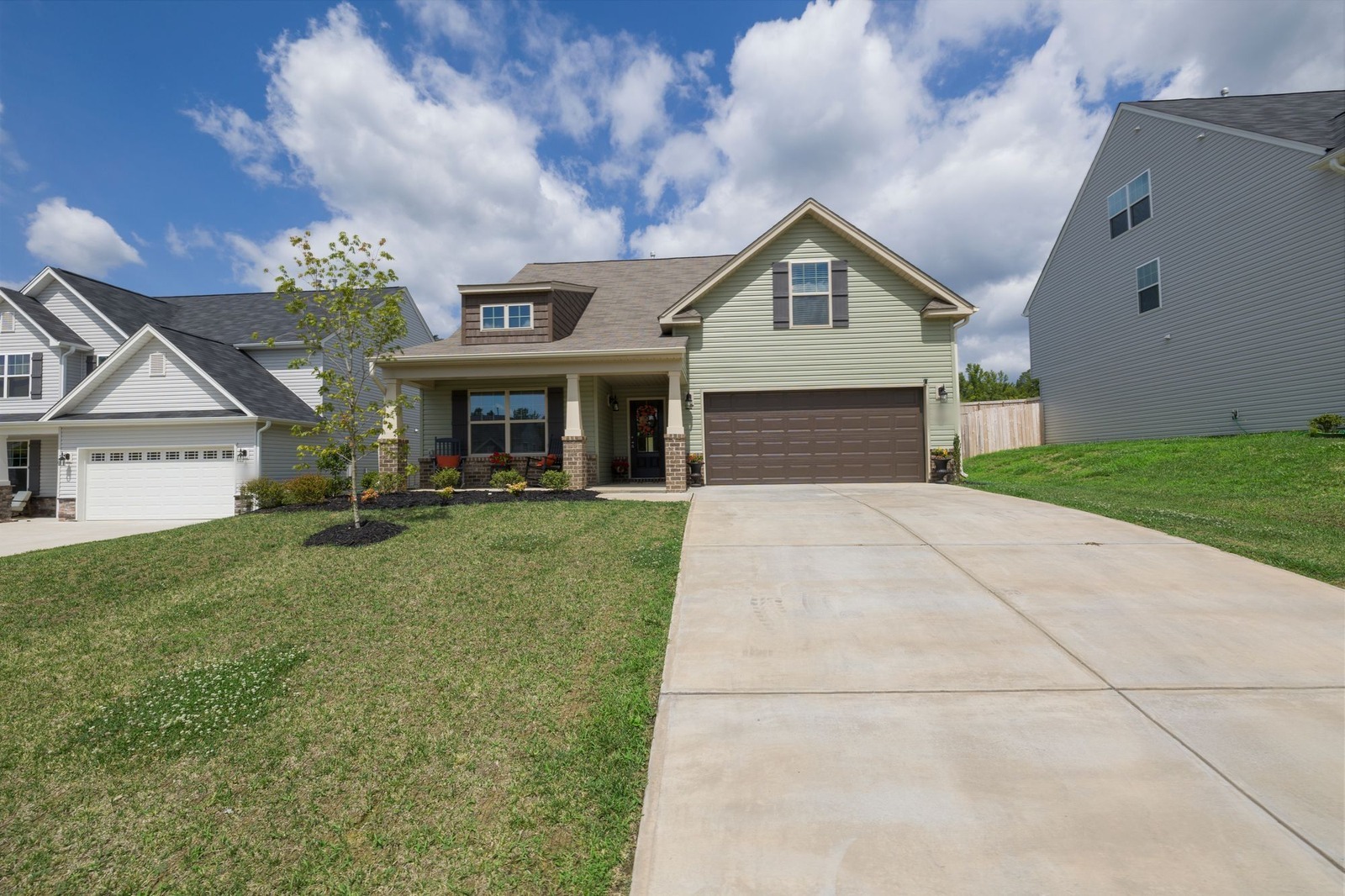
For a quick change, add one bed rather than redoing the whole yard. Light Touch is meant for a few accents, and the AI drew a bigger bed than that here, so treat it as a starting idea. A bed along the drive ties the lawn to the house, and mulch keeps weeds down. Two things to check before you copy this: the flowers in the picture are far fuller than a first-year planting, and the mulch is drawn very dark, where real mulch turns browner. Keep the plants near the drive edge low enough to see over, and leave room for car doors and snow clearing.
4. Trees and a stepping-stone path on a new lawn
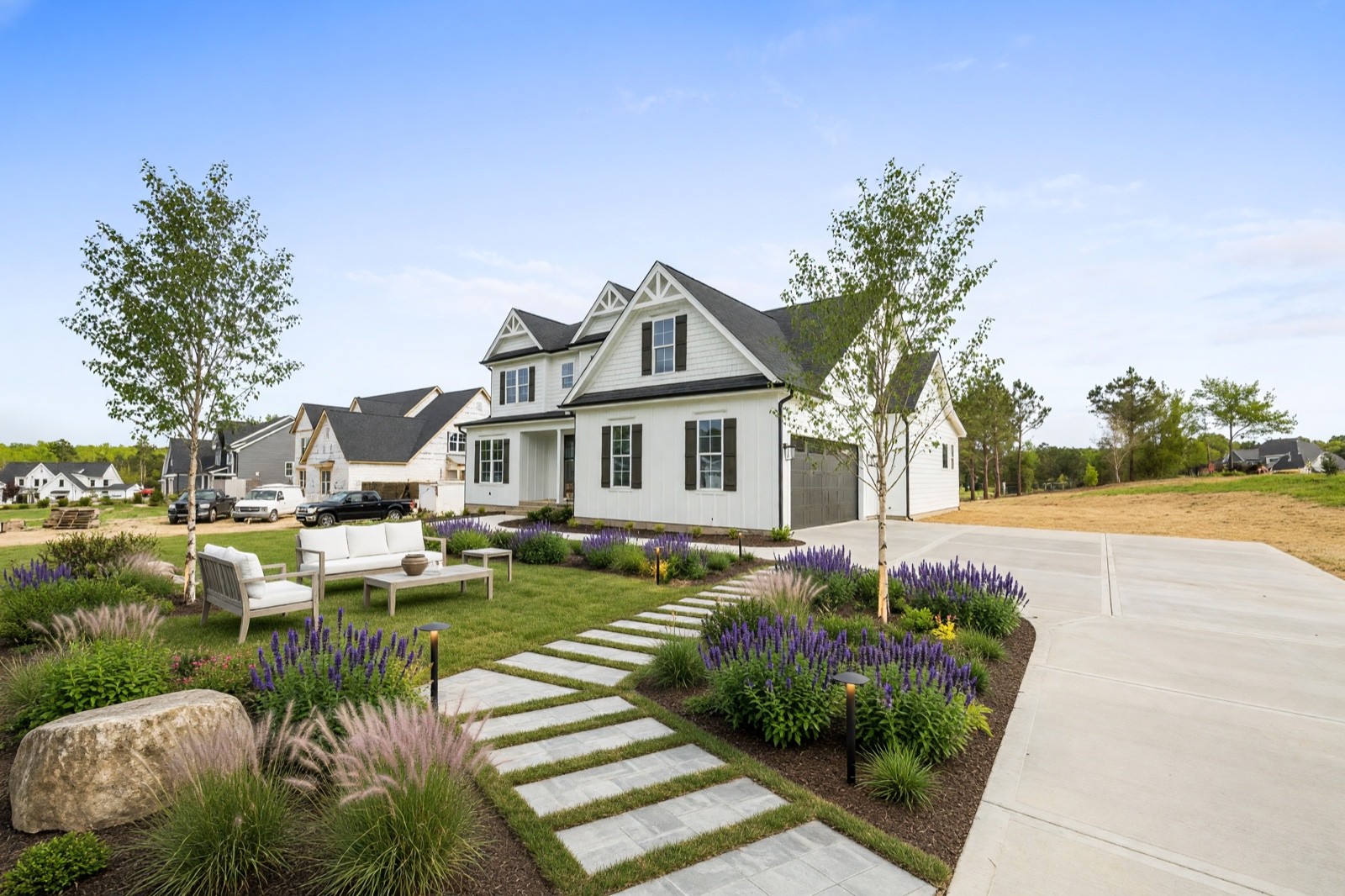
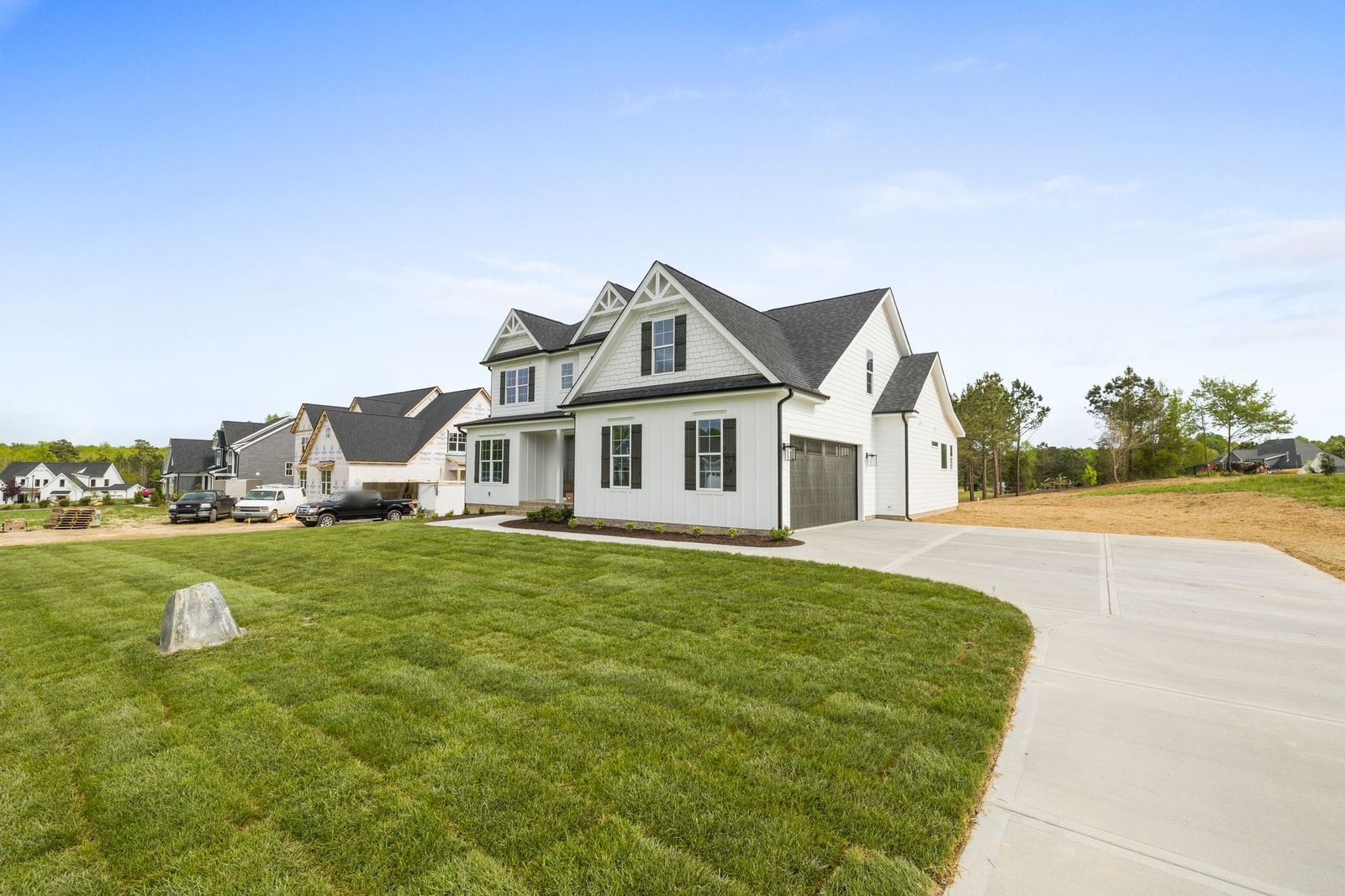
A new build starts with bare turf, so trees, beds and a path do the most. Stepping stones with grass between them are a softer link than a poured walk. The picture also shows a mistake: the birch beside the garage reaches the roofline, and a mature tree that close is a planting-distance problem. Check the mature width and height of any tree before you choose a spot. The path here starts at the drive curve but stops in the lawn before it reaches the door, so in a real plan it must run all the way to the entrance. A sofa set is not a typical front yard feature, so treat it as decoration.
5. Flower borders along a porch entry walk
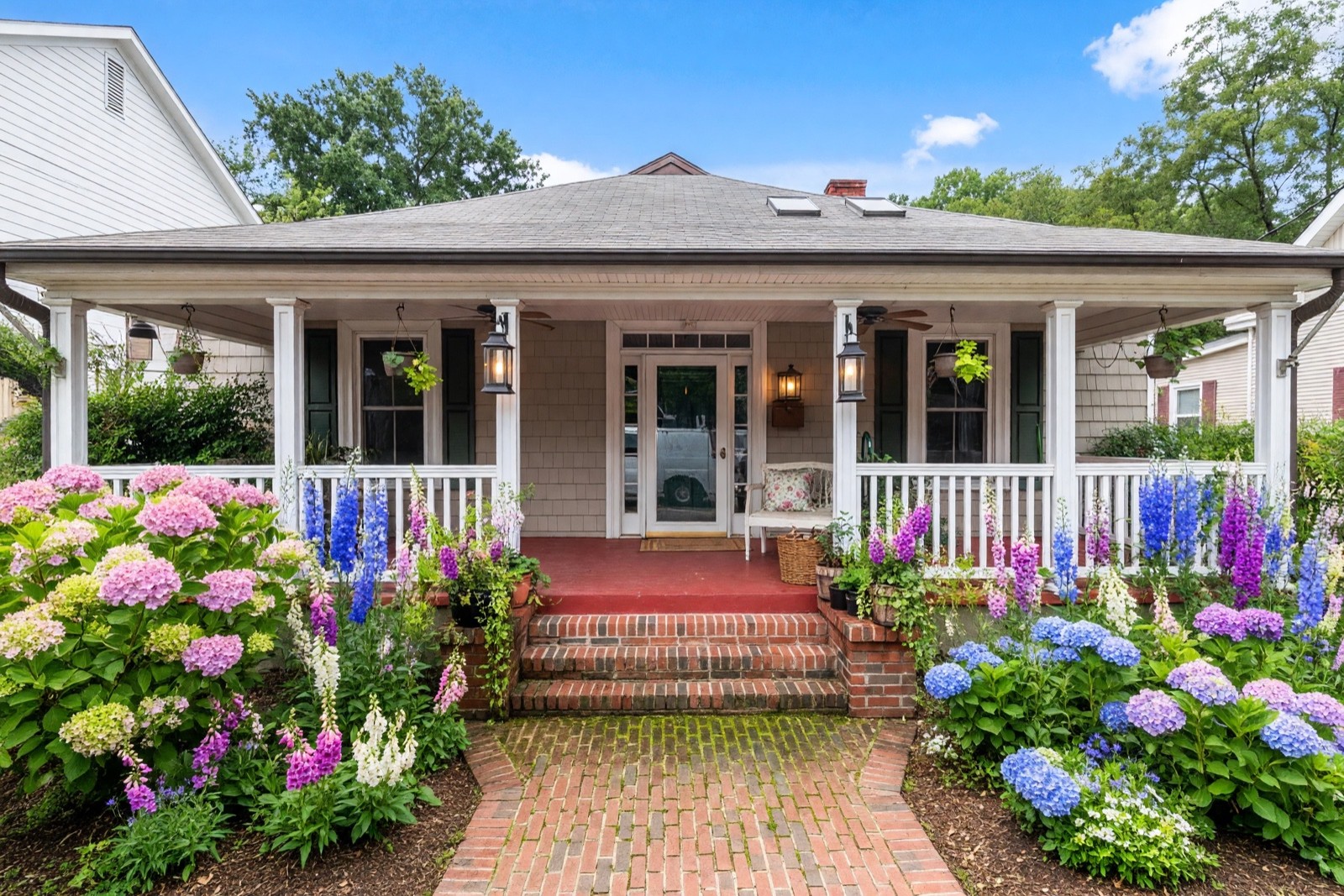
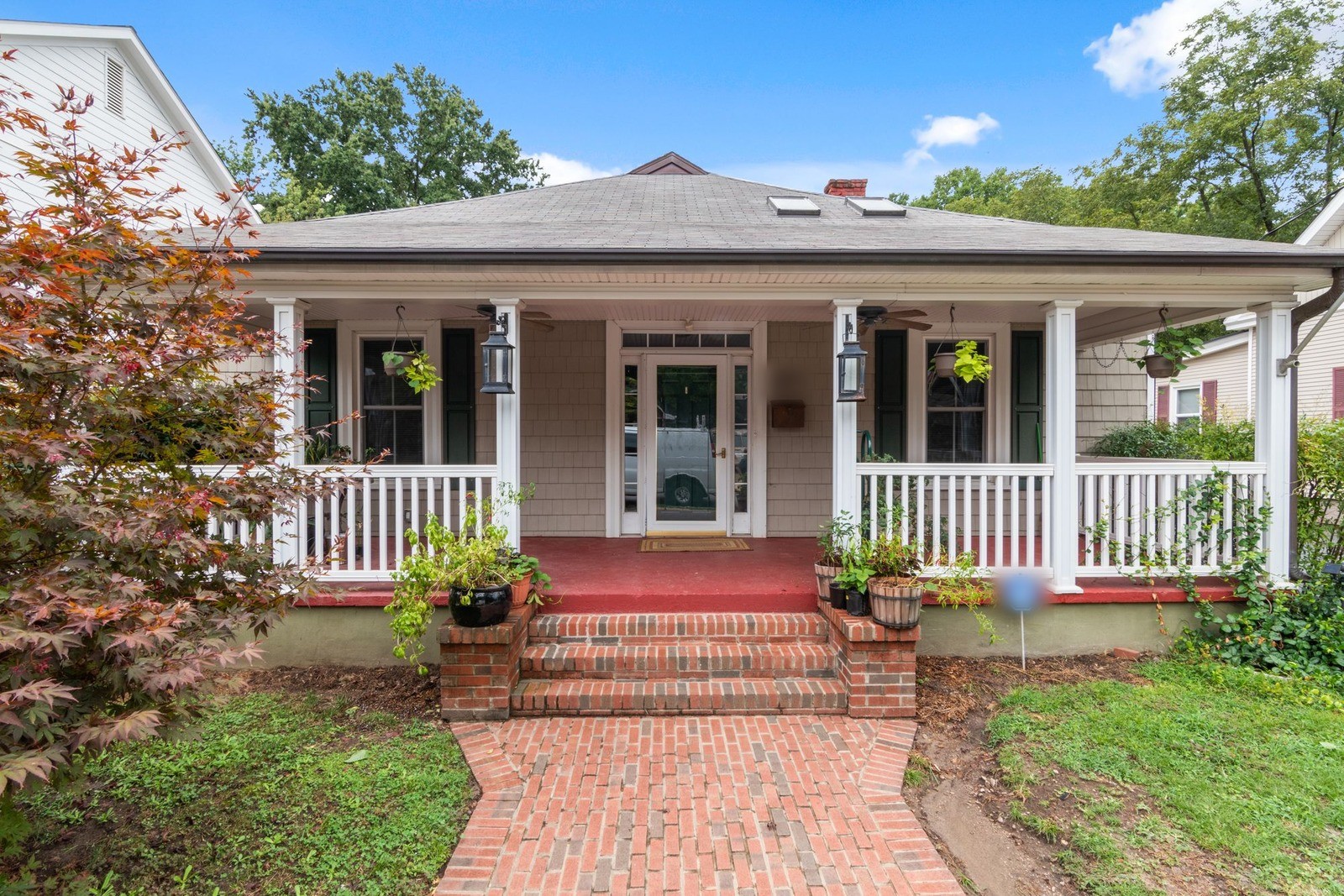
Flower beds on both sides of a straight entry walk frame the door and lead the eye to it, and a deep border is easier to keep tidy than patchy lawn. The key is to keep the route clear: in the picture the steps and bricks stay open, but tall flowers hide part of the porch railing. In real life, set tall plants back from the path edge so they do not brush people on the steps. The AI draws foxglove, delphinium and hydrangea full-grown and in bloom at once, while real plants flower in different months, and delphiniums often need staking. Hydrangeas usually want steady moisture. The picture also removes the maple and adds a bench and lights you did not choose, so treat those as decoration and check what suits your climate zone, sun and soil.
6. One focal tree in a small walled front garden
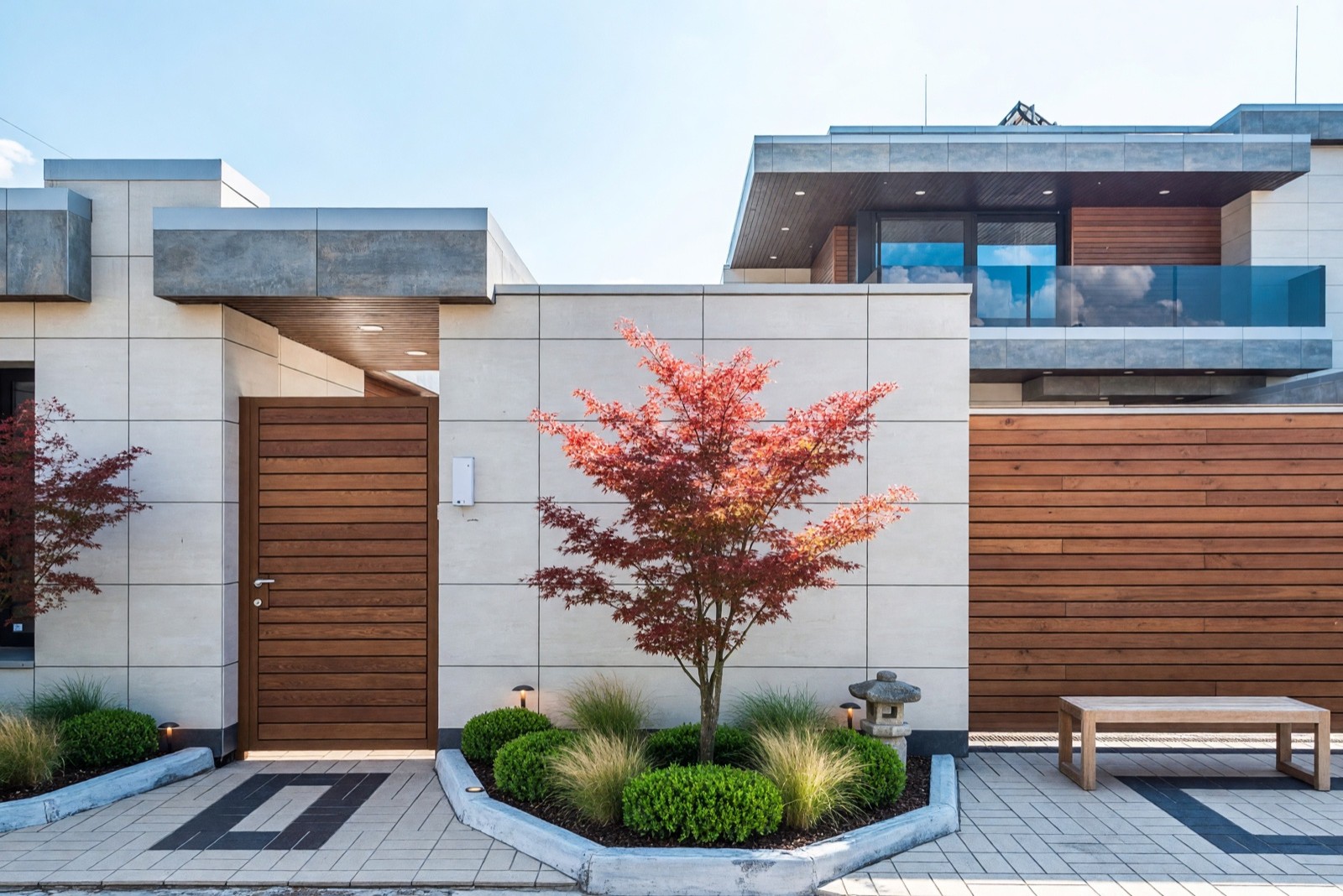
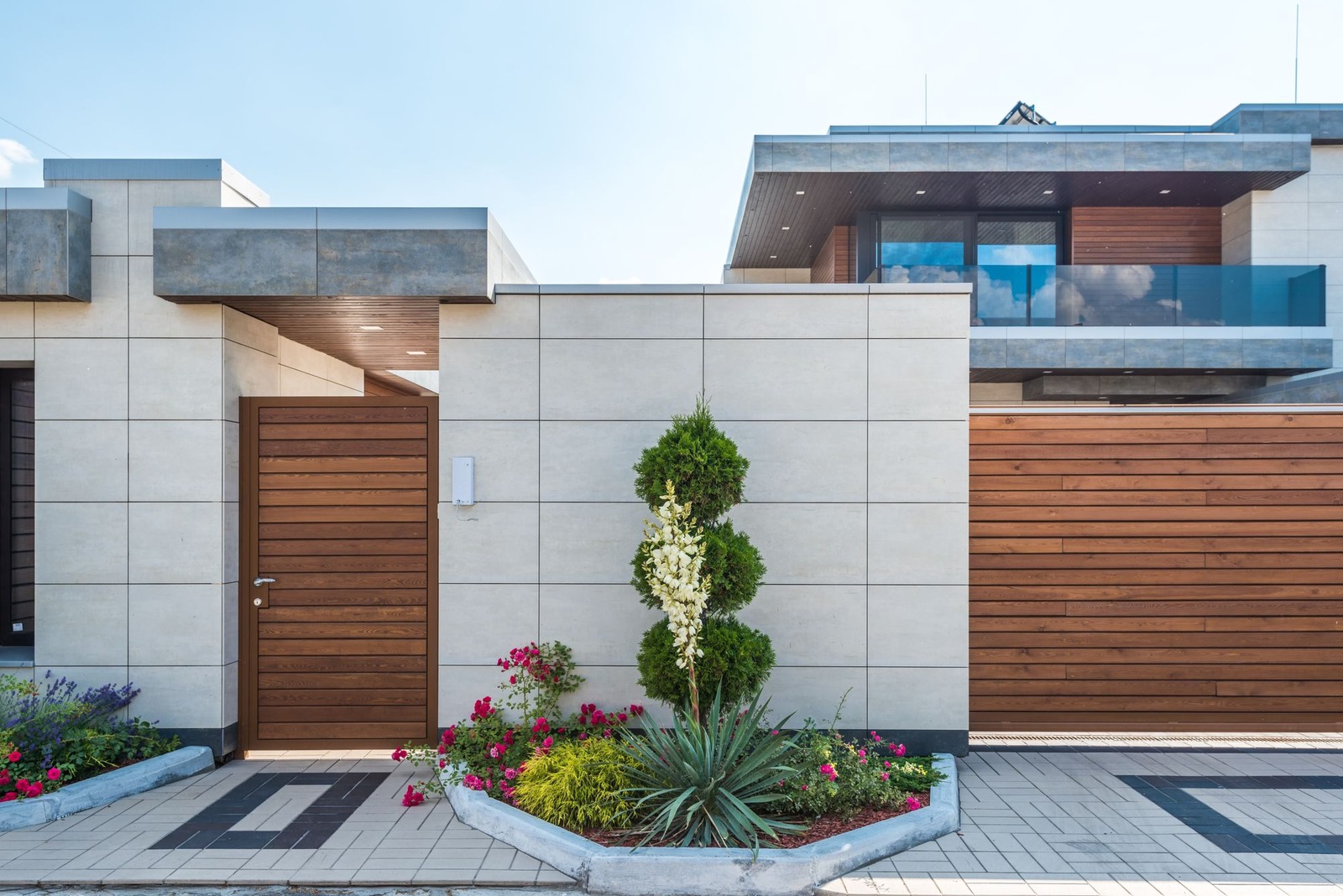
With no lawn, one focal plant against a plain wall does the work. A single small tree with a few rounded shapes at its foot reads as calm from the street, and the light wall panels show off the foliage. The bench stands in front of the sliding gate and would block it, so treat it as decoration only. The maple is drawn taller than a young tree would be, and a wall that gets strong sun or wind can scorch maple leaves, so check the exposure first.
Front yard landscaping ideas at a glance
| Idea | Why it works | What to check |
|---|---|---|
| Curved path with a hedge edge | Gives a wide lawn a clear approach and a defined edge | Room to trim the hedge, a clear route from the curb to the door |
| Layered foundation bed | Softens the house wall and adds depth from the street | Bed depth, mature size of shrubs, distance from the wall |
| One bed beside the driveway | Quick change with little digging | Height near the drive, car doors, snow clearing |
| Trees and stepping stones on a lawn | Breaks up flat turf and links the street to the house | Mature tree size, distance from roof and drive, where the path ends |
| Flower beds on both sides of an entry walk | Frames the door and replaces patchy lawn with a border that is easy to reshape | Keep the walk and steps clear, mature height, plant spacing, sun and watering |
| One focal tree in a small yard | Calm and low effort in a walled or paved space | Sun and wind exposure, root room, keeping gates clear |
| Low path lights | Shows the way and makes steps safer | Warm light, outdoor-rated wiring or low-voltage kit |
Do you need a lawn in the front yard?
Not always, but a small lawn is still the easiest surface for a front yard that gets walked on. If mowing and watering are the problem, shrink the lawn rather than remove it, and replace the rest with one of these:
- Mulched beds with shrubs and perennials. A popular swap, and a bed can be reshaped later; see the porch walk example above.
- Gravel or flagstone with drought-tolerant plants. Little watering once the plants are settled.
- Low groundcovers or ornamental grasses. Soft and easy to keep, though not for heavy foot traffic.
- Stepping stones with grass between them. Keeps a green look and marks the path.
Water restrictions, homeowner association rules and local ordinances can affect what you may remove or plant in front. Check them before you tear anything out.
Front yard lighting ideas
- Light the path and the steps first, with low fixtures pointing down.
- Wash one wall or a tree with light to add depth to the front of the house after dark.
- Choose warm white light, around 2700 K, so the brick, siding and leaves keep their color.
- Use low-voltage or solar lights to start. Line-voltage wiring outdoors needs an outdoor-rated circuit, and in many places it must be fitted by a qualified electrician.
What is the cheapest way to landscape a front yard?
Start with the small, low-cost jobs and leave the big ones for later. Fresh mulch, a clean bed edge, a few plants chosen for your climate, a repainted front door, clear house numbers and a couple of low lights change how a front yard looks without heavy work. Plants started small, from cuttings, divisions or seed, usually cost less than mature ones, though they take a season or two to fill in. The big costs are usually hard surfaces such as paving, structures such as walls and fences, grading and large trees, so get local quotes before committing to any of those.
What is the rule of 3 in landscaping?
It is a loose design guideline, not a standard or a code. In a front yard it usually means two things: plant in odd-numbered groups, such as 3 or 5, and repeat about three colors or materials across the whole front, for example one green foliage, one flower color and one type of stone. Repetition makes a planting look planned. Use it as a starting point and break it where the space calls for it, such as a single tree as the focal point.
What are the front yard landscaping trends for 2026?
Trends are hard to pin down, but a few directions keep coming up: less lawn and more planted beds, low-water and native plants suited to the local climate, softer warm lighting, and natural materials such as stone and gravel. They also happen to be the low-maintenance choices on this page. Choose what fits your house and climate rather than a trend, since a front yard should still look right in ten years.
Front yard landscaping with rocks
A rock bed looks best with rocks of several sizes, grouped like a natural outcrop rather than lined up in a row. Bury about a third of each large rock so it looks settled, set them in odd-numbered groups, and plant low, drought-tolerant plants between them. Lay landscape fabric or another weed barrier under gravel, but expect to pull a few weeds that seed on top. Large rocks are very heavy, so use machinery or get help, and lift with your legs. For dry-loving planting such as lavender, see Mediterranean house exterior ideas.
Modern and small front yard ideas
A modern or small front yard works best with clean lines and few choices. Use two or three plant types repeated in groups, one material for the path rather than a patchwork, straight or gently curved bed edges, and one kind of light fixture. In a small space, a single tree or one large pot as the focal point is enough. In Garden Design, the Modern and Minimalistic styles are a good place to start on your own photo.
Landscaping a ranch house front yard
A low, wide ranch house suits wide, low plantings. Run a long bed along the front in groups of low shrubs and grasses, lead a gently curved path to the door, and add one tree off to the side for height, set well away from the roof. Example 2 above shows a layered bed along a low single-story house.
Common front yard landscaping mistakes
- Planting for the day you buy. A shrub or tree at nursery size can be several times wider in a few years. Plan for the mature size, away from walls, roofs, the driveway and overhead lines.
- Digging before checking underground lines. Call your local utility locate service first.
- A path that goes nowhere. It should connect the curb or driveway with the entrance.
- Blocking the view. Tall plants beside the drive or in front of windows hide cars and people, and can hide the door from the street.
- Too many plant types. Repeat a few plants in groups instead of one of everything.
- Ignoring sun, soil and water. A Mediterranean planting in a wet shady yard will struggle, and the reverse is also true.
- Removing a retaining edge on a slope. Soil and mulch will slide onto the walk.
What the pictures can and cannot tell you
The pictures are planting and layout ideas, not plans. The AI draws plants full-grown and in bloom at once, adds furniture and lights you did not choose, and may redraw paths, edging, gravel or small details nearby. Whether a plant will grow for you depends on your climate zone, sun, soil, water and the mature size of the plant, none of which the picture tests. Check utilities, setbacks and your local rules before you dig or build, and ask a local nursery or landscaper to confirm the plant list.
Try front yard ideas on your own photo
Take a photo of your house from the street or the curb, in daylight, with the whole front yard and the entrance in view. In Garden Design, choose a style, a mode and your preferred planting. Preserve Structure keeps your layout and refreshes the planting, Bold Design reworks the beds and surfaces, and Full Makeover redesigns everything on the ground inside the boundaries. If the house also needs a new color or material, try Exterior Design and read our house exterior color ideas. Paint recolors a fence or garden wall, and Floor Restyle tries new paving.
This page is about the front of the house. For the back, see small backyard garden ideas, and for a house style to plan around, modern farmhouse exterior ideas. For the color of the front door at the end of the path, see front door colors. The HomeCompose design ideas page has more outdoor and indoor ideas.
Frequently asked questions
What is the easiest way to improve a front yard?
Start with the path and the edges: a clear route to the door, clean bed edges and fresh mulch. Then add one planted bed beside the entrance and a few low lights.
What is the lowest-maintenance front yard?
Mulched beds or gravel with shrubs, perennials and grasses suited to your climate, in groups, and a smaller lawn. Plants that fit your sun and soil need less water and fewer replacements.
Will the plants in the picture grow in my yard?
Not necessarily. The AI shows how plants could look, full-grown, and does not test climate, soil, sun or water. Ask a local nursery which plants suit your area.
Do I need permission to change my front yard?
Sometimes. Homeowner associations, city rules and utility easements can limit fences, trees, plant height near the road and paving. Ask before you start.
Is it free to try?
Yes. You can start on the free plan, and it includes a limited number of designs.