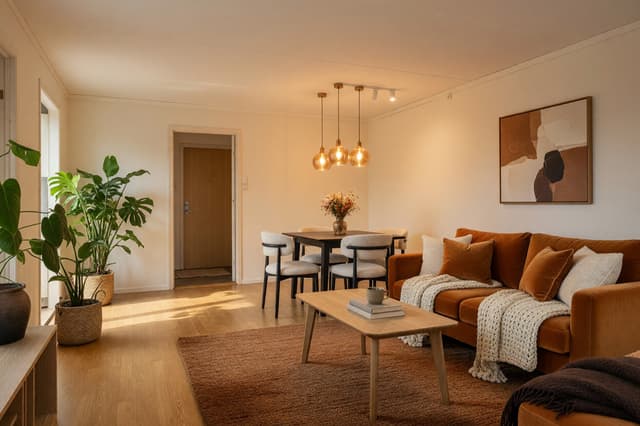
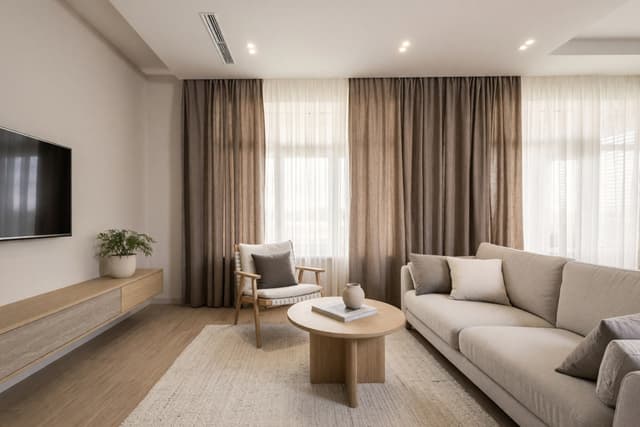
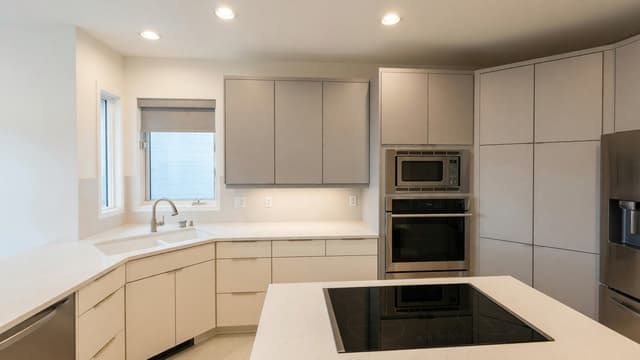
Dining room ideas
A good dining room has space to pull out the chairs, a light over the table instead of in the ceiling, and a rug and materials that feel warm underfoot. Below are six dining room ideas shown on real rooms and showroom photos, before and after, with the table, rug, lighting and color choices behind each one, and the mistakes to avoid.
How do you plan a dining room?
- Size the table to the room. A common guide is about 90 cm (3 ft) between the table edge and the wall or sideboard, so chairs can be pulled out and people can walk behind them. A round or oval table suits a small or square room.
- Light the table. One pendant centered over the table, on a dimmer, changes the mood more than any other single item. About 75 cm (30 in) above the tabletop is a common starting point.
- Anchor the table with a rug. Aim for a rug that extends about 60 cm (2 ft) past the table on every side, so the chairs stay on it when pulled out.
- Mix two or three materials. Wood, linen and stone or metal sit calmly together; more than that usually feels busy.
- Use the walls. One large piece of art, a mirror or a few frames hung in a row finishes a plain wall; wainscoting or a painted wall adds depth.
- Keep the sideboard useful. A low sideboard holds tableware and gives a surface for lamps and flowers without crowding the room.
6 dining room ideas, before and after
Each example starts from a photo of a real dining room or a furniture showroom (the fifth is a showroom photo), shown before and after AI restyles it in Interior Design with Structural Preservation, which keeps the room's shape and leaves the walls, windows and doors where they are, and refreshes furniture, textiles, lighting and finishes. AI can also change small details, so compare each pair closely and treat every result as a design idea, not a shopping list.
1. Modern: warm oak and bouclé in an open-plan dining area
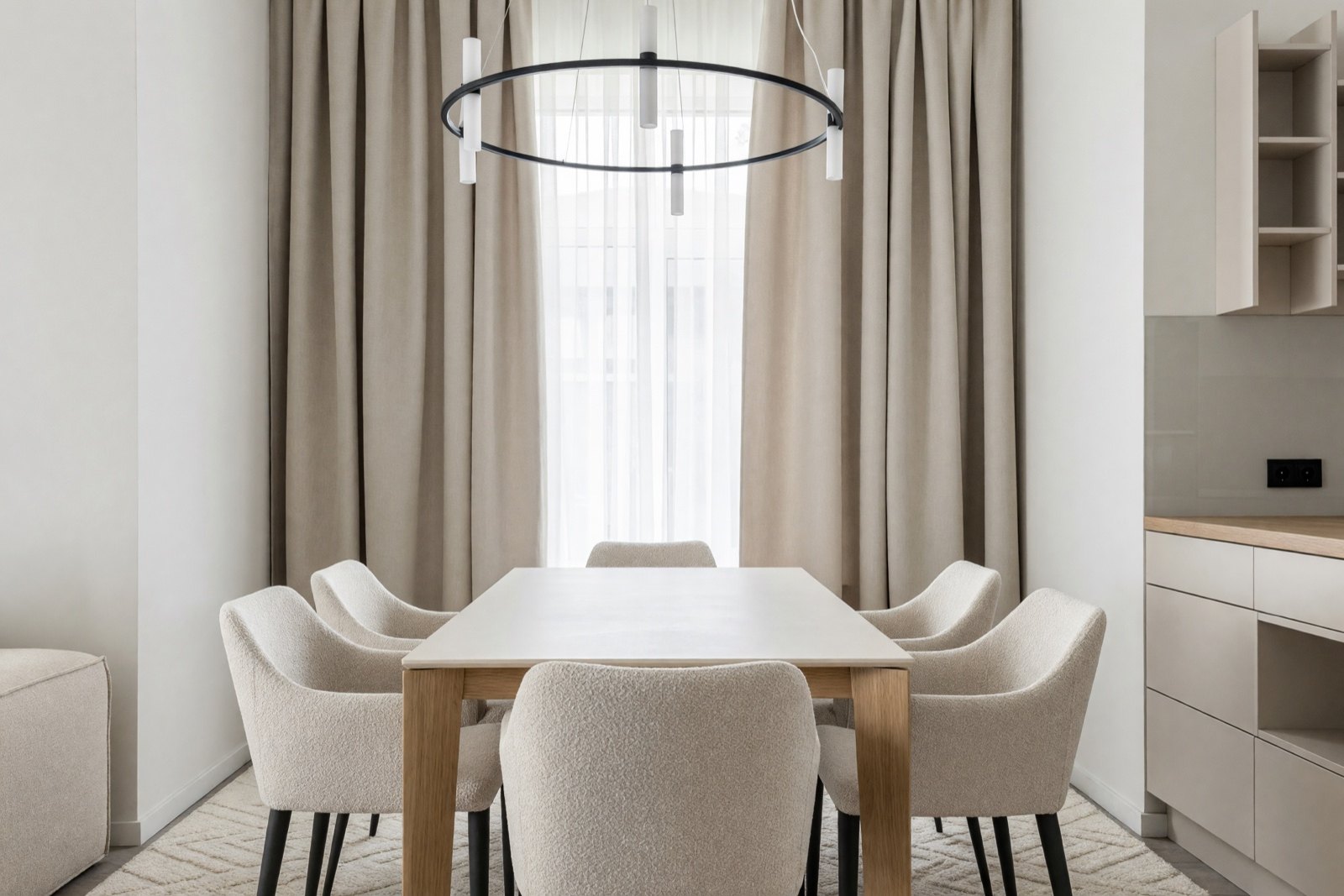
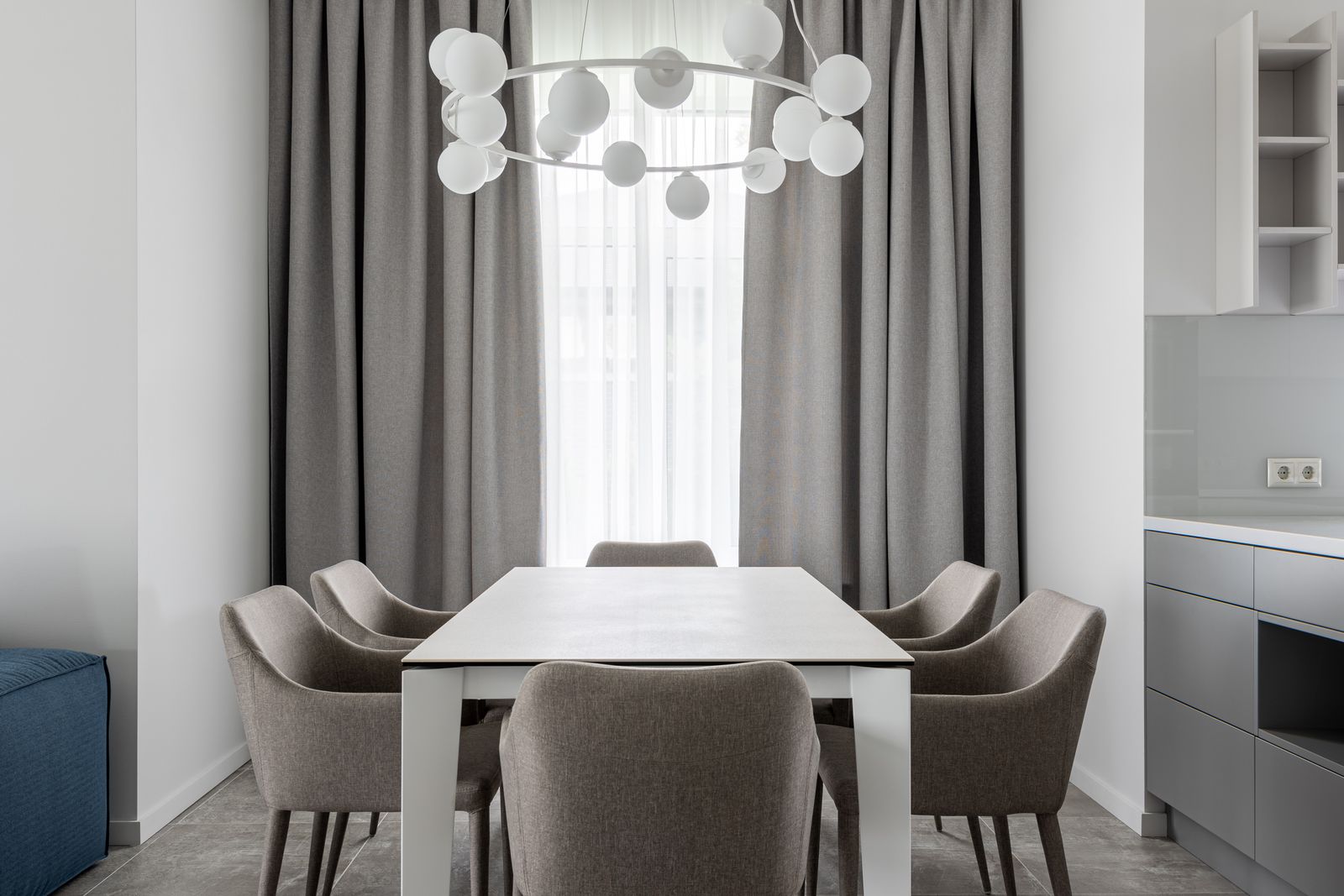
The change here is mostly color and texture: gray becomes warm taupe, cream and oak, so the same open-plan corner feels softer. The slim black ring is a lighter shape than the globe chandelier and still hangs over the table, and the rug ties the six chairs together. A pale scheme like this can look flat without the rug and the oak, so keep both.
2. Japandi: soft beige walls, pale oak and a jute rug
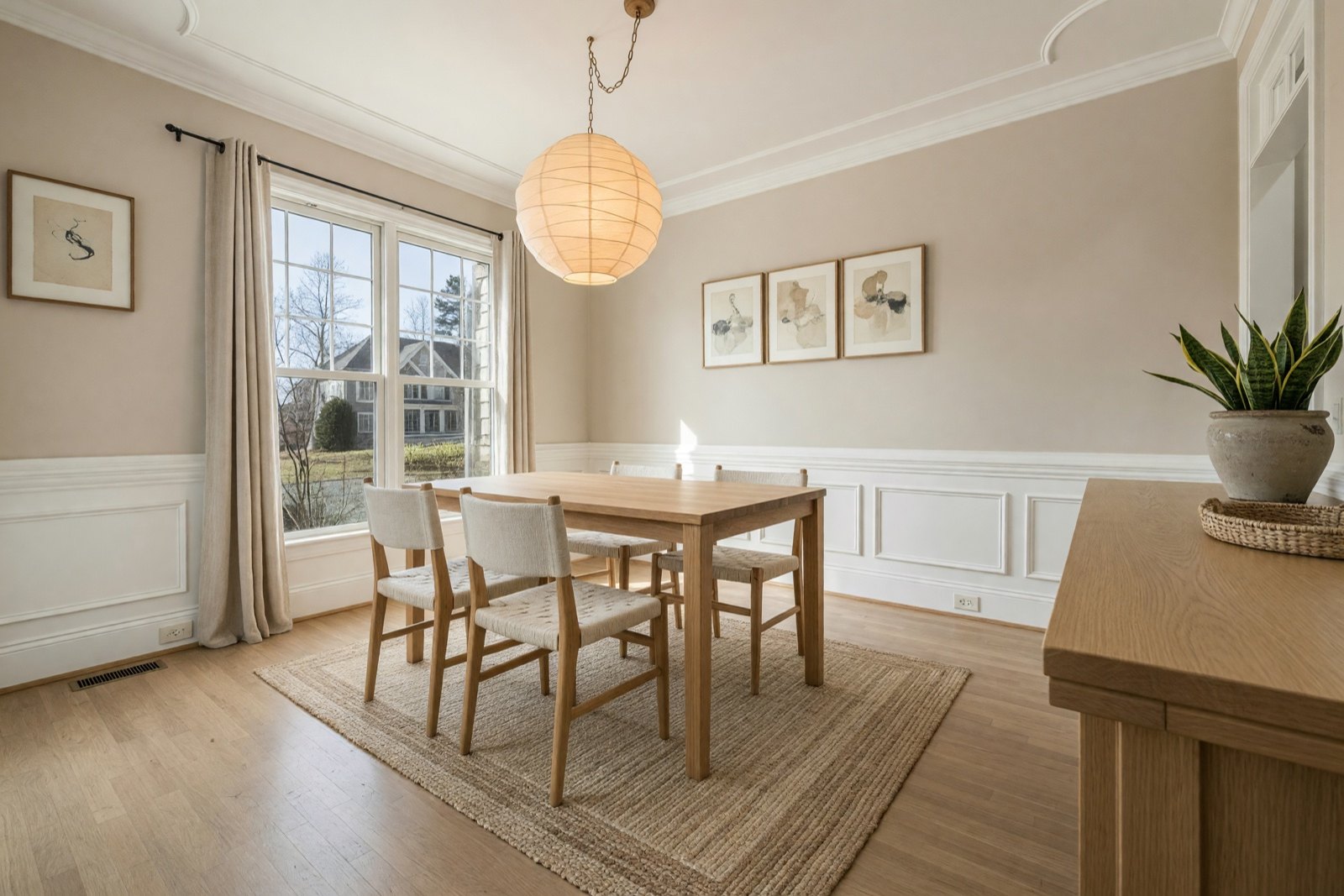
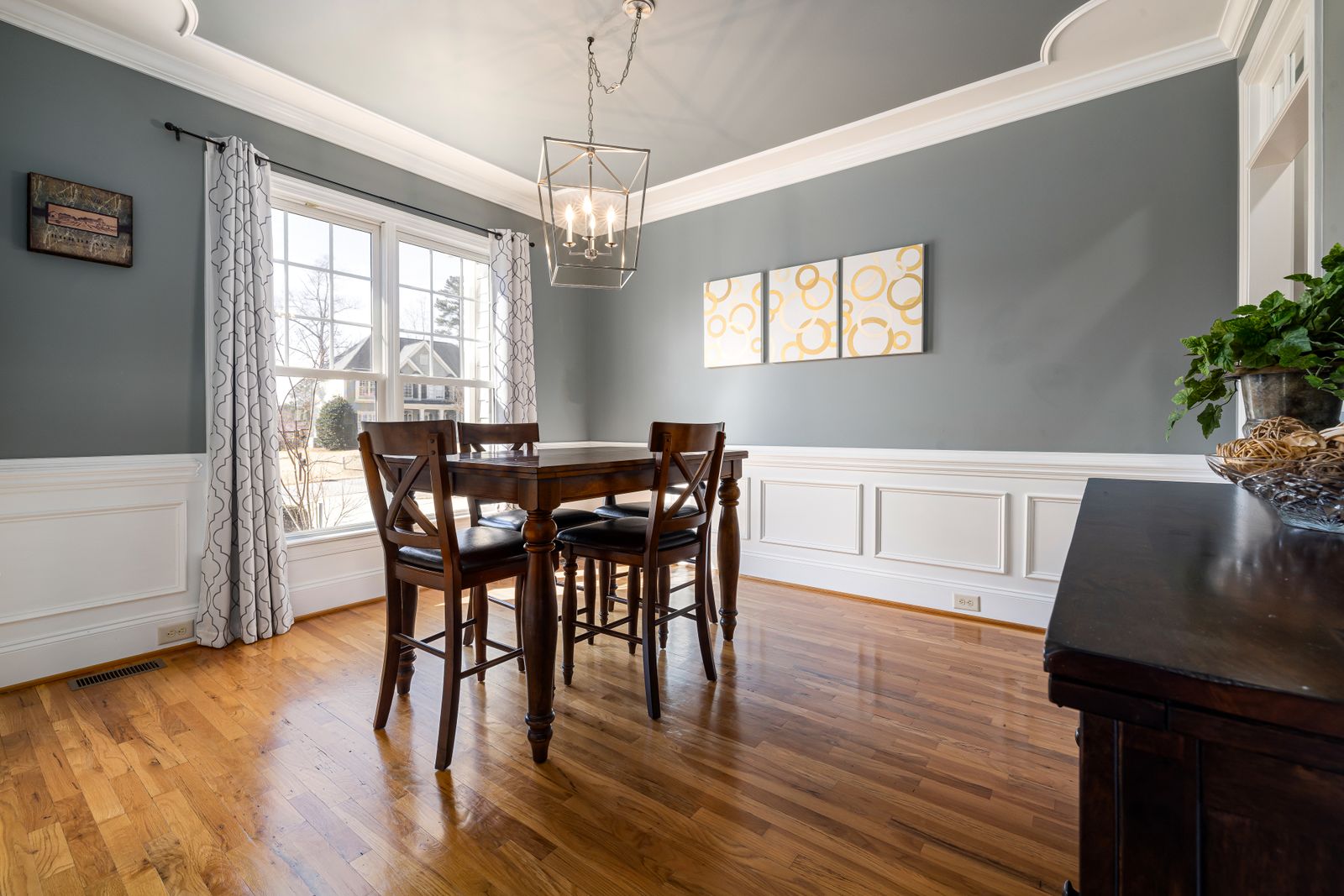
Japandi here means warm beige walls, pale oak and woven jute with very little color, so the heavy gray room turns calm and light while the white wainscoting still gives it structure. The standard-height oak table and open-backed chairs feel lighter than the dark counter-height set, and the paper pendant adds a warm glow at the center. A scheme this pale needs the jute rug and warm light to avoid feeling cool.
3. Cozy: linen, wool and a warm pendant
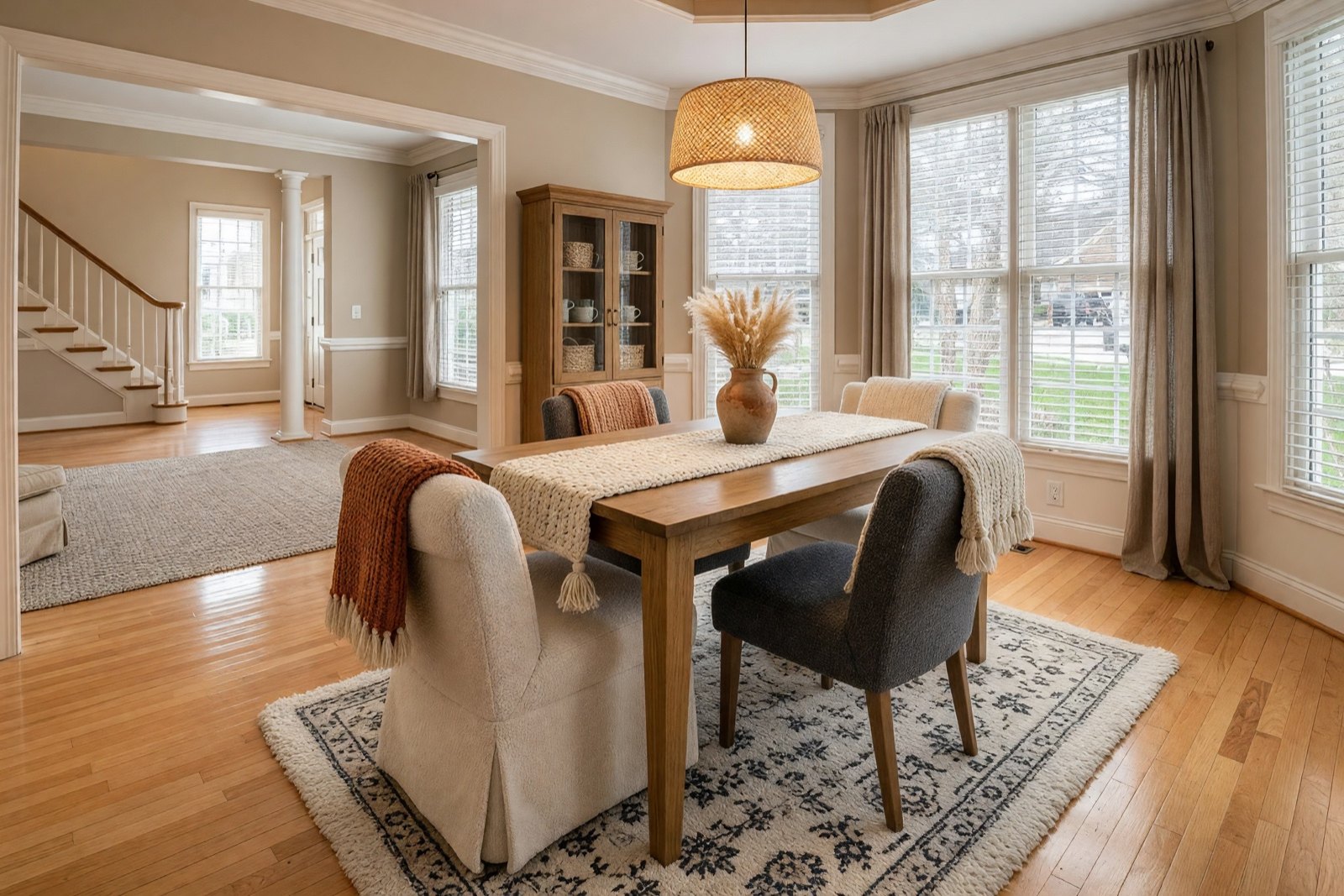
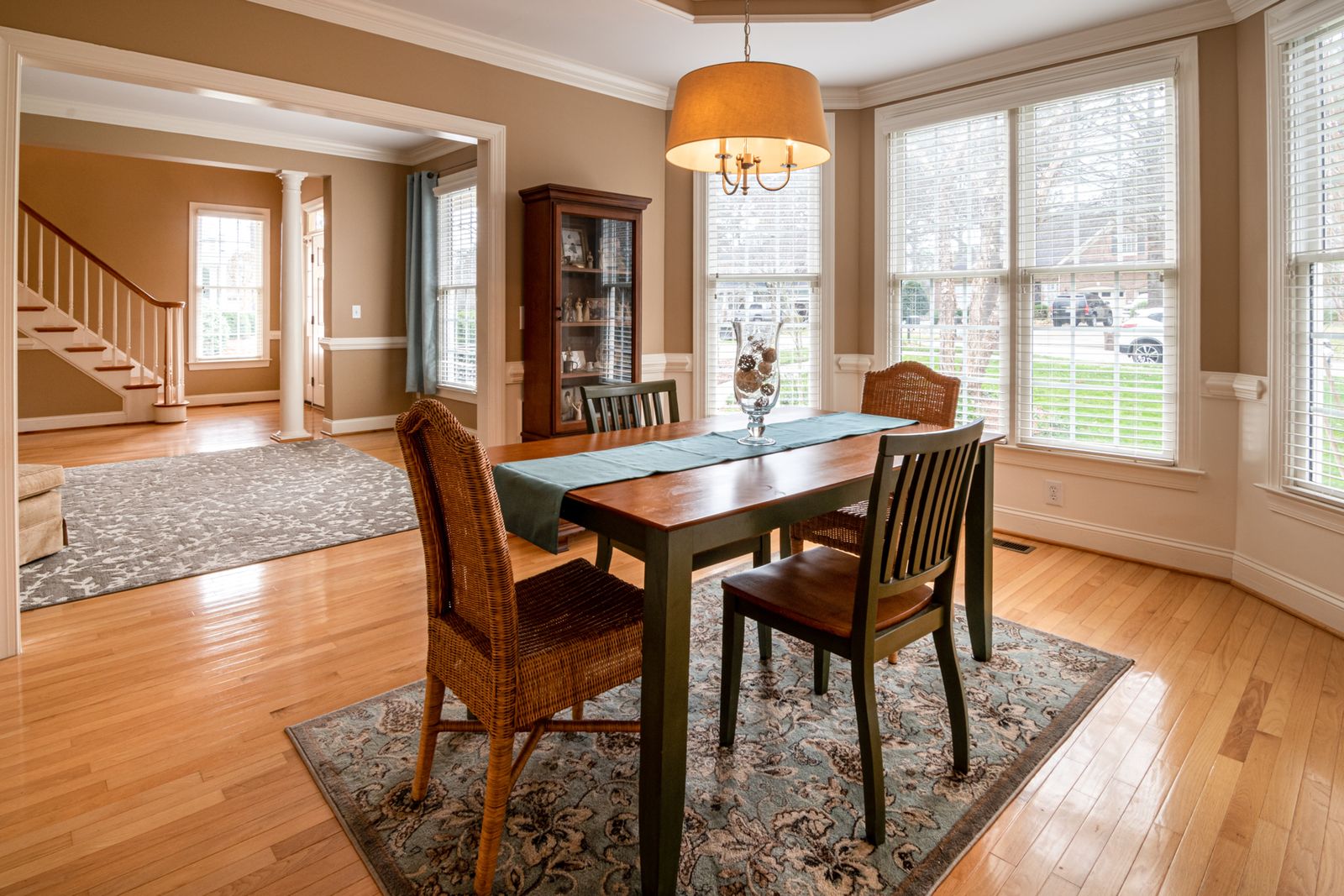
Cozy here is built from texture: knit, bouclé, linen and rattan, with rust and cream throws against the warm wood floor. The woven shade softens the light, and the linen curtains frame the bay without hiding the blinds. This many layers can crowd a table that is also used for meals, so in a real room take the throws off the chairs while people eat.
4. Coastal: light wood and white linen in an open plan
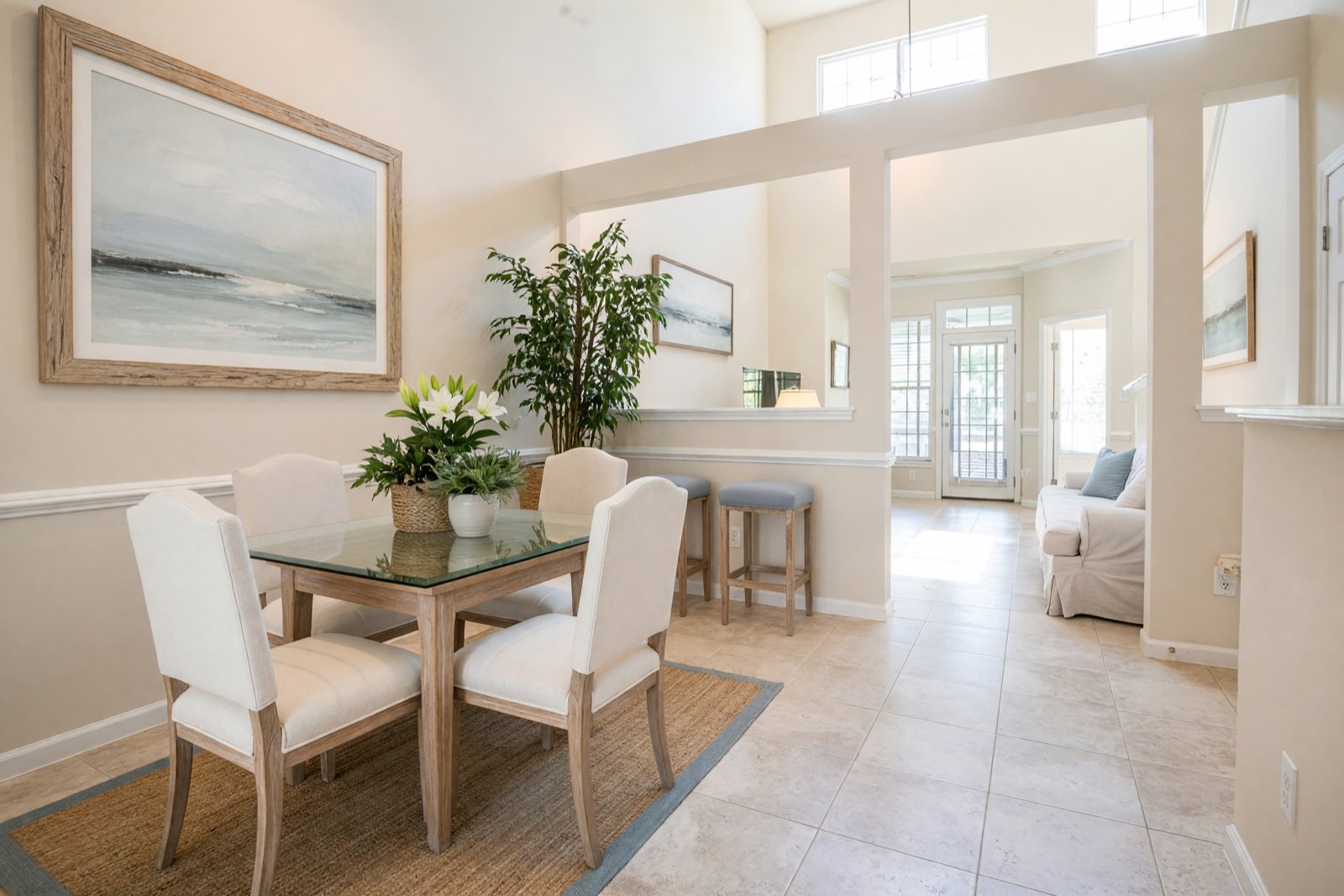
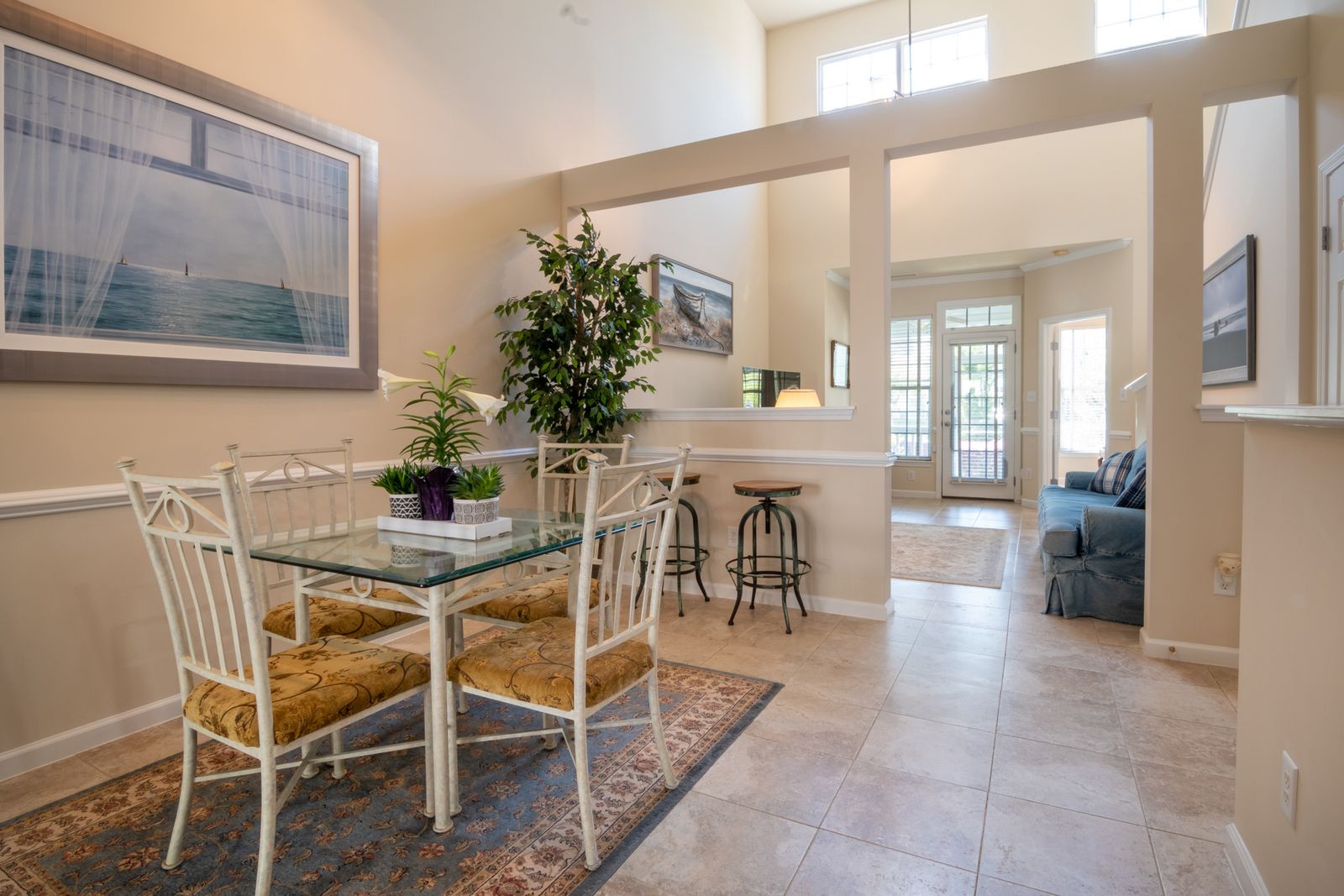
The coastal look comes from a short list: pale wood, white upholstery, jute and a soft blue-gray, repeated in the art, the stool seats and the rug border. The seascape is calmer than the sailboat print, and the lighter tile and white sofa make the open plan brighter. Too much white and blue can look like a showroom, so keep the natural wood and the plants.
5. Bohemian: rattan, pottery and plants against a dark wall
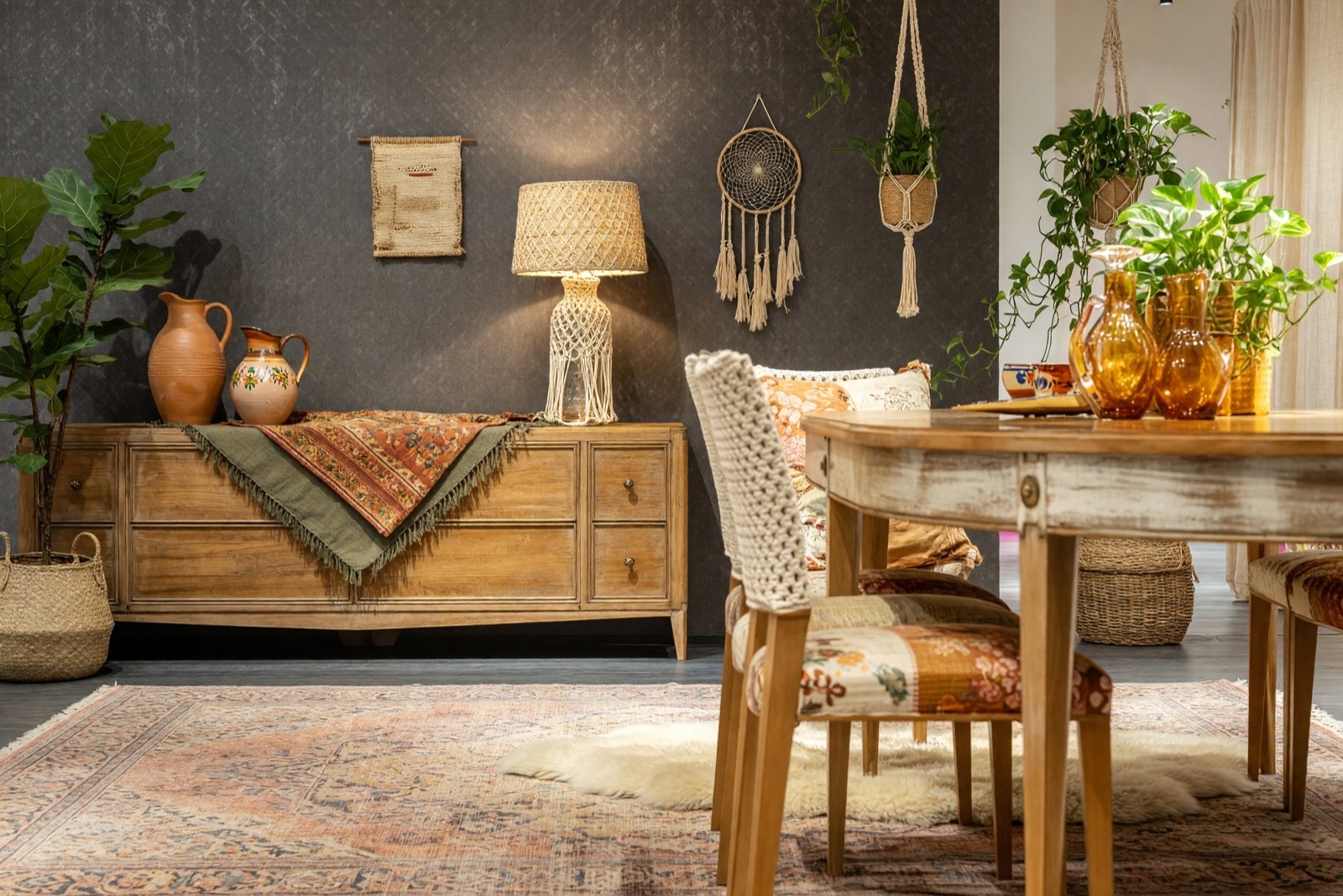
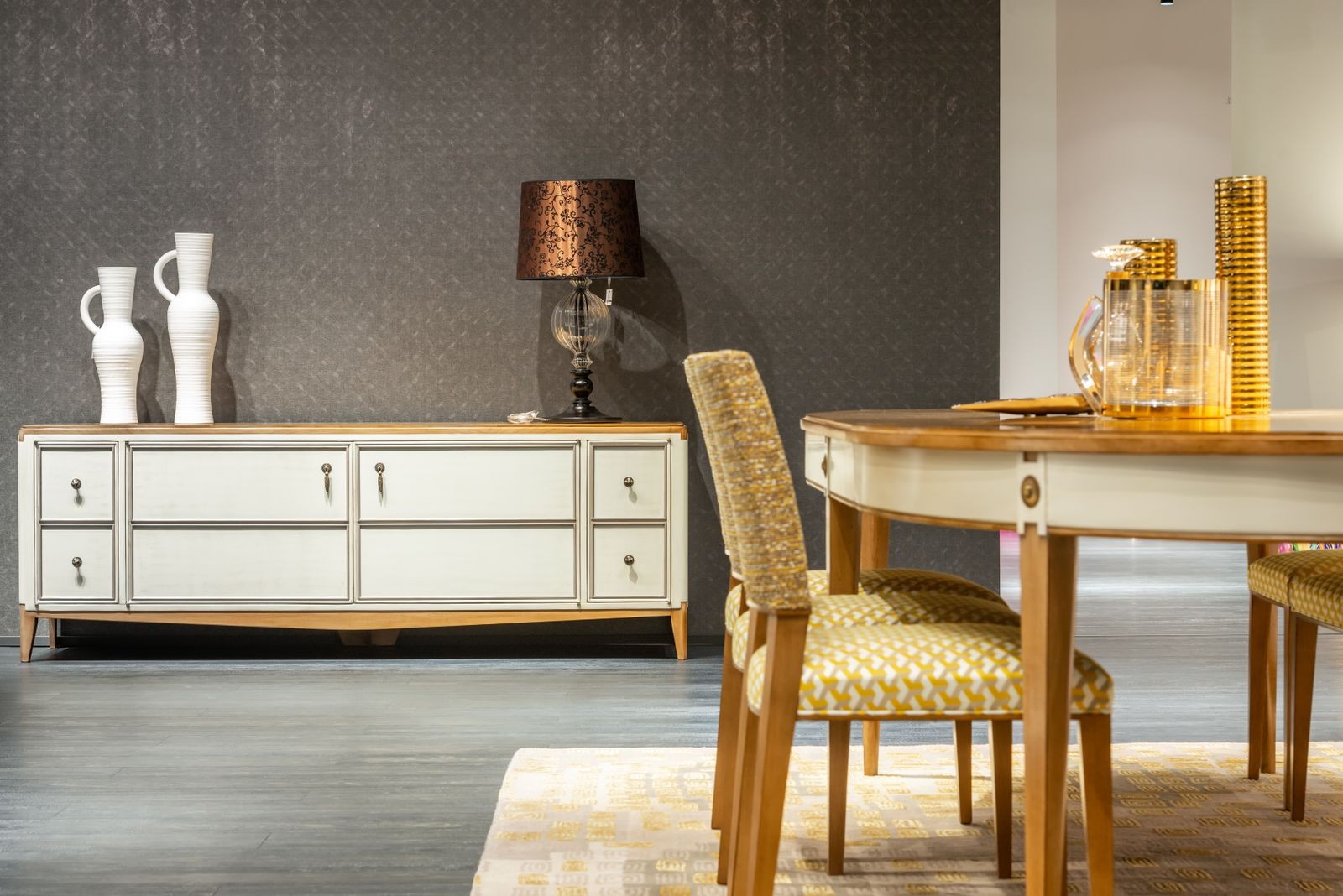
The dark wall makes this version work: the warm wood, terracotta, rattan and cream knit all stand out against it, and the plants add green at several heights. The pattern stays in the rug and the chair seats, while the wall holds a few quiet textures. This style is easy to overfill, so a real room needs fewer pieces than the picture shows.
6. Modern: from dark wood paneling to white walls under old beams
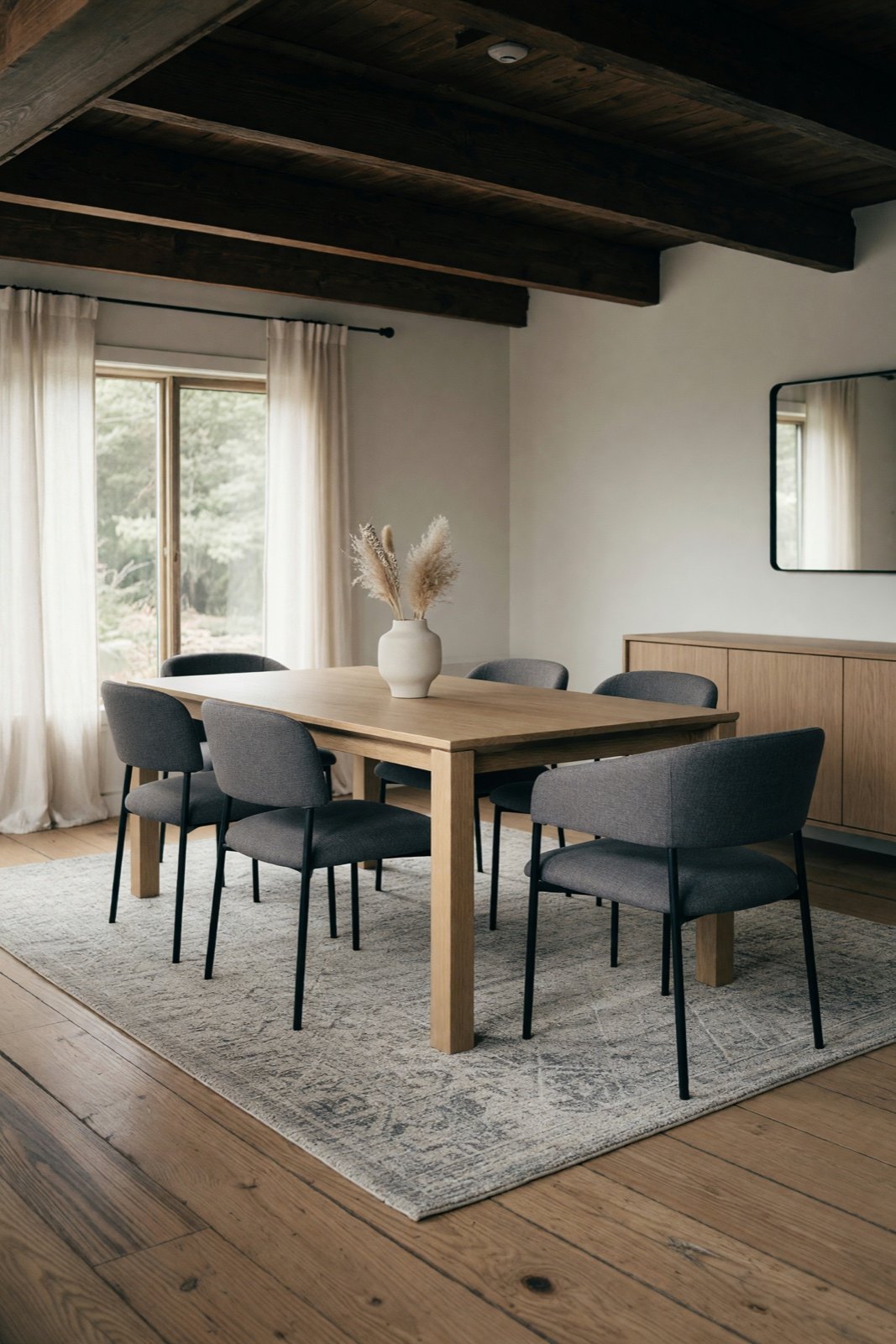
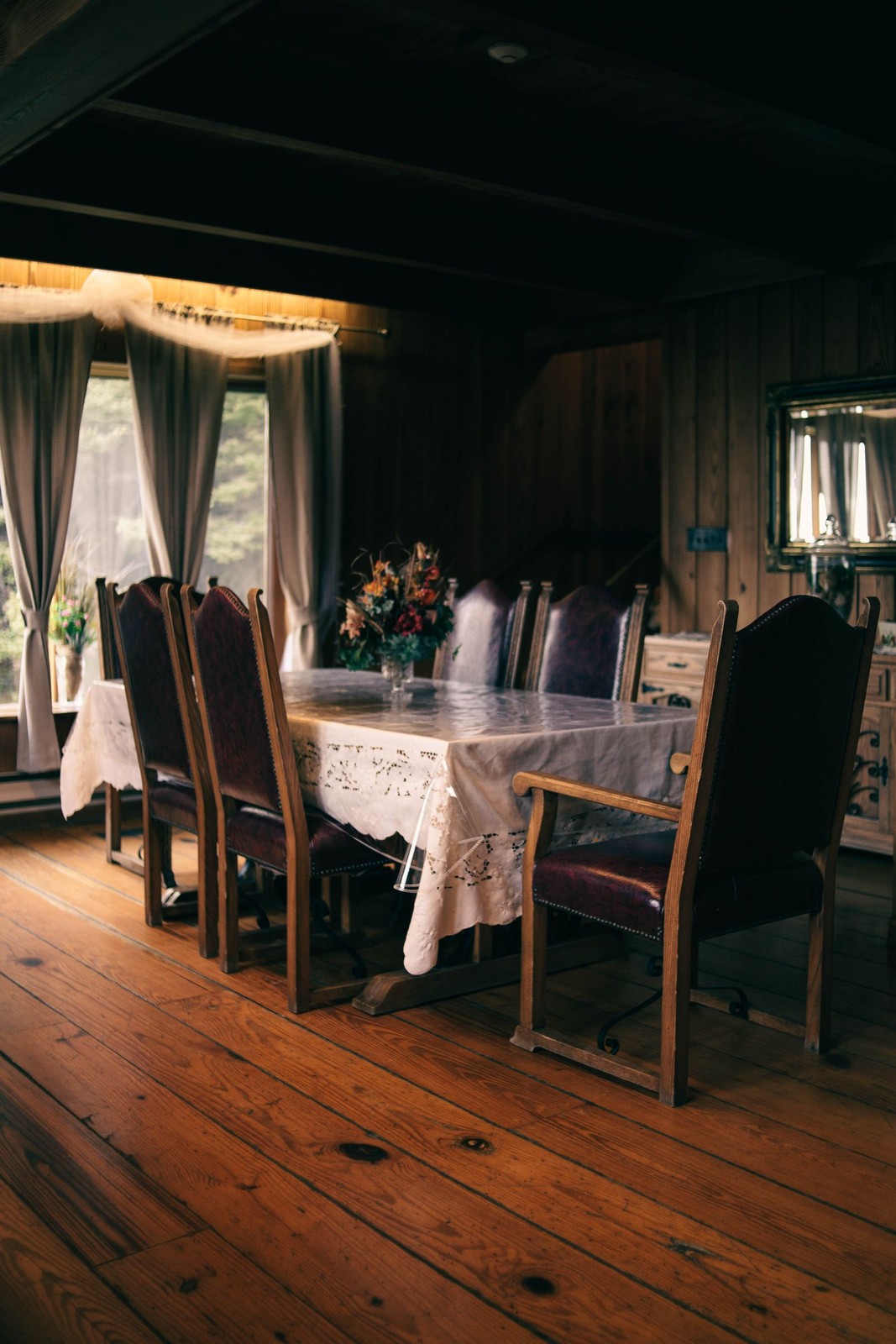
The white walls do most of the work: the dark beams and ceiling now stand out as a feature, and the oak table, charcoal chairs and gray rug keep the palette quiet. A ceiling this dark still needs good lighting over the table, so plan the pendant or a dimmable lamp before the furniture.
Dining room styles at a glance
| Style | Look | Good with | Watch out for |
|---|---|---|---|
| Modern | Clean lines, oak, bouclé, black accents | Small and open-plan rooms | Can feel plain without texture |
| Japandi | Pale wood, beige, jute, few objects | Rooms with good daylight | Can feel cool without warm light |
| Cozy | Linen, wool, warm lamps, throws | Traditional rooms with wood floors | Too many layers crowd the table |
| Coastal | Light wood, white, blue-gray, natural fibers | Bright, open rooms | Too much white and blue can look like a showroom |
| Bohemian | Rattan, pottery, patterned rug, plants | Dark or textured walls | Easy to overfill |
| Modern with beams | Oak, charcoal chairs, white walls under dark beams | Rooms with strong structure | Dark ceilings need good lighting |
What are the dining room trends for 2026?
Dining room trends are leaning toward natural wood, softer lighting over the table, earthy or muted colors and comfortable chairs. They are directions, not rules, and trends change from year to year, so keep what suits your room and ignore the rest.
- Natural wood. Oak or walnut on the table, the sideboard or the floor. Examples 2 and 3 above use pale oak and an oak table.
- Softer light. A dimmable pendant with a paper or woven shade instead of one bright ceiling light, as with the paper lantern in example 2 and the rattan pendant in example 3.
- Earthy or muted colors. Clay, olive, warm beige and muted blue-gray are easier to live with than bright shades.
- Comfortable chairs. Upholstered or curved-back chairs tend to keep people at the table after the meal.
What is the 3-5-7 rule in decorating?
The 3-5-7 rule is a common designer rule of thumb: group decor in odd numbers, such as three, five or seven objects, because odd groups tend to look more natural than even ones. It is a habit, not a standard, and a room can break it. On the table, try three pieces of different heights, such as a tall vase, a low bowl and a candleholder, and leave space for plates and serving dishes. On the sideboard, five items work well: a lamp, a stack of books, a plant, a tray and a piece of art leaning behind them.
How do you design a dining room wall?
Start with the one wall you see from the table or the one behind the sideboard, and give it a single idea rather than three.
- A gallery. Hang frames in a row or a loose grid; a group about as wide as the sideboard, or a little narrower, usually looks balanced.
- One painted wall. A deeper color behind the table frames the room. See accent wall ideas for colors.
- Paneling. Wainscoting or slim wall panels add depth without color. See wall paneling ideas.
How do you style a formal or a simple dining room?
Formal dining room
A formal dining room is built on a matching table and chair set, layered lighting and a sideboard for serving. Use a chandelier or pendant on a dimmer, add a lamp or wall lights for a second level of light, and hang curtains to the floor. Because a full matching set can look flat, vary the other pieces: a sideboard in a different wood, a patterned rug.
Simple dining room
A simple dining room needs a table, comfortable chairs and one good light. Leave the walls and the sideboard top mostly bare, and add a single item, such as a jug of branches or one large print.
How do you decorate a dining room on a budget?
Change the things that show most before you buy furniture: paint, lighting and textiles.
- Paint. One painted wall or a fresh coat in a warm neutral usually changes the room more than any accessory.
- Lighting. A new pendant or a plain shade, a dimmer and a lamp on the sideboard.
- Textiles. Linen curtains, a rug that reaches past the chairs, seat cushions or a table runner.
- A thrifted chair mix. Second-hand chairs in related tones, or in one painted color, look chosen rather than mismatched.
To compare options before you spend anything, try them on a photo of your own room in Interior Design; the result is a design idea, so test real samples at home.
Common dining room design mistakes
- A table that is too big for the room. If chairs cannot be pulled out with about 90 cm (3 ft) of space behind them, choose a smaller or round table.
- One bright overhead light. Use a pendant on a dimmer and add a lamp on the sideboard.
- A rug that is too small. Chairs should stay on it when pulled out.
- Matching everything. A full matching set looks flat. Pair the table and chairs in related tones but different materials, such as an oak table with upholstered chairs.
- Forgetting the walls. Bare walls make a room feel unfinished; one large piece of art helps.
Try a dining room design on your own room photo
Upload a photo of your dining room to Interior Design, choose Dining room, a style such as Japandi, Cozy, Modern or Coastal, and Structural Preservation to keep the walls, windows and doors. Photograph the room in daylight from a corner so the table, walls and floor show.
The result is a design idea, not a plan or a product list. Colors and materials look different on screen and in the room, so test real samples before you buy. For wall colors, see accent wall ideas and living room paint colors. To furnish an empty room, see the virtual staging guide. If the dining room opens onto the kitchen, see modern kitchen ideas. More rooms and styles are on the HomeCompose design ideas page.
Frequently asked questions
How do I decorate a small dining room?
Use a round or oval table, keep the chairs light in color, hang one pendant low over the table and add a large mirror or one big piece of art. A bench on one side tucks under the table and saves space.
What color should a dining room be?
Warm neutrals, soft greens and muted blue-gray are easy to live with. A deep color works when the room has plenty of daylight; paint one wall rather than all four if you are unsure.
How high should a dining room pendant hang?
A common range is about 75 to 85 cm (30 to 34 in) above the tabletop, so people can see each other across the table without glare. Hang it lower over a small round table and higher in a room with a tall ceiling.
Can I see a dining room style on my own room before I buy?
Yes. Upload a photo of your room to HomeCompose Interior Design to see a style as a design idea. It shows style, not whether furniture fits, so measure the room and the table before you buy.
Is it free to try?
Yes. You can start on the free plan, and it includes a limited number of designs.