Fire pit ideas
A good fire pit idea starts with the look and the seats around it, not with the fire: a stone ring on gravel, a fire table on a patio, a sunken pit in the lawn or a simple bowl with two chairs. Below are six fire pit ideas shown before and after on real yard photos, a table of what each suits and what to check, and the mistakes to avoid. For the wider layout of your yard, see backyard design ideas.
What kinds of fire pit are there?
- Round stone ring. A low wall of fieldstone or cut stone around an open bowl. It looks rustic and suits gravel, a wooded corner or a lawn (examples 1, 4 and 6).
- Fire bowl on legs. A metal bowl on short legs, with no built structure around it. It is the lightest look and the easiest to picture on open grass with two chairs (example 2).
- Fire table. A low, flat-topped square or rectangle with the flame in a recessed middle, often with a glass wind guard. It sits at coffee-table height beside patio chairs (example 3).
- Sunken or conversation pit. The seats are steps or benches that ring the fire below the level of the lawn (example 5).
- Pit with a stone border or seating wall. A circular or curved wall that frames the fire and doubles as a place to sit.
- Pit on a gravel or paver circle. A defined floor ties the pit and the seats into one zone and keeps the look tidy (examples 3, 4 and 6).
- Fire zone beside a deck or terrace. The pit stands on the lawn a short walk from the house, so the terrace stays free for dining (examples 3 and 4).
The fuel changes the look too. A wood-burning ring suggests logs and a log pile nearby; a table or a tidy bowl suggests gas. Which fuel is allowed, and how it is supplied, is a local and a technical question, covered in the checks below.
What is the current trend in fire pits?
Simple shapes lead: a low round or square bowl, or a fire table, with seating arranged around it. Gas and ethanol options sit next to wood-burning ones, and natural stone looks stay popular, as in the round stone ring above. Trends change, so use this to choose a look you will still like in a few years, not as a rule. Which fuel you may use is a local question.
Where should a fire pit go?
- Treat it as a place of its own. A fire pit is somewhere you walk to, a little apart from where you cook and eat. A circle of gravel or pavers (examples 3 and 4) says so at a glance.
- Keep the walk easy. A path from the back door to the seats, wide enough for two people (about 1.2 m or 4 ft as a starting point), means the evening does not end with a trek across dark grass.
- Give the seats a view and a backdrop. Turn them toward the garden or the best view rather than a blank wall. A hedge, a fence or planting behind the circle gives it a sense of enclosure (the row of narrow conifers in example 3, the fence and lilac in example 6).
- Leave room around the seating. Chairs need space to pull out, and people need to walk behind them. About 1 m (3 ft) of clear floor behind each seat is a common starting point for the walk, not a rule.
- Leave distance and wind to the experts. How far a fire pit must stand from the house, a veranda or deck, a fence, a shed, trees and overhanging branches is set by the manufacturer's instructions and by local rules, and wind and smoke direction matter too. A picture cannot tell you any of it, so check before you choose a spot.
What are some fire pit ideas for a small backyard?
A small round pit with two or three seats is enough. A compact bowl, a table-top fire bowl or a portable pit takes little room and can be put away when you want the lawn back, and built-in bench seating along a fence saves the space chairs need to pull out. Keep a clear zone from the house, fences, trees and overhead branches; the numbers come from the manufacturer's clearances and local rules, not from a picture. For more layouts, see small backyard garden ideas.
6 fire pit ideas, before and after
Each example starts from a real licensed photo of a yard, patio or garden. All six use Magic Edit (Pro plan): you write one fire pit setting in a sentence and name what must stay. In example 2, a small house name plate in the before photo was softly blurred for privacy. The flames are drawn by the AI as an effect, and in the first example we asked for none.
Magic Edit says that anything you do not mention stays as it is, but the AI can still redraw things nearby, so compare each pair closely and treat every result as an idea, not a plan. Where a result missed our instruction, we say so.
1. A round stone ring on gravel
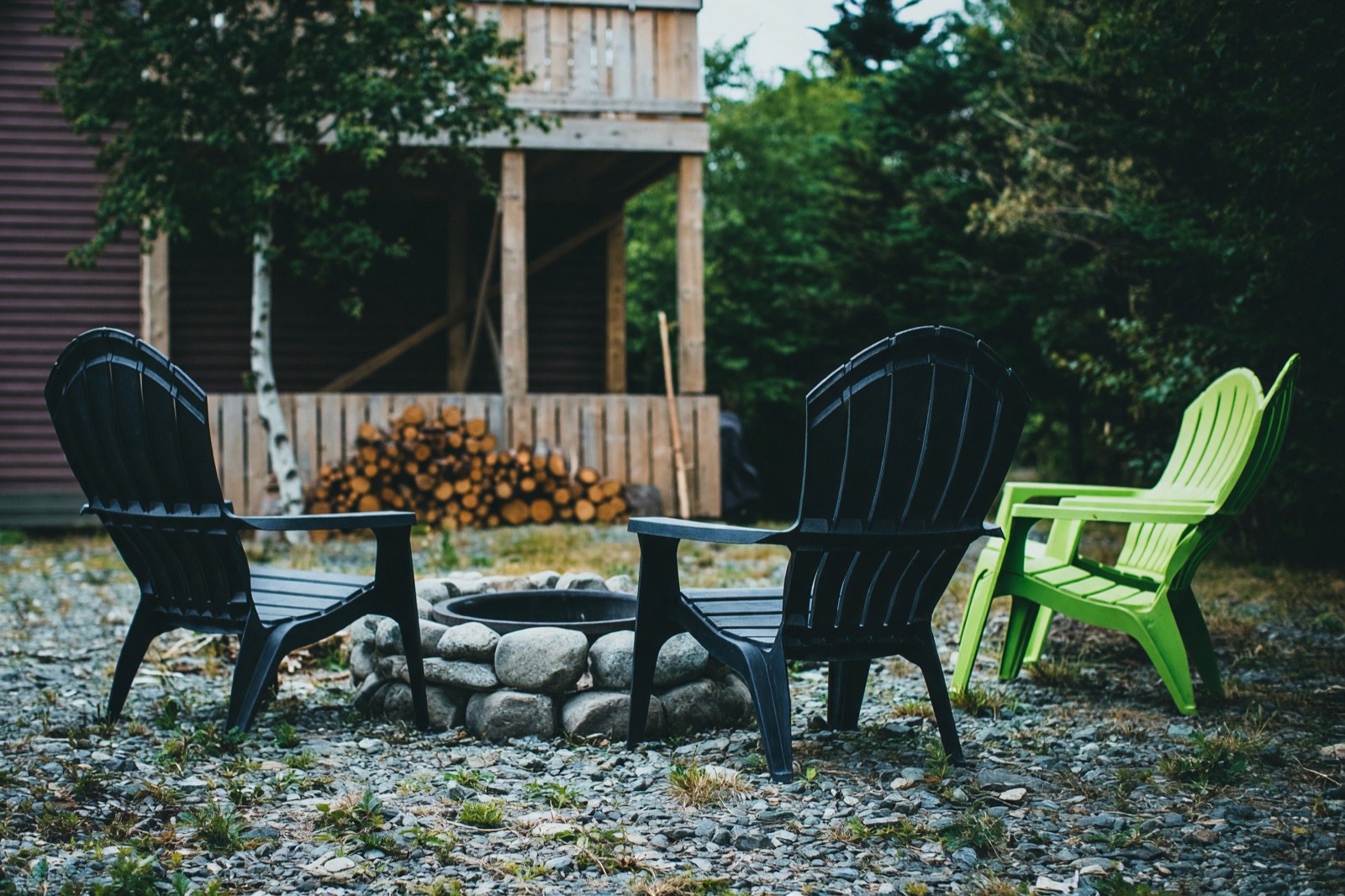
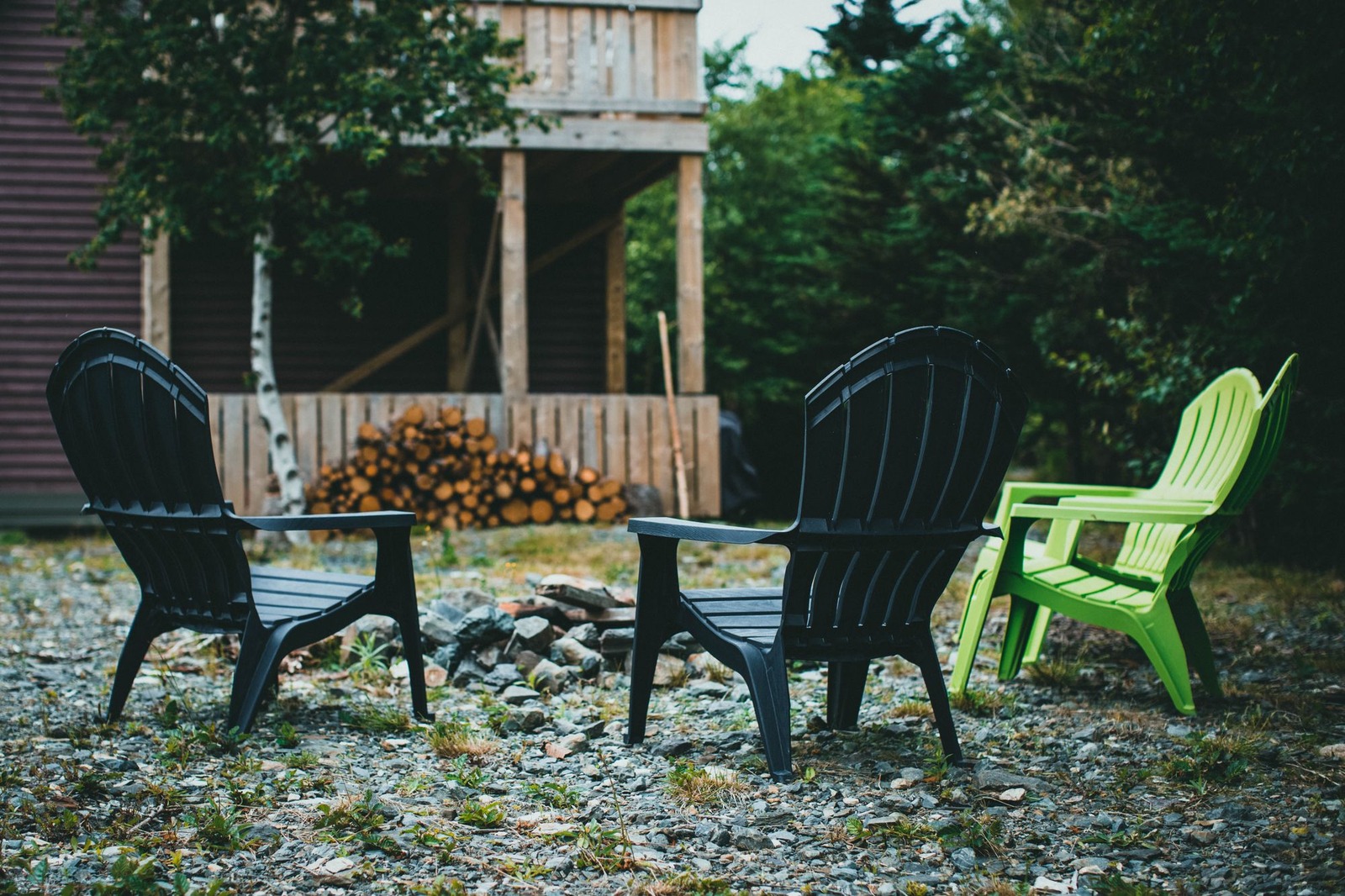
A rough stone ring is the classic look, and it works where the ground is already gravel or bare earth. Here it replaces a loose heap of stones, which shows the idea: a defined edge turns a heap into a place. The three chairs were already in a loop, so the seats come first and the ring finishes the circle. The wood pile stays where it was in the picture. Where firewood may be kept in relation to a fire is a question for the manufacturer's instructions, not for the image.
2. A fire bowl with two chairs on a lawn
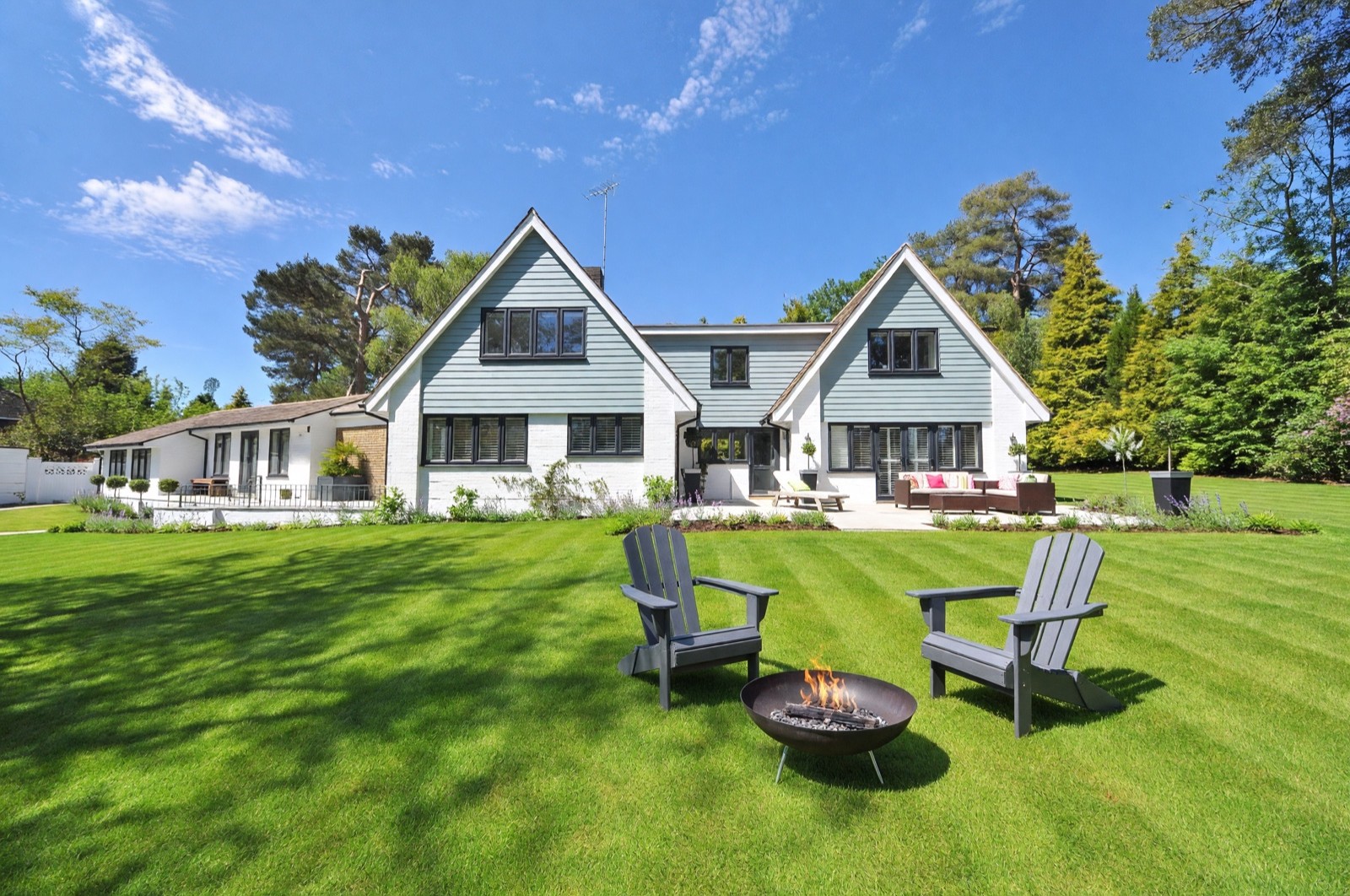
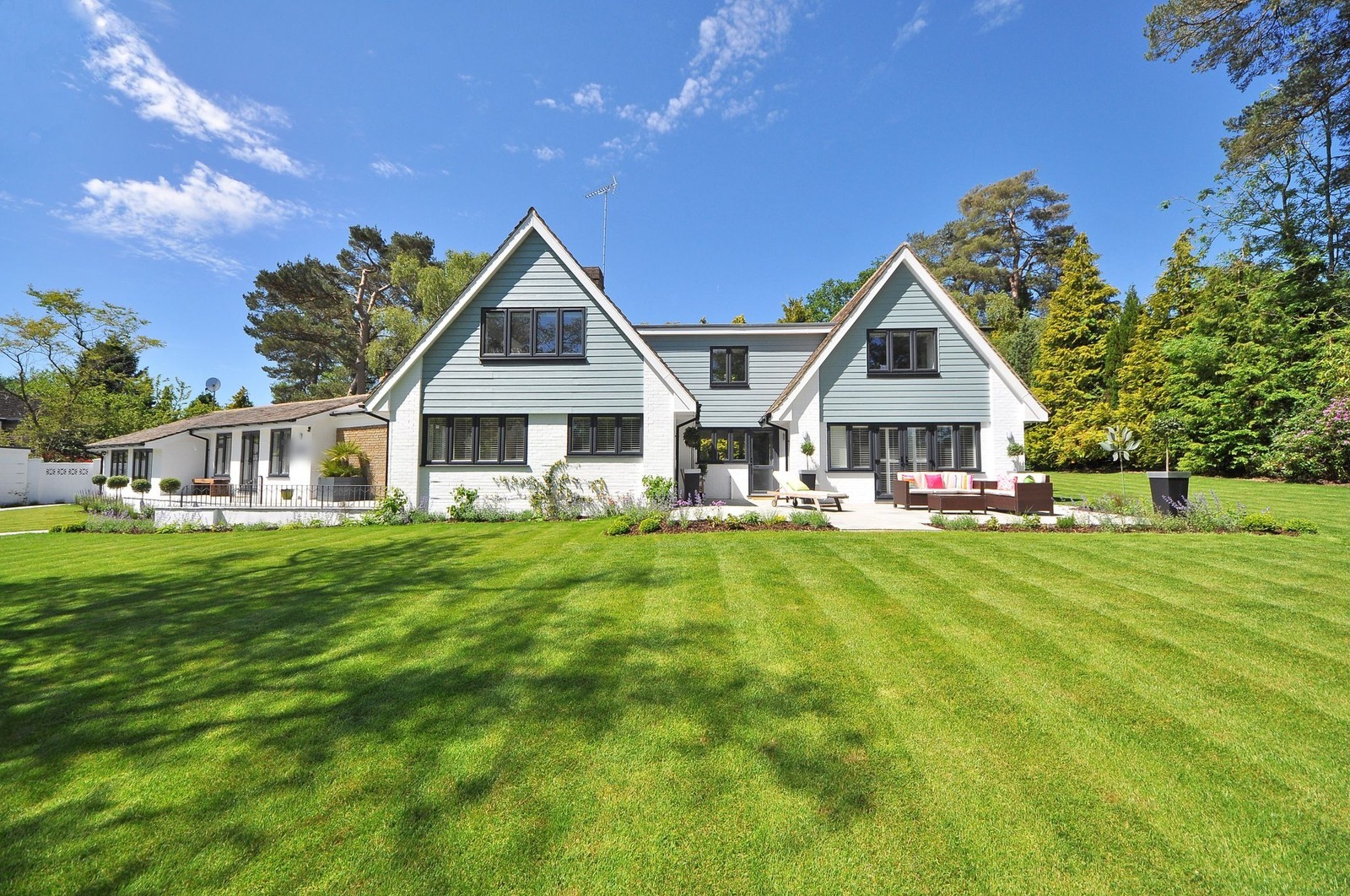
This is the lightest version: a bowl and two chairs, no built structure. It gives a big empty lawn a focal point, but notice how far it floats from the house. A group on open grass often needs a path or a patch of different ground to feel connected. What the ground under a bowl needs, and how it is protected, is a question for the manufacturer's instructions and an installer.
3. A fire table on a paver patio
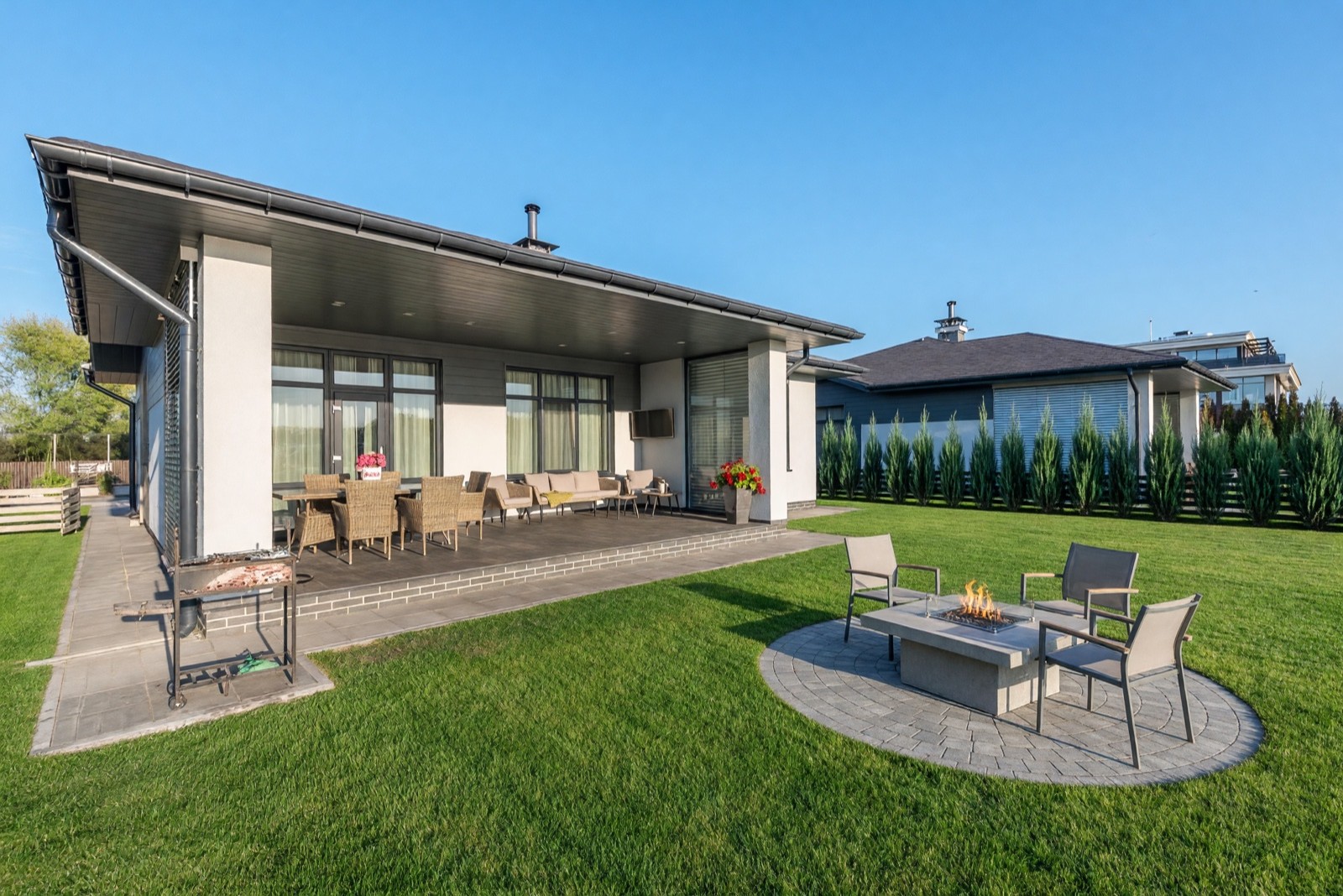
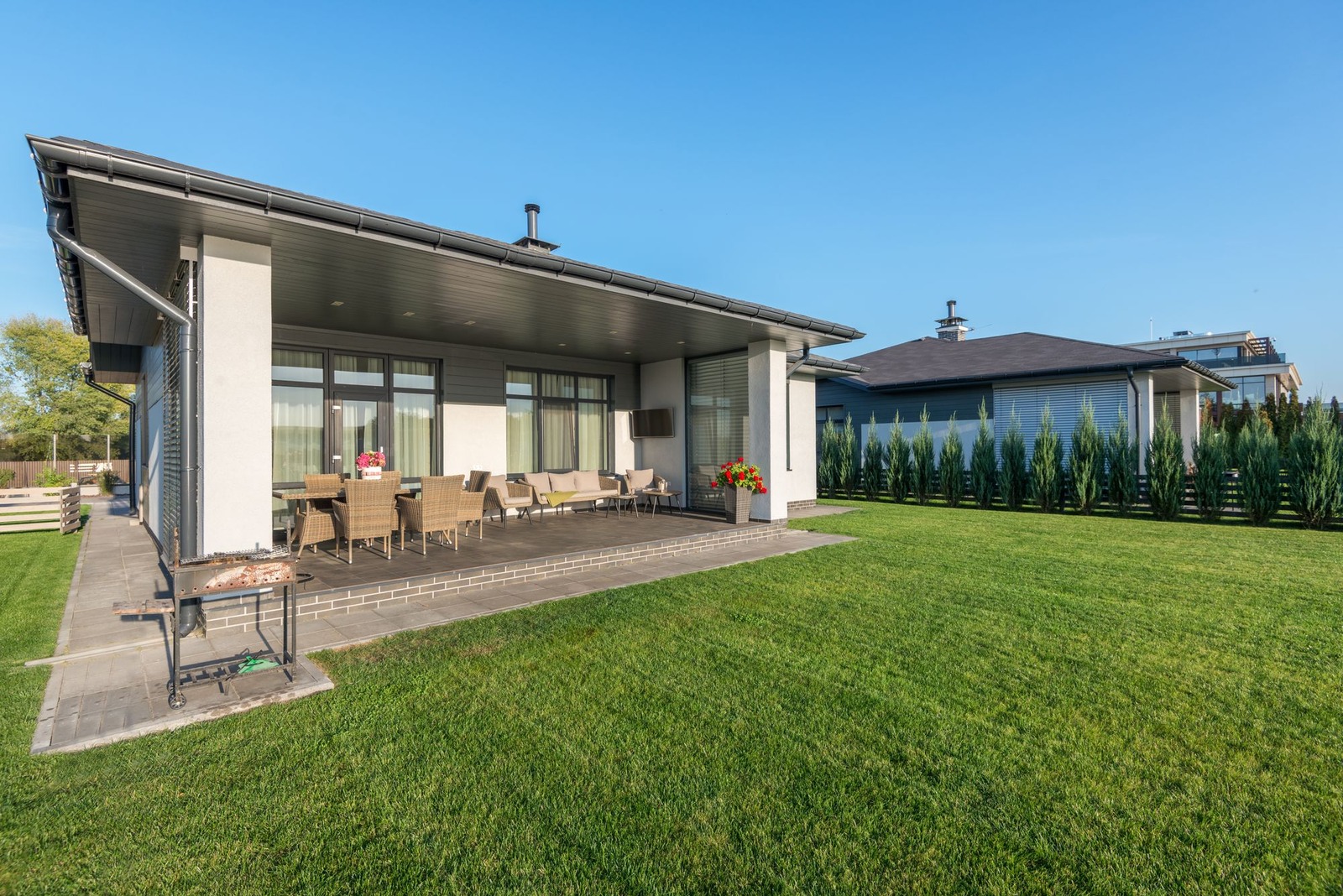
A fire table sits at coffee-table height, so lighter chairs work and the corner feels like patio furniture. The paver circle does the zoning: it separates the fire corner from the covered terrace and the grill, and the row of narrow conifers gives it a backdrop. We asked for four chairs and only three show, so count seats yourself. A fire table usually runs on gas, so how it is supplied is a job for a licensed professional and the manufacturer's instructions.
4. A gravel fire zone with two benches
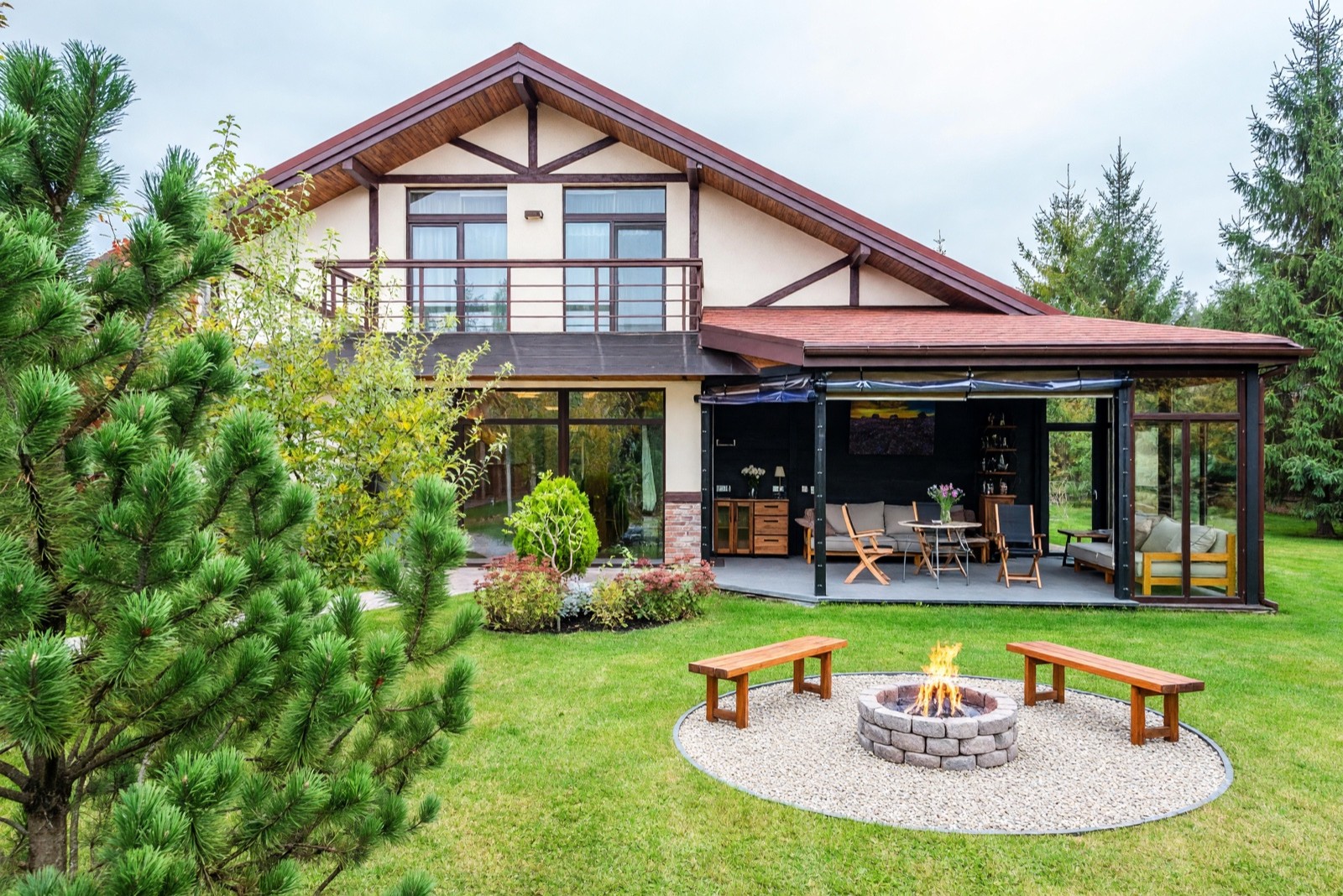
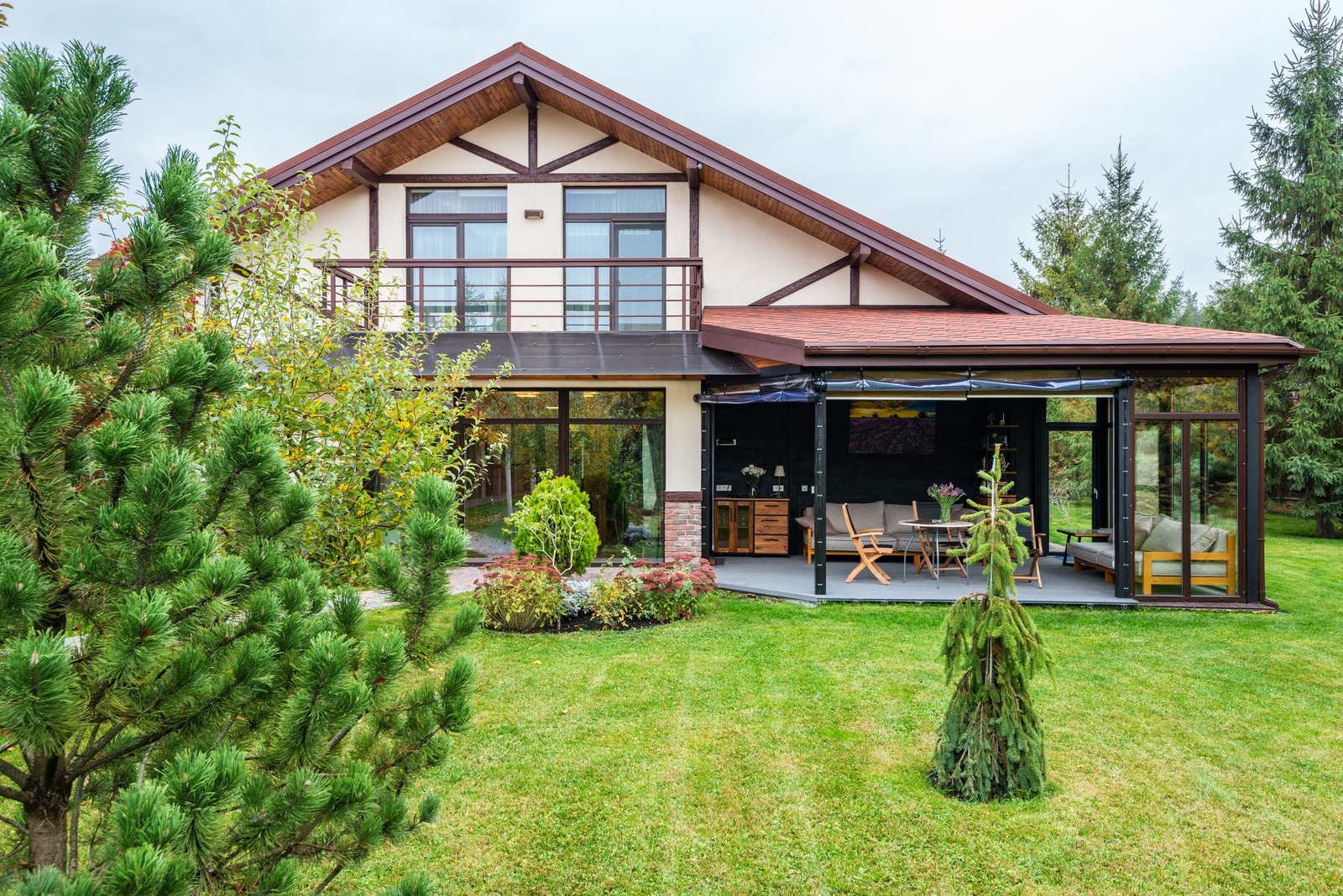
A gravel circle with a pit in the middle and a bench on each side reads as one zone, and it keeps the terrace free for dining. It also shows a limit: the AI removed the spruce we asked it to keep, because the zone stands where the tree stood, and a second try did the same. Do not read a distance off the picture. How far the zone must stand from the veranda, the house and the trees comes from the manufacturer's instructions and local rules.
5. A sunken seating pit in the lawn
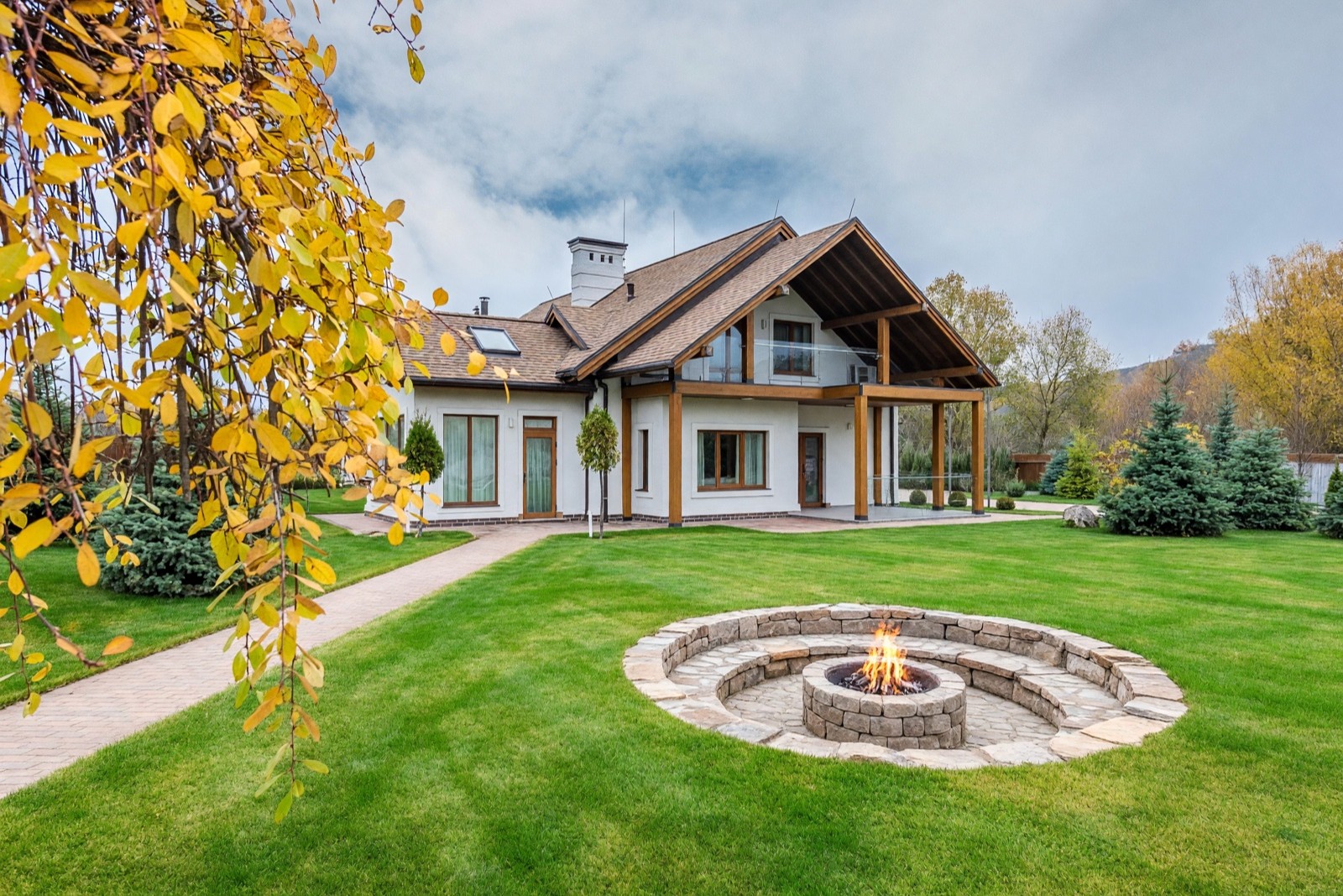
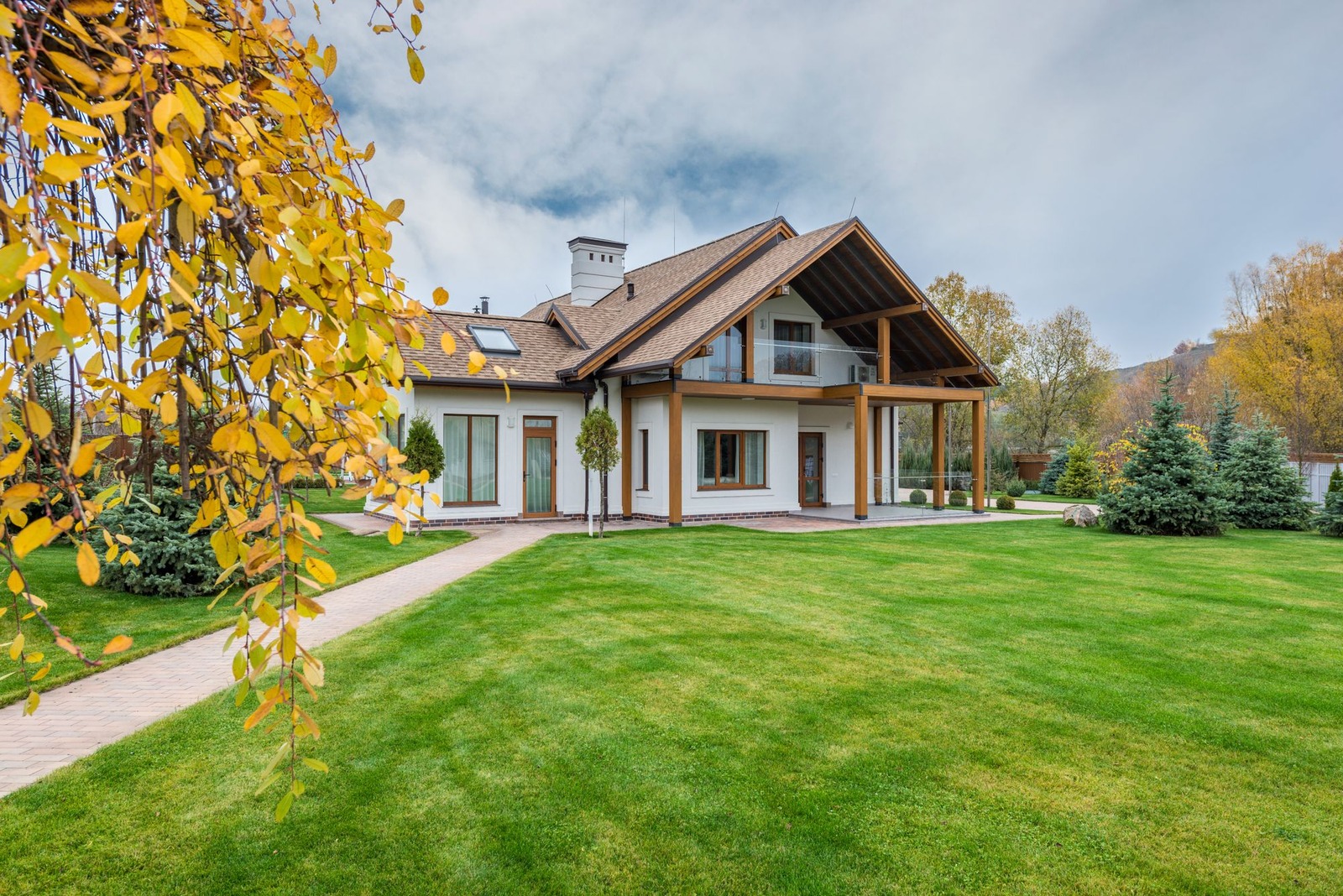
A sunken pit wraps the seats around the fire in steps, like a small amphitheater. It suits a wide, open lawn where a round shape has room, as here. It is also the idea that most needs checks: digging, drainage and where water collects are questions for a professional, and a flat picture cannot show depth or what lies under the grass. The picture also does not show how deep this pit really is.
6. A corner fire pit with a bench
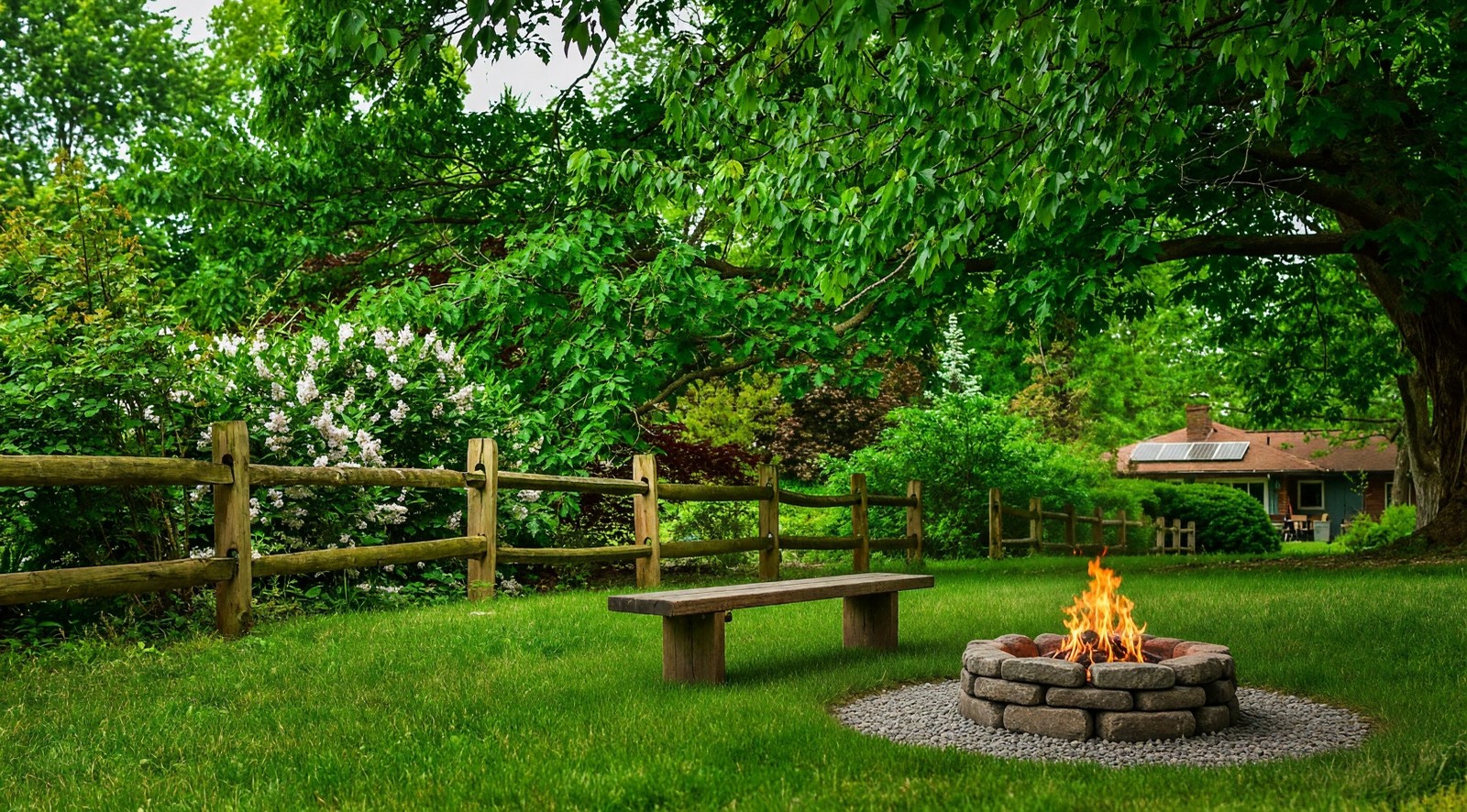
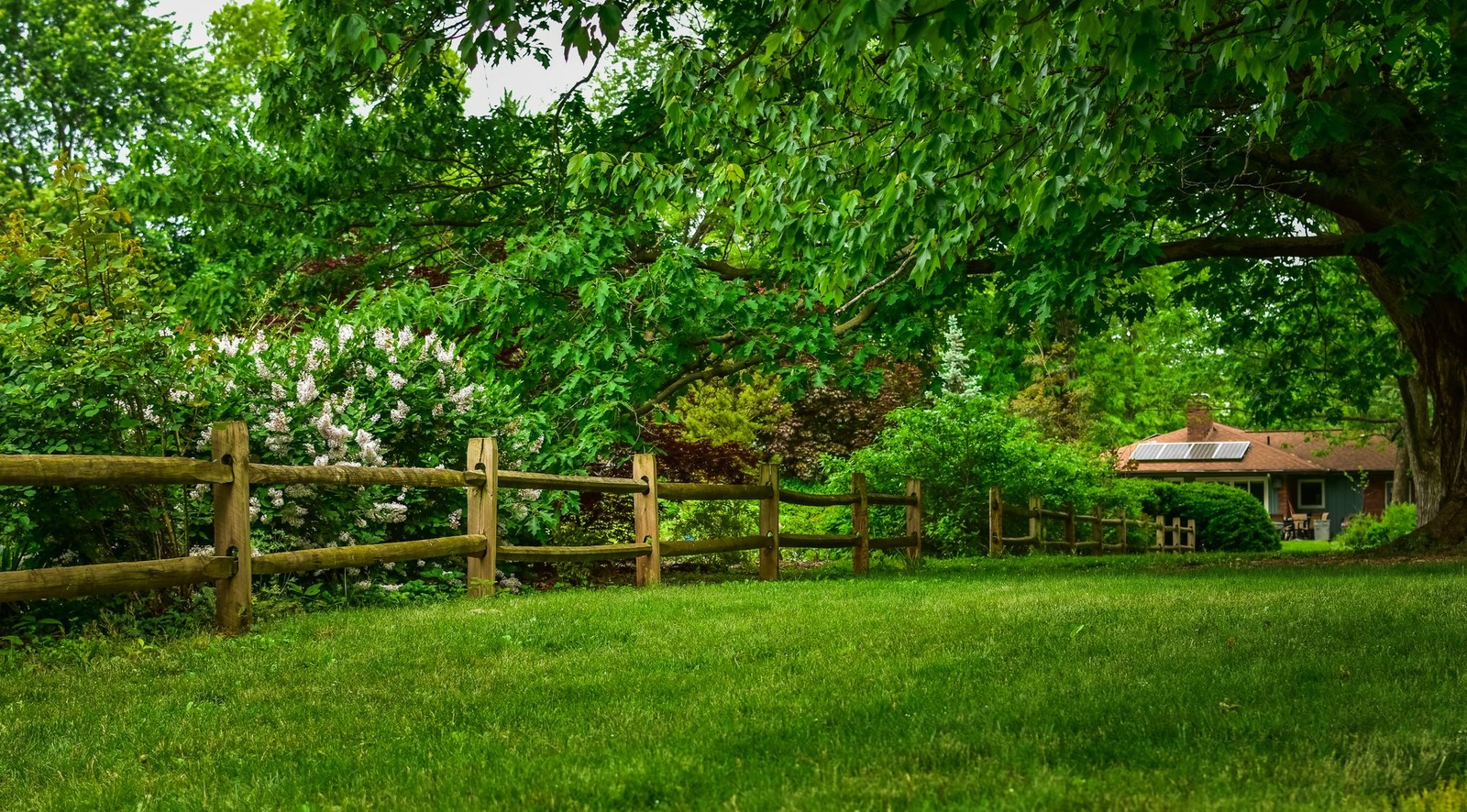
A quiet corner with a fence and a flowering shrub behind it suits a small group and one long bench. This example needed correcting: the first try pushed the bench into the flames, so we added "clearly apart" to the sentence. The second try kept the bench apart but drew a round pit instead of a square one. Asking for one thing, checking the result and rewording the sentence is the normal way to work with the tool.
Fire pit ideas at a glance
| Idea | Good for | What to check |
|---|---|---|
| Round stone ring on gravel (examples 1, 4 and 6) | Rustic yards, wooded corners and gravel areas | The ground under it; where logs are kept; distance to trees and fences |
| Fire bowl with chairs (example 2) | Open lawns and a first, simple look | What protects the ground; wind; how much open space surrounds it |
| Fire table on a patio (example 3) | Patios and terraces with tidy, chair-height seating | How the fuel is supplied; the wind guard; distance to the house |
| Sunken seating pit (example 5) | Wide, level lawns and a conversation circle | Digging and drainage; steps and edges after dark; local rules |
| Gravel fire zone with benches (example 4) | A lawn beside a terrace, two to four seats | Distance to the veranda, trees and fences; the walk from the door |
| Corner pit with a bench (example 6) | A quiet end of the yard and a small group | Which way smoke drifts; light at the bench; the walk from the house |
Seating and lighting around a fire pit
- Pick seats for the look and the evening. Adirondack-style chairs (examples 1 and 2), benches (examples 4 and 6), stone steps (example 5) or patio chairs (example 3). Benches seat more people in less space; chairs are easier to turn toward one another. Ask a supplier what is made for outdoor use.
- Seat people in a loop, not a line. A curve lets everyone see each other and the fire. The three chairs in example 1 already do it.
- Add a soft light besides the flame. Flames light faces unevenly and change all evening. A few low path lights, a string of lights of around 2700 K or lanterns make the edges visible without glare. Outdoor wiring is a job for an electrician.
- Light the walk and the steps. Especially for a sunken pit (example 5), where the seats sit below the lawn and the edge is easy to miss in the dark.
Which materials look right around a fire pit?
Pick a look first, then ask a supplier what is made for outdoor and fire use. Stone suits a rustic ring (examples 1, 4, 5 and 6). Gravel gives a clean floor and lets a lawn stop where the zone starts (examples 1, 4 and 6). Pavers tie a fire corner to an existing terrace (example 3). A black steel bowl is the simplest look (example 2), and wooden benches (examples 4 and 6) warm up a stone and gravel scene. Repeat one tone that is already there: the gray pavers echo the gray terrace in example 3. The picture says nothing about how a material copes with heat, rain or frost.
What should you put in the bottom of a fire pit?
Sand, gravel or lava rock are the common choices for the bottom of a fire pit, to protect the base and help water drain away. For a manufactured pit, follow the maker's instructions on what to use and how much. Keep the base dry, and avoid wet or porous stones, which can crack when heated. If the pit is built into the ground, ask an installer about drainage.
Metal, wood or gas: which fire pit suits you?
A steel or other metal pit is usually the easiest to move and the simplest to set up, and a bowl on legs is the lightest option. A wood-burning pit gives the classic crackle but makes smoke and needs dry logs and ash cleanup. Gas is cleaner and easier to start and stop, but the connection should be made by a licensed professional. A stone or block ring is built to stay where it is. Local rules and burn bans decide which fuel you may use.
Planting and screening around a fire pit
Decide the pit and the seats first, then plant. Tall grasses, a hedge or a row of narrow conifers behind the seats give privacy and a sense of enclosure (the row of narrow conifers in example 3, the fence and lilac in example 6). Low plants at the edge of a gravel circle soften it. How far plants, hedges and overhanging branches must stay from a flame is a question for the manufacturer's instructions and local rules.
To try new planting, furniture and lighting around the pit, use Garden Design. Its Light Touch mode keeps the garden as it is and adds a few accents such as potted plants, planters and garden lights, and Preserve Structure refreshes the planting, furniture and lighting while keeping the layout. For a tall screen at the boundary, see garden fence ideas. For the layout of the whole yard, see backyard design ideas, or small backyard garden ideas for a small space. If you want shade beside the seats, see pergola ideas, and for cooking near them, outdoor kitchen ideas.
Inexpensive and DIY fire pit ideas
The lowest-cost route is usually a ring of stacked blocks or a simple steel bowl, with a gravel floor and two chairs. Use materials made for heat, not ordinary river rock or damp stone, which can crack when heated, and follow the manufacturer's instructions for any block or kit. A pit sunk into the ground needs care about buried lines, so call before you dig where that service exists. Whatever you build, keep the safety basics in place:
- Never leave a fire unattended.
- Keep water or a fire extinguisher at hand.
- Check local rules and any burn bans before you light it.
- Hire a professional for anything that involves gas.
What to check before you build, and common mistakes
- Distance and clearance. From the house, a veranda or deck, fences, sheds, trees and overhanging branches. The manufacturer's instructions and your local authority set the numbers, not a picture.
- Fuel. Wood or gas, and whether each is allowed where you live. Burn bans and local rules can change by season. How gas is supplied is a job for a licensed professional.
- Permits and insurance. Some areas ask for a permit or limit open fires, and an insurer may have conditions. Ask before you buy.
- Wind and smoke. Notice which way the wind usually blows, and whether smoke would drift toward your own seats, your windows or a neighbor's.
- The ground. Whether it is level, what it is made of and where water goes. A sunken pit especially needs advice on digging and drainage.
- A pit too big for the space. Seats pushed against the fire and no room to walk behind. Mark the outline on the lawn first, with a hose or paint, and stand in it.
- No path and no light. A fire zone you cannot reach safely in the dark will not get used.
- Choosing by the picture. A picture does not show a product's real size, fuel type or safety label. Check them with the manufacturer's information before you choose.
- Forgetting storage. Where firewood, tools and a cover live is part of the plan. Ask the manufacturer what applies to your pit.
What the pictures can and cannot tell you
The pictures show the look only. They do not know your clearances, your local rules, your wind, your ground or the real size of anything. In these six examples the AI drew flames as an effect, removed a spruce we asked it to keep, drew a round pit where we asked for a square one, made a flame bigger than the gentle one we asked for, showed three chairs where we asked for four and turned a bench to face the camera. It also redrew plants, furniture and small details near each pit. Use the pictures to compare looks and layouts, then check the details with the manufacturer's instructions, a licensed professional and your local authority.
Try a fire pit idea on your own photo
Take the photo from a corner of the yard in even daylight, so the lawn, the house and the free space show. In Magic Edit (Pro plan), write one setting in plain words, such as a round stone fire pit with two chairs on the lawn, then name everything that must stay: the house, the furniture, the trees, the path. If a tree or a shrub stands where you want the pit, name it too, and still check the result: in example 4 the tree disappeared anyway, and a different spot helped.
To try planting and lighting around the pit, use Garden Design. More outdoor and indoor ideas are on the HomeCompose design ideas page.
Frequently asked questions
Where is the best place for a fire pit in a backyard?
A spot with open space around it, an easy walk from the back door and a backdrop such as a hedge or fence, where smoke is unlikely to drift into windows. The distances to the house, trees and fences are set by the manufacturer's instructions and local rules, so check those first.
What is the difference between a fire pit and a fire table?
A fire pit is usually a bowl or ring that sits low, often with an open fire. A fire table is a flat-topped piece at coffee-table height with the flame in the middle, often behind a glass guard. Which fuel and which rules apply is a question for the manufacturer and your local authority.
What goes under or around a fire pit?
For the look, people often choose gravel, pavers, stone or brick (examples 1, 3 and 4). A picture says nothing about heat, so ask the manufacturer's instructions and an installer what the ground needs.
Can I see a fire pit on a photo of my own yard?
Yes, as an idea. In Magic Edit (Pro plan), describe one fire pit and say what must stay. Garden Design helps with the planting and lighting around it. Both show a look, not a plan, so check fire safety, clearances and local rules with a professional.
Is it free to try?
Yes. You can start on the free plan, and it includes a limited number of designs.